
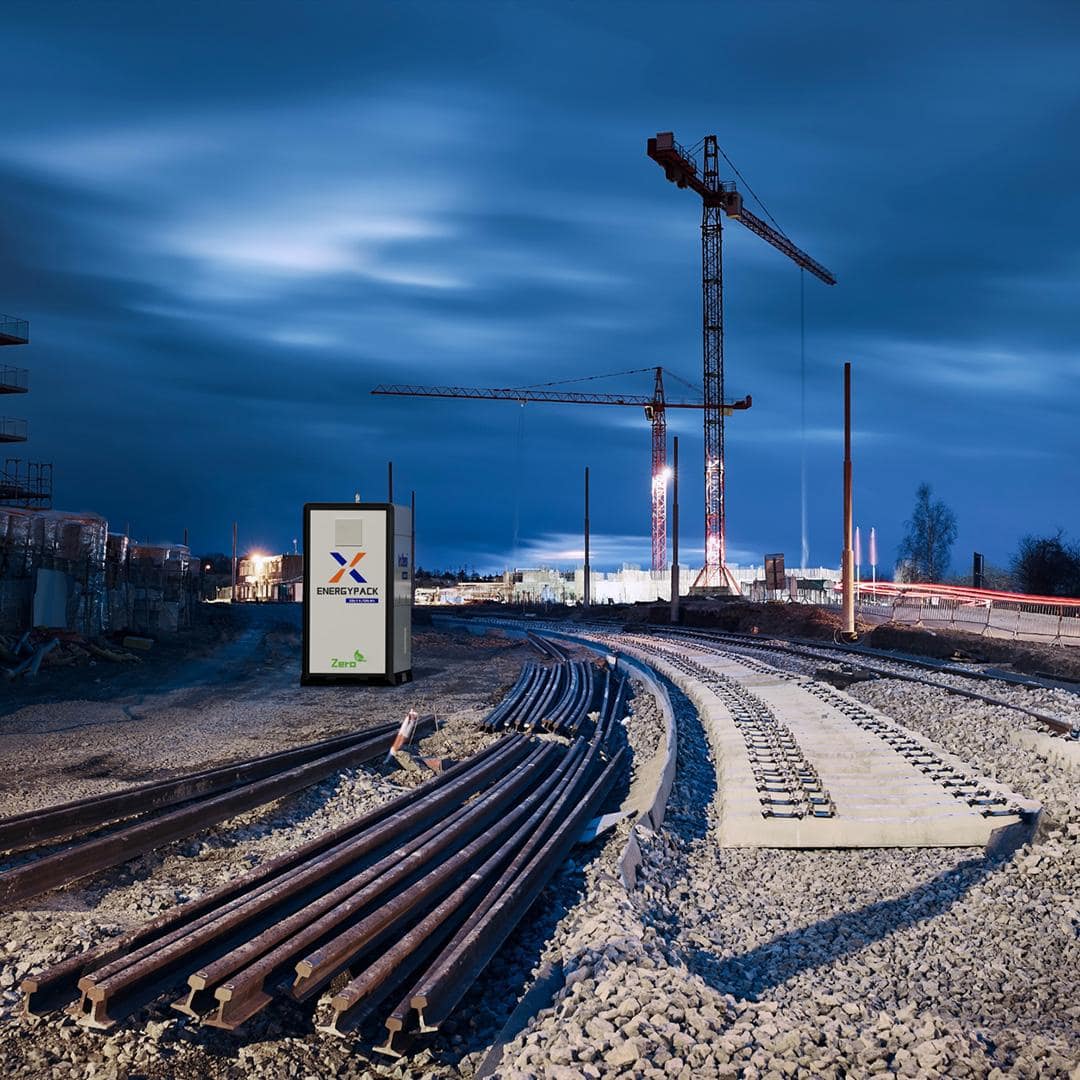
Tower cranes are the heartbeat of modern construction sites, driving heavy lifting with reliable precision. However, their energy demand is far from steady. As a result, the traditional approach of relying on oversized diesel generators is becoming increasingly unsustainable—burdened by rising fuel costs, operational inefficiencies, and tightening environmental regulations.
The solution lies in Hybrid Battery Energy Storage Systems (BESS). By integrating advanced battery technology with conventional power, hybrid systems like Foxtheon’s P500 provide the stability, cost-efficiency, and sustainability that modern construction demands.
Here is why Hybrid BESS is the ideal power partner for tower cranes.
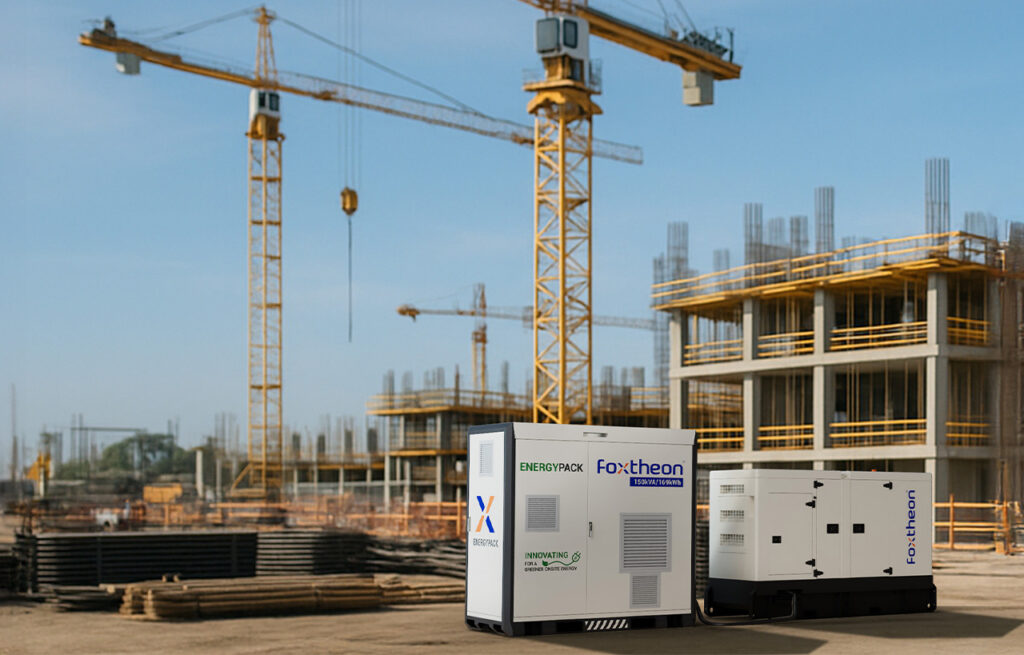
The Challenge: The “Heartbeat” Load Profile of Tower Cranes
In reality, their power consumption follows a highly irregular pulse pattern. Their operation is characterized by a “pulse” load profile that creates severe inefficiencies for standalone diesel generators.
⚡ Massive Peak Loads: When heavy lifts begin, power demand can spike to 3× the average load. Generators must be oversized just to handle these few seconds of peak demand.
⏳ Idle Period Losses: Between lifts, generators burn fuel while delivering almost no useful energy. During these periods, a massive diesel generator continues to run, burning fuel while producing almost no useful work (a phenomenon known as “wet stacking,” which damages the engine).
🔄 Regeneration Gone to Waste: Lowering loads generates energy that traditional systems simply dump as heat. In a standard setup, this “reverse power” is wasted as heat or, worse, can damage the diesel generator.
The Result: High operational expenditures (OPEX), frequent generator maintenance, and excessive CO2 emissions.
The Solution: How Hybrid BESS Solves the Efficiency Gap
At its core, a hybrid BESS serves as a dynamic buffer between the power source and the crane load. It smooths out the peaks and valleys of energy demand.
Key Technical Advantages:
1. Peak Shaving (High Discharge Rate): The battery handles the instant surge of power needed for lifting. This allows you to use a smaller, more efficient generator that runs at a constant, optimal load, rather than oversizing one just for the peaks.
2. Energy Capture (Regenerative Braking): Unlike diesel generators, Foxtheon’s BESS can absorb the reverse power generated when the crane lowers a load. This energy is stored in the battery and re-used for the next lift, creating a closed-loop energy efficiency cycle.
3. Silent Watch (Idle Efficiency): When the crane is idle or demand is low, the generator turns off completely. The BESS provides silent, emission-free power for site lighting, security, or crane standby modes.
Comparison: Diesel Generator vs. Foxtheon Hybrid BESS
Feature | Traditional Diesel Generator | Foxtheon Hybrid BESS Solution |
Fuel Consumption | High (Runs continuously) | Reduced by ~40-60% |
Generator Sizing | Oversized (to meet peak demand) | Optimized (Downsized capacity) |
Maintenance | Frequent (due to low-load running) | Low (reduced engine runtime) |
Regenerative Energy | Wasted (resistor banks) | Captured & Reused |
Emissions | High CO2 & Noise | Low Carbon & Silent Operation |
Product Spotlight: Foxtheon EnergyPack P500
Foxtheon has engineered the P500 EnergyPack specifically for the rigorous demands of construction environments. These are not just batteries; they are intelligent energy management platforms.
Intelligent Control (FoxMind): Our proprietary EMS (Energy Management System) monitors load demands in real-time, automatically switching between battery and generator to maximize fuel savings.
Robust Power Output: It also delivers robust power output, engineered to handle the high inrush currents of industrial motors.
Plug-and-Play: Engineered for rapid deployment on temporary construction sites with ruggedized exteriors to withstand dust and weather.
Case Study: Real-World Performance Data
In a recent high-rise construction project, the Foxtheon P500 was deployed to support a heavy-lift tower crane. The results validated the hybrid approach:
Peak Load Management: The system successfully smoothed power spikes exceeding 100 kW, protecting the grid connection from tripping.
Operational Savings: Diesel generator runtime was reduced by over 50%, directly correlating to fuel cost reductions.
Power Quality: The crane operator reported “stiffer” voltage, resulting in smoother lifting operations and less wear on the crane’s variable frequency drives (VFD).
📊 The load curve analysis confirmed that the P500 stabilized the site voltage, preventing the sags and surges that typically plague generator-only sites.
Frequently Asked Questions (FAQ)
Q: Can a battery really handle the sudden surge of a crane lift?
A: Yes. Foxtheon systems utilize high C-rate battery cells specifically designed for rapid discharge, ensuring instant power delivery for heavy lifts.
Q: What happens to the energy when the crane lowers a load?
A: In a hybrid system, this regenerative energy is absorbed by the battery. In a traditional generator setup, this energy is often dissipated as heat, which is wasteful and can harm equipment.
Q: Is the system compatible with my existing generator?
A: Absolutely. Foxtheon’s BESS is designed to be generator-agnostic. It pairs seamlessly with your existing diesel units to create a hybrid microgrid.
The Future of Energy-Efficient Construction
The construction industry is moving toward a lower-carbon future, and equipment like the EnergyPack P500 is leading the charge. In this context, adopting Hybrid BESS allows site managers to decouple energy costs from fluctuating fuel prices while also meeting increasingly strict environmental tenders.
Ready to reduce your fuel bill and extend your equipment life?
🔗 [Contact Foxtheon Today] to request a site energy analysis and see how our Hybrid BESS can power your next project.