
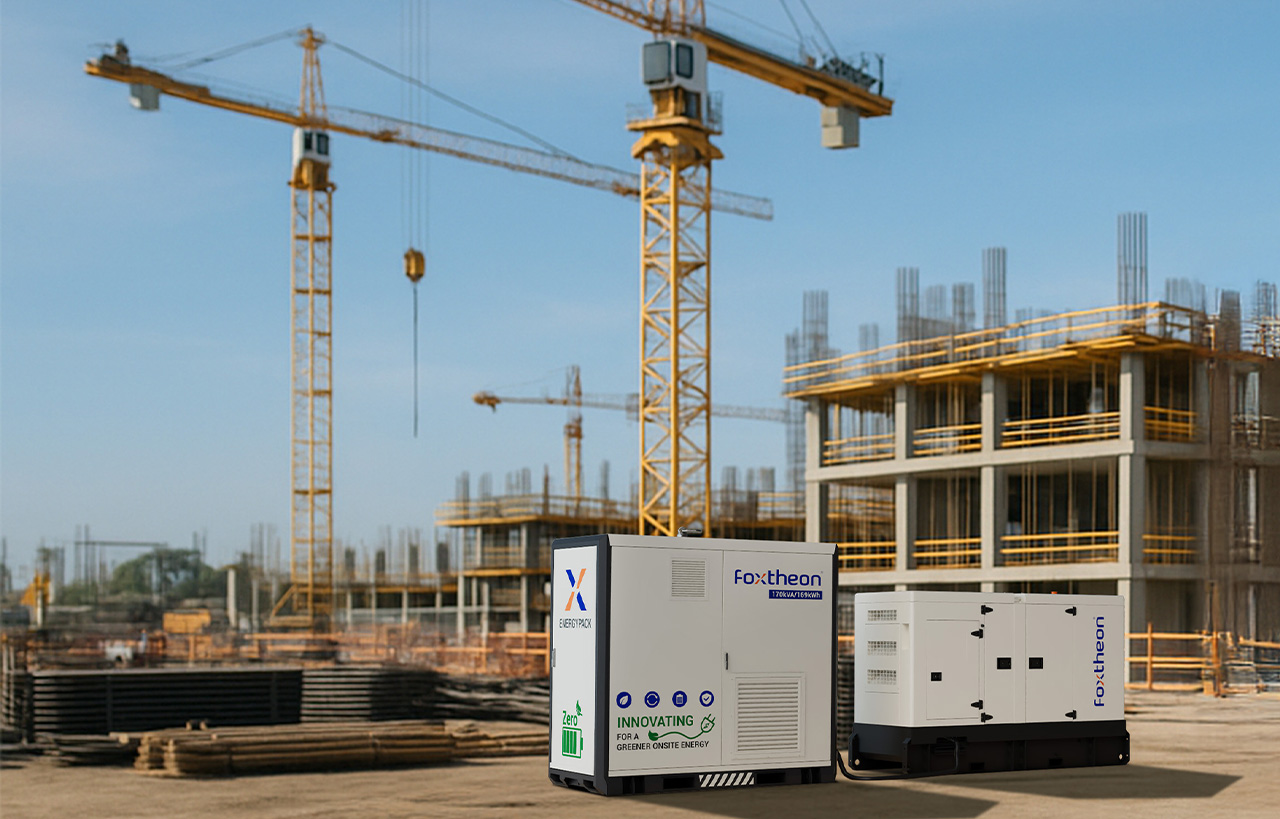
Reducing Tower Crane Generator Size by 50%: 3 Proven Hybrid Power Configurations for 2026
Tower cranes are not energy-hungry. They are power-volatile.
High start-up currents, frequent lifting cycles, and unpredictable peak loads make tower cranes one of the most challenging applications on modern construction sites. Traditionally, project engineers have been forced to oversize diesel generators just to survive these momentary peaks—resulting in wasted fuel, constant noise, and high carbon emissions.
EnergyPack, a specialized Hybrid BESS (Battery Energy Storage System), changes the game. By acting as a high-speed power buffer, EnergyPack decouples energy generation from peak power demand. This allows sites to achieve rock-solid stability using much smaller, more efficient power sources.
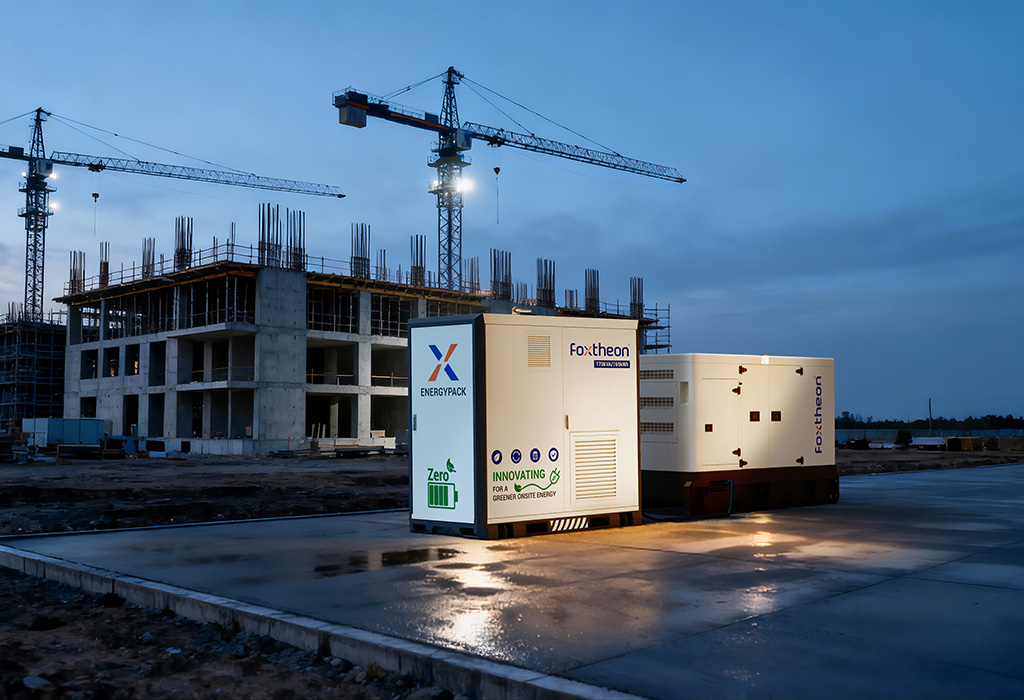
3 Proven Hybrid Power Configurations for Construction Sites
Configuration 1: Generator Downsizing via VSG Power Boost
Smaller Generators. Same Crane Performance. In off-grid sites, the generator no longer needs to be oversized to “chase” load volatility. This setup utilizes Virtual Synchronous Generator (VSG) technology and our Genset Power Boost Mode to shield the engine from aggressive power spikes.
- How it Works: A downsized diesel generator (e.g., 150kVA instead of 250kVA) operates steadily within its optimal fuel efficiency zone. The EnergyPack BESS acts as a high-speed buffer, delivering instantaneous peak power during heavy lifting cycles.
- The Result: * Generator size reduced by up to 50%.
- Elimination of “Wet Stacking” and engine carbon buildup caused by low-load idling.
- Maximum fuel-to-kWh conversion and extended equipment lifespan.
Configuration 2: Rapid Charging & Silent Power Mode
Run for 2 Hours. Power the Site All Day. For construction sites with intermittent crane activity or strict noise ordinances, this configuration shifts the reliance from the engine to the battery. It eliminates the need for a generator to idle 24/7 just to be “ready” for a 5-minute lift.
- How it Works: A medium-sized generator is used to fast-charge the EnergyPack at high efficiency for a short window (e.g., 2 hours). Once the BESS is charged, the generator is shut down completely. The EnergyPack then operates in Grid-Forming mode, silently providing 100% of the power for the crane and site loads for the remainder of the shift.
- The Result: * 90% reduction in generator runtime.
- Zero noise pollution during crane operation—ideal for urban or night-shift projects.
- Drastic reduction in onsite CO2 emissions and service intervals.
Configuration 3: Grid-Limited Support (Buffer Mode)
Making Weak Grids Usable for Heavy Lifting. Many urban sites have grid access but lack the approved amperage to supply tower cranes directly. Connecting a crane to a weak grid often leads to voltage drops or utility overcurrent penalties.
- How it Works: Operating in Grid-Forming mode, EnergyPack acts as a Site-Ready Buffer and Power Amplifier. It draws a constant, low-current charge from the grid and supplies high-surge peak power to the crane. The crane never “touches” the grid directly.
- The Result: * Run heavy tower cranes without expensive grid infrastructure upgrades.
- No more site-wide tripping or voltage instability.
- Immediate usability of existing low-capacity power connections
Comparison: Traditional Setup vs. EnergyPack Hybrid Configurations
Case Study Reference: Based on a standard 76kW Tower Crane operation on a typical construction site.
| Feature | Traditional Setup (Oversized GenSet) | Configuration 1: VSG Power Boost | Configuration 2: Rapid Charging / Silent Mode | Configuration 3: Grid-Limited Support |
| Primary Goal | Survival of Peak Loads | Generator Downsizing | Runtime Reduction | Power Amplification |
| Required Power Source | 250kVA GenSet | 125kVA – 150kVA GenSet | 150kVA GenSet | 30kW – 45kW Grid |
| BESS Role | None (Idle heavy) | Peak Shaving (Buffer) | Primary Power Source | Power Amplifier |
| GenSet Runtime | 10 – 12 Hours / Shift | 10 – 12 Hours (Steady) | ~2 Hours / Day | Zero (unless backup) |
| Fuel Efficiency | Low (Low-load Idling) | High (Optimized Zone) | Ultra-High (Max RPM) | N/A (Grid Energy) |
| Noise Impact | Constant High Noise | Steady Moderate Noise | Zero Noise (BESS Mode) | Zero Noise |
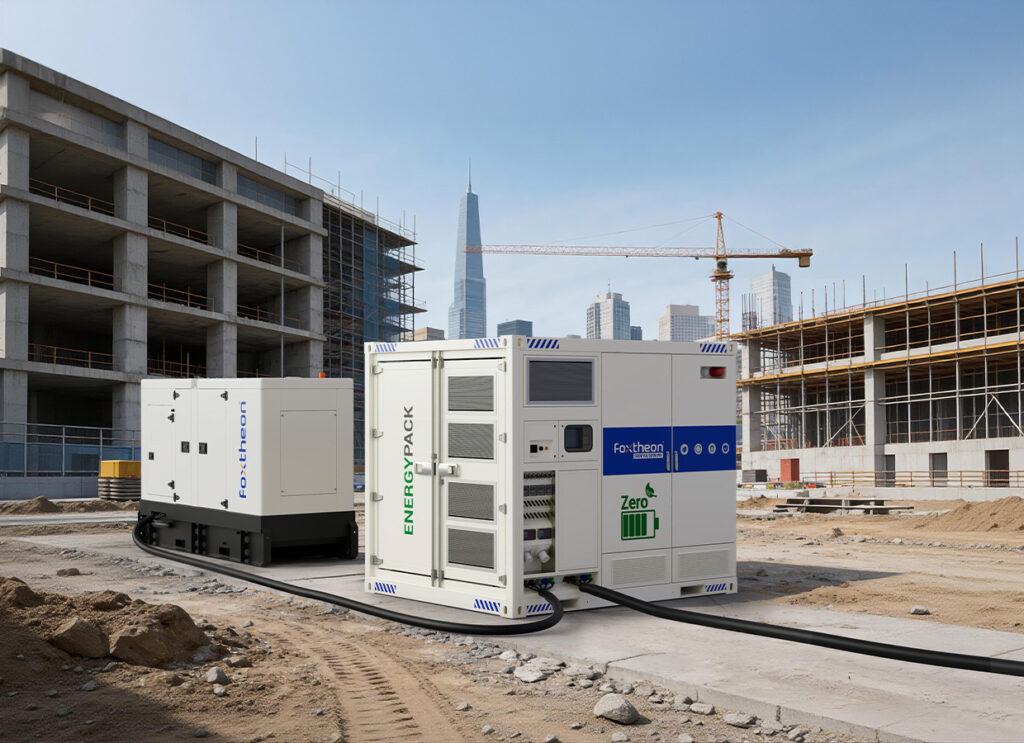
Why Choose a Hybrid BESS for Your Project?
Traditional setups force power sources to react to volatility. EnergyPack absorbs it.
| Feature | Traditional Oversized GenSet | EnergyPack Hybrid Configuration |
| Generator Sizing | Scaled for Peak Loads (Oversized) | Scaled for Average Demand (Downsized) |
| Fuel Efficiency | Low (constant idling/varying RPM) | High (optimized, steady RPM) |
| Grid Requirement | High Amperage (Often Unavailable) | Low Amperage (Easy Trickle Charge) |
| Power Quality | Prone to Frequency Fluctuation | Constant Voltage & Frequency |
Frequently Asked Questions (FAQ)
Q: Can a BESS really handle the high start-up current of a tower crane?
A: Absolutely. EnergyPack is specifically engineered with Virtual Synchronous Generator (VSG) algorithms and dynamic power allocation to absorb the massive inrush currents that typical generators struggle to manage.
Q: Does this hybrid setup reduce site noise?
A: Yes, significantly. By downsizing the generator and allowing it to run at steady speeds (or even shutting it off during low-demand periods for a complete “Silent Run” mode), you drastically reduce the noise footprint-a critical factor for night shifts or residential areas.
Q: Is EnergyPack compatible with all crane brands?
A: Our Hybrid BESS is a universal solution. Acting as a Grid-Forming power source, it stabilizes the power input for frequency-converter cranes and traditional models alike, protecting sensitive crane electronics from voltage sags and spikes.
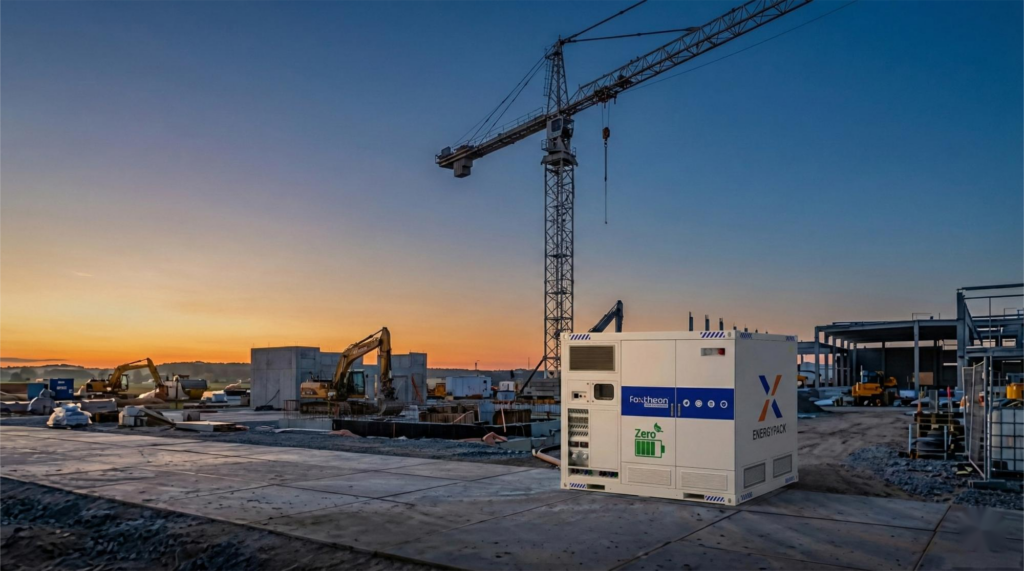
Technical Snapshot for Project Engineers
- System Type: Hybrid BESS (Battery Energy Storage System)
- Primary Function: Peak Shaving & Transient Load Support
- Compatible Sources: Diesel Generators, Weak Grid, PV/Solar
- Applications: Tower Cranes, Construction Hoists, Concrete Pumps
Ready to standardize your tower crane power design? EnergyPack turns volatility into stability.