
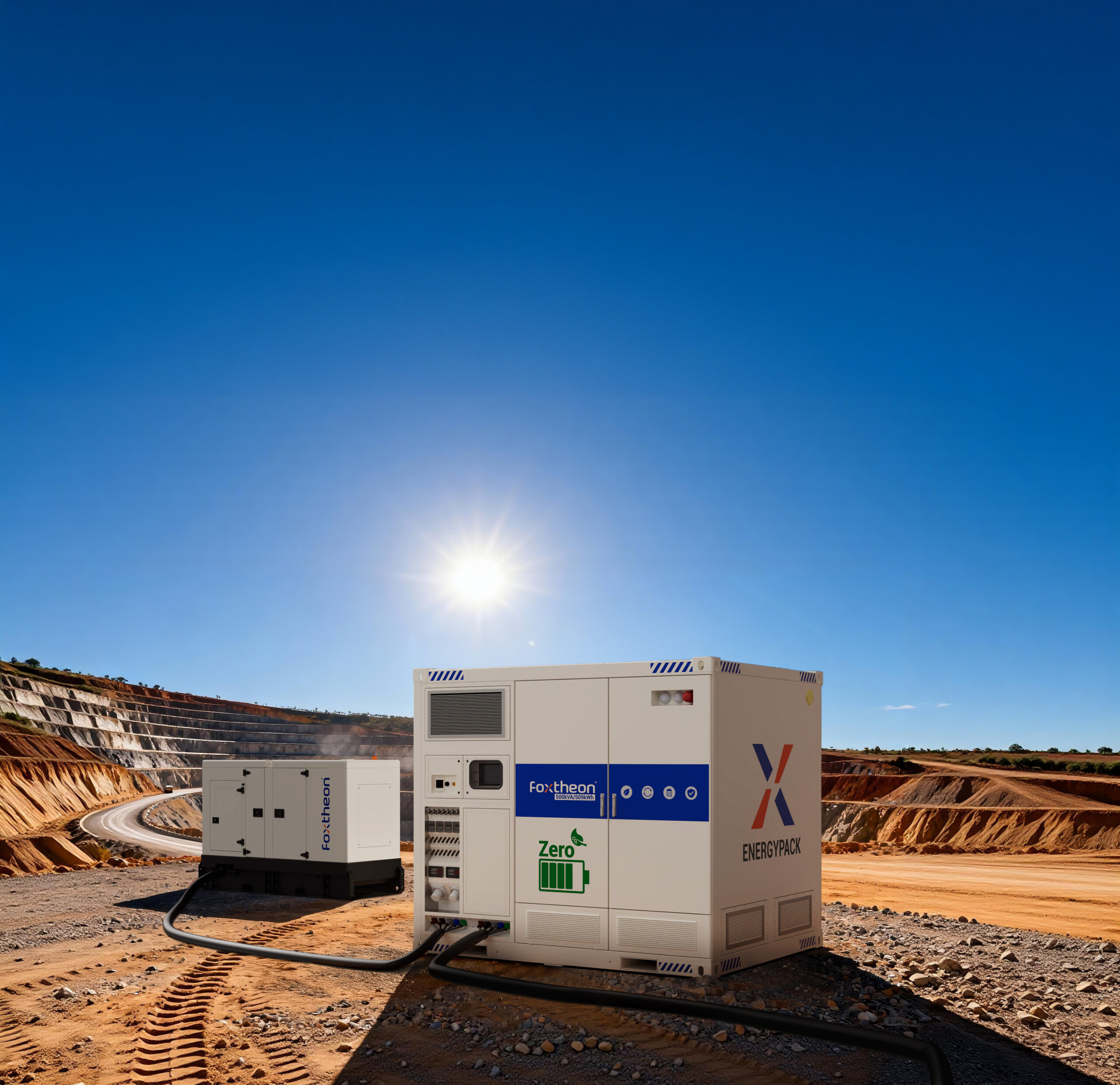
Executive Summary: The Cost of Peak Loads
Temporary power failures aren’t usually caused by a lack of average capacity; they are triggered by sudden load surges. In industries like construction, mining, and large-scale events, these spikes can reach 2-5x the nominal demand, leading to equipment failure, costly delays, and inefficient generator oversizing. A Hybrid Battery Energy Storage System (BESS), like the Foxtheon EnergyPack, offers a modern solution by stabilizing peak loads and slashing fuel costs by up to 30~80%.
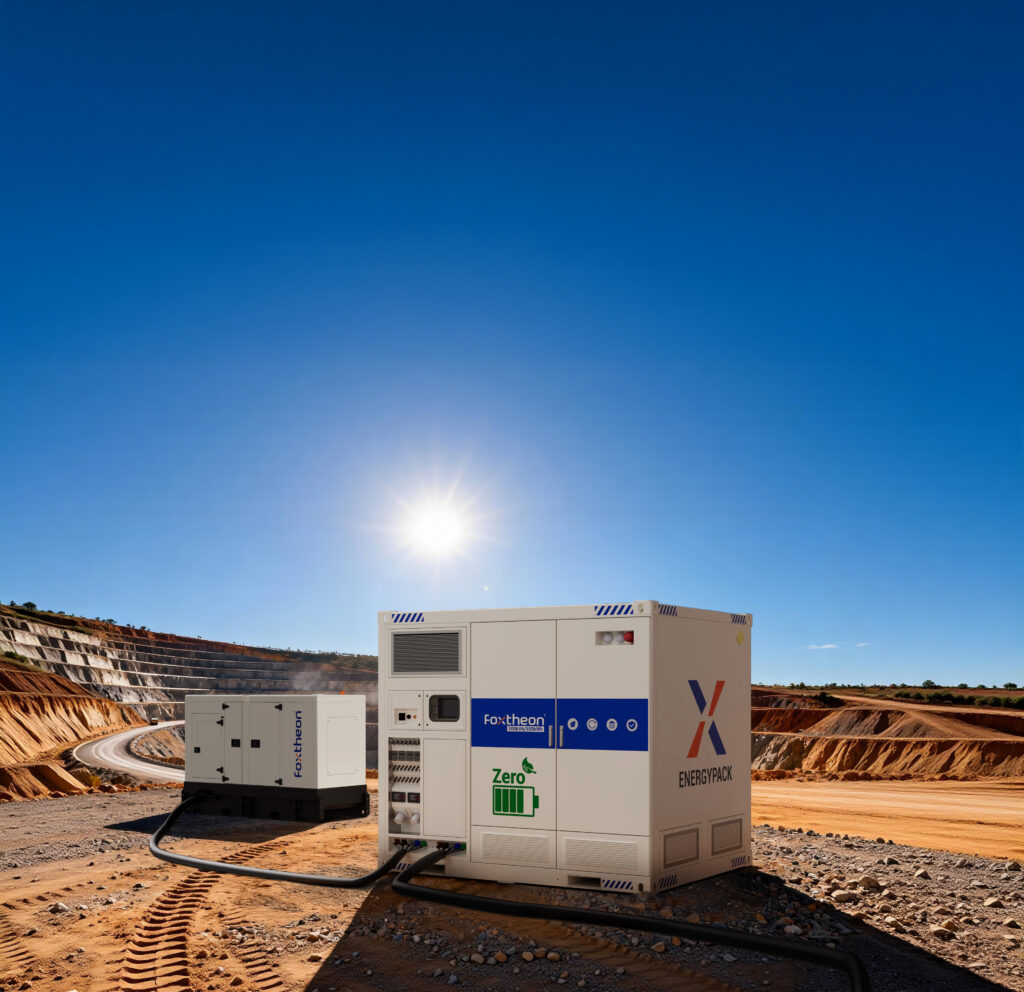
The Hidden Culprit: Why “Average Power” is a Misleading Metric
In modern infrastructure projects, power demand is rarely linear. The acceleration of electrification and automation means multiple high-power systems often engage simultaneously.
Common Triggers for Load Surges:
- Construction: Tower cranes rotating or concrete pumps ramping up.
- Mining: Crushers and heavy machinery cycling.
- Events: High-power audio-visual arrays and climate control systems.
Key Statistic: Industry data reveals that over 70% of generator faults occur during load transitions, not steady-state operation.
The “Oversizing Trap”: Costs and Compliance Risks
To survive these milliseconds-long surges, many project managers choose to oversize generators. While this prevents immediate tripping, it creates a “hidden” financial drain:
- Low-Load Inefficiency: Generators running at 30–40% capacity suffer from wet stacking, increased maintenance, and shorter lifespans.
- The Fuel Penalty: Rental benchmarks show low-load operation can increase fuel costs by 20–35%.
- Regulatory Hurdles: Oversized engines produce higher emissions and noise, making it difficult to meet strict urban ESG (Environmental, Social, and Governance) standards.
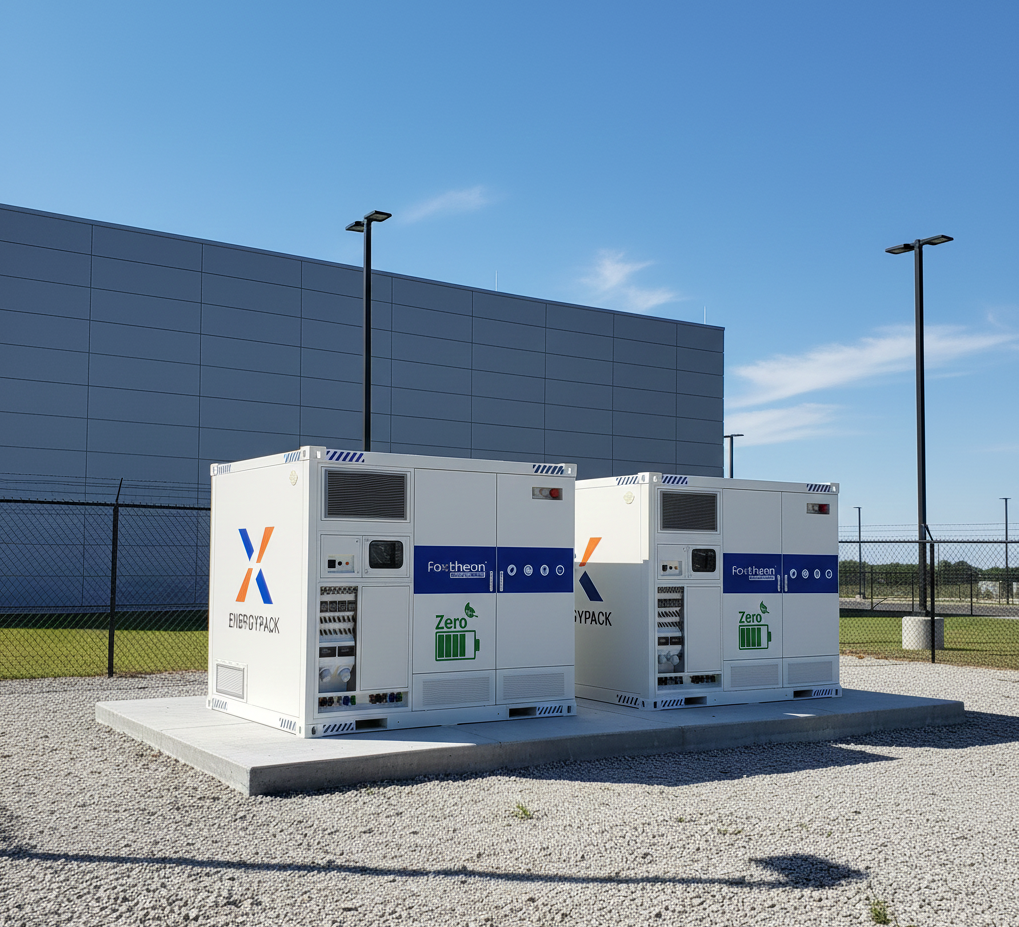
How Hybrid BESS Solves the Peak Load Problem
A Hybrid Battery Energy Storage System (Hybrid BESS) acts as a dynamic buffer between the generator and the load.
The Mechanics of Hybridization:
- Instant Response: High-power batteries deliver instantaneous discharge to absorb the impact of a surge.
- Generator Optimization: The generator is allowed to run at its “sweet spot” (optimal efficiency) or stay off entirely during low-demand periods.
- Power Quality: Stabilizes voltage and frequency, preventing “brownouts” that damage sensitive electronics.
Case Study: The Foxtheon EnergyPack Advantage
The Foxtheon EnergyPack series is engineered specifically for high-fluctuation environments. Unlike standard storage, the EnergyPack focuses on instantaneous response capability.
| Feature | Impact on Project |
| High-Power LFP Modules | Rapid discharge for aggressive load spikes. |
| FoxMind EMS | Real-time load analysis and predictive transient management. |
| Fuel Savings | Field-proven reductions of 30% to 80%. |
| Silent Operation | Zero-noise power during night shifts or low-load gaps. |
Conclusion: Is a Hybrid Energy Storage System Right for You?
Transitioning to a hybrid strategy is no longer just an “eco-friendly” choice; it is a financial and operational necessity.
A Hybrid BESS is the right fit if your project involves:
- Frequent Start-Stops: Heavy machinery with high-impact starting currents.
- Unstable Power: Weak grid connections or remote off-grid locations.
- Strict Regulations: Projects requiring low-noise or low-emission certification.
- Cost Sensitivity: A need to reduce diesel consumption and maintenance overhead.
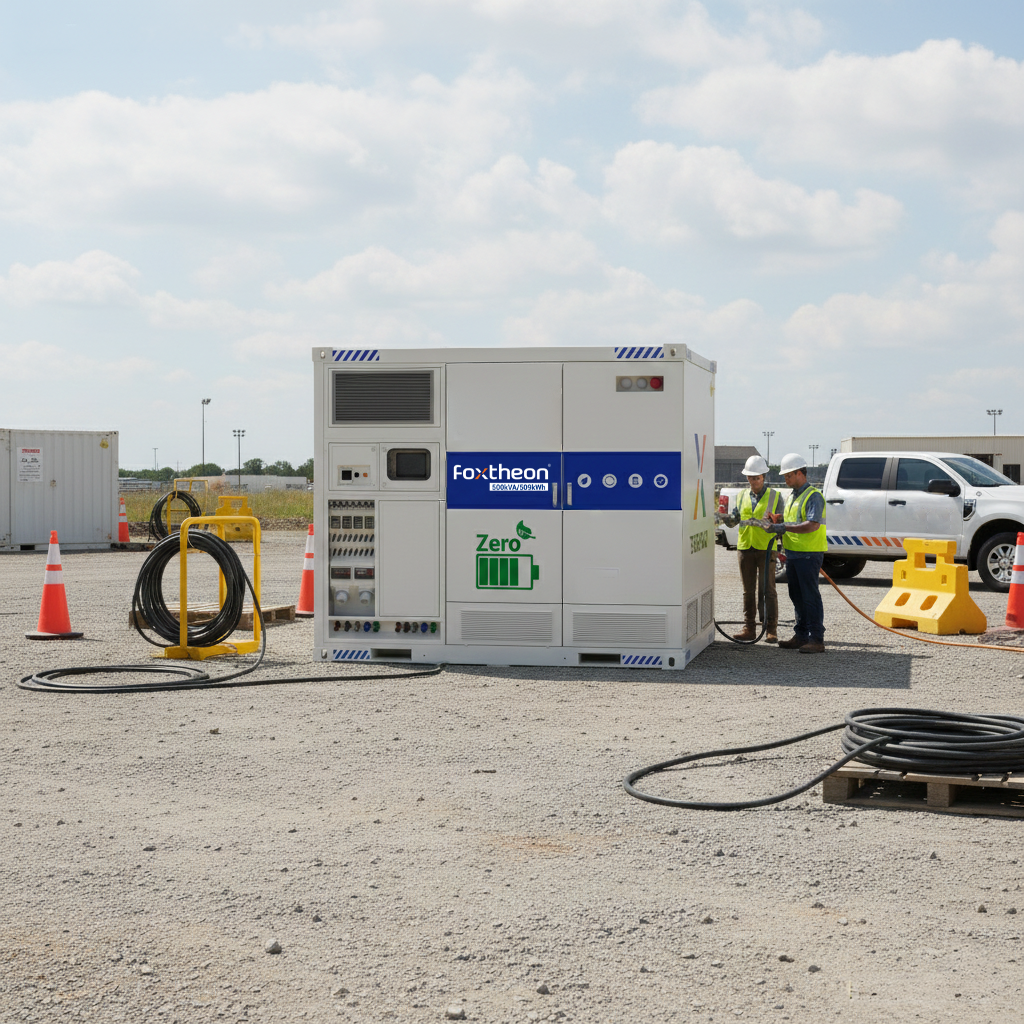
Frequently Asked Questions about Hybrid Energy Storage
Q1: How does a Hybrid BESS handle high starting currents compared to a traditional generator?
A: Unlike generators that have a mechanical delay when ramping up, a Hybrid BESS like the EnergyPack uses power electronics to deliver instantaneous energy. It acts as a “buffer,” providing the massive surge of current required to start heavy motors or cranes in milliseconds, preventing voltage drops and generator tripping.
Q2: Can a Hybrid BESS really reduce fuel consumption by over 50%?
A: Yes. Fuel savings are most significant in projects with high load fluctuations or long periods of low-load demand. By allowing the generator to shut down during low-load periods and ensuring it only runs at its most efficient peak, users typically see diesel savings between 30% and 55%.
Q3: Is it difficult to integrate the Foxtheon EnergyPack with my existing diesel generators?
A: Not at all. The EnergyPack is designed for “plug-and-play” integration. Our FoxMind Energy Management System (EMS) automatically synchronizes with most standard digital and analog generator controllers, managing the power flow between the battery, generator, and load without manual intervention.
Q4: What is the typical ROI (Return on Investment) for switching to a hybrid power system?
A: While it depends on local fuel costs and load profiles, most of our customers achieve ROI within 12 to 24 months. This is driven by three factors: reduced fuel spend, significantly lower maintenance frequency (due to fewer generator run hours), and the ability to rent/buy a smaller, cheaper generator.
Q5: How does the system perform in extreme weather conditions typical of mining or construction sites?
A: The EnergyPack series is built with industrial-grade housing and advanced thermal management systems. It is rated for wide temperature ranges and high-dust environments, ensuring the LFP battery cells remain stable and efficient even in harsh outdoor conditions.
Ready to stabilize your site power?
[Explore the Foxtheon EnergyPack Series] or [Request a Load Analysis for Your Project]