
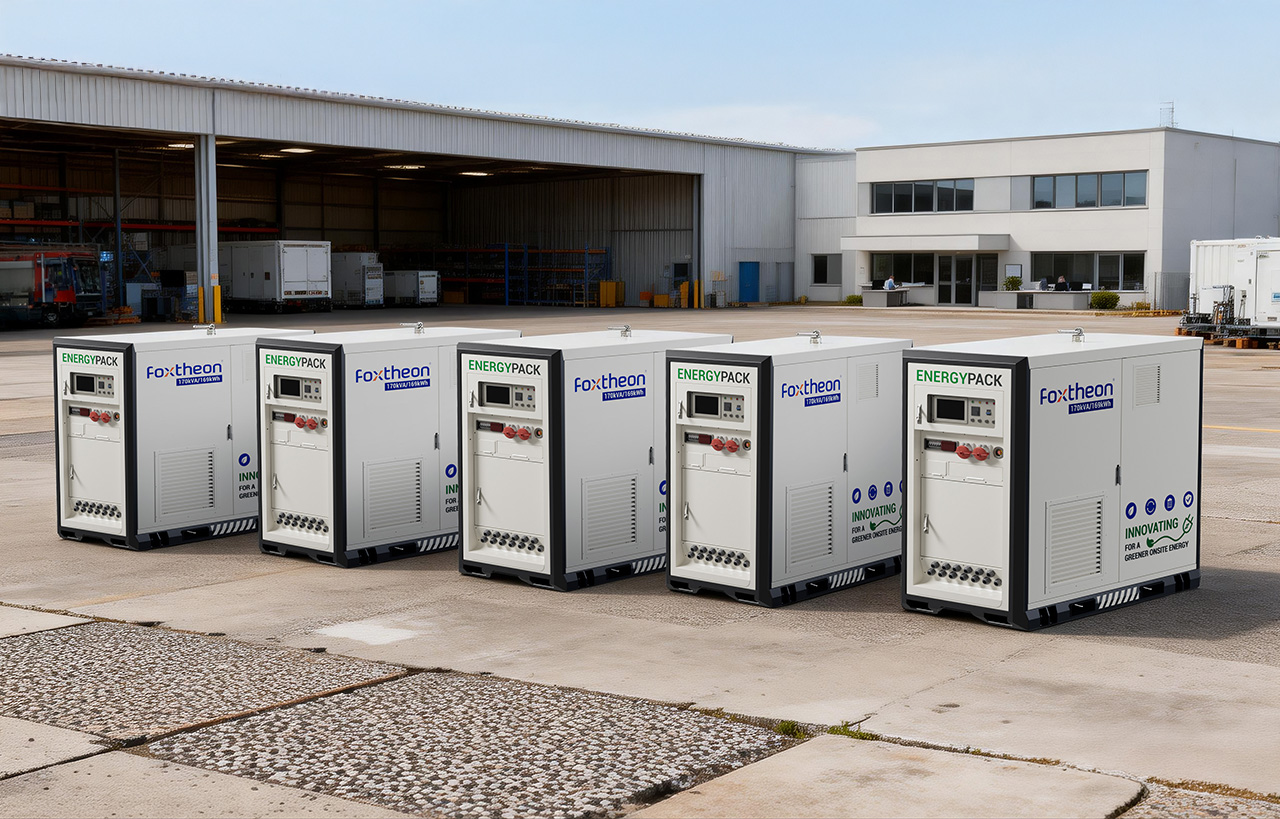
The global shift toward decarbonization and energy independence has accelerated demand for flexible, scalable storage solutions. Among these, the 10ft shipping container power station has emerged as a pivotal asset for industries requiring rapid deployment, robust performance, and seamless integration with renewable sources. Unlike traditional diesel gensets or larger containerized systems, the 10‑foot form factor strikes an optimal balance between transportability and energy capacity—typically housing 100–200 kWh of lithium‑ion batteries and a bi‑directional inverter. This article dissects the technology, applications, and economic rationale behind these units, with a focus on how Foxtheon is redefining reliability through its EnergyPack P150 series.
Technical Architecture: Inside a 10ft Shipping Container Power Station
A modern 10ft shipping container power station is far more than batteries in a box. It integrates multiple subsystems designed for safety, efficiency, and remote intelligence.
Core Components & Advanced Chemistry
- Battery cells & racks: Most systems now utilize Lithium Iron Phosphate (LFP) chemistry, prized for its thermal stability and cycle life (>6000 cycles at 80% depth of discharge). The 10‑foot envelope typically accommodates 4–6 battery racks, arranged with front‑access servicing.
- Power Conversion System (PCS): A 50–100 kW bi‑directional inverter handles grid‑tied and off‑grid operations. Modern PCS units feature silicon carbide (SiC) semiconductors for efficiency exceeding 97.5% and sub‑10ms transfer times during grid outages.
- Battery Management System (BMS) & Energy Management System (EMS): Multi‑layer safety includes cell‑level voltage/temperature monitoring, passive/active balancing, and predictive analytics. The EMS orchestrates charging/discharging based on tariff signals, load forecasts, or renewable generation.
- Thermal management: Given the compact footprint, liquid cooling or advanced forced‑air systems maintain cells within optimal range (15–35°C). Some units incorporate heat pumps for extreme climates.
- Enclosure & safety: IP54 or NEMA 3R rating protects against dust and water ingress, while integrated fire suppression (aerosol or clean agent) and arc‑fault detection meet UL 9540 and IEC 62619 standards.
Modularity and Scalability
One key advantage of the 10‑foot platform is its ability to act as a building block. Multiple units can be paralleled via AC or DC coupling to scale up to megawatt‑hour capacities—ideal for temporary high‑demand events or incremental capacity additions. This modularity reduces upfront capital expenditure and allows “right‑sizing” for specific loads.
Why 10 Feet? The Logistics & Economic Advantage
The external dimensions of a 10 ft ISO container (approx. 3.0m L x 2.4m W x 2.6m H) enable transport via standard flatbed trucks, rail, or even intermodal container ships. Compared to 20 ft or 40 ft siblings, the 10 ft variant offers:
- Rapid deployment: One flatbed can deliver the unit directly to a construction site, mining camp, or event venue without special permits in many regions.
- Lower site preparation costs: Smaller footprint means minimal concrete or grading; often only a compacted gravel base is needed.
- Flexible siting: It fits in urban alleys, rooftops (with structural assessment), or inside warehouses for behind‑the‑meter applications.
Critical Applications Across Industries
The versatility of a 10ft shipping container power station makes it a solution for diverse sectors. Below are three high‑impact use cases with real‑world metrics.
Construction & Infrastructure
Temporary power for tunneling, high‑rise erection, or bridge building often relies on diesel generators that run 24/7, incurring fuel costs of $0.30–$0.50 per kWh and generating noise complaints. A containerized battery unit can be paired with a small solar array or grid feed to perform peak shaving and reduce generator runtime by up to 80%. For example, a 120 kWh / 60 kW unit can power tower cranes, lighting, and site offices overnight without a generator.
Event & Entertainment
Outdoor festivals, film sets, and sporting events demand clean, silent power. Diesel generators disrupt acoustics and require refueling logistics. A 10 ft power station with 150 kWh capacity can run sound systems, catering, and LED lighting for a 12‑hour festival day—recharged overnight from a reduced generator or grid connection.
Mining & Remote Operations
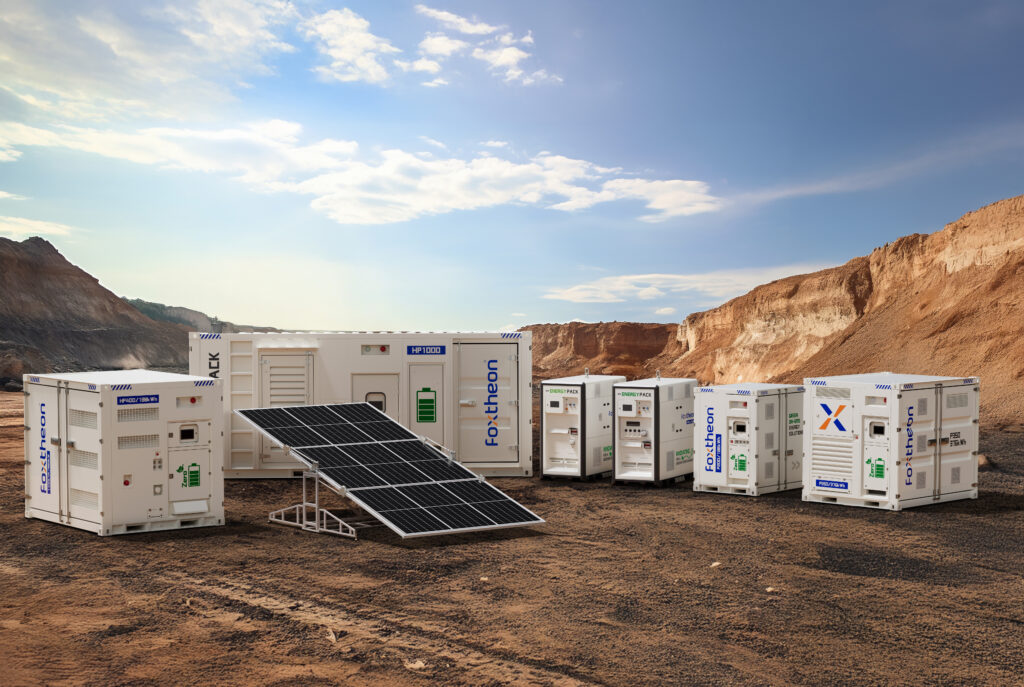
Off‑grid mines often use heavy fuel oil for power, with high emissions and transport costs. Integrating a 10 ft battery energy storage system (BESS) with existing diesel gensets enables “genset‑optimized” operation: batteries handle load spikes, allowing gensets to run at optimal efficiency and reducing maintenance intervals. Some mines in Australia have reported fuel savings of 15–20% after deploying such hybrid solutions.
Data Centers & Critical Infrastructure
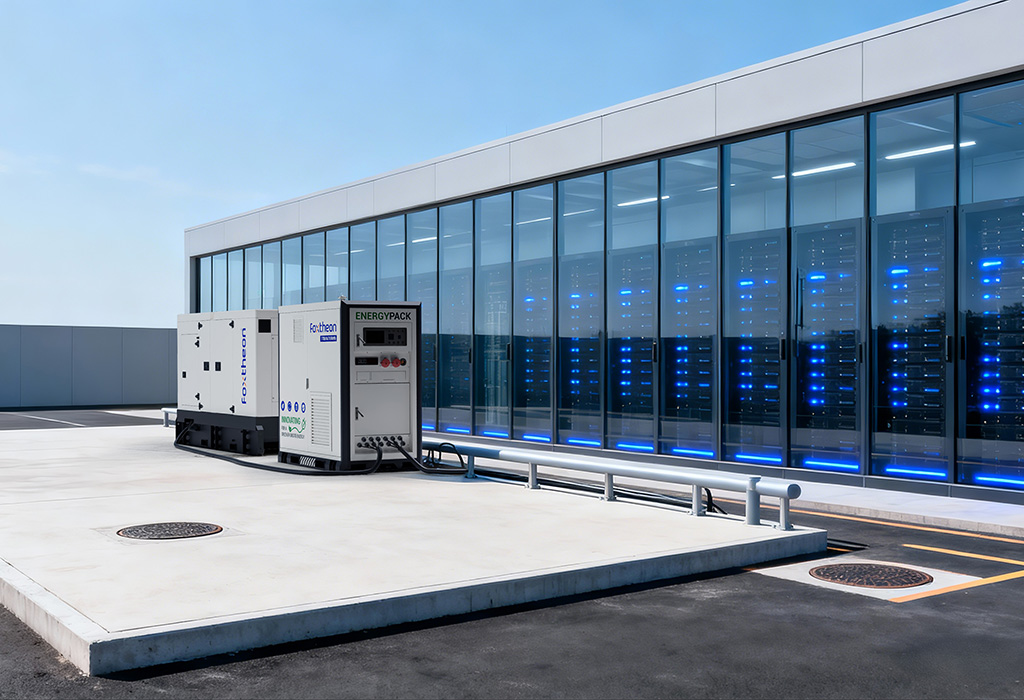
Edge computing sites and 5G hubs require backup power with instant response. A 10 ft container power station can provide N+1 redundancy, bridging the gap between grid failure and standby generator start‑up, while also participating in demand response programs.
Addressing Industry Pain Points with Foxtheon’s Engineering
Despite the promise of containerized storage, buyers face challenges: safety concerns, complex integration, and uncertain ROI. Foxtheon has tackled these head‑on with its EnergyPack P150, a fully integrated 10ft shipping container power station designed for harsh environments and high‑cyclical applications.
Enhanced Safety & Compliance
Foxtheon’s P150 series incorporates multi‑level fire mitigation: ceramic fiber insulation between racks, early‑warning gas sensors, and a three‑stage suppression system (aerosol + water mist). It is certified to UL 9540A, ensuring that thermal runaway propagation is contained within a single rack. This level of safety is crucial for installations near personnel or sensitive equipment.
Digital Intelligence for Optimized ROI
The built‑in EMS leverages machine learning to predict load profiles and optimize dispatch. Users access a cloud dashboard showing real‑time state of charge, revenue from grid services (frequency regulation, demand response), and predictive maintenance alerts. Foxtheon’s remote firmware updates ensure the system evolves with market rules.
Rapid Deployment & Scalability
Each EnergyPack P150 arrives pre‑commissioned from the factory; on‑site connection takes less than two hours. For larger projects, up to ten units can be paralleled via a common AC bus, forming a 1.5 MWh / 600 kW virtual power plant. This plug‑and‑play scalability is unmatched by traditional construction.
Technical Specifications Snapshot (Foxtheon EnergyPack P150)
To ground the discussion in data, here are representative specs for a modern 10‑foot containerized unit:
- Usable energy: 150 kWh (LFP, 6000 cycles)
- Rated power: 75 kW continuous, 112 kW peak (10 sec)
- AC output: 480V / 400V / 208V 3‑phase, 60/50 Hz
- Round‑trip efficiency: 88% (AC‑to‑AC)
- Operating temperature: -20°C to 50°C (with thermal management)
- Weight: ~4,500 kg
- Communication: Modbus TCP, IEC 61850, cloud API
Market Trends and Future Outlook
The global containerized energy storage market is projected to grow at a CAGR of 12.5% through 2030, driven by electrification of remote assets and grid instability. The 10‑foot segment will benefit from two trends:
- Second‑life batteries: Repurposed EV batteries are increasingly used in stationary storage; the modular 10‑foot container is ideal for re‑racking cells with different states of health.
- Hydrogen hybrid systems: Some manufacturers are pairing 10‑foot batteries with fuel cells for extended autonomy, creating zero‑emission power sources for weeks.
As an early mover, Foxtheon is already exploring solid‑state battery integration and V2G (vehicle‑to‑grid) capabilities within the 10‑foot form factor.
The 10ft shipping container power station is not merely a smaller version of its larger cousins—it is a purpose‑built tool for the energy‑agile world. Whether shaving peaks at a factory, powering a remote village, or ensuring grid stability during a natural disaster, its combination of portability, intelligence, and robustness solves real problems. With industry leaders like Foxtheon pushing the boundaries of safety and software, these compact power plants will become ubiquitous in the coming decade.
Frequently Asked Questions (FAQ)
Q1: What is the typical capacity range of a 10ft shipping container power station?
A1: Most units offer between 100 kWh and 200 kWh of usable energy, with power ratings from 50 kW to 100 kW. The Foxtheon EnergyPack P150, for example, provides 150 kWh and 75 kW continuous output, suitable for a wide range of commercial and industrial loads.
Q2: How fast can a 10ft container power station be deployed on site?
A2: Thanks to factory integration and pre‑commissioning, a unit can be operational within two to four hours of delivery—only requiring electrical connection by a certified electrician and, if needed, minimal site leveling.
Q3: Can it be integrated with solar panels or wind turbines?
A3: Yes. Modern container power stations feature bidirectional inverters that accept DC from solar arrays or AC from wind turbines. The EMS can manage hybrid charging, store excess renewable energy, and discharge when generation drops.
Q4: What maintenance does a containerized BESS require?
A4: Maintenance is minimal compared to diesel generators. Annual checks include cleaning air filters, torque checks on electrical connections, and remote diagnostic reviews. Battery cells typically need no maintenance for 10+ years under normal cycling.
Q5: How does Foxtheon ensure the safety of its 10ft shipping container power station?
A5: Foxtheon’s design adheres to UL 9540A, with cell‑level fusing, thermal barriers, and a multi‑stage fire suppression system (aerosol and water mist). Additionally, the EMS continuously monitors for anomalies and can automatically isolate faulty modules.
Q6: Can multiple 10ft units be combined for larger projects?
A6: Absolutely. They can be paralleled either in AC (via a common switchgear) or in DC (using a centralized inverter) to scale up to several megawatt‑hours, offering a modular path to large‑scale storage without custom engineering.
Q7: What is the expected lifespan of such a system?
A7: With LFP batteries, a 10ft shipping container power station typically lasts 15–20 years, depending on cycling frequency. Foxtheon offers performance warranties guaranteeing 80% retained capacity after 10 years or 6,000 cycles.
For more detailed technical consultations or project‑specific sizing, visit Foxtheon and explore the 10ft shipping container power station product page.