
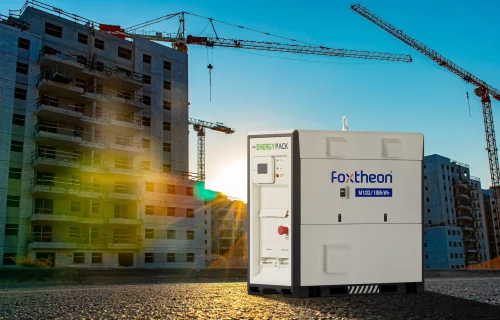
For factory managers and industrial facility operators, the conversation around battery storage is rapidly shifting. It’s no longer just about keeping the lights on during an outage. Today, an industrial BESS (Battery Energy Storage System) is a multi-functional asset that directly tackles operational costs, energy security, and sustainability goals.
Think of it as a strategic energy manager on your site. It stores electricity when it’s cheap or plentiful and delivers it precisely when and where it’s needed most. This capability is transforming how energy-intensive businesses operate.
Companies like Foxtheon are at the forefront, designing integrated industrial energy storage solutions that are built for the harsh, demanding environments of manufacturing plants and industrial parks.
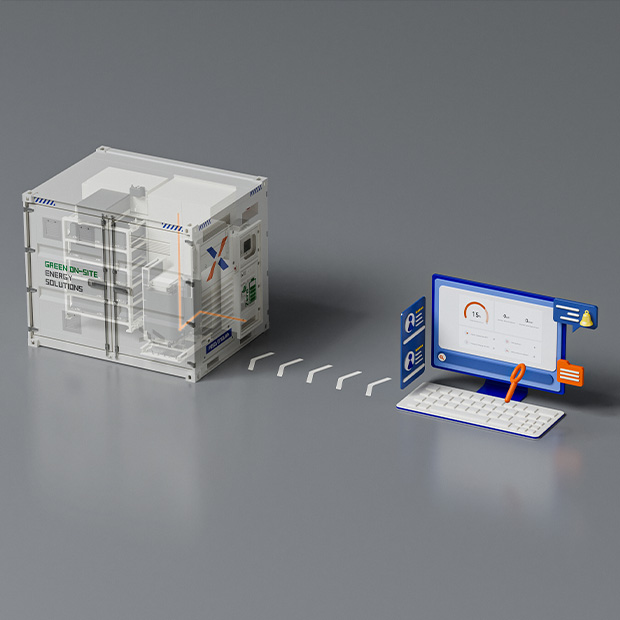
What Exactly is an Industrial BESS? More Than Just Big Batteries
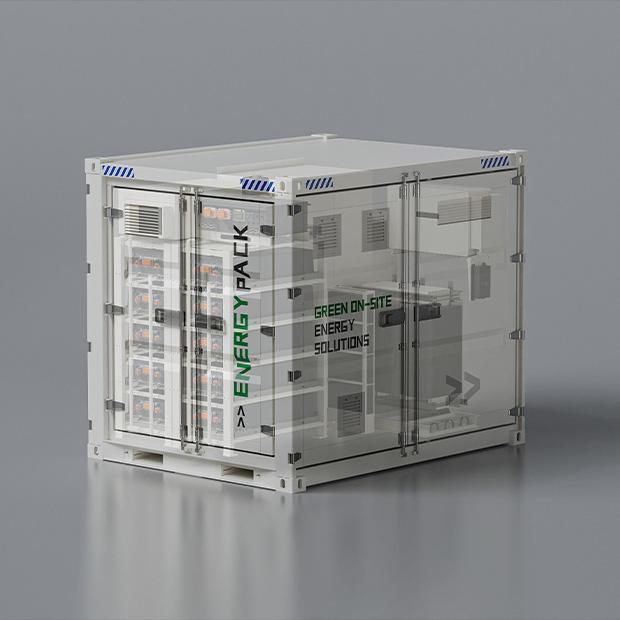
An industrial BESS is a large-scale, containerized or modular system comprising several key components:
Battery Racks: Hundreds to thousands of individual battery cells, typically Lithium Iron Phosphate (LFP) for safety and longevity.
Power Conversion System (PCS): Inverters and converters that manage AC/DC electricity flow.
Energy Management System (EMS): The brain of the operation. This software controls when to charge and discharge based on algorithms, cost signals, or grid needs.
Thermal Management: A critical cooling/heating system to keep batteries at optimal temperature.
Safety & Monitoring: Comprehensive systems for fire suppression, gas detection, and 24/7 performance monitoring.
Unlike a residential unit, an industrial battery storage system is engineered for thousands of deep charge/discharge cycles, high power throughput, and seamless integration with heavy electrical infrastructure.
Industrial BESS vs. Traditional Alternatives: A Pragmatic Comparison
When considering energy management, it’s helpful to see where an industrial BESS fits alongside other options.
vs. Diesel Generators
Generators are a known quantity for backup. However, they are idle assets 99% of the time, expensive to run, polluting, and require constant maintenance. An industrial BESS provides silent, instant power for short-duration outages and, crucially, delivers daily financial benefits through energy arbitrage and peak shaving, offering a real ROI.
vs. Grid Power Alone
Relying solely on the grid means exposure to volatile time-of-use rates, crippling demand charges, and increasing instability. A BESS for factories acts as a buffer, insulating your operation from these external price shocks and reliability issues.
vs. Solar PV Without Storage
Solar panels reduce your energy consumption (kWh) bill. But without storage, you can’t control when you use that solar power. An industrial BESS captures excess solar generation for use in the evening or on cloudy days, maximizing self-consumption and significantly improving the economics of your solar investment.
The 5 Key Applications Driving Adoption Today
The real value of an industrial BESS lies in its versatility. Here are the primary ways it delivers a return:
1. Peak Shaving (Demand Charge Management)
This is often the primary economic driver. Utilities charge industrial customers a premium based on their highest 15-minute power draw each month. The BESS discharges during these short peak periods, “shaving” the demand spike and slashing this portion of the bill, often by 20-40%.
2. Energy Arbitrage
The system automatically charges when electricity prices are low (e.g., at night) and discharges to power operations when prices are high. This simple “buy low, use high” strategy directly reduces energy supply costs.
3. Backup Power & Microgrid Support
For critical processes, even a 2-second outage can be catastrophic. An industrial BESS provides seamless, instantaneous backup power. When paired with solar or generators, it can form a resilient on-site microgrid, allowing sections of your facility to “island” from the main grid during extended outages.
4. Frequency Regulation & Grid Services
In many markets, grid operators pay for fast-responding resources to help balance supply and demand (frequency regulation). An industrial BESS can participate in these programs, generating a new revenue stream without affecting its primary site duties.
5. Renewable Energy Integration & Firming
For plants with significant wind or solar, the BESS smooths out the intermittent generation. It stores excess power and releases it during shortfalls, “firming” the renewable output and making it behave more like a predictable, dispatchable power plant.
Cost Considerations and the Path to a Strong ROI
The question of cost is central. The landscape for industrial BESS has improved dramatically.
Capital Cost Drivers: Total price depends on both power (kW) and energy (kWh) capacity. Costs are typically quoted per kWh and have fallen significantly. Balance-of-system components, installation complexity, and site-specific requirements also factor in.
Financing Models: You don’t always have to purchase outright. Third-party ownership, leasing, and Energy-as-a-Service (EaaS) models are common, where a provider like Foxtheon owns and maintains the system, and you pay a monthly service fee often lower than your projected savings.
Incentives are Crucial: Government incentives drastically improve economics. The U.S. Investment Tax Credit (ITC), for example, can cover 30-70% of project costs. Similar grants, tax breaks, or accelerated depreciation exist in the EU, UK, Australia, and other regions.
Calculating Payback: A detailed feasibility study is essential. Payback periods for a well-optimized industrial BESS now frequently fall between 3-7 years. After that, the savings go straight to the bottom line for the system’s 15-20 year lifespan.
Choosing a Supplier: What to Look For
Selecting the right partner is as important as selecting the right technology.
Proven Industrial Experience: Look for a portfolio of similar projects. An industrial BESS for a steel mill is different from one for a data center.
Technology-Agnostic Advice: The supplier should recommend the best battery chemistry and architecture for your specific goals, not just push a single product.
End-to-End Capability: Can they handle design, grid interconnection permits, installation, commissioning, and long-term O&M? This single-point accountability is invaluable.
Software Intelligence: The EMS is where the magic happens. Ensure it’s sophisticated, user-friendly, and capable of optimizing for all your applications (peak shaving, arbitrage, etc.) simultaneously.
Safety First Philosophy: Demand documentation on safety certifications (UL 9540, NFPA 855, IEC standards) and ask detailed questions about their system’s safety design.
A Technical Deep Dive: The Heart of a Reliable System
Understanding a few key technical aspects ensures you get a system built to last.
Why LFP Chemistry Dominates Industrial Storage
Lithium Iron Phosphate (LFP) batteries have become the standard for stationary industrial energy storage. They offer superior thermal and chemical stability (safer), a longer cycle life, and do not use cobalt, making them more ethically and economically sustainable.
The Non-Negotiable: Thermal Management
Industrial facilities can be hot. A battery’s performance, lifespan, and safety are tied to its operating temperature. Advanced liquid cooling systems are now common in industrial BESS designs, maintaining a tight temperature range for maximum efficiency and longevity.
Grid-Forming Inverters: The New Frontier
Traditional “grid-following” inverters need the grid to operate. New “grid-forming” inverters allow the industrial BESS to create a stable voltage and frequency waveform on its own. This is a game-changer for building robust on-site microgrids that can operate completely independently.
An Investment in Operational Resilience and Efficiency
Implementing an industrial BESS is a strategic business decision, not just an engineering project. It directly addresses three core business challenges: reducing a major and volatile operating cost (energy), de-risking operations from grid instability, and meeting corporate carbon reduction targets.
As energy markets become more complex, the ability to control your power profile is a competitive advantage. Forward-thinking industrial operators are moving now to lock in savings and build resilience. Exploring a tailored solution with an experienced provider is the logical first step toward energy independence.
Frequently Asked Questions (FAQ)
Q1: How much physical space does an industrial-scale BESS require?
A1: It varies by capacity. A typical 1 MWh/500 kW containerized system might occupy an area similar to a 40-foot shipping container. Modular, cabinet-based systems can be integrated into existing utility yards or buildings. A site assessment will determine the optimal layout.
Q2: What is the typical lifespan, and what happens to the batteries afterward?
A2: A well-maintained industrial BESS is designed for a 15-20 year operational life. The batteries themselves may degrade to 60-80% of original capacity after 10-15 years. Reputable suppliers plan for this with recycling partnerships or “second-life” repurposing programs for used batteries in less demanding applications.
Q3: Can we expand the system later if our needs grow?
A3: Modularity is key. A well-designed system from a quality provider will allow for capacity expansion by adding more battery racks or entire new units. Discuss future scalability during the initial design phase to avoid costly re-engineering later.
Q4: How does the software prioritize between saving on demand charges vs. earning grid service revenue?
A4: A sophisticated Energy Management System (EMS) can be configured with a hierarchy of objectives. You might set it to prioritize peak shaving first (your biggest savings), then use remaining capacity for energy arbitrage or grid services. The software dynamically optimizes dispatch to maximize total economic value.
Q5: Are there ongoing operational costs?
A5: Yes, but they are relatively low. Costs include a regular service/maintenance contract (often 1-2% of CAPEX annually), ongoing software subscription/updates, and a small amount of electricity for system losses and cooling. These are factored into the overall ROI calculation.