
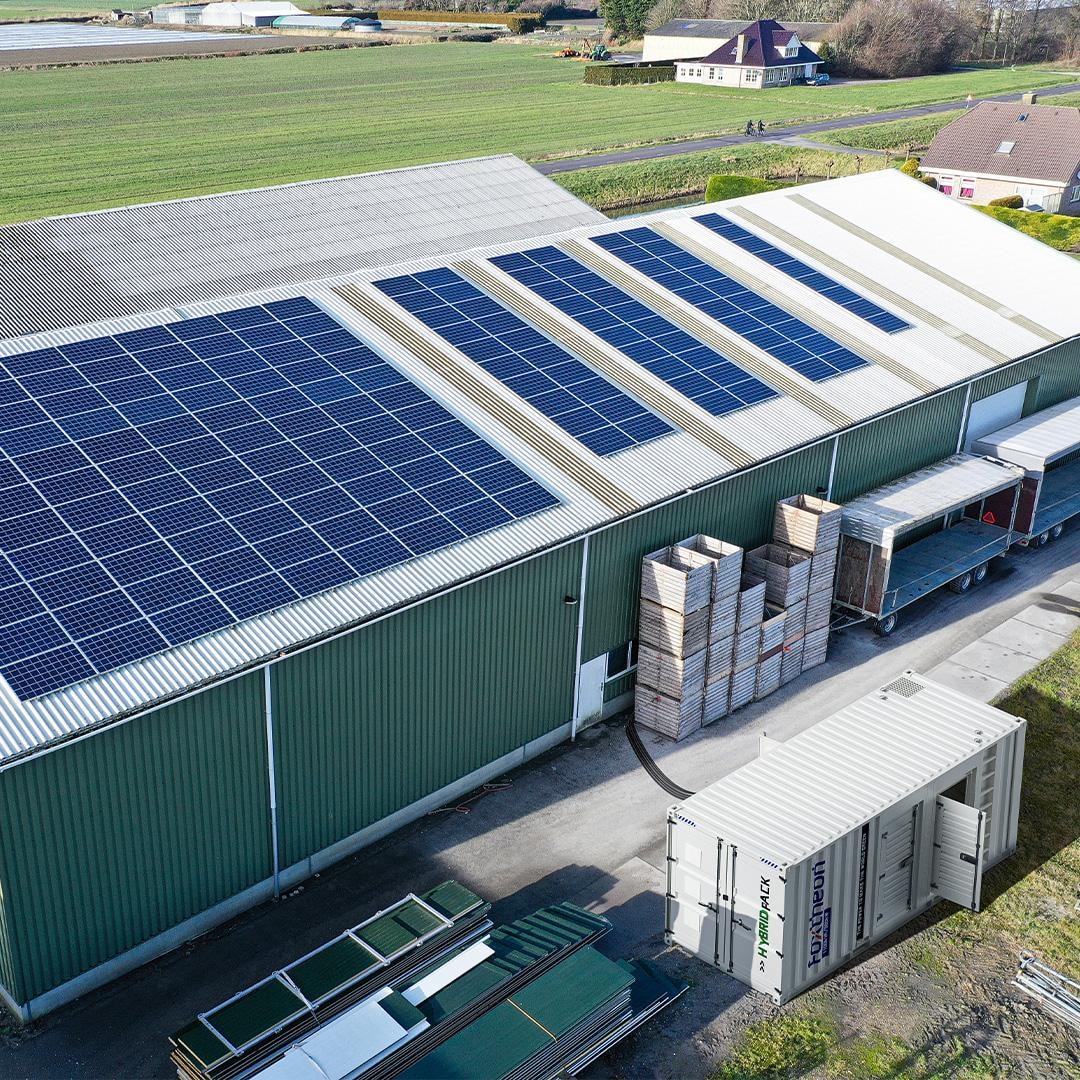
The quest for energy independence and resilience is reshaping how we power communities, campuses, and industrial facilities. Microgrids stand at the forefront of this shift. But as they evolve, a critical question emerges: is a single-technology battery system enough?
For truly robust, efficient, and future-proof microgrids, the answer increasingly points to a hybrid BESS for microgrid solutions. This approach goes beyond a standard battery by intelligently integrating two or more storage technologies, typically pairing lithium-ion batteries with ultra-long-duration storage like flow batteries or even advanced lead-acid.
This article breaks down the five compelling advantages of this integrated approach and why it represents the next logical step for sophisticated microgrid operators.
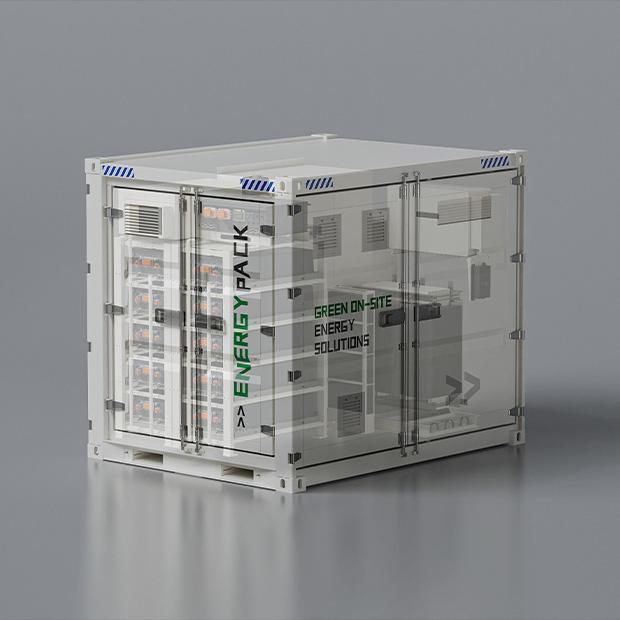
What is a Hybrid BESS for Microgrid Applications?
Let’s clarify the term. A hybrid BESS for microgrid configurations does not simply combine solar and battery—that’s a standard hybrid renewable system.
Instead, it refers to an Energy Storage System (ESS) that combines different storage technologies within a single, unified platform. The most common pairing is Lithium-ion (Li-ion) with another chemistry, each managed by a sophisticated control system to perform distinct, complementary roles.
The core idea is to leverage the unique strengths of each technology to overcome the limitations of using either one alone.
Benefit 1: Optimized Performance for Both Power and Energy
This is the fundamental driver. Different storage technologies have different natural strengths.
The High-Power Role: Lithium-Ion Batteries
Li-ion batteries excel at providing high power in short, intense bursts. In a hybrid BESS for microgrid setup, they are perfectly tasked with:
Frequency Regulation: Stabilizing the grid within milliseconds.
Ramp Rate Control: Smoothing out sudden spikes or drops from solar or wind generation.
Providing Grid-Forming Inertia: Acting as the voltage and frequency backbone for an islanded microgrid.
Meeting Short-Duration Peak Loads.
The High-Energy Role: Flow Batteries or Alternative Chemistries
Technologies like Vanadium Redox Flow Batteries (VRFBs) are designed for long-duration storage with minimal degradation. Their role is:
Long-Duration Energy Shifting: Storing excess solar from midday for use throughout the entire night.
Seasonal or Multi-Day Backup: Providing power through extended cloudy periods or grid outages.
Bulk Energy Management: Acting as the microgrid’s “fuel tank” for base load needs.
By pairing them, you get a system that can handle both the instantaneous 5-second power crisis and the 10-hour energy drought.
Benefit 2: Enhanced System Lifespan and Reduced Degradation
Li-ion batteries degrade with both cycle count and depth of discharge (DoD). Constantly using them for long-duration, deep-cycle duties shortens their operational life.
A hybrid BESS for microgrid operations uses its intelligent controller to protect the Li-ion batteries. It strategically dispatches the long-duration storage for the deep, slow cycles, reserving the Li-ion for high-power, shallow-depth events.
This “stress reduction” can significantly extend the life of the more cycle-sensitive Li-ion components, improving the overall system’s economics and reducing lifetime replacement costs.
Benefit 3: Improved Economics and Levelized Cost of Storage (LCOS)
While the upfront capital cost of a hybrid system may be higher, its total lifetime value often wins out. This is measured by the Levelized Cost of Storage (LCOS).
The hybrid model improves LCOS by:
Matching Technology to Value Stream: Using cheaper-per-kWh long-duration storage for bulk energy arbitrage.
Extending Asset Life: As mentioned, preserving the Li-ion batteries.
Unlocking More Revenue: A system capable of providing both fast-frequency response and long-duration shifting can participate in more grid service markets simultaneously.
For a commercial or industrial microgrid, this means a faster payback period and stronger long-term ROI.
Benefit 4: Greater Design Flexibility and Scalability
Every microgrid site is unique. A one-size-fits-all storage solution can lead to over-engineering for some functions and under-performance for others.
A hybrid BESS for microgrid design offers engineers and developers a toolkit. They can size the power (kW) component (Li-ion) independently from the energy (kWh) component (flow battery) to precisely match the site’s load profile, renewable generation mix, and resilience goals.
This modularity also simplifies future expansion. Energy duration can be scaled up relatively easily with additional flow battery tanks, without necessarily needing to overhaul the entire power conversion system.
Benefit 5: Increased Resilience and Risk Mitigation
Reliability is non-negotiable for mission-critical microgrids. A hybrid approach diversifies technology risk.
If a software issue or a needed maintenance procedure temporarily affects one storage subsystem, the other can often continue to provide essential services. This built-in redundancy is a powerful feature for hospitals, data centers, or military bases.
Furthermore, using non-flammable, thermally stable technologies like flow batteries for the bulk storage can enhance overall system safety—a key consideration for system integrators and operators like Foxtheon, who prioritize robust and safe energy solutions.
Implementation and Control: The Intelligence Behind the Hardware
The benefits of a hybrid BESS for microgrid projects are only realized with a master-level control system. A simple, rules-based controller won’t suffice.
It requires an advanced Energy Management System (EMS) with:
Predictive Analytics: Using weather and load forecasts to optimally schedule which storage asset to use and when.
Real-Time Optimization: Dynamically dispatching assets based on actual grid conditions and value signals.
Seamless Technology Integration: A unified interface that manages the distinct charge/discharge profiles and communication protocols of the different technologies as one cohesive asset.
Is a Hybrid BESS Right for Your Microgrid?
Consider a hybrid approach if your microgrid project faces:
A need for both short-term grid stability and long-duration backup (4+ hours).
High daily cycling requirements that could stress a Li-ion-only system.
A desire to maximize participation in diverse revenue streams.
Mission-critical resilience requirements that benefit from technology diversity.
Ample space for the footprint of a larger, multi-technology system.
Companies like Foxtheon are at the forefront of designing and integrating these complex systems. Their expertise lies in modeling site-specific needs to determine if a hybrid BESS for microgrid deployment offers the optimal balance of performance, longevity, and cost for a given application.
The Future is Integrated
As microgrids mature from pilot projects to primary power sources, the storage systems that support them must also evolve. The hybrid BESS for microgrid model represents a more nuanced, intelligent, and ultimately more capable path forward.
By moving beyond a single-battery mindset, operators can build microgrids that are not just resilient, but also economically superior and technically sustainable for decades to come.
Frequently Asked Questions (FAQ)
Q1: Isn’t a hybrid BESS just more expensive and complicated than a standard lithium-ion system?
A1: Initially, the capital cost can be higher. However, the total lifetime cost (Levelized Cost of Storage) is often lower. By assigning the right task to the right technology, you reduce wear on expensive Li-ion batteries and utilize cheaper-per-kWh storage for bulk energy. The complication is managed by a sophisticated EMS, which operators like Foxtheon handle during system integration, presenting a simple interface to the end-user.
Q2: What is the most common hybrid pairing for microgrids today?
A2: The most prevalent and commercially mature pairing is Lithium-ion with Vanadium Redox Flow Batteries (VRFBs). Li-ion provides high power and fast response, while VRFBs provide long-duration, deep-cycle energy storage with exceptional cycle life and inherent safety for bulk storage.
Q3: How much physical space does a hybrid BESS require compared to a Li-ion-only system?
A3: It typically requires a larger footprint. Flow battery tanks and supporting equipment take up more space per kWh of energy than dense Li-ion racks. However, the power conversion equipment might be similarly sized. A proper feasibility study will always assess space constraints. The trade-off is a system better suited for long-duration needs without degrading the power components.
Q4: Can a hybrid BESS still provide “grid-forming” capability for islanded operation?
A4: Absolutely. This is a key strength. The Li-ion component, with its fast-responding power electronics, is typically used to provide the essential grid-forming service—creating a stable voltage and frequency waveform for the islanded microgrid. The long-duration storage then acts as the bulk energy source feeding into that stable grid.
Q5: Who manages the warranty and maintenance for two different technologies in one system?
A5: This is a critical procurement question. The ideal scenario is to work with a single, turnkey system integrator or provider (like Foxtheon) who supplies the entire hybrid BESS for microgrid as an integrated solution under a single performance warranty and service agreement. They become the single point of contact, managing the relationships with the different technology vendors and ensuring the subsystems work harmoniously.