
If you manage an industrial park, you see the electric meter spin like a top during shift changes and production peaks. That spinning translates directly into a major cost center: peak demand charges. For many industrial operations, these charges can make up nearly half of the monthly electricity bill.
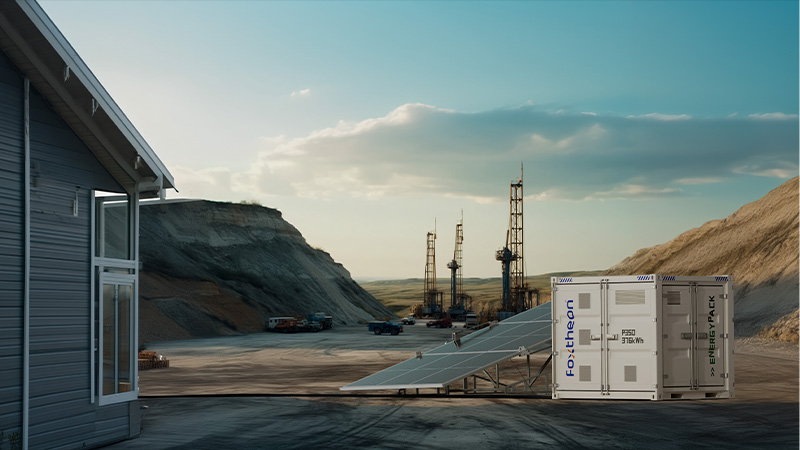
The strategic deployment of a BESS for peak shaving in industrial parks is no longer a futuristic concept. It’s a present-day financial and operational tool actively cutting costs and boosting resilience. This approach uses smart battery storage to flatten energy demand spikes.
Leading providers in the smart energy space, like Foxtheon, are making these systems more accessible and intelligent than ever for large-scale industrial applications.
The Core Problem: Why Peak Demand Charges Hurt Your Bottom Line
Utilities bill commercial and industrial customers for both energy used (kilowatt-hours) and power demanded (kilowatts). The demand charge is based on your single highest 15 or 30-minute average power draw each month.
Think of it like a delivery fee for the maximum capacity you needed from the grid. Even if that peak lasted only once, you pay for it all month.
A Battery Energy Storage System (BESS) acts as a buffer. It discharges power during these short, high-demand periods, “shaving” the peak drawn from the utility. This directly lowers the demand charge.
BESS vs. Traditional Peak Management: A Clear Comparison
Industrial managers have other tools, but BESS for peak shaving offers distinct advantages.
Compared to Diesel Generators
Generators provide backup power but are terrible for daily peak shaving. They are expensive to run, produce emissions and noise, and require significant maintenance. A BESS is silent, emissions-free, and has lower operational costs, providing both daily savings and backup.
Compared to Load Curtailment
Manually shutting down non-critical equipment (load shedding) disrupts operations and can impact productivity. An automated BESS for peak shaving works seamlessly in the background without affecting production schedules.
Compared to Solar PV Alone
Solar is excellent for reducing energy consumption. However, its generation profile often doesn’t align with an industrial park’s evening peak. A BESS stores excess solar or cheap nighttime energy precisely for that peak period, maximizing solar’s value.
Application Guide: Where BESS Fits in Your Industrial Park
Implementing a BESS for peak shaving unlocks multiple revenue streams and benefits.
1. Primary: Demand Charge Reduction
This is the core financial return. By consistently shaving 10-30% off your peak demand, the system pays for itself. The ROI is directly tied to your utility’s demand charge rates.
2. Enhanced Energy Resilience
Critical processes can’t afford a blackout. A BESS provides instantaneous backup power for essential loads, bridging gaps until generators start or grid power returns.
3. Energy Cost Arbitrage
Charge the batteries when wholesale electricity prices are low (e.g., at night) and use that stored energy during high-price daytime periods, further reducing energy supply costs.
4. Grid Services & Sustainability
In some markets, aggregated industrial BESS capacity can participate in grid-balancing programs for additional income. It also reduces your park’s carbon footprint by enabling more renewable use.
Navigating Cost, ROI, and Finding the Right Supplier
The economics of BESS for peak shaving in industrial parks are becoming increasingly favorable.
Understanding the Cost Structure
Costs are typically quoted in dollars per kilowatt-hour of storage capacity ($/kWh). Total project cost depends on system size, battery chemistry, and integration complexity. While an upfront capital expenditure, financing options like leases or Energy-as-a-Service (EaaS) models are widely available.
The ROI Timeline
Payback periods commonly range from 3 to 7 years. Factors include:
The severity of your demand charges.
Local electricity rate structures.
Available government incentives or tax credits (e.g., Investment Tax Credit in the U.S.).
The system’s ancillary service revenue potential.
How to Select a Supplier
Look for partners with:
Proven Track Record: Ask for case studies from similar industrial park energy storage projects.
Technology Agnosticism: They should recommend the best battery tech (like LFP) for your needs, not just what they sell.
Full-Service Capability: From design and financing to installation, software, and long-term maintenance.
Advanced Software: The brain of the system. The Energy Management System (EMS) must intelligently predict peaks and optimize dispatch.
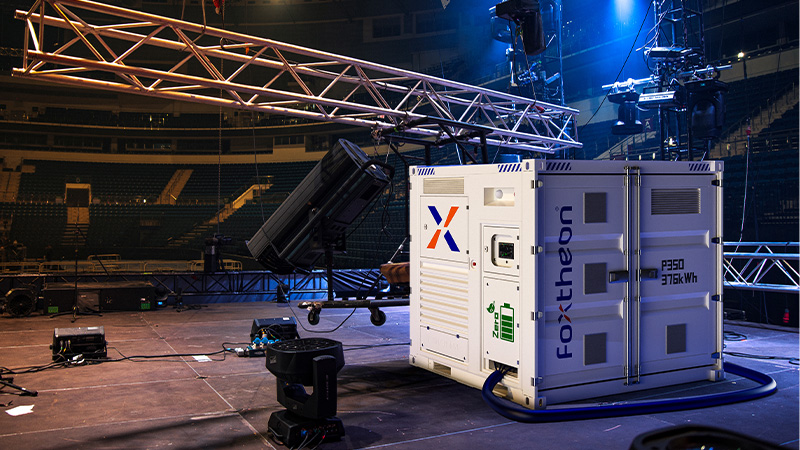
Companies like Foxtheon specialize in this end-to-end approach, ensuring the BESS for peak shaving is not just hardware but a tuned financial asset.
A Technical Look: What Makes an Industrial-Grade BESS
Durability and safety are non-negotiable in an industrial setting.
Battery Chemistry: The Rise of LFP
Lithium Iron Phosphate (LFP) batteries have become the preferred choice for stationary energy storage. They offer excellent thermal stability, long cycle life (often over 6,000 cycles), and avoid using cobalt, making them safer and often more cost-effective for industrial peak shaving.
The Critical Role of Thermal Management
Industrial parks can have harsh environments. A robust liquid or air-based thermal management system is essential to maintain optimal battery temperature, ensuring performance, safety, and longevity.
Grid-Forming Capabilities
Advanced inverters allow a BESS to “form” a grid. This means if the main grid goes down, the BESS can create a stable microgrid within the park to keep critical operations running smoothly.
Safety and Compliance
Any system must adhere to strict international standards like UL 9540 and NFPA 855. Look for designs with integrated fire suppression, gas venting, and comprehensive monitoring.
Viewing a BESS for peak shaving as merely an expense misses the point. It is a capital investment that generates a direct, predictable return on investment through lower utility bills. It simultaneously de-risks operations by providing backup power and supports corporate sustainability goals.
As electricity markets become more volatile and demand charges continue to rise, implementing a BESS for peak shaving in industrial parks moves from a smart option to a competitive necessity. Partnering with an experienced solutions provider is the first step to transforming your energy profile from a cost center into a managed asset.
Frequently Asked Questions (FAQ)
Q1: How do we determine the right size for a BESS in our industrial park?
A1: Sizing requires a detailed analysis of your historical interval meter data (usually 15-minute data). An energy engineer will identify your peak demand magnitude (kW) and duration (kWh) to model the optimal system size that maximizes savings without oversizing. Most providers, including Foxtheon, offer this analysis as a first step.
Q2: What maintenance does an industrial BESS require?
A2: Maintenance is relatively minimal compared to rotating machinery. It primarily involves regular visual inspections, checking thermal management systems, monitoring performance data via the software platform, and ensuring communication systems are active. The supplier typically provides a recommended service schedule.
Q3: Can the BESS be expanded later if our energy needs grow?
A3: Modular system design is key. A well-planned BESS for peak shaving should allow for capacity expansion by adding more battery racks or cabinets. Discuss future scalability with your supplier during the initial design phase.
Q4: How does the software control the BESS to ensure it saves the most money?
A4: Advanced EMS uses algorithms and sometimes machine learning. It analyzes your load patterns, weather forecasts, and electricity pricing signals. It then autonomously schedules charge/discharge cycles to target the highest likely demand peaks and the most expensive energy periods.
Q5: Are there safety risks with having a large battery system on-site?
A5: Modern industrial BESS are designed with safety as the top priority. Using stable chemistry like LFP, housed in purpose-built containers with fire-rated walls, continuous gas and temperature monitoring, and integrated fire suppression systems, the risks are managed to extremely low levels, compliant with all local fire codes.