

Electric grids operate within a narrow frequency band—typically 50 Hz or 60 Hz. When supply and demand fall out of sync, frequency deviates, risking equipment damage or blackouts. Traditionally, power plants ramped up or down to correct these imbalances, but that process is slow and inefficient. Today, BESS for frequency regulation offers a faster, cleaner alternative. Battery energy storage systems can inject or absorb power in milliseconds, stabilizing the grid with precision. Foxtheon integrates advanced battery storage into hybrid energy solutions, helping grid operators and commercial users maintain frequency without relying on fossil fuels. In this article, we explore five compelling reasons to adopt BESS for frequency regulation and how this technology is transforming modern power systems.
How BESS for Frequency Regulation Works
The Basics of Grid Frequency Control
Frequency regulation is the continuous balancing of electricity supply and demand. If demand exceeds supply, frequency drops; if supply exceeds demand, frequency rises. Grid operators manage this by dispatching resources that can quickly adjust their output. Traditional methods use gas or hydro turbines, but their response times are measured in seconds to minutes. BESS, by contrast, responds in milliseconds.
The Role of Battery Storage in Frequency Response
A BESS consists of lithium-ion or other advanced batteries connected to the grid via inverters. When frequency deviates, the system’s controller signals the battery to either charge (absorbing excess power) or discharge (supplying missing power). This immediate action arrests frequency excursions before they escalate. Foxtheon’s BESS solutions incorporate intelligent software that predicts grid needs and cycles the batteries optimally, prolonging their lifespan while delivering reliable frequency support.
Reason 1: Speed and Precision of BESS for Frequency Regulation
Sub-Second Response Times
No other grid asset can match the speed of batteries. While a conventional generator might take 30 seconds to ramp up, a BESS reacts in less than a second. This speed is critical for arresting sudden frequency drops caused by generator trips or rapid load changes. Faster response means less strain on the grid and lower risk of cascading failures.
Precision Control Without Overshoot
Battery systems provide precise amounts of power, avoiding the overshoot common with mechanical systems. For example, if the grid needs 2 MW of support, a BESS delivers exactly 2 MW. This accuracy reduces wear on other equipment and minimizes the need for additional balancing actions. Foxtheon‘s controllers use real-time data to fine-tune output, ensuring that BESS for frequency regulation operates with surgical precision.
Reason 2: Reduced Reliance on Fossil Fuels
Replacing Spinning Reserves
Utilities often keep gas or coal plants spinning at partial output to provide frequency regulation—a practice called “spinning reserve.” These plants burn fuel even when not needed, emitting CO₂ and incurring costs. BESS eliminates this waste. A battery can stand idle with zero emissions and deploy instantly when frequency deviates.
Enabling Higher Renewable Penetration
Solar and wind power are variable, which can make frequency regulation more challenging. However, BESS is uniquely suited to smooth out these fluctuations. By pairing renewables with storage, grid operators can integrate more clean energy without compromising stability. Foxtheon‘s hybrid systems often combine solar, storage, and sometimes backup generation, creating a balanced solution that supports both renewable goals and grid reliability.
Reason 3: Cost Savings Compared to Conventional Regulation
Lower Operation and Maintenance Costs
A battery has no moving parts, so its maintenance needs are minimal compared to a turbine. There are no fuel costs, no lubricants, and no major overhauls. Over the life of the system, these savings add up significantly. Even accounting for battery degradation, the levelized cost of frequency regulation with BESS is often lower than with traditional plants.
Revenue Opportunities in Ancillary Service Markets
In many deregulated electricity markets, frequency regulation is compensated through ancillary service payments. BESS owners can bid their capacity into these markets and earn revenue each time the battery responds to a grid signal. Because batteries respond faster and more accurately than conventional units, they often receive higher payments. Foxtheon helps clients analyze market rules and configure BESS to maximize these revenue streams.
Avoiding Grid Upgrades
By deploying BESS for frequency regulation at strategic locations, utilities can defer or avoid expensive infrastructure upgrades. For instance, placing batteries near load centers can relieve congestion on transmission lines while providing frequency support. This dual benefit makes BESS an attractive investment for grid planners.
Reason 4: Enhanced Grid Reliability and Resilience
Islanding and Black Start Capabilities
Some BESS installations can operate in island mode—disconnecting from the main grid and powering local loads independently. This feature is invaluable during extreme weather or grid outages. Additionally, certain systems provide black start capability, meaning they can restart a power plant without external power. Foxtheon designs BESS with these resilience features, ensuring that frequency regulation is just one part of a broader reliability strategy.
Mitigating Frequency Volatility
As grids incorporate more inverter-based resources like solar and wind, frequency volatility increases. These resources lack the inertia of traditional generators, making rapid frequency changes more common. BESS injects synthetic inertia, effectively mimicking the stabilizing effect of heavy rotating machines. This capability is becoming essential for modern grid operation.
Reason 5: Scalability and Modularity of BESS for Frequency Regulation
Easy Expansion to Meet Growing Needs
Battery systems are modular. You can start with a small installation and add more units as demand grows or budgets allow. This contrasts with building a new power plant, which requires massive upfront investment and years of construction. For frequency regulation, scalability means you can match capacity precisely to grid requirements without overbuilding.
Suitable for Various Applications
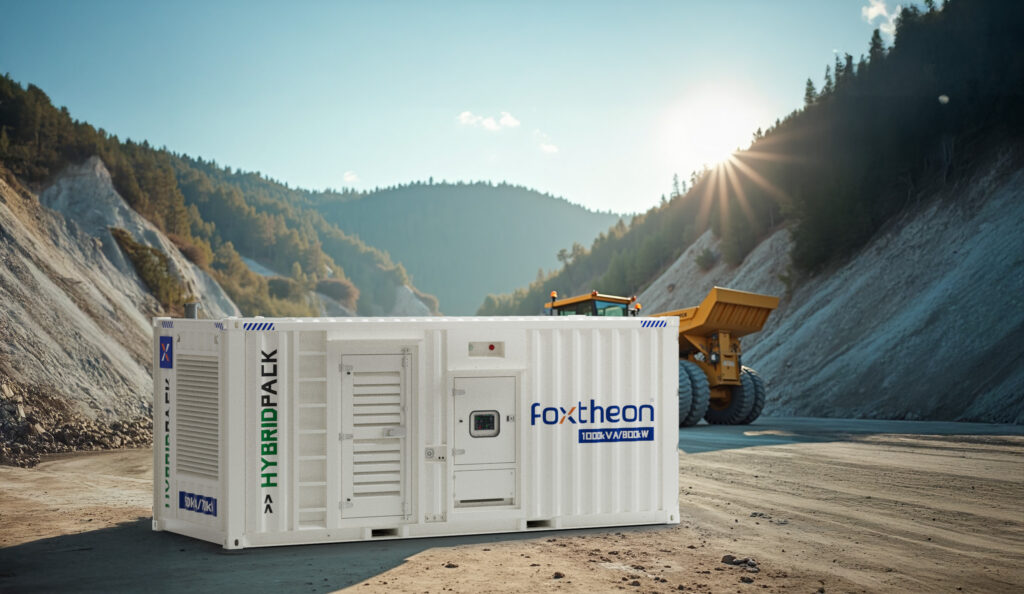
BESS for frequency regulation isn’t limited to utility-scale projects. Industrial facilities with on-site generation can use batteries to smooth their own power use and avoid penalties for causing frequency deviations. Microgrids in remote areas rely on BESS to maintain stable frequency when diesel generators are offline. Foxtheon offers BESS in multiple sizes, from containerized units for large sites to compact systems for commercial buildings.

The Business Case for BESS in Frequency Regulation
Payback Periods and ROI
The economics of BESS for frequency regulation depend on local market rules, battery costs, and available incentives. In regions with well-developed ancillary service markets, payback periods can be as short as four to six years. When combined with other revenue streams—such as energy arbitrage or demand charge reduction—the return on investment improves further. Foxtheon provides financial modeling to help clients understand the numbers before committing.
Policy and Regulatory Drivers
Governments worldwide are recognizing the value of fast frequency response. Some have introduced regulations requiring new generators to provide certain response times, or they have created market mechanisms that favor batteries. Staying informed about these policies is crucial, and Foxtheon’s consultants keep clients updated on opportunities that affect BESS for frequency regulation projects.
Technical Considerations for Implementing BESS
Sizing the System
Proper sizing is critical. Too small, and the BESS cannot arrest significant frequency events. Too large, and you waste capital. Engineers use historical grid data and simulation tools to determine the optimal capacity and power rating. Foxtheon‘s design process includes rigorous analysis to match the BESS to the specific frequency characteristics of the connection point.
Battery Chemistry and Cycle Life
Frequency regulation involves frequent charge/discharge cycles, which can accelerate battery degradation. Lithium iron phosphate (LFP) batteries are often preferred for this application due to their long cycle life and safety profile. Foxtheon selects battery chemistries based on the duty cycle, ensuring that the system lasts for the intended project duration without excessive capacity fade.
Integration with Existing Controls
A BESS must communicate seamlessly with grid operator systems or on-site energy management platforms. Standard protocols like IEC 61850 or Modbus TCP/IP are commonly used. Foxtheon’s integration team ensures that the BESS controller receives frequency signals accurately and responds without latency, maintaining compliance with grid codes.
Why BESS for Frequency Regulation Is a Smart Investment
Grid stability is non-negotiable, yet the tools to achieve it are evolving. Battery storage offers speed, precision, and cleanliness that traditional generators cannot match. By adopting BESS for frequency regulation, utilities, industrials, and project developers can enhance reliability, cut costs, and support renewable integration simultaneously. Foxtheon stands ready to deliver these benefits through customized BESS solutions that fit your technical and financial parameters. Whether you need a standalone frequency response unit or a hybrid system that also manages peak demand, Foxtheon’s expertise ensures you get the most from your investment. The future of grid balancing is fast, flexible, and battery-powered—and it’s already here.
BESS for Frequency Regulation Frequently Asked Questions
Q1: What is BESS for frequency regulation?
A1: BESS for frequency regulation refers to using battery energy storage systems to maintain grid frequency within its specified limits. The batteries respond to frequency deviations by charging or discharging instantly, helping balance supply and demand.
Q2: How does BESS compare to traditional frequency regulation methods?
A2: BESS responds in milliseconds, far faster than gas or hydro turbines. It also operates with zero emissions, requires less maintenance, and provides precise power adjustments without overshoot. These advantages make BESS more efficient and cost-effective in many cases.
Q3: Can BESS for frequency regulation generate revenue?
A3: Yes, in many electricity markets, frequency regulation is an ancillary service that pays providers. Because BESS offers fast and accurate response, it often qualifies for higher payment rates. Some projects also stack revenue from energy arbitrage or capacity markets.
Q4: How long does a BESS last when used for frequency regulation?
A4: The lifespan depends on the battery chemistry and the frequency of cycling. Lithium iron phosphate (LFP) batteries, commonly used for this application, can last 10 to 15 years with proper management. Foxtheon designs systems to optimize cycle life while meeting grid requirements.
Q5: Is BESS for frequency regulation suitable for commercial and industrial users?
A5: Absolutely. Large facilities with on-site generation or significant loads can benefit from BESS to avoid frequency-related penalties and improve power quality. Foxtheon offers scalable solutions for both utility and C&I applications.
Q6: Does Foxtheon provide BESS for frequency regulation projects?
A6: Yes, Foxtheon specializes in intelligent battery storage systems for grid support and other applications. Their solutions include advanced controls, remote monitoring, and flexible financing options to meet diverse client needs.