
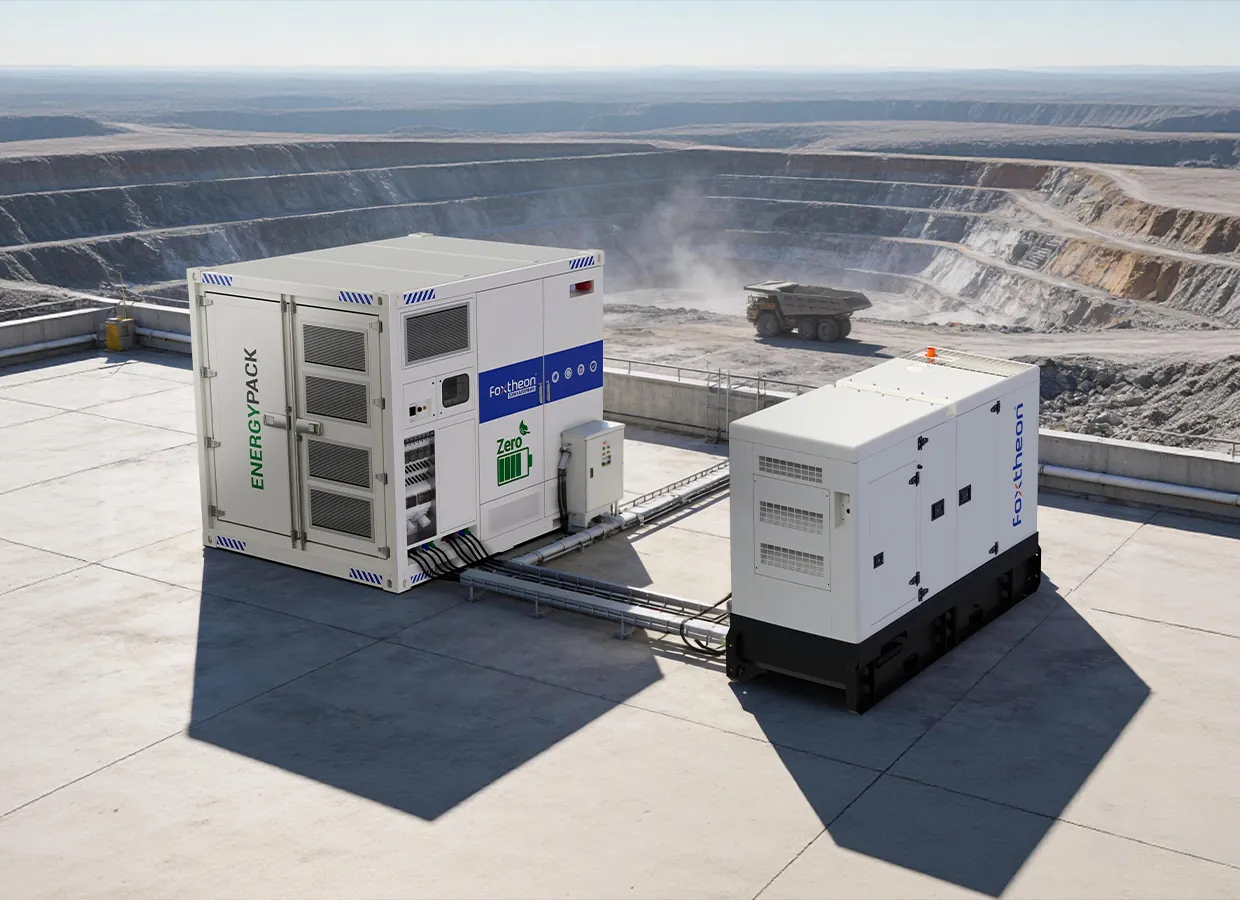
Starting heavy machinery requires a massive surge of power. If you operate industrial equipment, you know the lights might flicker, or breakers might trip when a large motor kicks in. This surge is called inrush current. Standard power supplies often struggle to cope with this sudden demand, leading to operational downtime and expensive peak demand charges from utility companies.
This is where a BESS for high inrush current becomes essential. Unlike standard storage systems designed for slow, steady discharge, these specialized units handle violent spikes in power demand. They act as a buffer, protecting your local grid and ensuring your heavy equipment starts smoothly every time.
Companies like Foxtheon have recognized this gap in the market. They design smart energy solutions specifically engineering to withstand these momentary but intense power loads. In this article, we will examine how these systems work, why they are necessary for modern industry, and how to choose the right one.
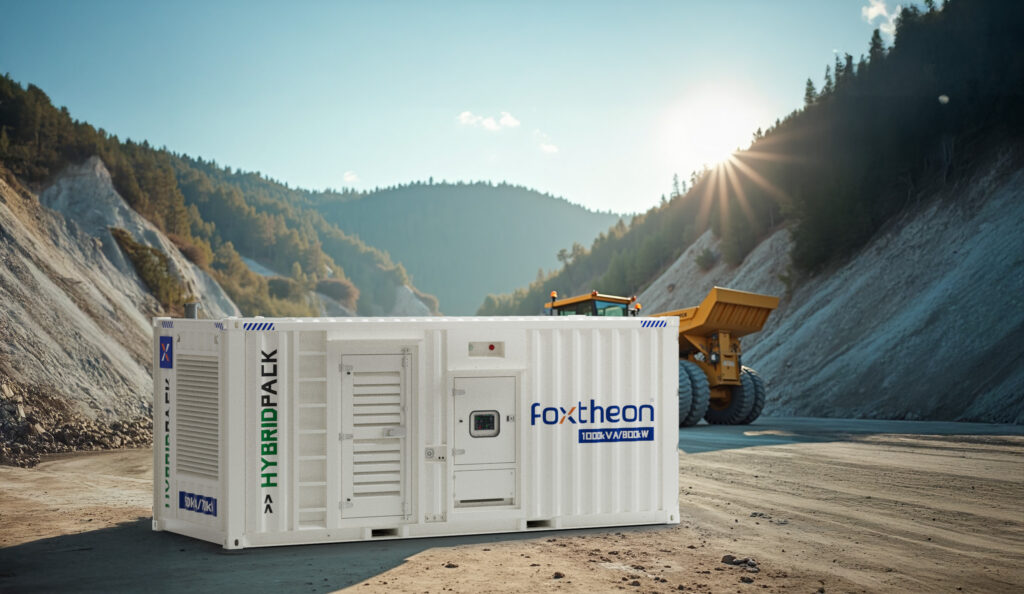
Understanding the Challenge of High Inrush Current
Inrush current is the instantaneous input current drawn by an electrical device when first turned on. For inductive loads like electric motors, transformers, and compressors, this surge can be 5 to 10 times the normal running current.
While this spike only lasts for a few seconds or even milliseconds, the impact on the power network is significant.
Why Standard Grids Struggle
Most local grids or diesel generators are sized for the continuous load, not the peak surge. When a crane or a large pump starts, the sudden draw causes a voltage dip.
This dip can cause:
Sensitive electronics to reset or fail.
Other running motors to stall.
Protection relays to trip, shutting down the entire site.
Implementing a BESS for high inrush current solves this physics problem. The battery system injects the necessary power instantly, smoothing out the curve and preventing the voltage from collapsing.
How a BESS for High Inrush Current Works
A Battery Energy Storage System (BESS) designed for these applications is different from a typical residential backup battery. It requires specific engineering in both the battery chemistry and the power conversion system (PCS).
The Critical Role of Inverter Overload Capacity
The battery cells store energy, but the inverter delivers it. For high inrush applications, the inverter is the choke point.
A standard inverter might shut down if the load exceeds 110% of its rating. However, a specialized inverter for inrush currents can often handle:
150% load for 60 seconds.
200% load for 3-5 seconds.
300% load for milliseconds.
This “surge capacity” allows the BESS for high inrush current to ride through the motor startup phase without disconnecting.
Battery Chemistry and Discharge Rates
The battery cells must also release energy quickly. This is often measured by the C-rate. A 1C battery empties in one hour. High-power applications often need 2C or 3C discharge rates for short bursts.
Lithium Iron Phosphate (LFP) is a common choice due to its thermal stability and high power density. Advanced systems effectively manage the thermal rise associated with these rapid discharges, ensuring safety and longevity.
5 Major Benefits of Deploying BESS for High Inrush Current
Investing in a robust storage system offers more than just technical reliability. It provides tangible financial and operational returns.
1. Elimination of Oversized Generators
Traditionally, if you had a 100kW running load but a 300kW starting spike, you had to buy a 300kW diesel generator. This meant running a massive generator at 30% capacity most of the time, which causes “wet stacking” and damages the engine.
A BESS handles the spike. You can now use a 100kW generator (or grid connection) for the baseline, while the battery covers the surge. This saves fuel and maintenance costs.
2. Reduction of Demand Charges
Utilities often charge industrial clients based on their highest power usage within a 15-minute window. A single motor start can spike this metric, ruining your electricity bill for the month.
A BESS for high inrush current engages during these peaks (peak shaving), keeping your draw from the grid flat and your bills low.
3. Voltage Stabilization
Voltage sags are the silent killers of industrial electronics. By providing immediate reactive power support, the BESS keeps voltage levels within a tight tolerance.
4. Seamless Off-Grid Operations
For construction sites or mines operating off-grid, stability is rare. A BESS acts as the grid-forming anchor. It allows renewable sources like solar to contribute without destabilizing the frequency when heavy loads turn on.
5. Increased Equipment Lifespan
Clean power means happy motors. By preventing voltage drops during startup, your motors run cooler and last longer.
Industries That Rely on High-Power BESS
Several sectors find this technology indispensable. The requirements here go beyond simple energy arbitrage; they need raw power availability.
Manufacturing and Heavy Industry
Factories with large conveyor belts, hydraulic presses, and injection molding machines create chaotic load profiles. A BESS for high inrush current smooths this chaos into a predictable load for the utility connection.
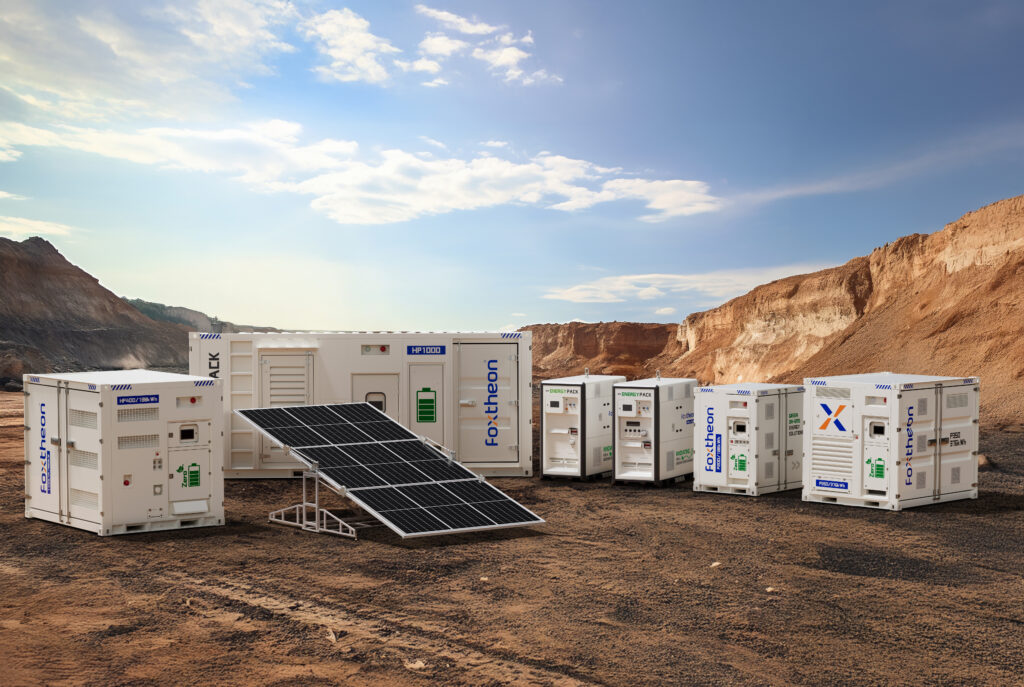
Foxtheon has developed specific configurations for these industrial environments. Their modular designs allow factories to scale their power capacity as they add more heavy machinery, ensuring the infrastructure keeps up with production goals.
Construction and Mining
Tower cranes and rock crushers are notorious for high inrush currents. Construction sites often rely on temporary power poles with limited amperage.
Without battery support, the lights on the job site dim every time the crane lifts a load. With a BESS, the site operates smoothly, and the generator fuel consumption drops drastically.
EV Charging Stations
Fast DC chargers are essentially massive loads that switch on instantly. A station with multiple chargers represents a significant inrush risk to the local grid. Batteries buffer this demand, allowing fast charging even in areas with weak grid connections.
Selecting the Right BESS for High Inrush Current
Choosing the correct system involves more than looking at the kWh (capacity). You must focus on the kW (power) and the surge duration.
Analyzing the Load Profile
You must log the current draw of your equipment at startup.
What is the peak amperage?
How long does the surge last (milliseconds vs. seconds)?
How frequently does the equipment start?
Hybrid Solutions
Some advanced BESS for high inrush current setups use a hybrid approach. They might combine standard lithium-ion batteries with supercapacitors.
Supercapacitors can discharge enormous amounts of energy instantly but hold very little total energy. They handle the initial millisecond spike, while the batteries take over for the subsequent seconds. This reduces stress on the battery cells.
Thermal Management
High current generates heat. The system you choose must have an active cooling system (liquid cooling is preferred over air cooling for high-power applications). This ensures the system does not derate or shut down due to overheating during repetitive motor starts.
Foxtheon: Engineering for the Surge
When discussing reliable energy storage for difficult loads, Foxtheon stands out as a pragmatic innovator. They do not just repackage standard solar batteries; they engineer systems capable of handling the rigors of industrial applications.
Their approach often involves:
High-Surge Inverters: Using industrial-grade components that tolerate momentary overloads.
Smart EMS (Energy Management Systems): Software that predicts load spikes and pre-charges capacitors or prepares the battery for immediate discharge.
Modular Architecture: Allowing users to parallel units to increase the total power output (kW) to match the inrush requirements of specific machinery.
By integrating a BESS for high inrush current from a specialized provider like Foxtheon, businesses secure their power quality and operational continuity.
Future Trends in High-Power Storage
As the world electrifies, the demand for high-power storage will only grow. We are seeing a shift toward “Grid-Interactive” systems. These BESS units don’t just protect the local site; they sell frequency regulation services to the national grid.
Because these batteries are already designed for rapid response (to handle inrush), they are perfectly suited for grid stabilization markets. This turns a sunk cost into a revenue stream.
Furthermore, advancements in solid-state batteries promise even higher discharge rates with lower fire risks, making them ideal for indoor industrial applications where safety is paramount.
Managing power quality is no longer just about keeping the lights on; it is about protecting expensive machinery and minimizing operational costs. A BESS for high inrush current is the most effective tool for mitigating the risks associated with starting heavy electric motors.
Whether you are running a remote mining camp, a construction site, or a manufacturing plant, the ability to absorb power surges protects your bottom line. It allows for smaller generators, lowers utility demand charges, and safeguards sensitive electronics.
Reliable manufacturers like Foxtheon continue to push the boundaries of what these systems can do, offering robust solutions that bridge the gap between weak grids and power-hungry machinery. By understanding your load profile and selecting a system with the right surge capacity, you ensure your operations run without interruption.
Frequently Asked Questions (FAQ)
Q1: What exactly is inrush current and why is it a problem?
A1: Inrush current is the momentary surge of electrical current that occurs when a device, typically a motor or transformer, is first turned on. It can be 5 to 10 times higher than the normal operating current. It is a problem because it causes voltage dips, trips circuit breakers, stresses electrical components, and can result in high demand charges from utility companies.
Q2: Can I use a standard solar battery as a BESS for high inrush current?
A2: Generally, no. Standard residential solar batteries are designed for “energy” (long duration, low power), not “power” (short duration, high surge). They typically cannot deliver the rapid burst of energy required to start heavy machinery without tripping their internal protection systems. You need a BESS specifically designed with high C-rate cells and high-surge inverters.
Q3: How does a BESS reduce the size of the generator needed?
A3: Without a BESS, a generator must be sized to handle the peak inrush current, meaning it is often 3 times larger than necessary for the running load. A BESS handles the momentary spike, allowing you to size the generator for the average running load. This results in a smaller generator, reduced fuel consumption, and better engine health.
Q4: Does Foxtheon offer solutions specifically for industrial motor starting?
A4: Yes, Foxtheon provides energy storage solutions engineered to handle high power loads and inrush currents. Their systems utilize advanced power conversion technologies and thermal management to ensure they can deliver the necessary surge power reliably in industrial environments like construction and mining.
Q5: How do I calculate the size of the BESS I need for my equipment?
A5: Sizing requires knowing the Locked Rotor Amps (LRA) or the inrush current multiplier of your motor, the duration of the startup phase, and the nominal voltage. You must ensure the BESS inverter’s “surge rating” exceeds the motor’s inrush current. It is best to consult with a BESS engineer who can analyze your specific load profile to recommend the correct power (kW) and energy (kWh) capacity.