
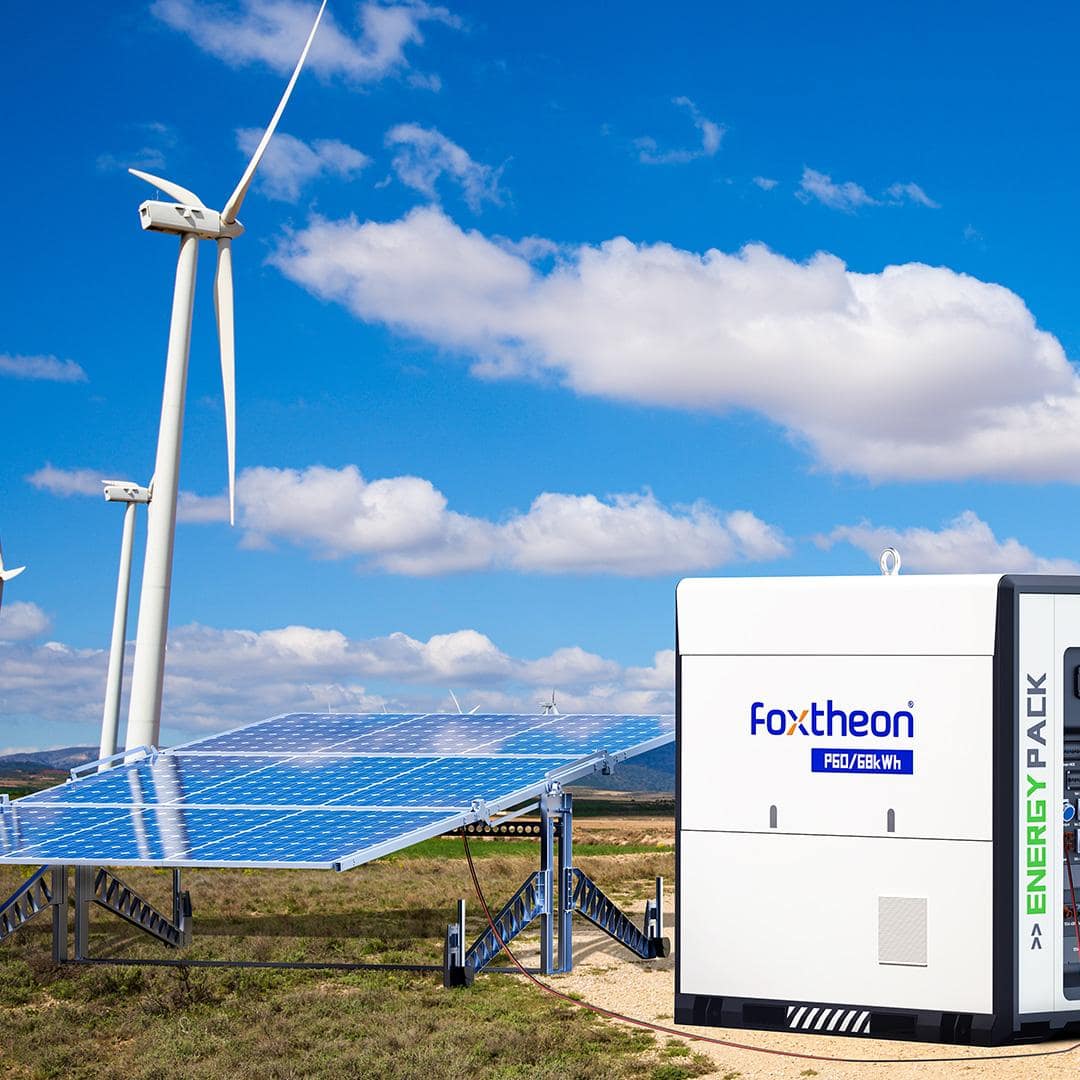
For decades, the temporary power industry relied on a single workhorse: the diesel generator. Whether for a construction site, a music festival, or emergency backup, the solution was always to rent a genset and order a fuel truck. However, the energy landscape has shifted. Rising fuel prices, stricter emissions regulations, and the maturity of battery technology have forced asset managers to rethink their power strategies.
The conversation has moved beyond environmental responsibility to hard economics. When analyzing the TCO of BESS vs diesel generator rental, project managers are finding that the sticker price of the rental is only the tip of the iceberg. The real costs lie in the daily operations.
Industry players, including innovators like Foxtheon, are demonstrating that while battery systems are advanced technology, their primary value proposition is often financial. Understanding the Total Cost of Ownership (TCO) requires looking at seven specific areas where money is either saved or burned.
1. The Fuel Cost Disparity
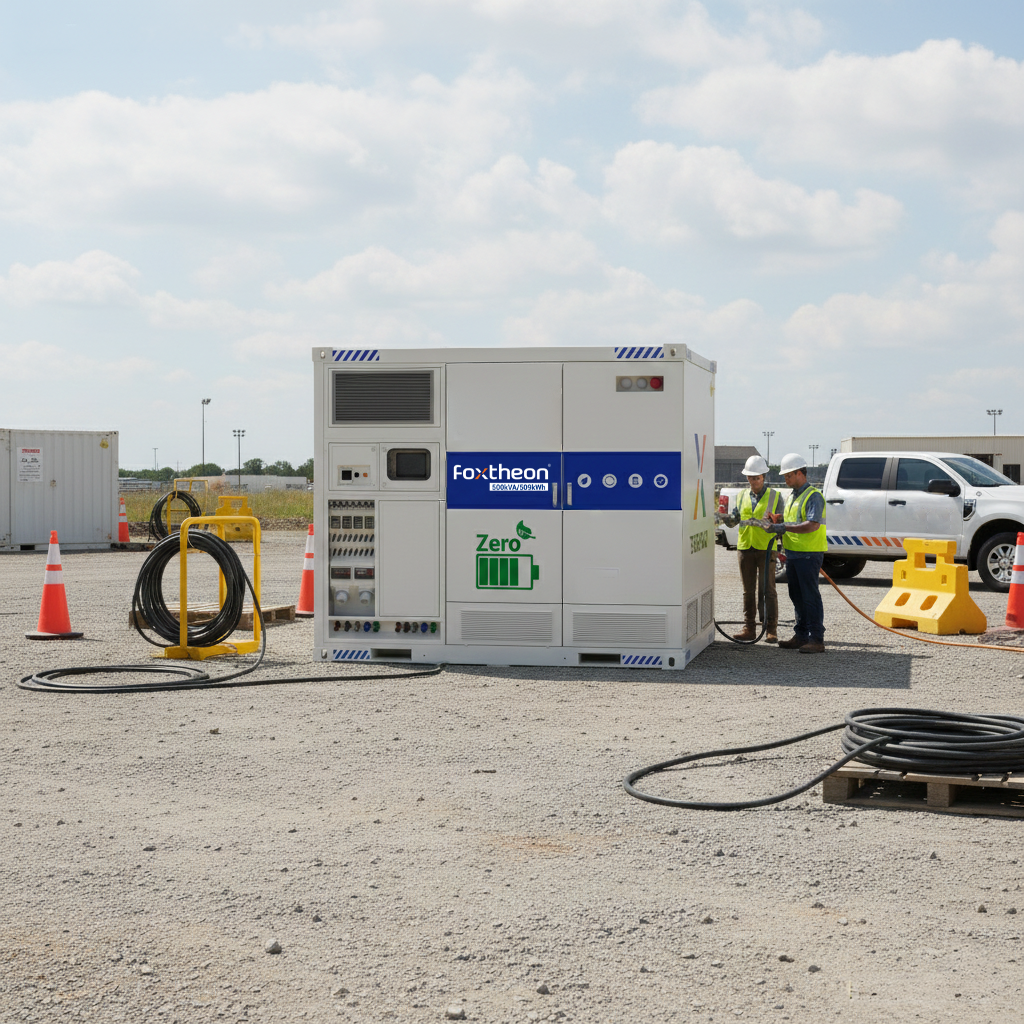
The most obvious differentiator is the energy source. When you rent a diesel generator, you are renting an engine that requires constant feeding. Fuel costs typically account for 60% to 80% of the total operating cost of a diesel generator over a long-term project.
Diesel prices are volatile. A spike in global oil prices can destroy a project’s budget overnight. Furthermore, the logistics of delivering that fuel—the “last mile” delivery surcharges—can add significant premiums to the per-gallon price.
In contrast, a Battery Energy Storage System (BESS) is “refueled” via the grid or on-site solar. The cost per kilowatt-hour (kWh) from the grid is generally stable and significantly lower than the cost of generating that same kWh via a diesel engine, especially when accounting for engine efficiency losses.
2. Efficiency at Low Loads
This is where the math gets interesting. Diesel generators are designed to run most efficiently at 70-80% load. However, most construction sites and temporary applications have highly variable load profiles. A site might need high power for cranes during the day but only needs to run security lights and cameras at night.
Running a 100kVA generator to power a 5kW load is incredibly inefficient. The fuel consumption does not drop linearly; the engine still consumes a baseline amount of fuel just to keep running.
The “Wet Stacking” Problem
Running diesel engines at low loads for extended periods leads to “wet stacking.” Unburned fuel accumulates in the exhaust system, leading to engine damage and heavy maintenance requirements.
BESS units do not suffer from this. They are equally efficient at 5% load as they are at 100% load. There is no idling cost. When no power is drawn, the system sits in standby with negligible loss.
H2: Calculating the TCO of BESS vs diesel generator rental in Urban Areas
Location plays a massive role in cost analysis. In dense urban environments, the hidden costs of diesel quickly mount up.
Noise pollution is a financial risk. Many cities impose strict fines for noise violations during night hours. A diesel generator running 24/7 often requires expensive sound attenuation barriers or must be shut down, halting work.
Batteries are silent. This eliminates the need for soundproofing rentals and allows operations to continue into the night without risking municipal fines. When calculating the TCO of BESS vs diesel generator rental, the avoidance of potential fines and the ability to extend working hours (increasing productivity) must be factored in.
3. Maintenance and Service Intervals
Diesel engines have hundreds of moving parts. They vibrate, generate heat, and require friction reduction. A rental generator running 24/7 typically requires an oil change and filter replacement every 250 to 400 hours. That is roughly every two weeks.
Each service visit incurs labor costs, parts costs, and travel time for the technician. If a site is remote, the travel time alone can double the service bill.
BESS units are solid-state technology. They have cooling fans and pumps, but no pistons or crankshafts. The maintenance requirement is minimal, often limited to annual inspections or air filter cleanings. For a six-month rental, a BESS might require zero physical site visits for maintenance, whereas a generator would require twelve.
4. The Logistics of Replenishment
Managing a fleet of diesel generators is largely a logistics game. You are managing fuel levels, scheduling trucks, and dealing with spills.
Fuel theft is another rampant issue on construction sites. It is estimated that a significant percentage of fuel purchased for remote sites never ends up in the generator. It is siphoned off or lost to sloppy refueling practices.
With a BESS, “theft” of power is much harder. If the unit is charged via a grid connection, the energy is metered. If it is paired with solar, the energy is free. The logistical overhead of scheduling fuel deliveries vanishes, freeing up site managers to focus on the actual construction or event work.
5. The Hybrid Solution: Reducing Generator Size
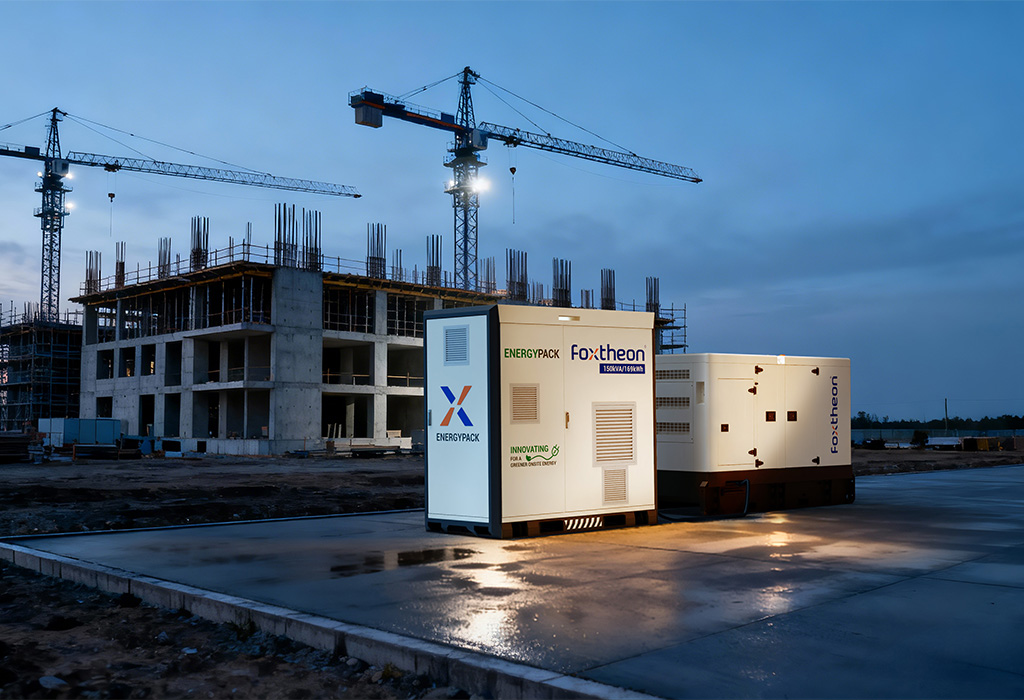
Often, the best TCO isn’t achieved by choosing one over the other, but by combining them. This is known as a Hybrid Power Solution.
In this scenario, a smaller diesel generator charges the BESS, and the BESS powers the load. The generator runs at 100% load (maximum efficiency) to charge the battery quickly, and then shuts off.
Improving Generator Lifespan
By using a Foxtheon battery system in tandem with a generator, the runtime of the engine can be reduced by 60% to 80%. This drastically reduces fuel consumption and maintenance intervals. The generator lasts longer, and the rental company may even offer better rates because the asset isn’t being worked as hard.
H2: Impact of Carbon Pricing on the TCO of BESS vs diesel generator rental
We are entering an era where carbon emissions have a direct price tag. Corporate sustainability goals are no longer just marketing fluff; they are tied to financing and contracts.
Many government tenders now require a “Green Construction” plan. Bidding with a diesel-only solution might disqualify a contractor, or they might be penalized via carbon taxes.
Using a BESS, especially one charged with renewable energy, drastically lowers the carbon footprint of a project. While the rental rate for a BESS might be higher than a basic generator, the “Compliance TCO” is lower. You avoid carbon taxes and gain access to projects that prioritize sustainability.
6. Setup and Mobilization
Diesel generators are heavy and cumbersome, but they are relatively simple to drop and start. BESS units historically were heavier and harder to transport.
However, modern high-density designs from manufacturers like Foxtheon have changed this dynamic. Compact energy storage units can now be transported as easily as standard gensets.
The setup for a BESS can sometimes be simpler because there is no need to set up spill containment berms (secondary containment for fuel leaks) which are mandatory for diesel tanks in many jurisdictions. This reduces the labor hours required for site mobilization and demobilization.
7. Resale Value and Asset Lifespan (For Owners)
If you are considering buying rather than renting to rent out (i.e., you are the rental company), the TCO calculation shifts to asset longevity.
A diesel generator has a finite engine life, usually measured in tens of thousands of hours before a major overhaul is needed. BESS units are rated by cycles. Modern LFP (Lithium Iron Phosphate) batteries can last 6000 to 8000 cycles.
In rental applications where the battery might cycle once a day, the asset could last 10 to 15 years with minimal degradation in performance. Furthermore, electricity prices are relatively stable compared to the wild swings of the fossil fuel market, making the Return on Investment (ROI) easier to forecast for BESS owners.
The decision between electrons and hydrocarbons is no longer just about being green; it is about being profitable. When you analyze the TCO of BESS vs diesel generator rental comprehensively, the battery often wins in scenarios involving variable loads, long operational hours, and urban locations.
While the upfront rental cost of a battery unit may appear higher on a quote, the elimination of fuel bills, the reduction in maintenance visits, and the avoidance of noise fines create a compelling savings narrative.
As technology providers like Foxtheon continue to improve energy density and software management, the economic gap will widen further. For modern project managers, the question is no longer “Can we afford to use a battery?” but rather “Can we afford the unpredictable costs of diesel?”
Frequently Asked Questions
Q1: Is a BESS always cheaper than a diesel generator rental?
A1: Not always. For very short-term projects (like a 1-day event) requiring high peak power where fuel consumption is negligible, a cheap diesel generator rental might still be the most cost-effective option due to lower transport and rental fees.
Q2: How much fuel can a hybrid BESS/Diesel setup save?
A2: In typical construction applications with variable loads, a hybrid setup can reduce fuel consumption by 50% to 80%. The generator only runs to charge the battery at optimal efficiency, rather than idling all day.
Q3: Does cold weather affect the TCO of BESS?
A3: Yes. Batteries lose some efficiency in extreme cold, and energy is required to heat the battery cells to operating temperature. However, diesel generators also face “cold start” issues and require block heaters (which use power) and winter-grade fuel additives, so both systems have cold-weather costs.
Q4: Can I charge a rental BESS with solar panels?
A4: Yes. This is the “Holy Grail” of TCO reduction. By adding portable solar panels to the rental package, you effectively reduce your “fuel” cost to zero. This drastically lowers the total cost of ownership over projects lasting several months.
Q5: What happens to the BESS if it runs out of charge?
A5: Unlike a generator that just stops when out of fuel, a BESS needs a charging source. This is why hybrid systems are popular. If the BESS depletes, the backup generator automatically kicks in to take the load and recharge the batteries simultaneously.