
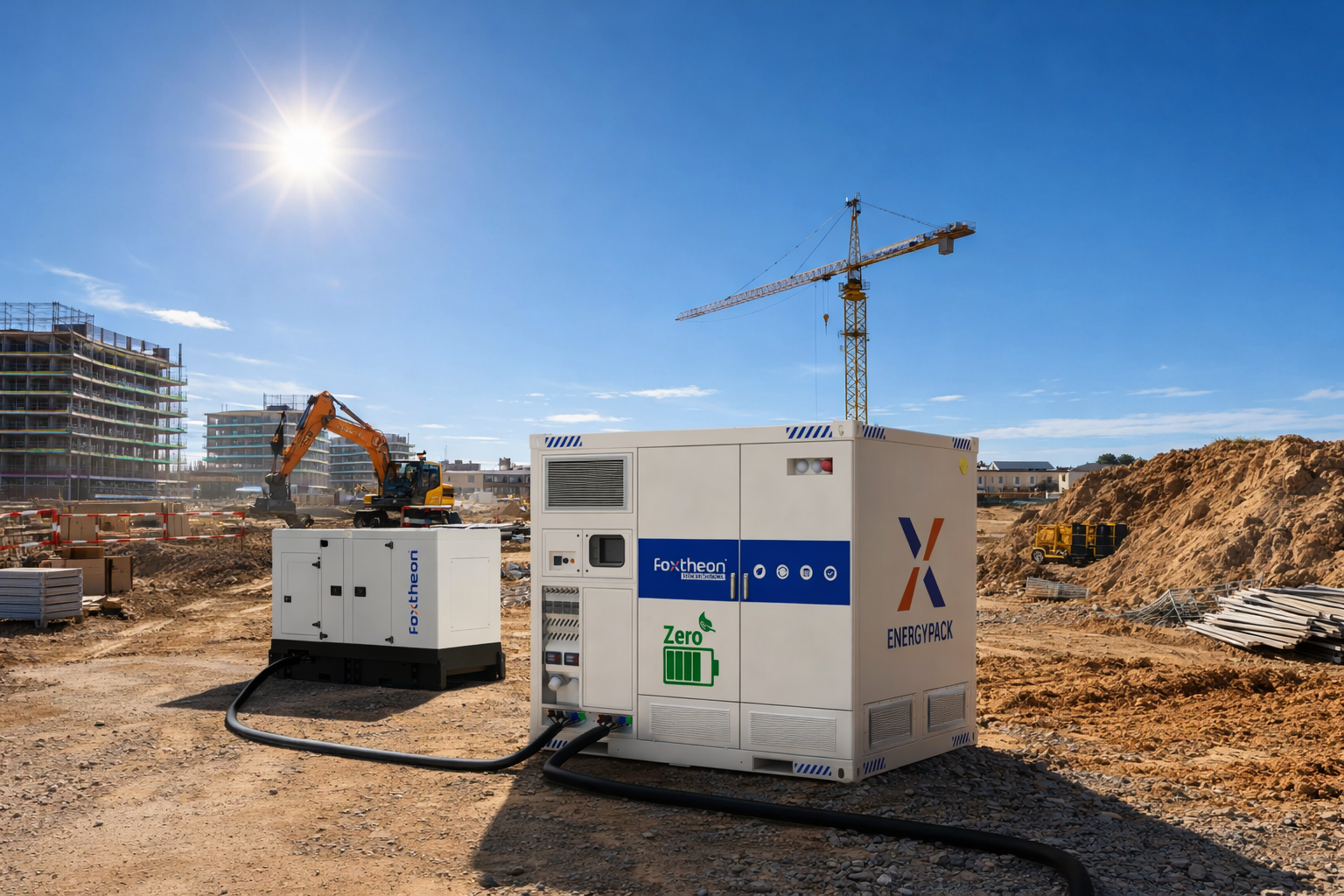
Managing a handful of battery sites is manageable with basic tools. However, as renewable energy portfolios expand across regions, operators face a data avalanche. The operational complexity skyrockets when you move from ten sites to a hundred. This is where the need for a centralized management for energy storage fleet becomes not just an advantage, but a necessity for survival in the modern energy market.
Operators today are less interested in theoretical software capabilities and more focused on uptime, revenue assurance, and safety. Whether you are an independent power producer (IPP) or a commercial aggregator, having a unified view of your assets determines your profitability.
Companies like Foxtheon have recognized that hardware is only half the battle; the intelligence connecting these assets is what truly drives value. This article explores practical strategies to streamline operations, reduce truck rolls, and maximize battery lifespan through unified control.
Why Siloed Operations Are Killing Profitability
In the early days of battery storage, systems were often monitored individually. Each site had its own local SCADA or a proprietary portal provided by the inverter manufacturer.
This creates a fragmented ecosystem. If an operator manages mixed assets—different battery chemistries, different inverter brands, and varying capacities—compiling a daily performance report becomes a manual nightmare.
Without a centralized management for energy storage fleet, you lack real-time visibility. A fault in a remote site might go unnoticed for days, leading to significant revenue loss. Unified management bridges these gaps, pulling data from disparate sources into a single source of truth.
Core Architecture of Centralized Management for Energy Storage Fleet
To build a robust management system, you need to understand the layers involved. It is not just about a dashboard; it is about the data pipeline from the cell level to the cloud.
The Role of Edge Computing
Data transmission costs money, and latency kills reaction time. You cannot send every millisecond of voltage data to the cloud.
Effective strategies employ edge computing controllers at the site level. These devices process high-frequency data locally and only send actionable insights or alerts to the central server. This ensures that your centralized management for energy storage fleet remains responsive and bandwidth-efficient, even for sites in remote locations with poor connectivity.
Cloud Integration and APIs
The central hub must be agnostic. It should be able to “speak” multiple protocols, such as Modbus TCP, DNP3, or IEC 61850. The ability to integrate via open APIs allows the fleet management software to pull in third-party data, such as weather forecasts or spot market prices, which are crucial for dispatch strategies.
Reducing O&M Costs Through Predictive Analytics
One of the largest operational expenditures (OpEx) for fleet operators is unscheduled maintenance. Sending a technician to a remote site to reset a breaker is inefficient.
By implementing centralized management for energy storage fleet, operators can shift from reactive maintenance to predictive maintenance.
Identifying Thermal Runaway Risks
Batteries do not usually fail without warning. Small deviations in cell temperature or voltage spreads often precede major failures. A centralized system runs algorithms across the entire fleet to spot these anomalies.
If Site A shows a thermal trend similar to a failure pattern seen at Site B last year, the system flags it immediately. This allows for intervention before a catastrophic event occurs, protecting both the asset and the brand reputation of providers like Foxtheon, who prioritize safety in their smart energy solutions.
Remote Firmware Updates
Managing software versions across hundreds of inverters can be tedious. A centralized platform allows for batch firmware updates. Operators can push patches to specific groups of assets during low-activity windows, ensuring security compliance without physical site visits.
Maximizing Revenue with Fleet Aggregation
For many operators, the battery is not just backup power; it is a trading asset.
Virtual Power Plants (VPP)
To participate in ancillary service markets (like frequency regulation), you often need a minimum megawatt capacity that a single site cannot provide.
Centralized management for energy storage fleet allows you to aggregate multiple smaller distributed assets into a single Virtual Power Plant. The grid operator sees one large battery, but in reality, you are dispatching power from fifty different locations simultaneously.
Optimized Dispatch Strategies
Algorithms can analyze the state of charge (SoC) across the fleet. If the spot price of electricity spikes, the centralized system determines which batteries have enough charge to sell back to the grid without compromising their warranty cycles. This level of orchestration is impossible with manual controls.
Navigating Battery Health and Warranty Management
Every battery manufacturer offers a warranty tied to throughput, cycles, or temperature exposure. Violating these terms can void coverage, leaving operators with expensive paperweights.
Tracking Warranty Compliance
A unified system tracks the precise usage of every module. It logs depth of discharge (DoD) and temperature cycles against the warranty terms.
If a specific dispatch strategy threatens to push a battery bank outside its warranty parameters, the management system can automatically limit power output. This safeguards the asset’s long-term value.
Balancing Usage Across the Fleet
In a fleet scenario, some assets work harder than others. A centralized approach allows for “wear leveling.” You can program the logic to prioritize dispatching newer or less-used batteries, giving older units a break. This extends the aggregate lifespan of the entire portfolio.
Addressing Cybersecurity in Centralized Systems
Connecting critical energy infrastructure to the internet introduces risk. A breach in a centralized server could theoretically give an attacker control over gigawatts of power.
Security must be “baked in,” not bolted on. This involves end-to-end encryption and strict user access controls.
Role-Based Access Control (RBAC)
Not every user needs admin rights. A site technician should only see the data relevant to their region. Financial analysts should only see revenue data, not control switches.
Robust centralized management for energy storage fleet platforms enforce strict RBAC. This minimizes the “blast radius” if a user’s credentials are compromised.
Audit Trails
Every command sent to a battery—whether it is a start command or a parameter change—must be logged. Centralized logging ensures that if an incident occurs, there is a clear digital trail for forensic analysis.
Overcoming Interoperability Challenges
The energy storage market is fragmented. You might have Samsung batteries at one site, CATL at another, and Foxtheon integrated systems at a third.
The Protocol Translator
The biggest hurdle to centralization is getting these devices to talk the same language. Successful fleet management relies on middleware that acts as a universal translator.
This software layer normalizes data tags. A “State of Charge” tag from Inverter Brand X might look different from Brand Y. The system maps them to a standard format, so the operator sees a consistent metric regardless of the underlying hardware.
The Future of AI in Fleet Management
While we want to avoid overhyped AI terminology, machine learning serves a practical purpose here.
As the dataset grows, simple logic (If X, then Y) becomes insufficient. Machine learning models can analyze years of historical data to predict load patterns more accurately than human operators.
For instance, the system might learn that a specific site experiences voltage sag every Tuesday afternoon due to local factory activity. It can pre-charge the batteries in anticipation, ensuring stability without human intervention.
The shift toward renewable energy is non-negotiable, and storage is the backbone of this transition. However, hardware alone is insufficient. The complexity of modern grids demands a sophisticated software layer capable of orchestration, protection, and optimization.
Implementing a strategy for centralized management for energy storage fleet is the difference between owning a collection of batteries and operating a profitable energy business. It lowers operational costs, opens new revenue streams through VPPs, and extends the life of expensive assets.
Industry leaders and solution providers, such as Foxtheon, understand that the future lies in this integration. As we move toward 2026 and beyond, the operators who succeed will be those who can turn their data into decisions, managing their distributed fleets with the precision of a single, unified instrument.
Frequently Asked Questions (FAQ)
Q1: What is the primary financial benefit of implementing centralized management for energy storage fleet?
A1: The most immediate financial benefit is the reduction of Operation and Maintenance (O&M) costs. By using remote monitoring and predictive diagnostics, operators can drastically reduce the number of physical truck rolls and site visits. Additionally, centralized control enables participation in energy aggregation (VPP) markets, creating new revenue streams that are not possible with standalone assets.
Q2: Can I integrate different battery brands into a single centralized management system?
A2: Yes, but it requires a hardware-agnostic software platform. The system must support open communication protocols like Modbus, CAN Bus, and DNP3. Middleware is often used to normalize data from different manufacturers (e.g., mixing Foxtheon units with other legacy brands) into a single, standardized dashboard view.
Q3: How does centralized management help with battery warranty compliance?
A3: A centralized system continuously logs critical performance metrics such as temperature, cycle count, and depth of discharge. It can be programmed to set “hard limits” that prevent the battery from operating outside of the manufacturer’s warranty zones. This ensures you have the data proofs required if a warranty claim is ever needed.
Q4: Is a centralized system vulnerable to cyberattacks?
A4: Any internet-connected system carries risk, but centralized management allows for stronger, unified security protocols. Instead of securing 100 individual gateways manually, you can apply enterprise-grade encryption, multi-factor authentication, and security patches across the entire fleet simultaneously. This generally results in a stronger security posture than managing sites individually.
Q5: Is centralized management suitable for small fleets of 3-5 sites?
A5: While the ROI is highest for large fleets, small fleets still benefit significantly. It establishes a scalable foundation for future growth. Even with a few sites, the ability to receive real-time alerts on mobile devices and automate reporting saves significant man-hours and ensures higher system uptime.