
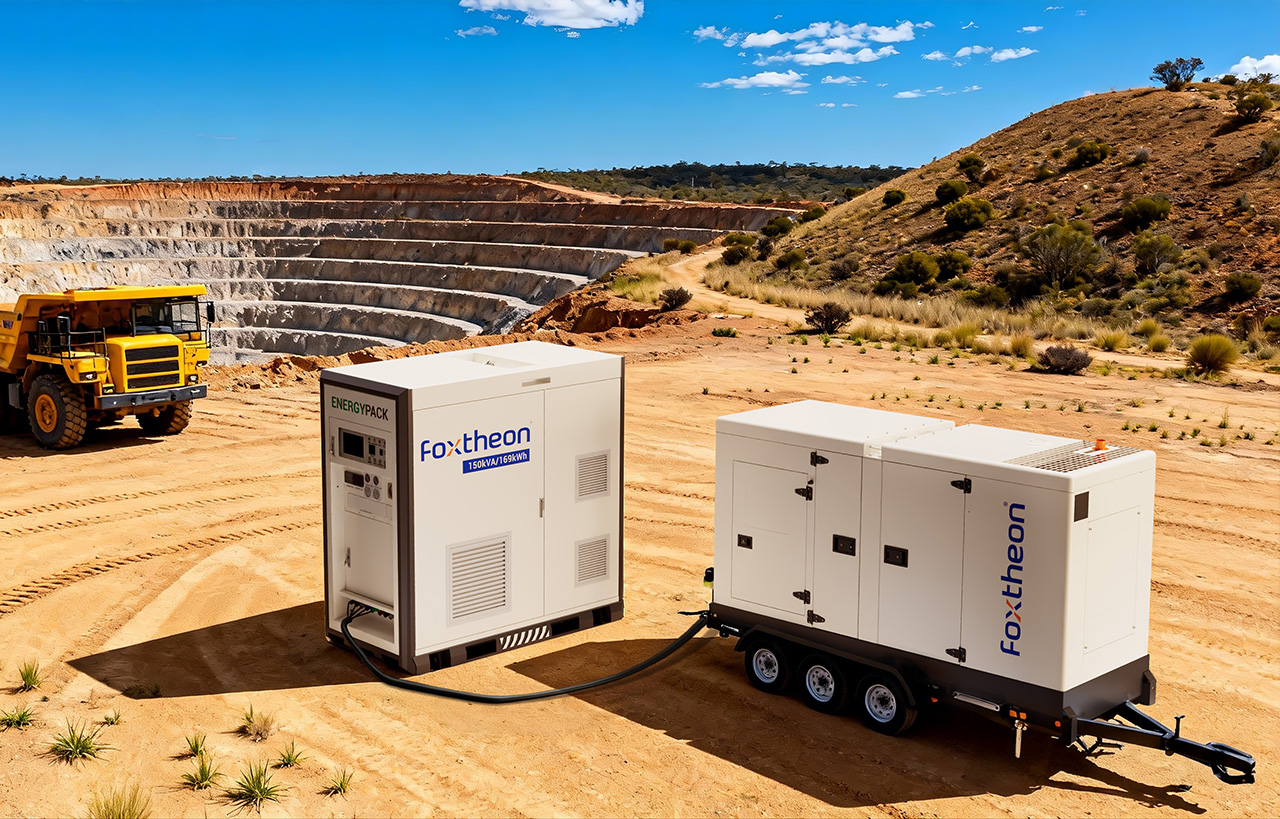
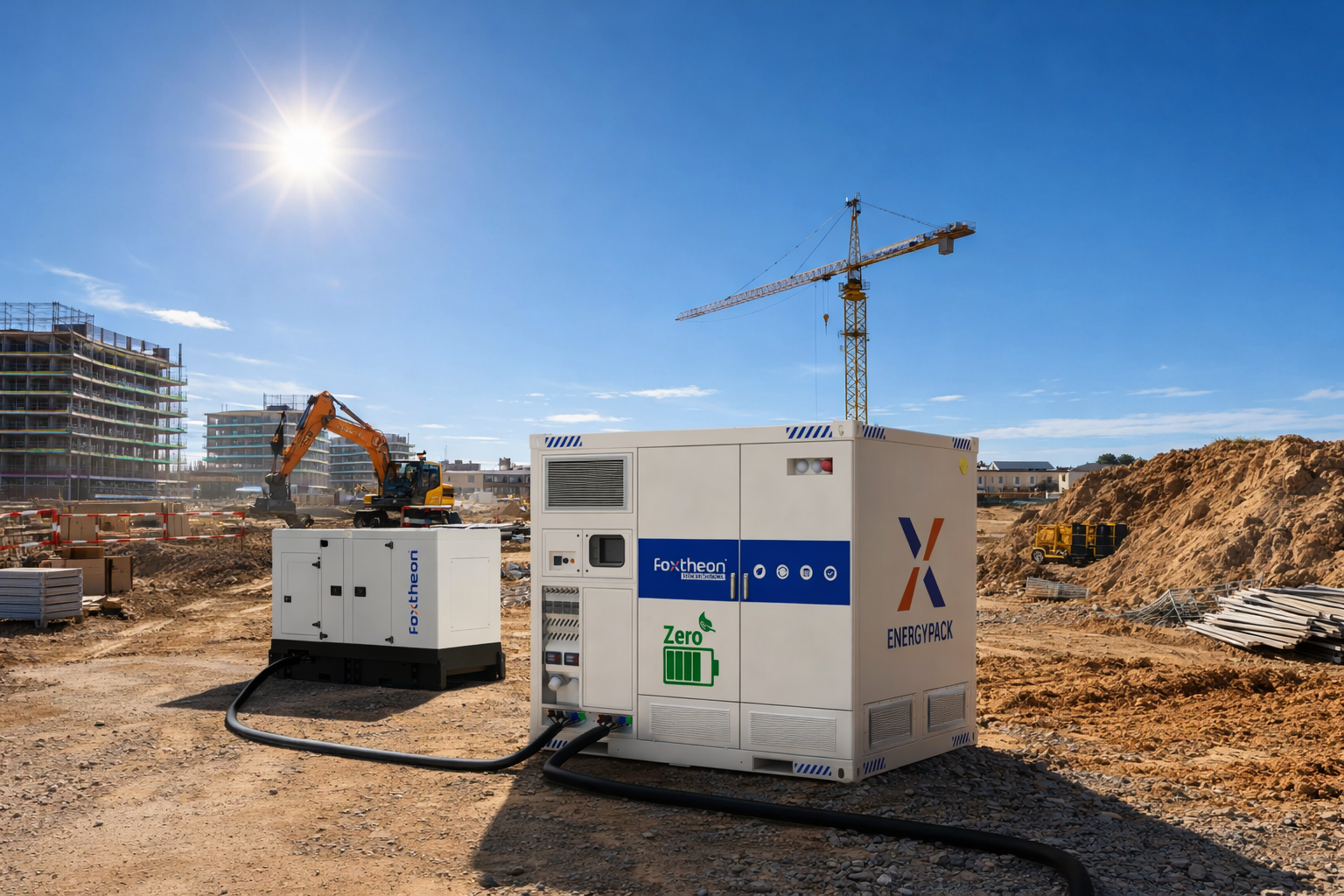
The equipment rental industry is tough. It is a business built on logistics, uptime, and margins. For years, the diesel generator was the only tool in the box. If a client needed power, you sent a diesel engine. But the market has shifted. Construction sites, film sets, and utilities are demanding cleaner, quieter, and more efficient power.
This demand has brought battery storage to the forefront. However, buying a standard battery bank is often a mistake for a rental fleet. It limits what you can do. This is why the industry is pivoting toward a more intelligent solution.
The new standard is software-defined BESS for rental companies. Unlike static battery packs, these units rely on advanced coding to dictate how they behave. It is a shift from hardware-centric thinking to software-centric operations.
Brands like Foxtheon have identified this gap early. They realized that for a rental company, the asset needs to be flexible. It needs to work for a rock concert one week and a tower crane the next. Only software can provide that level of adaptability.
This article explores why this technology is not just a trend, but a necessary evolution for rental fleet operators.
What Distinguishes Software-Defined BESS for Rental Companies?
At a glance, all battery energy storage systems (BESS) look similar. They are usually metal boxes with heavy cables. But the difference lies inside the controller.
In a traditional setup, the inverter and battery management system (BMS) are hard-coded. They have fixed parameters for voltage, discharge rates, and safety cut-offs.
A software-defined BESS for rental companies is different. The hardware is merely a vessel. The Energy Management System (EMS) is the brain, and it is programmable.
From Static Assets to Dynamic Solutions
Imagine buying a tool that can only do one job. That is a bad rental investment. You want a Swiss Army knife.
Software-defined systems allow you to change the machine’s personality. You can adjust the output voltage, change the frequency (50Hz/60Hz), and alter the response time to load spikes.
This is done via a user interface, not by swapping out circuit boards. This means a single unit in your yard can serve a much wider variety of customers.
The Role of Intelligent EMS
The Energy Management System is what separates a dumb battery from a smart one. In these modern units, the EMS handles complex logic.
It decides when to charge from solar, when to pull from the grid, and when to start a backup generator. For the end-user, this automation is invisible. For the rental company, it means the equipment works correctly without constant supervision.
Solving the Inventory and Logistics Headache
Rental managers know the pain of inventory management. Stocking five different types of generators for five different applications is expensive. It ties up capital and uses up yard space.
Software-defined units help consolidate this mess. Because one machine can be programmed for different tasks, you can standardize your fleet.
One Model, Many Uses
Instead of stocking specific “solar batteries” and separate “generator support batteries,” you buy one versatile model.
If a client calls needing a system for peak shaving, you adjust the software settings. If another client needs a standalone island power supply, you toggle a switch on the screen.
Companies like Foxtheon design their units with this versatility in mind. It simplifies the supply chain. You only need to stock spare parts for one type of machine, not ten.
Reducing the “Truck Roll”
The most expensive part of a rental contract is often the service call. Sending a technician in a van to flip a switch or reset a breaker destroys profit margins.
Software-defined systems are almost always connected systems. They allow for remote monitoring and control.
If a customer claims the unit isn’t working, your office team can log in remotely. They can view the error codes, reset the software, or adjust parameters without ever leaving the depot.
The Financial Impact of Software-Defined BESS for Rental Companies
Let’s talk about money. The initial cost of a battery system is higher than a diesel generator. However, the Total Cost of Ownership (TCO) is where the software shines.
The software controls the efficiency. By managing the power flow intelligently, these systems save the end-user money on fuel, which allows the rental company to charge a premium rate.
Maximizing Generator Efficiency
Diesel generators are inefficient at low loads. Running a 100kVA generator to power a 5kW security hut is burning money. It also damages the engine through “wet stacking.”
A software-defined BESS solves this. The software monitors the load. When demand is low, it shuts the generator off and runs on battery. When demand spikes, it restarts the generator.
This process reduces generator run-time by up to 80%. The fuel savings for the client are massive. You can structure your rental contracts to capture a portion of these savings.
Protecting the Asset Value
Software updates keep the equipment young. A mechanical diesel engine only gets worse with age. A software-defined system can actually get better.
Manufacturers can release firmware updates that improve efficiency or add new features. This extends the lifespan of the unit in your fleet. It maintains a higher resale value because the technology doesn’t become obsolete as quickly.
Operational Safety and Risk Mitigation
Safety is the number one priority in the rental sector. Your equipment is often operated by temporary labor or non-technical staff.
High-voltage batteries carry risks. This is where the “software-defined” aspect acts as a safety net.
Automated Error Prevention
In older systems, if a user plugged a 480V connection into a 208V slot, things would explode.
Smart BESS units use software to detect input voltages before closing the main contactors. If the software senses a mismatch, it physically prevents the connection. It displays a clear warning on the screen.
This protects your expensive asset from user error. It also protects your liability insurance.
Thermal Management Logic
Batteries get hot. Intelligent software constantly monitors the temperature of every cell.
It doesn’t just wait for a fire. It predicts issues. If the system detects a rising temperature trend, it can automatically derate the power output to cool down.
It manages the HVAC (heating, ventilation, and air conditioning) inside the unit proactively. This ensures the battery operates in its sweet spot, prolonging its life.
Why Software is Key for Green Compliance
Regulations are tightening globally. Cities like London, Paris, and New York are implementing strict emission zones. Noise pollution is also becoming a major legal issue for construction projects.
A software-defined BESS for rental companies is the tool to meet these rules.
The “Silent Mode” Feature
Software allows for scheduled operations. A construction site in a residential area might be forbidden from running generators between 6 PM and 8 AM.
You can program the BESS to prioritize charging during the day. Then, at 6 PM sharp, the software automatically switches to “Silent Mode,” running purely on battery power.
This ensures the client stays compliant with local laws without needing a staff member to manually switch off equipment.
Reporting and Carbon Accounting
Clients now require data. They need to report their carbon footprint to stakeholders.
Because these units are software-driven, they track every kilowatt-hour. They can generate automated reports showing exactly how much CO2 was saved compared to a diesel generator.
Providing this data is a value-added service. It makes your rental company a partner in their sustainability goals, not just a vendor.
Future-Proofing Your Rental Fleet
The energy grid is changing. Standards for connecting to the grid (Grid Codes) are evolving rapidly.
Buying hardware-defined equipment is risky. If the regulations change next year, your equipment might become illegal to connect to the grid.
Adapting to New Standards
With a software-defined architecture, compliance is often just a download away. If the utility company changes the frequency response requirement, you don’t need to buy new inverters.
You simply update the firmware. This flexibility is crucial for rental companies that operate across different states or countries with different rules.
VPP and Grid Services
In the near future, rental companies won’t just rent to construction sites. They will rent to the grid.
When your equipment is sitting in the yard unrented, it can still earn money. By connecting to a Virtual Power Plant (VPP), your fleet can provide grid balancing services.
This requires sophisticated software communication protocols (like OpenADR) that only advanced, software-defined systems possess.
Real-World Scenarios for Software-Defined Units
To understand the power of this technology, we have to look at how it performs in the field. The theoretical benefits translate into hard operational wins.
The Music Festival Scenario
Events are dynamic. The load fluctuates wildly between the main act and the breaks.
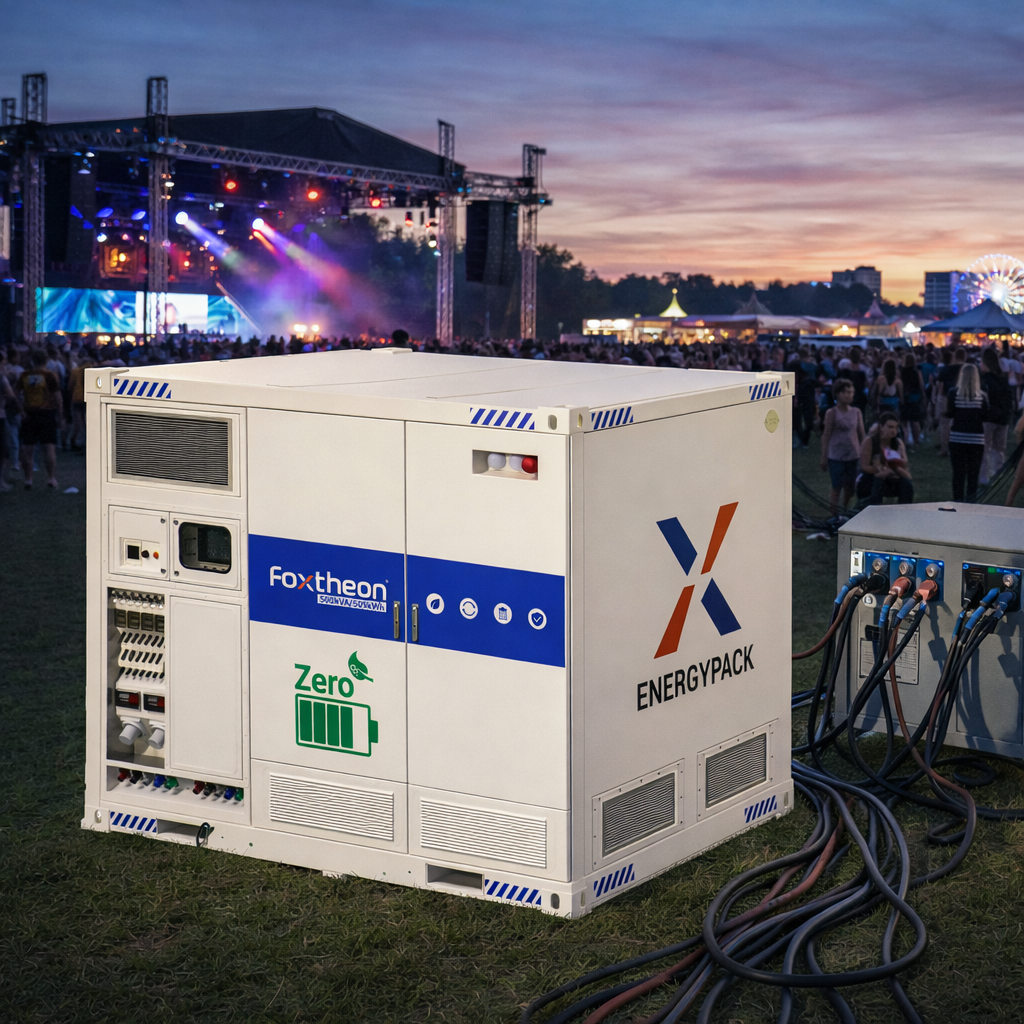
A software-defined BESS can smooth out these peaks. It allows the event organizer to use a much smaller generator. The battery handles the bass drops and light shows, while the generator provides a steady baseload.
The software handles the synchronization instantly. This prevents the lights from flickering and saves the organizer thousands in fuel costs.
The Remote Telecom Tower
Telecom towers in remote areas often rely on diesel generators running 24/7. This is a maintenance nightmare.
Deploying a smart BESS creates a hybrid cycle. The generator runs for 4 hours to charge the battery, then shuts off for 20 hours.
The software ensures the battery never drains completely, protecting the critical comms infrastructure. Foxtheon units, for example, are frequently used in these rigorous off-grid environments due to their robust software logic.
The shift is undeniable. The rental industry is moving from heavy iron to smart silicon.
The days of simply dropping off a diesel generator and hoping for the best are fading. Clients want data, they want silence, and they want fuel savings.
Adopting software-defined BESS for rental companies gives fleet managers the control they need. It turns a passive box of batteries into an intelligent energy asset. It simplifies logistics through standardization. It protects profits through remote management. And it opens up new revenue streams through grid services.
While the hardware is important, the software is the differentiator. As you look to modernize your fleet, focus on the intelligence behind the power. Manufacturers like Foxtheon are leading this charge, proving that the future of rental power is written in code.
Frequently Asked Questions (FAQ)
Q1: Will my current mechanics be able to service a software-defined BESS?
A1: Yes. While the term “software-defined” sounds complex, the maintenance is actually simpler than diesel engines. There are no oil changes or filter replacements. Most “service” involves checking connections and cleaning air vents. The software handles the diagnostics, telling the mechanic exactly where the fault is via the screen, removing the guesswork.
Q2: Can these units work with my existing fleet of older diesel generators?
A2: Absolutely. This is a core feature. The BESS is designed to be the “brain” of a hybrid system. It has a standard two-wire start/stop connection. You connect this to your old diesel generator. The BESS software then takes control, telling the generator when to turn on and off based on load demand, effectively modernizing your old equipment.
Q3: How long does the software update process take?
A3: It is usually very fast. A typical firmware update takes between 10 to 20 minutes. If the unit has a 4G/LTE connection, this can be done Over-the-Air (OTA) without anyone visiting the site. It can be scheduled for nighttime to ensure no disruption to the client’s power supply.
Q4: Is the data stored on the machine or in the cloud?
A4: It is usually both. The unit uses “Edge Computing” to store critical data locally, ensuring it works even without an internet signal. When a connection is available, it syncs this data to the cloud for long-term storage and analysis. This ensures you never lose operational data due to poor cell service.
Q5: What is the lifespan of a software-defined BESS compared to a generator?
A5: A well-managed LFP (Lithium Iron Phosphate) battery can last 6,000 to 8,000 cycles. In a rental application, this translates to roughly 10 years of heavy use. Because the software protects the battery from abuse (like deep discharging or overheating), these units often outlast diesel generators, which require major engine overhauls after 20,000 hours.