
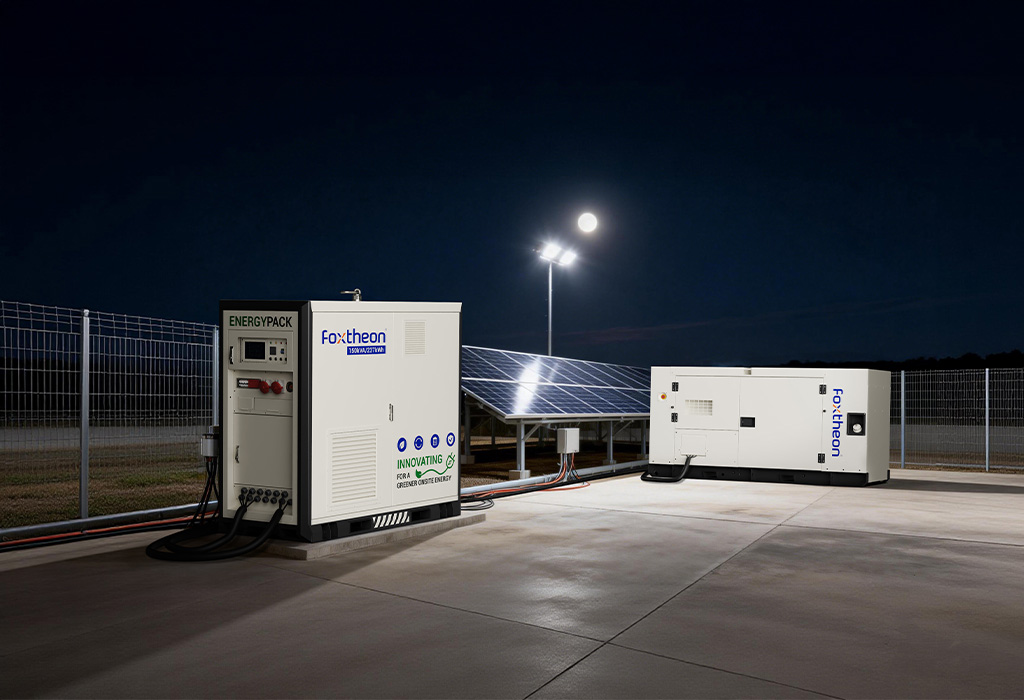
For decades, industrial sectors operating beyond the reach of the central electrical grid have relied heavily on internal combustion engines. While these traditional systems have provided a baseline of energy security, the operational expenditure (OPEX), maintenance requirements, and environmental liabilities associated with them have steadily increased. As corporate sustainability mandates intersect with volatile fossil fuel markets, industrial operators, fleet managers, and site engineers are actively evaluating viable commercial power replacements.
The transition toward a reliable diesel generator alternative is no longer purely an environmental initiative; it is a rigorous financial and operational imperative. By replacing legacy equipment with advanced battery energy storage systems (BESS), solar hybrid microgrids, and intelligent power management architectures, enterprises can drastically lower the Levelized Cost of Energy (LCOE) while increasing site reliability.
The Hidden Financial and Operational Costs of Traditional Power
To understand the financial justification for upgrading your power infrastructure, it is necessary to audit the true lifecycle costs of legacy diesel systems. The initial capital expenditure (CAPEX) of a traditional genset represents only a fraction of its total financial burden.
Operational Expenditures (OPEX) and Fuel Volatility
Fuel consumption typically accounts for 60% to 70% of a traditional generator’s lifecycle cost. Furthermore, logistics—specifically the transportation of fuel to remote construction sites, telecommunication towers, or mining camps—adds a substantial premium to the base cost per gallon. Fuel theft and fuel degradation during long-term storage further compound these inefficiencies.
Environmental Regulations and Decarbonization Pressures
Regulatory bodies globally are tightening emissions standards. In North America and Europe, Tier 4 Final and Stage V regulations mandate the use of diesel particulate filters (DPF) and selective catalytic reduction (SCR) systems. These components increase the initial purchase price, complicate routine maintenance, and require the continuous procurement of Diesel Exhaust Fluid (DEF). Failure to comply with regional noise and emission ordinances frequently results in severe site penalties or operational shutdowns.
The Phenomenon of “Wet Stacking” and Maintenance Downtime
Traditional gensets must be sized to handle peak transient loads, such as the startup current of large induction motors or tower cranes. Consequently, they often run at partial loads (below 30% capacity) during standard operations. Running an internal combustion engine at a low load causes unburned fuel to accumulate in the exhaust system—a condition known as “wet stacking.” This accelerates engine wear, necessitates frequent load-bank testing, and increases the frequency of scheduled maintenance intervals.
Evaluating the Top diesel generator alternative Technologies
The market currently offers several mature technologies capable of providing baseload and peak-shaving power. Selecting the correct architecture depends on load profiles, site conditions, and autonomy requirements.
Lithium-Ion Battery Energy Storage Systems (BESS)
Lithium Iron Phosphate (LiFePO4 or LFP) battery systems have become the standard for mobile and stationary energy storage. Unlike traditional lead-acid batteries, LFP chemistry allows for a deep Depth of Discharge (DoD)—often up to 90%—without significantly degrading the cycle life.
Zero Emissions and Silent Operation: BESS units produce zero localized emissions and operate silently, making them ideal for urban construction, film sets, and indoor applications.
Peak Demand Management: High-capacity inverters can instantly dispatch power to handle inductive load spikes, eliminating the need to oversize the power source.
Advanced Telemetry: Modern Battery Management Systems (BMS) offer cell-level monitoring, thermal regulation, and cloud-based predictive maintenance.
Solar-Plus-Storage Hybrid Systems
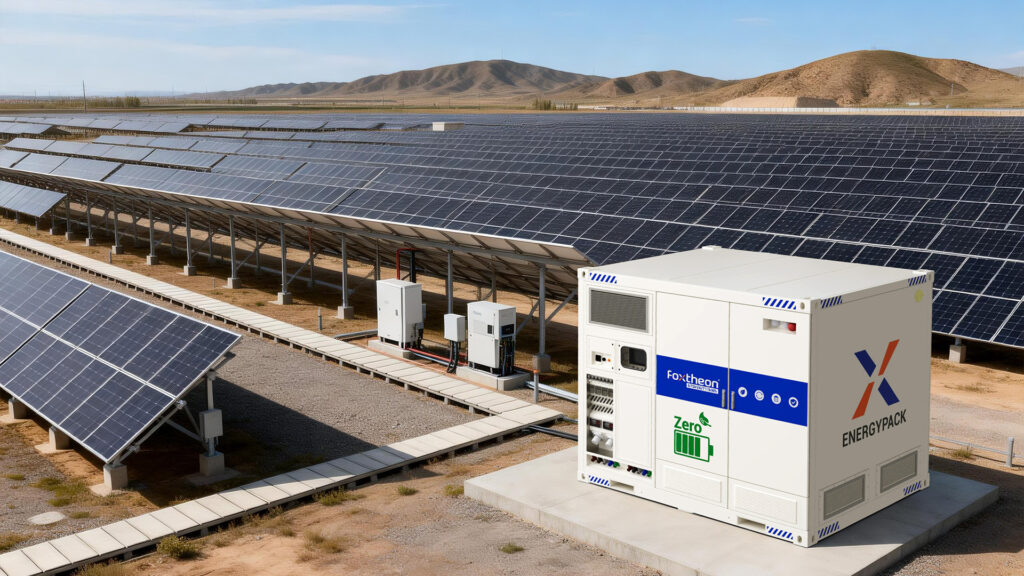
For prolonged off-grid operations, coupling a BESS with deployable solar photovoltaic (PV) arrays creates a highly resilient microgrid. Maximum Power Point Tracking (MPPT) charge controllers ensure that the battery banks capture the maximum possible solar yield, regardless of variable weather conditions. Leading manufacturers, such as Foxtheon, engineer specialized hybrid architectures that seamlessly blend solar input, battery storage, and even grid power when available, ensuring uninterrupted power continuity while mathematically minimizing fossil fuel reliance.
Hydrogen Fuel Cells
Proton Exchange Membrane (PEM) fuel cells generate electricity through an electrochemical reaction between hydrogen and oxygen, emitting only water vapor and heat. While hydrogen fuel cells provide high energy density and continuous power (provided the fuel supply is maintained), the technology currently faces hurdles regarding the green hydrogen supply chain, specialized storage requirements, and high initial CAPEX.
Critical B2B Application Scenarios for Clean Off-Grid Power
The operational requirements for off-grid power vary drastically by sector. Below is an analysis of how specific industries are deploying modernized power equipment.
Heavy Construction and Engineering Sites
A standard commercial construction site exhibits a highly variable load profile. Tower cranes, welding rigs, and heavy material hoists require massive, instantaneous surges of power, while overnight security lighting and site trailers draw minimal current.
Deploying a hybrid BESS allows the site to utilize stored energy for baseload requirements, discharging high-amperage current only during crane operations. This approach drastically cuts noise pollution, allowing for extended working hours in noise-restricted residential zones.
Telecommunications and Remote Base Stations
The rollout of 5G infrastructure has increased the power demands of macro base stations, many of which are located in remote areas far from the central grid. Refueling a traditional genset on a mountain peak or an isolated island is logistically complex and prohibitively expensive. Implementing a reliable diesel generator alternative utilizing solar panels and deep-cycle lithium batteries can extend site autonomy from a few days to several months, reducing site maintenance visits by over 80%.
Emergency Backup for Data Centers and Healthcare
Mission-critical facilities require Uninterruptible Power Supplies (UPS) capable of assuming the facility’s load within milliseconds of a grid failure. Modern solid-state BESS units provide instantaneous transfer times, eliminating the brief blackout period typically experienced while a mechanical engine cranks and synchronizes with the load.
Conducting a Feasibility Study: Sizing Your Equipment
Migrating to a sustainable microgrid requires precise engineering. Implementing a 1:1 kilowatt equivalent of your legacy system will result in severe overcapitalization.
Conduct Comprehensive Data Logging: Install a power analyzer on your existing equipment to record the actual kilowatt (kW) draw, kilovolt-ampere (kVA) requirements, and peak transient spikes over a representative operational period.
Define the Load Profile: Segregate your electrical loads into continuous (baseload), intermittent (pumps, HVAC), and transient (motor startups).
Optimize the Inverter/Battery Ratio: The inverter must be sized to handle the peak kVA, while the battery bank capacity (measured in kilowatt-hours, kWh) must be sized for the required runtime.
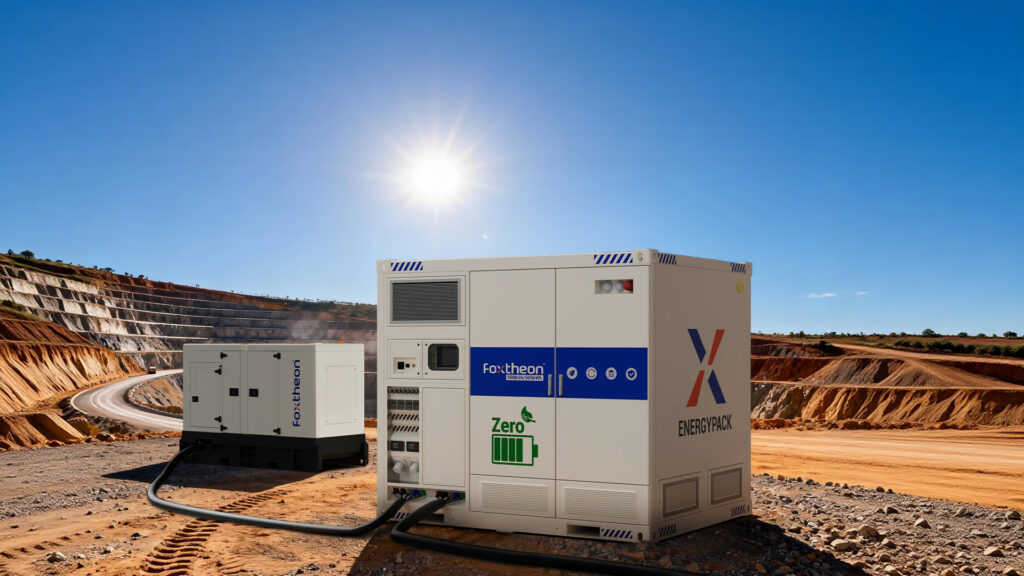
Evaluate Hybrid Integration: Determine if adding a localized solar array or integrating with a smaller, tier-4 compliant backup generator (for extreme weather contingencies) yields the lowest LCOE. Advanced hybrid systems engineered by Foxtheon utilize proprietary algorithms to dispatch the most cost-effective energy source in real-time, maximizing battery lifespan and minimizing generator runtime.
Making the Strategic Transition
The commercial energy sector is undergoing a structural shift driven by basic economics, stringent environmental compliance, and advancements in solid-state electronics. Operators who continue to rely solely on legacy fossil-fuel engines will face compounding costs associated with maintenance, fuel logistics, and regulatory penalties.
By conducting rigorous load profiling and investing in a professionally engineered diesel generator alternative, organizations can immediately reduce OPEX, eliminate the inefficiencies of low-load engine operation, and achieve corporate decarbonization targets. Transitioning to hybrid energy storage and intelligent microgrids is an analytical, data-driven strategy that guarantees long-term energy security and a distinct competitive advantage in commercial operations.
Frequently Asked Questions (FAQ)
Q1: What is the standard Return on Investment (ROI) timeline for transitioning away from legacy fossil fuel generators?
A1: The ROI timeline depends heavily on regional fuel costs, logistical expenses, and local grid electricity rates. For remote operations (like mining or telecom) where fuel delivery costs are exponentially high, a commercial hybrid system often achieves ROI within 18 to 36 months solely through OPEX savings on fuel and preventative maintenance.
Q2: Can clean power systems handle heavy inductive loads, such as large water pumps or construction cranes?
A2: Yes. The capability to handle inductive loads depends entirely on the system’s inverter. Industrial-grade inverters used in a high-capacity diesel generator alternative are specifically engineered to supply surge currents that are 200% to 300% of their continuous rating for short durations, easily facilitating heavy motor startups without voltage drops.
Q3: How do battery energy storage systems maintain safety and performance in extreme environmental temperatures?
A3: Commercial BESS units are equipped with sophisticated thermal management systems. Depending on the environment, these systems utilize active liquid cooling or HVAC systems integrated directly into the enclosure to keep the lithium cells within their optimal operating temperature range (typically 15°C to 25°C), preventing thermal runaway and capacity degradation.
Q4: What routine maintenance is required for a commercial battery energy storage unit?
A4: Because BESS units rely on solid-state electronics rather than internal combustion mechanics, physical maintenance is minimal. Routine procedures primarily involve inspecting torque specifications on electrical terminals, cleaning air filters on the thermal management system, and monitoring firmware updates. Companies like Foxtheon offer cloud-based telemetry that provides remote diagnostics, significantly reducing the need for on-site engineering visits.
Q5: Will integrating solar panels with my energy storage system provide enough power for a 24/7 commercial operation?
A5: For a 24/7 operation, solar alone is rarely sufficient due to nighttime hours and inclement weather. The most mathematically sound approach is a hybrid architecture. Solar PV handles the daytime baseload and charges the batteries, the batteries handle the overnight load, and a vastly downsized mechanical generator acts strictly as an automated backup to recharge the batteries during extended periods of heavy cloud cover or abnormal load spikes.