
Diesel generators serve as the backbone for critical infrastructure, providing reliable backup power for data centers, hospitals, and remote industrial sites. However, a persistent technical challenge known as “wet stacking” often compromises these systems. When a compression-ignition engine operates significantly below its rated capacity, it fails to reach the thermal equilibrium required for complete combustion. This inefficiency leads to the accumulation of unburned fuel and carbon in the exhaust system, posing a risk to both operational longevity and environmental compliance.
To maintain peak performance and reduce generator wet stacking, operators must adopt a multifaceted approach that combines precise load monitoring with modern energy integration. Understanding the mechanical nuances of this phenomenon is the first step toward implementing a robust maintenance and operational strategy.
The Physics of Wet Stacking: Why Low Loads Damage Engines
Diesel engines are engineered to operate most efficiently within a specific load range, typically between 70% and 80% of their maximum rated capacity. At these levels, the cylinder temperature is high enough to ensure that the injected fuel vaporizes and burns completely. When the load drops below 30%, several detrimental physical processes begin:
- Incomplete Combustion: Low combustion temperatures prevent the fuel from burning entirely. This results in the formation of fine droplets of unburned fuel.
- Cylinder Glazing: The unburned fuel acts as a solvent, washing away the essential lubricating oil on the cylinder liners. Over time, the friction and heat cause the oil to bake into a smooth, enamel-like finish known as “glazing,” which prevents piston rings from sealing correctly.
- Exhaust System Contamination: The mixture of soot and unburned fuel creates a thick, black, tar-like substance that leaks from exhaust joints and accumulates in the turbocharger.
Ignoring these signs leads to increased Brake Specific Fuel Consumption (BSFC) and eventually necessitates expensive top-end engine overhauls. Therefore, finding ways to reduce generator wet stacking is not merely a maintenance preference but a financial necessity for B2B operations.
The Economic Impact of Poor Load Management
The financial ramifications of wet stacking extend beyond simple repair costs. In an industrial context, the “Total Cost of Ownership” (TCO) of a generator set is heavily influenced by its duty cycle. An engine suffering from wet stacking experiences higher fuel waste, as the energy in the unburned fuel is literally expelled through the exhaust. Furthermore, the buildup of carbon deposits on fuel injectors reduces atomization efficiency, creating a vicious cycle of further performance degradation.
Environmental regulations also play a role. Modern Tier 4 engines equipped with Diesel Particulate Filters (DPF) and Selective Catalytic Reduction (SCR) systems are particularly sensitive. Wet stacking can plug a DPF rapidly, forcing the engine into a “derate” mode or requiring an active regeneration cycle that consumes even more fuel. By implementing strategies to reduce generator wet stacking, companies can stay within emission limits and avoid the downtime associated with premature exhaust system failure.
1. Utilizing Automatic Load Banks
One of the most established methods to counteract low-load issues is the use of a load bank. A load bank is a device that provides an electrical load to the generator, simulating the demand required to reach optimal operating temperatures.
Automatic load banks monitor the building’s actual load. If the demand drops below a predetermined threshold (e.g., 40%), the load bank automatically switches on to provide the necessary supplemental resistance. This ensures the engine stays hot enough to burn off any accumulated carbon. While effective, the primary drawback is energy waste; the heat generated by the load bank is typically dissipated into the atmosphere without being used for any productive purpose.
2. Integrating Hybrid Energy Storage Systems (HESS)
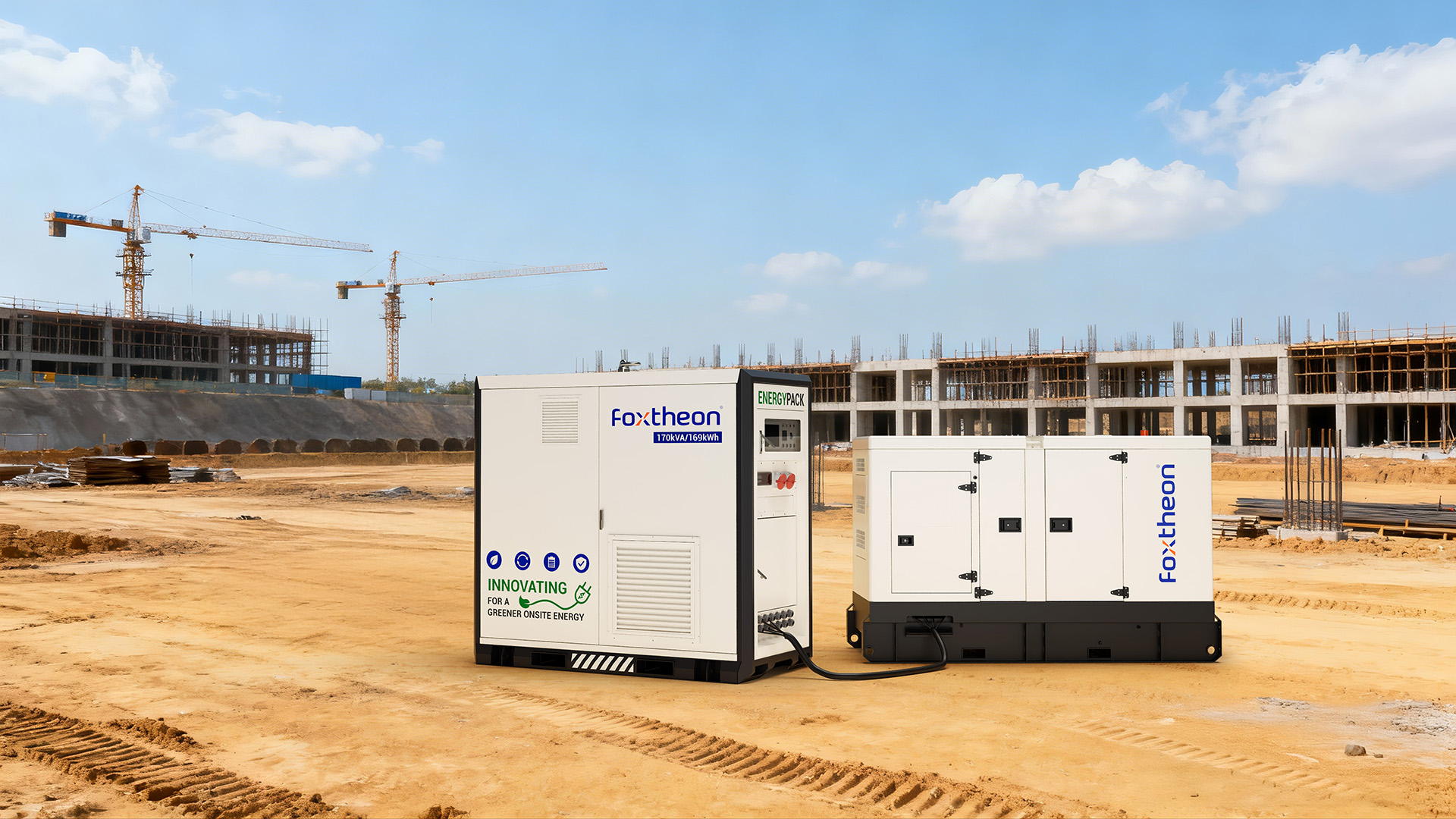
A more sustainable and modern approach involves the use of Battery Energy Storage Systems (BESS). By integrating a system from Foxtheon, operators can decouple the generator’s output from the immediate load demand. This is often referred to as a “Hybrid Power Solution.”
In this configuration, the generator is used primarily to charge a high-capacity battery bank. The batteries then provide power to the site. This allows the generator to run at its highest efficiency point (sweet spot) for a shorter duration and then shut down entirely while the batteries handle the light loads. This effectively eliminates the low-load conditions that cause carboning and is a premier way to reduce generator wet stacking while significantly lowering fuel consumption.
3. Implementing Advanced Control Logic and Parallelism
In facilities with multiple generators, “N+1” or “N+2” redundancy is common. Often, all generators are kept running at low loads to ensure immediate availability if one fails. However, modern control systems allow for “Load Demand Paralleling.”
This logic ensures that only the minimum number of generators required to meet the load (plus one for redundancy) are running at any given time. As the load increases, additional units are synchronized and brought online. As the load decreases, units are shed. By keeping the active units running at 60-80% capacity, you naturally reduce generator wet stacking without the need for external load banks.
4. Predictive Maintenance and Thermal Monitoring
Data-driven maintenance is critical for identifying the early stages of wet stacking. Operators should monitor the following metrics:
- Exhaust Gas Temperature (EGT): A drop in EGT is the first indicator that the engine is running too cold.
- Crankcase Pressure: Increased pressure often suggests that piston rings are no longer sealing due to cylinder glazing.
- Opacity Testing: Regularly checking the smoke density can help identify fuel atomization issues.
Using IoT-enabled sensors, companies like Foxtheon provide the hardware and software necessary to track these variables in real-time, allowing for proactive intervention before a minor soot buildup becomes a major mechanical failure.
5. Right-Sizing the Generation Asset
A frequent cause of wet stacking is “over-speccing.” Project engineers often choose a generator based on the absolute peak startup current of the largest motor on site, plus a significant safety margin. This results in a generator that spends 99% of its life running at 10% capacity.
To reduce generator wet stacking at the design phase, engineers should consider “Peak Shaving” with batteries. By using a smaller generator to handle the base load and a battery system to provide the “kick” needed for motor startups, the generator can be sized much closer to the average running load, ensuring it stays within its ideal thermal range.
6. Periodic High-Load Exercising
For standby generators that rarely see heavy use, a “burn-off” period is essential. Industry standards often recommend running the generator at at least 75% of its rated nameplate capacity for 2 to 4 hours once a month. This period of high-intensity operation raises the combustion chamber temperature sufficiently to vaporize unburned fuel and burn off the “coke” or carbon deposits on the injectors and turbocharger vanes.
7. Optimizing Fuel Quality and Injection Timing
While mechanical load is the primary driver of wet stacking, fuel quality plays a supporting role. Using high-cetane fuel can improve ignition quality under marginal temperature conditions. Additionally, some modern electronic engines allow for slight adjustments in injection timing to increase exhaust temperatures during low-load operation, though this must be balanced against NOx emission limits. Combining these chemical and mechanical adjustments helps to further reduce generator wet stacking in harsh environments.
Case Study: Remote Mining Operations
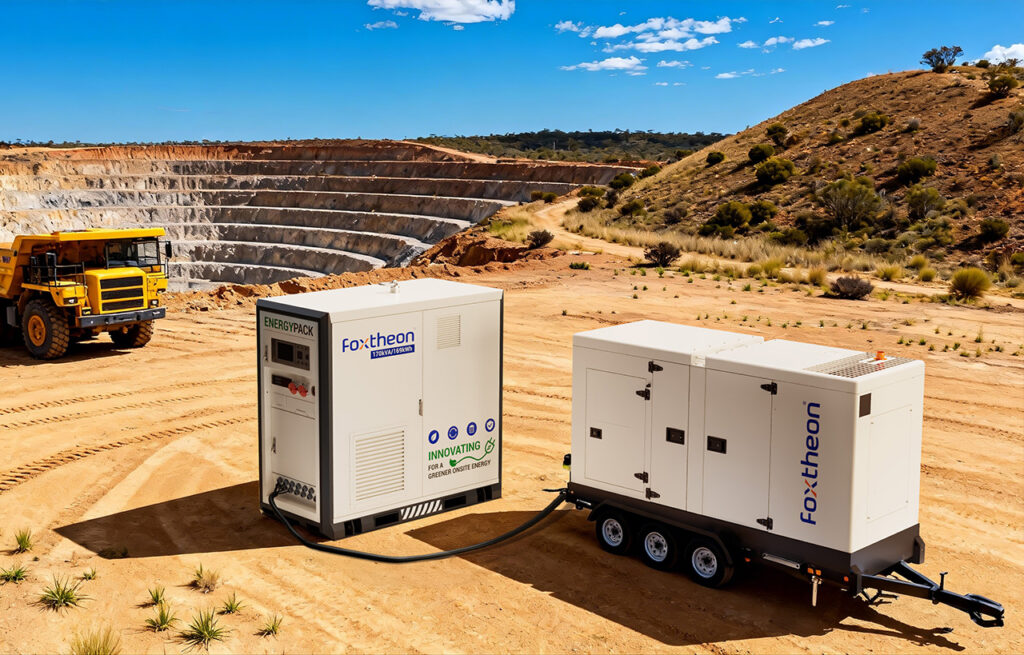
In remote mining, power demand fluctuates wildly between heavy machinery operation and nighttime site security. Traditionally, large diesel units would idle through the night, leading to massive wet stacking issues. By implementing a hybrid solution from Foxtheon, one site was able to shut down its primary generators for 10 hours a day, relying on stored energy for low-demand periods. This not only eliminated wet stacking but also extended the engine service intervals by 40%.
A Proactive Path to Power Reliability
Wet stacking is an avoidable consequence of mismatched power supply and demand. By moving away from the “set it and forget it” mentality and embracing technologies like load banks, paralleling logic, and hybrid energy storage, industrial operators can protect their assets. The objective to reduce generator wet stacking is intrinsically linked to the broader goal of operational efficiency and decarbonization. As energy systems become more complex, the integration of intelligent storage and load management will remain the gold standard for high-availability power systems.
Frequently Asked Questions (FAQ)
Q1: How can I tell if my generator is already suffering from wet stacking?
A1: Look for “slobber,” which is a dark, oily liquid leaking from exhaust manifolds or joints. Other signs include thick black smoke during load changes, a noticeable drop in power output, and increased fuel consumption without a corresponding increase in work performed.
Q2: Is wet stacking permanent, or can it be reversed?
A2: In its early stages, wet stacking is reversible. Running the engine at a high load (above 75%) for several hours can often burn off the deposits. However, if the condition has progressed to deep cylinder glazing, the engine may require a mechanical hone and ring replacement.
Q3: Does wet stacking affect natural gas generators the same way as diesel?
A3: No. Wet stacking is specific to diesel (compression-ignition) engines because diesel fuel requires much higher temperatures and pressures to ignite and burn completely compared to the spark-ignition process used in natural gas engines.
Q4: Why not just run the generator at a lower RPM to save fuel?
A4: Most industrial generators must run at a constant speed (e.g., 1500 or 1800 RPM) to maintain the correct electrical frequency (50Hz or 60Hz). Reducing RPM would cause “under-frequency” and damage the connected electrical equipment.
Q5: How does a hybrid battery system specifically prevent this issue?
A5: The hybrid system acts as a buffer. Instead of the generator struggling to provide 5kW of power (a low load for a 100kW unit), the generator stays off while the battery provides the 5kW. When the battery needs charging, the generator runs at 80kW—its most efficient state—to charge the battery quickly and then shuts down again.