

Managing a rental fleet used to be about clipboards, phone calls, and whiteboards. Today, it is about data. Whether you are renting out diesel generators, hybrid light towers, or advanced Battery Energy Storage Systems (BESS), the operational complexity has skyrocketed.
The modern fleet manager deals with assets scattered across different job sites, varying usage patterns, and customers demanding real-time transparency. This is where API integration for rental equipment becomes the critical link. It stops being just a tech buzzword and becomes the operational backbone that keeps a business profitable.
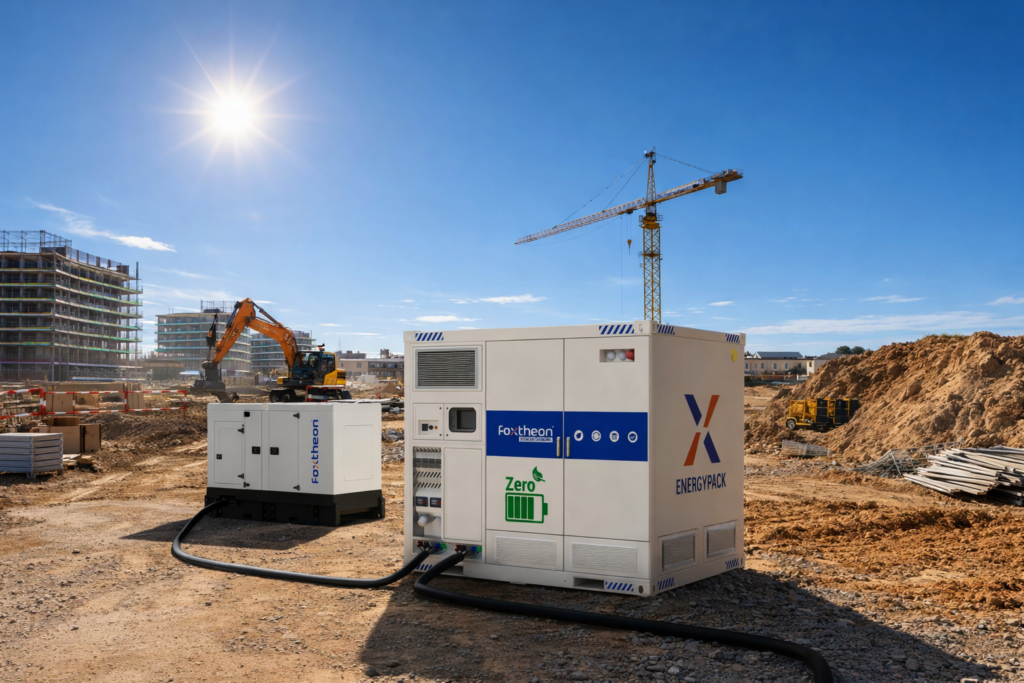
Companies like Foxtheon have recognized this shift. They understand that manufacturing high-quality energy assets is only part of the equation; ensuring those assets can “talk” to the rental company’s management software is equally important.
What is API Integration in the Rental Context?
An Application Programming Interface (API) acts as a digital bridge. In the rental industry, you typically have two distinct islands of data. On one side, you have your physical assets (batteries, generators) generating telemetry data. On the other side, you have your Enterprise Resource Planning (ERP) or rental management software.
Without an API, these two islands don’t connect. You might have to manually log into a manufacturer’s portal to check battery levels and then manually type that data into your billing software.
API integration for rental equipment automates this flow. It allows your rental software to pull data directly from the equipment without human intervention. This seamless handshake creates a unified ecosystem where data flows freely from the job site to the back office.
1. Automating Billing Based on Usage
The traditional rental model charges by the day or week. However, the energy sector is moving toward “Power-as-a-Service.” Customers want to pay for what they use, not just for having the equipment on site.
Precision Metering
With API connections, you can pull exact runtime hours or kilowatt-hours (kWh) consumed directly from the asset into your invoicing system. This eliminates disputes. The customer cannot argue they didn’t use the generator if the data log shows it ran at 80% load for 10 hours.
Tiered Pricing
This data allows for dynamic billing. You can set up automatic triggers where usage exceeding a certain threshold creates a surcharge, or conversely, offer efficiency incentives. The billing becomes instantaneous and accurate, improving cash flow.
2. Real-Time Asset Tracking and Geofencing
Loss of equipment is a massive drain on ROI. GPS trackers have been around for a while, but an integrated API strategy takes this a step further.
Instead of just seeing a dot on a map in a separate app, the location data is fed into your dispatch software. If a piece of equipment moves outside a designated “geofence” (the job site boundary), the system can automatically flag it as stolen in your inventory, alert the customer via SMS, and notify the police.
For high-value assets like Foxtheon’s energy storage units, this level of security is mandatory. The integration ensures that the moment an asset moves unexpectedly, the operations team knows about it without needing to constantly monitor a map screen.
3. Shifting from Reactive to Predictive Maintenance
Downtime is the enemy of a rental business. If a unit fails on a client’s site, you have to rush out a replacement, pay for transport, and likely issue a credit note.
API integration for rental equipment allows the machine to tell you it is sick before it dies.
Reading the Warning Signs
By pulling live diagnostic codes (DTCs) into your maintenance software, you can spot trends. Perhaps an inverter is showing consistent overheating warnings, or a battery cell voltage is drifting.
Automated Work Orders
The API can trigger a workflow. When an alert code is received, the system can automatically generate a maintenance ticket, assign a technician, and even order the necessary spare part. The repair happens during scheduled downtime, not during a critical power outage.
4. Foxtheon and the Connected Ecosystem
In the niche of intelligent energy solutions, the hardware must be smart. Foxtheon has positioned itself as a key player by ensuring their hybrid energy storage systems are API-friendly.
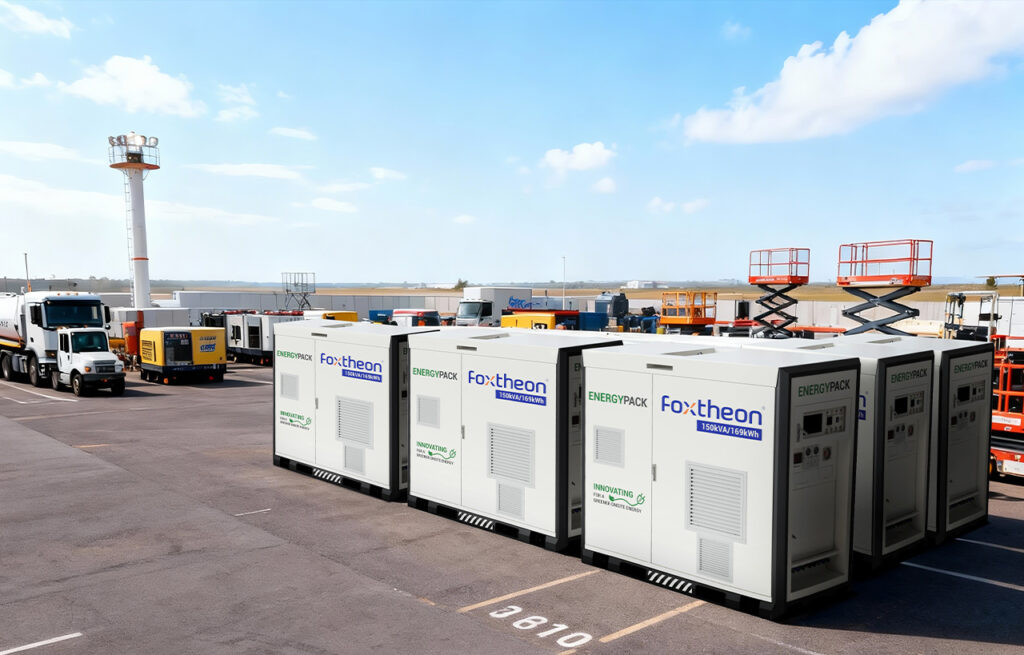
When a rental company adds Foxtheon units to their fleet, they aren’t just buying a battery box. They are buying an asset that integrates easily with existing fleet management platforms. This “developer-friendly” approach reduces the friction of adopting new technology.
Instead of needing a proprietary app just to check the battery status of a Foxtheon unit, a fleet manager can view that data right alongside their diesel generators and solar arrays in a single “pane of glass” dashboard.
5. Enhancing the Customer Experience
Your customers are becoming more sophisticated. Construction managers and event organizers want to know their carbon footprint and fuel usage in real time.
Customer Portals
By using APIs, you can feed the telemetry data from your equipment into a customer-facing portal. Your clients can log in and see exactly how much fuel they have saved by using a hybrid system versus a standard generator.
Self-Service Operations
Integration allows customers to perform basic functions themselves, such as remote starting or stopping a unit, without calling your support line. This empowers the customer and reduces the burden on your support staff.
6. Streamlining Inventory Management
Knowing what you have is good; knowing what is “rent-ready” is better.
A standard inventory list might say you have 10 units in the yard. However, API integration for rental equipment updates the status based on health checks. If 3 of those units have unresolved error codes or low fluid levels, the system marks them as unavailable.
This prevents the sales team from booking equipment that isn’t actually ready to go out. It avoids the embarrassment of sending a broken unit to a new client, preserving your reputation.
7. Scalability and Data Analytics
As your rental business grows from 100 units to 1,000, manual processes break down. You cannot manage a large fleet with spreadsheets.
Big Data Insights
APIs aggregate massive amounts of data over time. You can analyze this to make purchasing decisions. If the data shows that your 100kW generators are utilized 90% of the time, but your 200kW units only 30%, you know exactly what to buy next year.
ROI Calculation
You can track the exact profitability of every single asset. By combining maintenance costs (from the shop software) with rental revenue (from the ERP) and operational hours (from the API), you get a granular view of the total cost of ownership (TCO).
Overcoming Integration Challenges
While the benefits are clear, the path to full integration requires planning. Not all equipment speaks the same language.
Protocol Translation
Some older equipment might use legacy protocols like Modbus or CAN bus without a cloud connection. You may need to install IoT gateways—hardware “translators”—to get that data online.
Data Standardization
Different manufacturers structure their data differently. “Battery Level” might be labeled “SoC” by one vendor and “Fuel_Level_2” by another. Middleware is often required to standardize this incoming data so your rental software can understand it uniformly.
The Future is Interconnected
The rental industry is moving away from purely mechanical assets. The equipment of the future is software-defined.
We are seeing a trend where the API integration for rental equipment allows for over-the-air (OTA) updates. Imagine a scenario where a customer needs a different output voltage configuration. Instead of sending a mechanic, you push a software command via the API to reconfigure the machine instantly.
This level of agility is what separates market leaders from legacy rental houses.
The days of renting out a “dumb” iron box are numbered. To compete in the modern energy and construction markets, rental companies must treat data as a commodity as valuable as the equipment itself.
Implementing a robust strategy for API integration for rental equipment reduces overhead, secures revenue, and significantly improves customer satisfaction. It transforms the chaotic nature of fleet management into a streamlined, data-driven operation.
Whether you are deploying Foxtheon’s advanced energy storage or traditional earthmoving gear, the ability to connect, monitor, and automate is the key to scaling your business in the digital age.
Frequently Asked Questions
Q1: What is the main benefit of API integration for a small rental business?
A1: For smaller businesses, the main benefit is the elimination of manual data entry. It saves hours of administrative work each week by automatically updating meter readings and location data, allowing the small team to focus on sales and customer service rather than paperwork.
Q2: Do I need a dedicated software developer to set up API integration?
A2: Not always. Many modern rental management software platforms (like Point of Rental or Wynne) have pre-built integrations with major equipment manufacturers. However, for custom setups or integrating mixed fleets with obscure hardware, you might need a system integrator or a developer to map the data points correctly.
Q3: How does API integration help with equipment theft?
A3: It enables real-time geofencing. The API feeds GPS coordinates directly to your security system. If a unit moves outside of the authorized area or during unauthorized hours, the system triggers immediate alerts to you and potentially to local law enforcement, vastly improving recovery times.
Q4: Is API integration expensive to implement?
A4: The cost varies. Some manufacturers charge a subscription fee for access to their API data stream (telematics fees). Additionally, there may be costs associated with upgrading your rental software to a tier that supports API connectivity. However, the return on investment through reduced theft and improved billing accuracy usually offsets these costs quickly.
Q5: Can I integrate legacy equipment that doesn’t have built-in internet connectivity?
A5: Yes, but it requires hardware retrofitting. You can install third-party telematics devices (IoT gateways) on older machines. These devices read the machine’s internal signals and transmit them to the cloud, where your API integration for rental equipment can then access the data just like it would for a modern machine.