
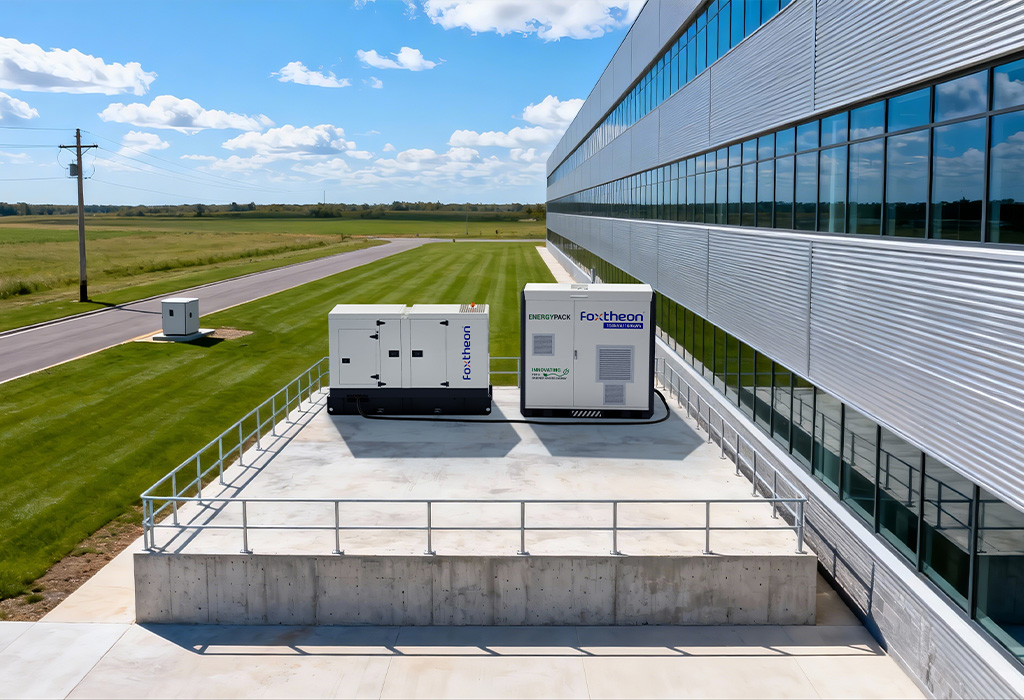
The global energy landscape is shifting rapidly toward decentralization and sustainability. For equipment rental companies, this transition presents both a challenge and a massive opportunity. Historically, rental yards were dominated by diesel-guzzling generators that were loud, expensive to maintain, and increasingly at odds with environmental regulations. Today, the focus has moved toward smarter, cleaner alternatives. Specifically, fleet managers are now looking at the financial benefits of improving rental asset ROI BESS (Battery Energy Storage Systems) to stay ahead of the competition.
The rise of mobile energy storage isn’t just about being “green.” It is about the fundamental economics of a rental business. When you reduce fuel consumption, minimize on-site maintenance visits, and extend the working life of your machinery, your margins expand. Companies like Foxtheon are leading this charge by providing robust, high-performance energy storage solutions that allow rental houses to transition from traditional power to intelligent, hybrid systems seamlessly.
1. Implementing Hybrid Power Architectures
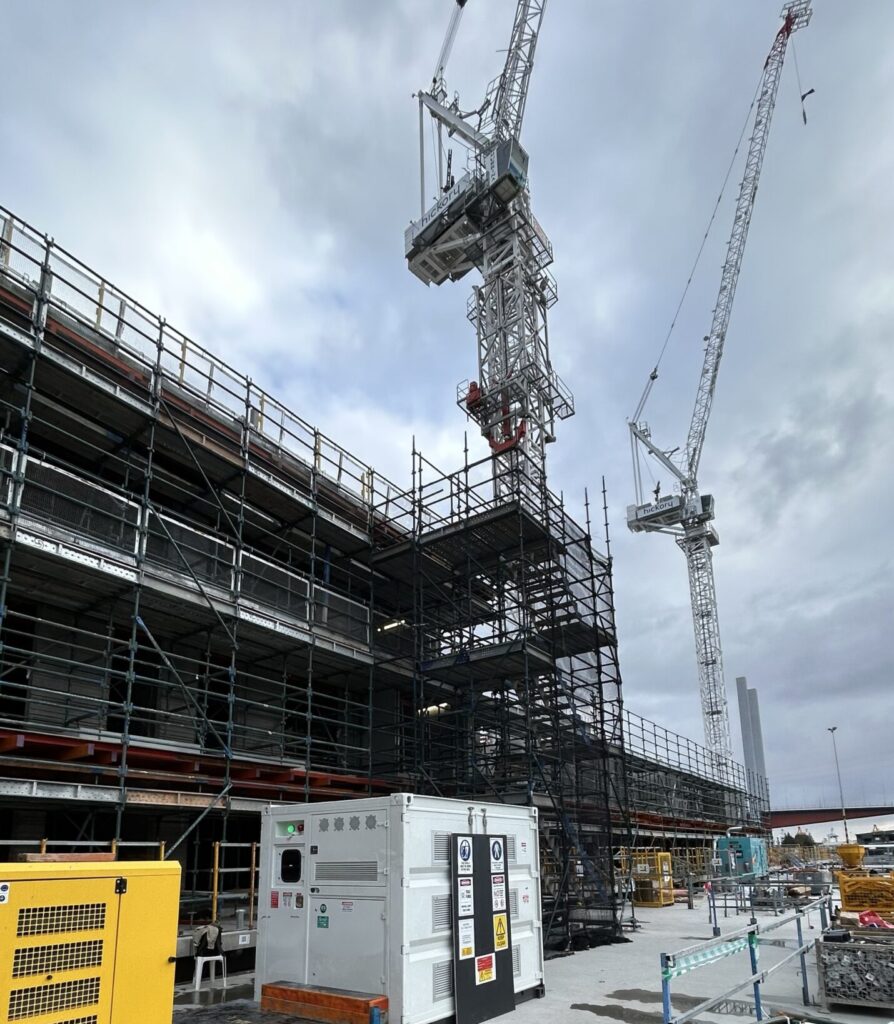
One of the most immediate ways to see a return is through hybridization. Most rental customers tend to oversize their generators to handle peak startup loads. However, for most of the day, those generators run at low loads—a practice that leads to “wet stacking,” high fuel waste, and frequent engine failures.
By integrating a BESS into the setup, the battery handles the low-load periods and the peak surges. The generator only runs to recharge the battery at its most efficient RPM. This setup can reduce fuel costs by up to 70%. For a rental company, this translates to lower wear and tear on their generator fleet and a more attractive, cost-saving package for the end-user.
2. Leveraging Telematics for Improving Rental Asset ROI BESS
Modern energy storage systems are essentially “computers in a box.” Unlike mechanical generators, they offer a wealth of data that can be monitored remotely. To truly succeed in improving rental asset ROI BESS, you must utilize real-time telematics.
With cloud-based monitoring, a fleet manager can see the state of charge, the health of the battery cells, and the load profile of the customer’s site from a smartphone. If a unit is being abused or if a fault is detected, the system sends an alert before a breakdown occurs. This proactive approach eliminates unnecessary “no-fault-found” service trips, which are a major drain on rental profitability.
3. Expanding into “Quiet Zone” and Urban Markets
Traditional power solutions often struggle with noise ordinances in residential areas or near hospitals. This limits the “billable hours” of a rental asset to daytime windows. A battery energy storage system, however, is silent.
By offering BESS units, rental companies can bid on night-time construction projects, film sets, and urban events that were previously off-limits. This ability to operate 24/7 without disturbing the peace significantly increases the utilization rate of the asset. When a piece of equipment is out on rent for longer periods across diverse sectors, the path to profitability becomes much shorter.
4. Reducing Total Cost of Ownership (TCO)
When evaluating the ROI of a rental asset, many owners only look at the initial purchase price. This is a mistake. The true value lies in the Total Cost of Ownership. Diesel generators require oil changes, filter replacements, and belt adjustments every few hundred hours.
In contrast, BESS units have almost no moving parts. Brands like Foxtheon design their systems to be virtually maintenance-free for years. By removing the labor and parts costs associated with engine maintenance, the rental house keeps a much higher percentage of the daily rental rate as pure profit. Over a five-year period, the savings on maintenance alone can often cover a significant portion of the initial investment.
The Role of Battery Management Systems (BMS)
The heart of any BESS is the BMS. This software ensures that cells are balanced and that the battery never operates outside of its safe temperature or voltage range. A high-quality BMS doesn’t just prevent fires; it extends the usable life of the battery. For a rental company, a battery that lasts 10 years instead of 5 years effectively doubles the ROI of that asset.
Modular Scalability
Another factor in reducing TCO is the ability to scale. Instead of buying ten different sizes of generators, a fleet owner can invest in modular BESS units. If a customer needs more power, you simply parallel two or three units together. This modularity reduces the amount of “dead stock” sitting in your yard and ensures that your capital is always working for you.
5. Capturing Premium Pricing through ESG Compliance
Environmental, Social, and Governance (ESG) mandates are no longer optional for large-scale construction and infrastructure firms. Many tier-one contractors are now required to show a reduction in carbon emissions on their job sites.
Rental companies that can provide documented proof of carbon savings through BESS technology can command a premium rental rate. Customers are willing to pay more for a “Clean Power” solution that helps them meet their contractual obligations and avoid “green” taxes or fines. Positioning your fleet as a high-tech, sustainable partner is a powerful way of improving rental asset ROI BESS.
6. Streamlining Logistics and Deployment
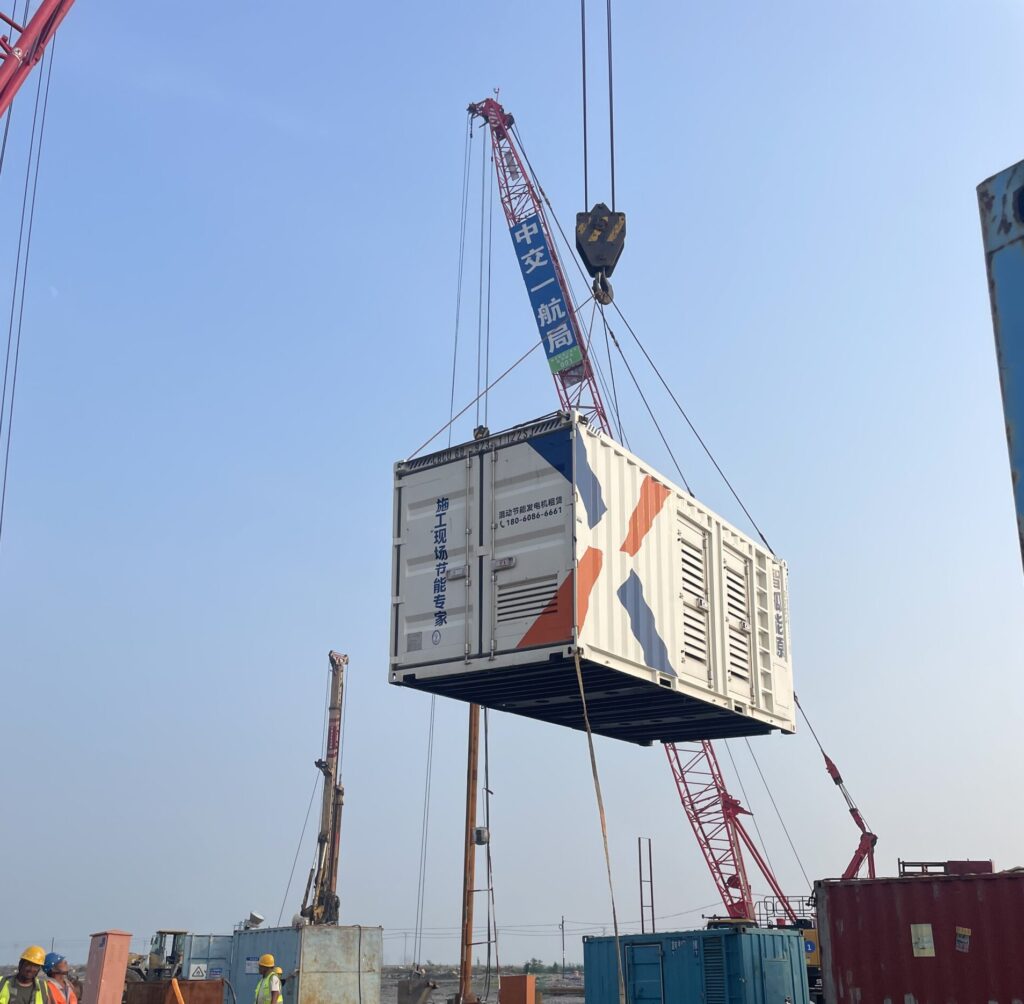
Transporting energy assets is an expensive part of the rental business. Diesel generators are heavy and require careful handling to avoid fuel or oil spills during transit.
Modern lithium-based energy storage systems are often more compact and energy-dense. They don’t require spill kits or special environmental permits for transport in most jurisdictions. Furthermore, because they are easier to set up—often requiring just a few “plug-and-play” connections—the labor time required for deployment is slashed. Faster turnarounds between rentals mean the asset spends more time earning and less time on the back of a truck.
7. Data-Driven Value-Added Billing
One of the biggest leaks in rental revenue is the “flat rate” model. Many companies rent out a generator for a day and charge a fixed fee, regardless of how much it is used. With the intelligent sensors in a BESS, you can move toward “Value-Based Billing.”
You can charge based on the total kilowatt-hours delivered or provide the customer with an “Energy Efficiency Report” at the end of the month. This data is highly valuable to customers who are trying to optimize their own operations. By providing this data as an added service, you differentiate your business and can justify a higher overall service fee, further contributing to your bottom line.
8. Enhancing Resale and Residual Value
Eventually, every rental asset must be retired and sold on the secondary market. A diesel generator with 10,000 hours on it has a very low resale value because the engine is likely near the end of its life.
A BESS unit, however, maintains its value differently. If the telematics show that the battery cells have been well-maintained and still have 80% State of Health (SOH), the unit remains a highly valuable asset for second-life applications, such as stationary home storage or backup power for small businesses. Having a “digital birth certificate” for your equipment ensures that you get the highest possible price when it’s time to cycle the fleet.
Choosing the Right Technology Partner
Success in the modern rental market requires more than just buying the cheapest equipment available. It requires a partnership with innovators who understand the rigors of the field. Foxtheon provides the kind of durable, high-density power solutions that are purpose-built for the rental industry. Their equipment is designed to handle the vibrations of transport, the dust of construction sites, and the fluctuating demands of variable loads.
By focusing on high-quality hardware and intelligent software, fleet owners can move away from the “commodity” rental business and move into the high-margin world of professional energy management.
The path to improving rental asset ROI BESS is paved with data, efficiency, and market diversification. By reducing fuel dependency, slashing maintenance costs, and tapping into the growing demand for green energy, rental companies can transform their financial outlook.
It is no longer enough to simply provide power; you must provide “smart” power. As the industry continues to evolve, those who embrace hybrid systems and remote monitoring will be the ones who lead the market. With the right strategy and the right technology from partners like Foxtheon, the transition to a high-ROI, sustainable rental fleet is well within reach. Focus on the long-term lifecycle of your assets, and the profitability will follow.
Frequently Asked Questions (FAQ)
Q1: How much can I actually expect to save on fuel by using a BESS?
A1: While results vary by application, most hybrid setups (Generator + BESS) see fuel savings between 40% and 70%. In low-load scenarios, such as overnight on a construction site where only security cameras and lights are running, the savings can be even higher as the generator stays completely off.
Q2: Is the initial high cost of BESS a barrier to ROI?
A2: While the upfront cost is higher than a standard diesel generator, the ROI is found in the operational savings. When you factor in the 90% reduction in maintenance costs, the fuel savings, and the longer asset lifespan, most rental companies find that the “break-even” point is reached much faster than they initially expected.
Q3: Can these systems be used in extreme weather conditions?
A3: Yes. Quality units, such as those produced by Foxtheon, are designed with advanced thermal management systems. They include heating and cooling mechanisms that allow the lithium cells to operate safely and efficiently in both freezing winters and high-heat summer environments.
Q4: How do I know when it is time to replace the batteries in a rental unit?
A4: This is handled through State of Health (SOH) monitoring. The telematics system will give you a percentage reading of the battery’s remaining capacity. Typically, in the rental industry, an asset is considered for “second-life” resale once its capacity drops below 70-80%, though it may still be perfectly functional for less demanding tasks.
Q5: Will I need to retrain my technicians to handle BESS units?
A5: There is a learning curve, but it is often simpler than learning diesel mechanics. Technicians move from working with greasy engines, fuel lines, and filters to working with electrical connections and software interfaces. Most manufacturers provide comprehensive training modules to help your team make the transition quickly.
Q6: Can a BESS be charged from renewable sources like solar while on a job site?
A6: Absolutely. One of the biggest advantages of BESS is its ability to accept power from multiple sources. You can connect portable solar folding mats or rigid panels directly to the system. This allows for “Zero-Emission” operation, which is a major selling point for high-end rental contracts.