
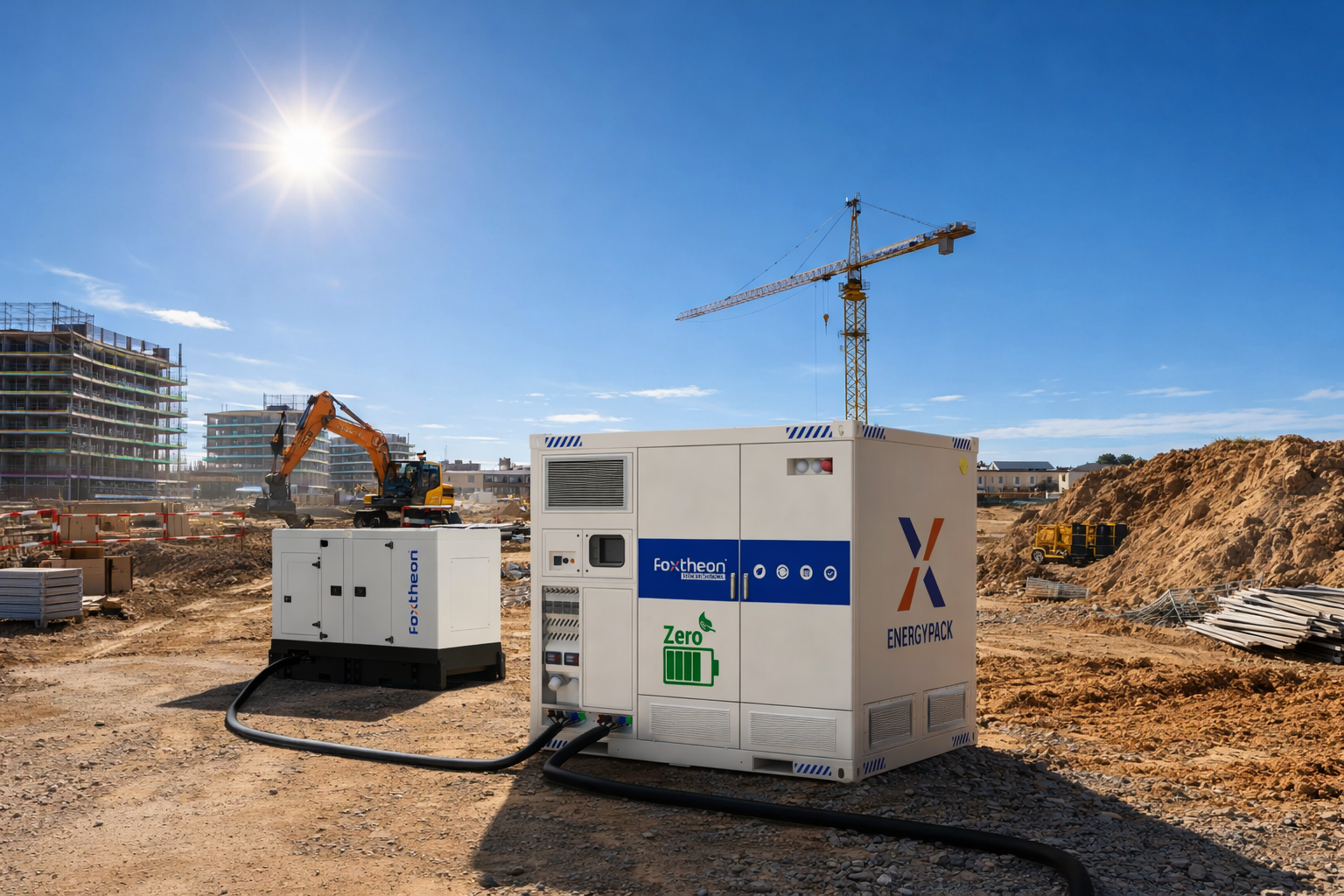
The acoustic footprint of civil engineering projects has become a primary bottleneck for project delivery timelines in densely populated urban centers. As municipal authorities tighten noise ordinances and local communities become more sensitive to environmental disturbances, the transition toward the quiet construction site generator is no longer an optional luxury but a regulatory requirement. For project managers and fleet operators, understanding the engineering behind sound attenuation and energy management is pivotal to maintaining operational continuity throughout night shifts and in noise-sensitive zones such as hospital vicinities or residential districts.
Traditional diesel generators, while robust, often emit sound pressure levels exceeding 95-100 dB(A) at the source. This level of noise pollution triggers immediate legal challenges and negatively impacts worker safety through increased cognitive fatigue and communication interference. Modern engineering solutions, spearheaded by firms like Foxtheon, are redefining the power profile of the modern job site by integrating advanced acoustic enclosures with sophisticated power electronics.
The Physics of Sound Attenuation in Power Generation
To achieve the status of a true quiet construction site generator, manufacturers must address three distinct noise pathways: mechanical vibration from the engine block, cooling fan turbulence, and exhaust gas pulsations. Sound is measured on a logarithmic scale; therefore, a reduction of just 3 dB(A) represents a 50% decrease in sound energy. For a generator to operate at a “silent” level—typically defined as 60-65 dB(A) at 7 meters—several technical layers must be implemented.
Acoustic Enclosure Materials and Geometry
Modern enclosures utilize high-density composite materials that offer both sound absorption and sound transmission loss. Unlike thin sheet metal, these specialized panels incorporate rock wool or open-cell polyurethane foam with a protective perforated inner lining. The geometry of the air intake and discharge is equally vital. “S-curve” air ducts or labyrinthine baffles force sound waves to bounce multiple times against absorbent surfaces before exiting the canopy, significantly bleeding off acoustic energy without restricting the airflow necessary for engine cooling.
Vibration Isolation and Harmonic Dampening
Low-frequency noise is often the result of structural vibrations transferred from the engine to the skid and then to the ground. Using anti-vibration mounts (AVMs) made from high-grade nitrile rubber or spring-loaded dampers helps decouple the reciprocating mass from the external environment. This structural isolation is a fundamental requirement for any quiet construction site generator intended for use on rooftops or in multi-story developments where vibration can travel through the building’s steel frame.
Strategy 2: The Shift to Hybrid Power and BESS Integration
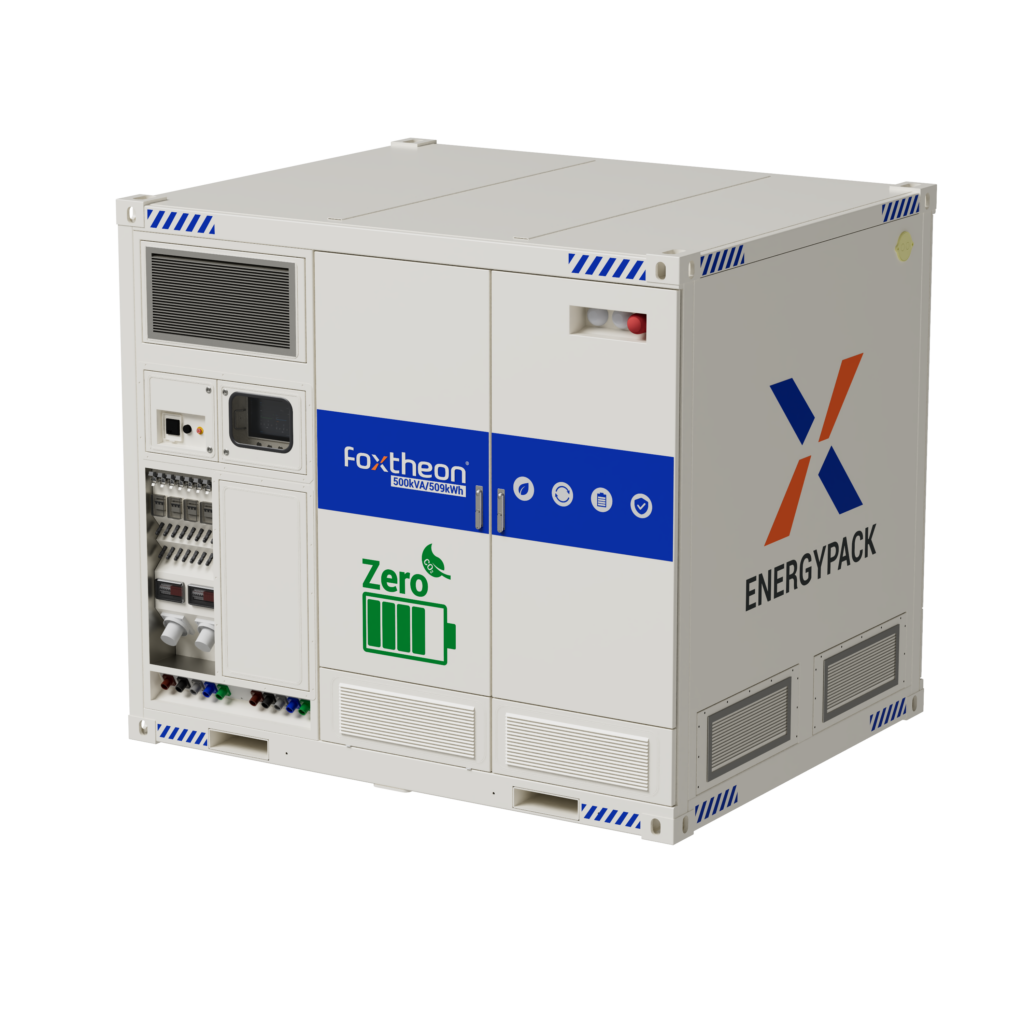
The most effective way to eliminate noise is to stop the internal combustion engine altogether. This is achieved through the integration of a Battery Energy Storage System (BESS). By pairing a traditional diesel asset with a high-capacity lithium-ion storage unit, such as those designed by Foxtheon, operators can run the site on silent battery power during low-load periods or strictly regulated night hours.
This hybrid architecture allows the quiet construction site generator to function in a “peak shaving” or “load-shifting” mode. The generator runs only when the battery state of charge (SoC) is low and does so at its most efficient, highest-load point, which ironically produces a more stable and easier-to-muffle acoustic profile than a generator constantly hunting for speed under variable loads.
- Silent Night Operations: Batteries handle lighting and security systems without any acoustic output.
- Emission Reduction: Lowering engine runtime directly translates to lower site-wide CO2 and NOx emissions.
- Maintenance Longevity: Fewer engine hours mean extended intervals between oil changes and filter replacements.
Addressing Urban Regulatory Frameworks and Compliance
In global hubs like London, New York, and Singapore, “Section 61” notices and similar environmental protection acts mandate strict noise limits. Failure to comply can result in immediate work-stop orders or heavy daily fines. Utilizing a quiet construction site generator allows contractors to bid on premium contracts where “Quiet Working Hours” are a mandatory part of the tender.
Furthermore, the health and safety implications of noise cannot be ignored. Chronic exposure to high-decibel environments is linked to permanent hearing loss and increased cardiovascular stress among workers. By reducing the ambient noise floor, site supervisors improve the clarity of verbal instructions and the audibility of safety alarms, thereby reducing the risk of on-site accidents.
The Role of Inverter Technology in Noise Control
Traditional generators must run at a fixed RPM (usually 1500 or 3000 RPM) to maintain a steady 50Hz or 60Hz frequency. This constant high-speed operation generates significant noise even when the demand for power is low. In contrast, an inverter-based quiet construction site generator uses a variable-speed engine.
The engine speed modulates in real-time to match the electrical load. If only a few power tools are in use, the engine drops to a low-idle speed, dramatically reducing both fuel consumption and noise. The AC output is then digitally synthesized via an inverter, ensuring that the power quality remains a pure sine wave with low Total Harmonic Distortion (THD), which is vital for sensitive electronic equipment like site surveying lasers and BIM workstations.
Total Cost of Ownership (TCO) for Silent Power Solutions
While the initial capital expenditure for a high-performance quiet construction site generator may be higher than a standard open-frame unit, the long-term ROI is compelling. A data-driven analysis of TCO includes several factors:
- Fuel Savings: Hybrid and inverter-based systems can reduce fuel consumption by 30% to 50% in variable-load scenarios.
- Logistics: Reduced fuel consumption means fewer refueling truck visits, which is a major logistical advantage in congested urban areas.
- Permitting: Easier approval for night work can shorten a 12-month project by several weeks, saving millions in labor and overhead costs.
- Asset Value: Silent, Tier 4 Final or Stage V compliant units hold significantly higher resale value in the secondary market due to their versatility.
Companies like Foxtheon emphasize these economic advantages, providing scalable solutions that grow with the project’s complexity. Their focus on high-density energy storage means that even the most power-hungry tools can be supported with a minimal acoustic footprint.
Implementing Intelligent Load Management
To truly maximize the effectiveness of a quiet construction site generator, an Energy Management System (EMS) must be employed. An EMS monitors the power demand of the entire site and determines the most silent power path. For instance, if a tower crane requires a massive surge of power for a lift, the EMS can draw from the BESS and the generator simultaneously. Once the lift is complete, the generator can be throttled back or shut off, leaving the battery to handle the steady-state load of site offices and lighting.
This “Smart Dispatch” logic ensures that the generator is never running at low, inefficient, and loud idle speeds. It also prevents the “wet stacking” phenomenon, where unburnt fuel accumulates in the exhaust system of under-loaded diesel engines, leading to smoke and increased noise over time.
The Future of On-Site Power: Zero-Emission and Silent
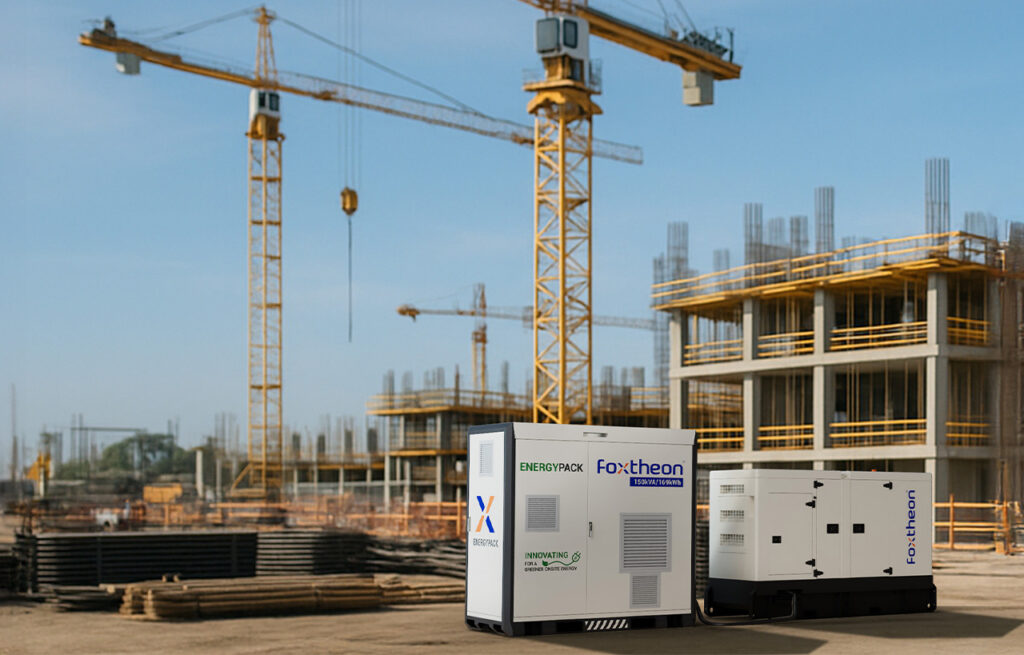
The industry is moving toward a future where the quiet construction site generator will eventually transition into full-scale mobile battery units recharged by renewable sources or hydrogen fuel cells. However, for the current decade, the hybrid diesel-lithium model remains the most reliable and cost-effective solution for high-power industrial applications. By investing in superior acoustic engineering and battery integration today, construction firms future-proof their operations against tightening environmental legislation and enhance their reputation as responsible corporate citizens.
In conclusion, the selection of power equipment is a strategic decision that affects project viability, worker health, and fiscal performance. Moving away from legacy acoustic-heavy machinery toward a quiet construction site generator is a mandatory step for any forward-thinking B2B enterprise in the energy and infrastructure space.
Frequently Asked Questions
Q1: What is the maximum noise level allowed for a generator in a residential construction zone?
A1: While regulations vary by city, most urban ordinances require noise levels to remain below 65 dB(A) at the property line during daytime hours and as low as 45-50 dB(A) during night hours. Achieving these levels usually requires a hybrid battery-generator system or a highly attenuated acoustic enclosure.
Q2: Can a quiet generator handle high-surge loads like water pumps or circular saws?
A2: Yes. High-quality quiet generators, especially those utilizing inverter technology or battery assistance, are designed to handle high inrush currents. The battery provides the immediate “punch” needed for motor startups, while the generator maintains the long-term energy supply.
Q3: Does a soundproof enclosure cause the generator to overheat?
A3: A professionally engineered enclosure for a [quiet construction site generator] is designed with sophisticated airflow thermal modeling. It uses high-static pressure fans and strategically placed vents to ensure that the engine remains within its optimal thermal range even in high ambient temperatures.
Q4: How often do the acoustic materials inside the generator need to be replaced?
A4: Modern acoustic foams and rock wool linings are designed to be oil and fire-resistant. Under normal operating conditions, these materials can last for the entire lifespan of the generator (10,000+ hours), provided they are kept free from direct fuel spills and physical damage.
Q5: Are hybrid “silent” generators more difficult to maintain than standard ones?
A5: Not necessarily. While they have more components (like inverters and batteries), the core diesel engine actually undergoes less stress because it is not subjected to constant low-load idling. Most maintenance is software-monitored, allowing for predictive alerts before a component fails.