
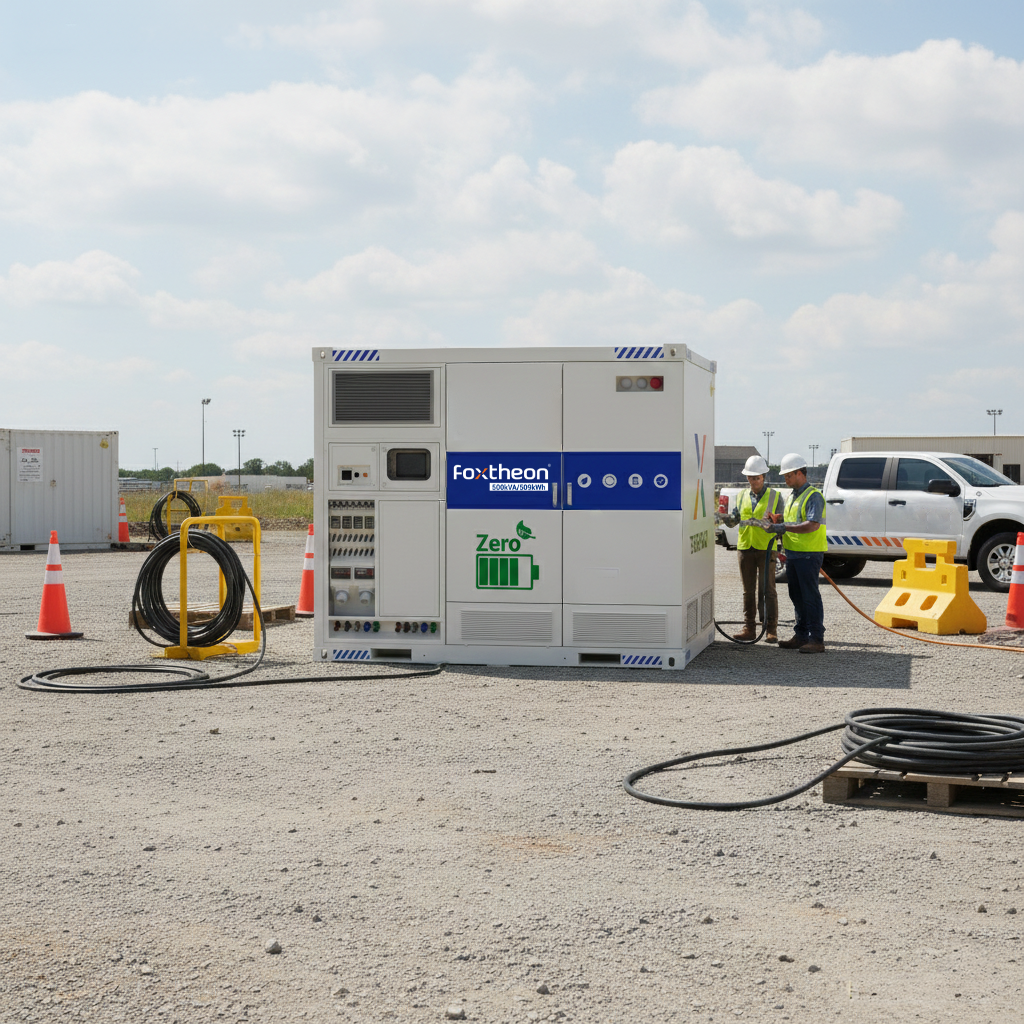
Managing energy costs in commercial buildings is a constant challenge for facility managers. Heating, Ventilation, and Air Conditioning (HVAC) systems often consume the largest portion of a building’s electricity. When these systems kick on simultaneously, they create massive spikes in power demand. Utilities charge premium rates for these spikes, leading to exorbitant monthly bills. This is where BESS for HVAC load leveling becomes a critical strategy.
Battery Energy Storage Systems (BESS) offer a smart way to smooth out these electrical peaks. By storing energy during off-peak hours when rates are low, facilities can deploy that power when the HVAC system works hardest. This process, known as load leveling, keeps the draw from the grid steady.
Companies like Foxtheon are recognizing the massive potential in this sector, providing robust energy solutions that integrate seamlessly with existing infrastructure. Adopting BESS for HVAC load leveling is no longer just a futuristic concept; it is a financial necessity for modern building management.
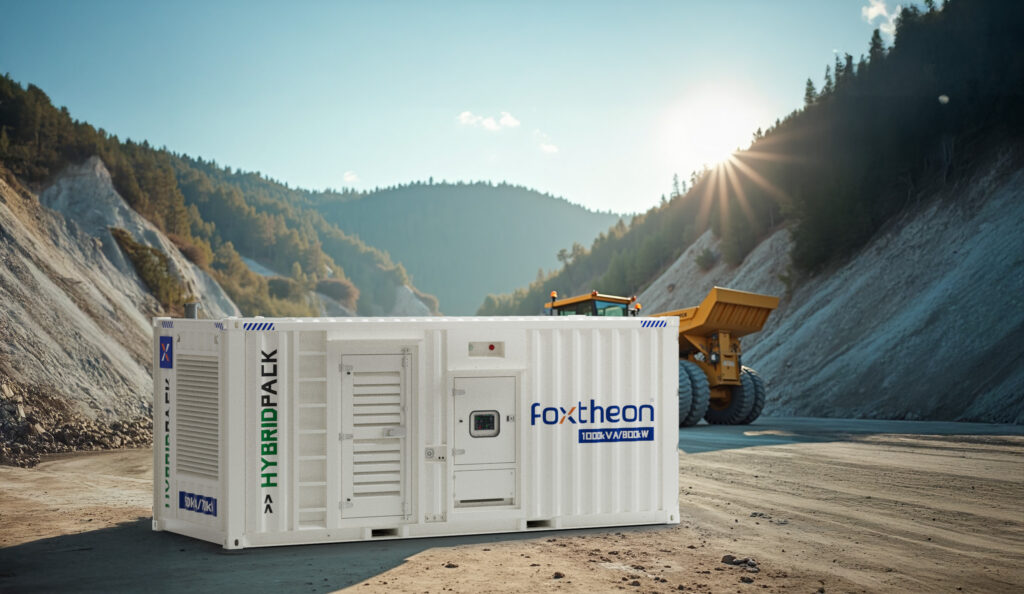
Understanding BESS for HVAC Load Leveling
To grasp the value of this technology, we must look at how commercial grids operate. Utilities do not just charge for the total amount of electricity used. They also charge for “demand,” which is the highest amount of power drawn at any single moment during the billing cycle.
BESS for HVAC load leveling specifically targets these demand intervals. The battery system acts as a buffer. When the HVAC compressors start up and require a surge of power, the battery provides that immediate energy instead of the grid.
Peak Shaving: Eliminating the highest spikes in usage.
Load Shifting: Moving consumption from expensive times to cheaper times.
Grid Stability: Reducing stress on local power lines.
Implementing BESS for HVAC load leveling creates a predictable load profile. This predictability allows facility managers to budget more accurately and avoid surprise charges on their utility bills.
How Battery Storage Reduces Peak Demand Charges
The primary financial driver for installing BESS for HVAC load leveling is the reduction of peak demand charges. In many commercial tariffs, demand charges can make up 50% of the total electric bill. HVAC systems are notorious for creating these peaks, especially on hot summer afternoons.
When you integrate a battery system, the intelligent controller monitors real-time building loads. As soon as the HVAC load begins to climb above a set threshold, the battery discharges.
Here is how the savings accumulate:
Lower Demand Rates: You stay in a lower pricing tier by keeping peak usage down.
Arbitrage: Charge batteries at night (cheap rates) and discharge during the day (expensive rates).
Capacity Charges: Some grids charge based on your potential capacity; batteries lower this requirement.
Effective BESS for HVAC load leveling ensures that the utility meter sees a flat line rather than a series of mountains, directly translating to cash savings.
Comparing BESS for HVAC Load Leveling vs. Thermal Storage
Historically, buildings used thermal storage (ice banks) to manage cooling loads. While effective, thermal storage has limitations compared to BESS for HVAC load leveling.
BESS Advantages:
Versatility: Batteries power lights and computers, not just cooling.
Space Efficiency: Modern Lithium-ion packs take up less room than large ice tanks.
Response Time: Batteries react in milliseconds; thermal systems take time to deploy.
Thermal Storage Limitations:
Single Use: Can only be used for cooling.
Maintenance: Requires complex plumbing and water treatment.
Degradation: Mechanical parts wear out faster than solid-state batteries.
For facilities seeking a comprehensive energy solution, BESS for HVAC load leveling offers superior flexibility. It solves the cooling load problem while providing backup power for other critical systems.
Choosing the Right Battery Chemistry
Not all batteries handle the stress of commercial HVAC support equally well. Selecting the right chemistry is vital for successful BESS for HVAC load leveling. The system must handle frequent charge and discharge cycles without rapid degradation.
Two main chemistries dominate the market:
Lithium Iron Phosphate (LFP):
High safety profile with low thermal runaway risk.
Long cycle life (often 6000+ cycles).
Ideal for daily load leveling.
Nickel Manganese Cobalt (NMC):
Higher energy density (more power in less space).
Better for space-constrained urban buildings.
Slightly shorter lifespan than LFP.
Top-tier providers, including Foxtheon, often favor LFP for stationary storage due to its longevity and safety. When designing BESS for HVAC load leveling, engineers must match the battery’s discharge rate (C-rate) to the inrush current of the HVAC motors. If the battery cannot discharge fast enough, the grid will still take the hit, defeating the purpose.
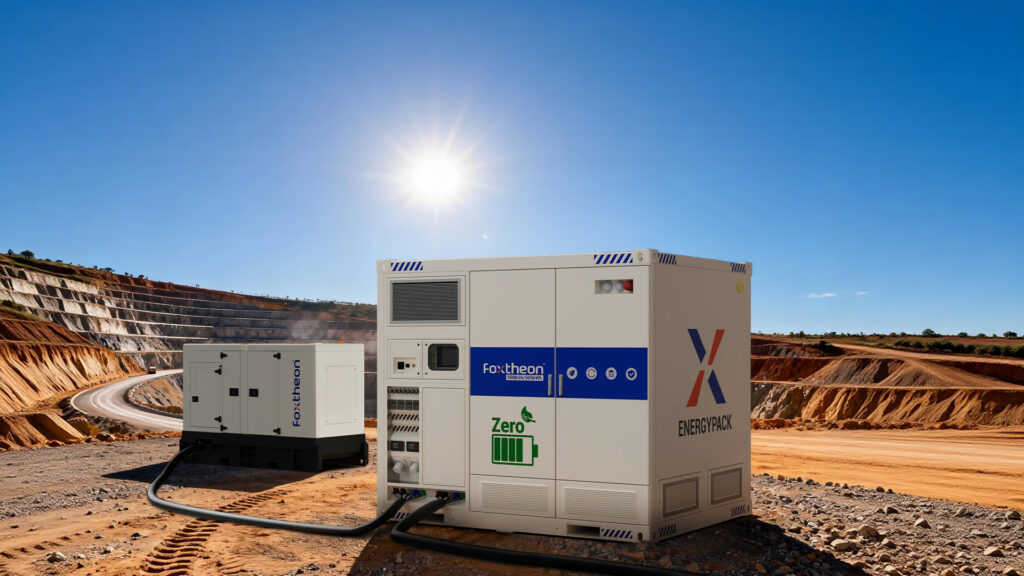
Integration with Building Management Systems (BMS)
Hardware is only half the battle. The software controlling the BESS for HVAC load leveling determines the system’s success. The battery management system must communicate directly with the Building Management System (BMS).
A smart integration allows for:
Predictive Cooling: Pre-cooling the building using battery power before peak hours.
Weather Response: Adjusting battery reserves based on heatwave forecasts.
Automated Dispatch: Discharging batteries automatically when HVAC creates a spike.
Without intelligent software, BESS for HVAC load leveling remains a manual, inefficient process. Modern controllers use AI to learn the building’s thermal properties, optimizing when to charge and discharge for maximum savings.
Cost Analysis and ROI for Commercial Buildings
Investing in BESS for HVAC load leveling requires capital expenditure, but the Return on Investment (ROI) is often attractive. The payback period typically ranges from 3 to 7 years, depending on local utility rates and incentives.
Financial factors to consider:
Federal Tax Credits: The Investment Tax Credit (ITC) can cover a significant percentage of hardware costs.
State Rebates: Many regions offer cash rebates for installing storage.
Demand Response Revenue: Utilities pay buildings to use their batteries to stabilize the grid.
When calculating ROI for BESS for HVAC load leveling, factor in the avoided costs of equipment wear. Running HVAC systems at a steady state, assisted by batteries, reduces mechanical stress compared to rapid cycling.
Technical Challenges and Solutions
Implementing BESS for HVAC load leveling does come with technical hurdles. The primary challenge is handling the “inrush current.” Large motors draw 5 to 7 times their running current during startup.
Solutions include:
Soft Starters: Devices that slowly ramp up motor speed to reduce the initial spike.
Variable Frequency Drives (VFDs): Allowing motors to run at partial speeds, matching load requirements.
Oversizing Inverters: Ensuring the battery inverter can handle temporary surges.
Engineers must size the BESS for HVAC load leveling solution correctly. Undersizing results in grid reliance during critical moments. Oversizing ruins the financial ROI. Trusted manufacturers like Foxtheon assist in this precise sizing process to ensure the system meets specific building loads.
Application Scenarios: Retail and Industrial
Different building types utilize BESS for HVAC load leveling in unique ways.
Retail and Supermarkets:
Have massive refrigeration loads alongside HVAC.
Use batteries to handle the mid-day peak when customers are active.
Protect perishable goods during outages.
Manufacturing Plants:
Process heat adds to the HVAC load.
BESS for HVAC load leveling prevents demand charges from eating into production margins.
Ensures consistent temperatures for sensitive manufacturing processes.
In both scenarios, the goal is the same: flatten the load curve. The adaptability of BESS for HVAC load leveling makes it suitable for almost any facility with a high cooling demand.
Future Trends in Energy Storage
The technology behind BESS for HVAC load leveling is evolving rapidly. We are seeing a shift toward “hybrid” inverters that manage solar PV and batteries simultaneously. This allows buildings to run HVAC on sunshine directly, using the battery only for clouds or evening peaks.
Another trend is “Virtual Power Plants” (VPPs). Aggregators bundle hundreds of systems using BESS for HVAC load leveling together. They sell this aggregated capacity back to the grid. This turns a cost-saving asset into a revenue-generating one.
Solid-state batteries are also on the horizon. They promise higher density and safety, which will further accelerate the adoption of BESS for HVAC load leveling in dense city centers where fire codes are strict.
Selecting a Vendor for Your BESS
Choosing the right partner is crucial. The market is flooded with integrators, but BESS for HVAC load leveling requires specific expertise in power electronics and thermal dynamics.
What to look for:
Track Record: Have they installed systems in similar climates?
Warranty: Does the warranty cover high-cycle usage?
Software: Is the EMS interface user-friendly?
Support: Is there local maintenance support?
Companies like Foxtheon distinguish themselves by offering integrated solutions that prioritize safety and long-term reliability. A vendor should not just sell a battery; they should sell a complete BESS for HVAC load leveling strategy tailored to your energy profile.
Energy management is the new frontier for operational efficiency. BESS for HVAC load leveling provides a practical, proven method to regain control over electricity expenses. By mitigating peak demand charges and optimizing energy usage, businesses can free up capital for growth.
Whether for a shopping mall, a data center, or a factory, the logic holds true. Smoothing the power curve saves money. As technology advances and brands like Foxtheon continue to innovate, BESS for HVAC load leveling will become the standard for smart, sustainable building management.
Frequently Asked Questions
Q1: How much space does a typical BESS for HVAC load leveling system require?
A1: The space requirement depends on the building’s size and load. However, modern commercial battery cabinets are compact. A typical 100kWh to 200kWh system, common for mid-sized commercial buildings, takes up roughly the space of two standard refrigerators or a small parking spot. Outdoor containerized solutions are also available for facilities with limited indoor room.
Q2: Can BESS for HVAC load leveling work if I don’t have solar panels?
A2: Yes, absolutely. While solar enhances the savings, it is not required. The system saves money primarily through “peak shaving”—using stored grid energy (bought at cheap night rates) to power the HVAC during expensive peak hours. You do not need renewable generation to benefit from load leveling.
Q3: What is the expected lifespan of a battery system used for daily load leveling?
A3: Most modern Lithium Iron Phosphate (LFP) batteries are designed for 4,000 to 6,000 deep cycles. If used for daily BESS for HVAC load leveling, the system should last between 10 to 15 years before the capacity degrades significantly. Regular maintenance and proper temperature control can extend this life further.
Q4: Is it difficult to retrofit BESS for HVAC load leveling into an existing building?
A4: Retrofitting is generally straightforward but requires an electrical assessment. The battery system connects to the main switchboard. The most complex part is integrating the software with the existing HVAC controls. However, experienced installers can complete the physical installation and software integration with minimal disruption to daily operations.
Q5: Will BESS for HVAC load leveling provide backup power during a blackout?
A5: Yes, most systems are designed to offer backup capabilities. While the primary goal is cost savings through load leveling, the battery can isolate from the grid during an outage (islanding) to keep critical HVAC zones or essential building circuits running. You must specify this requirement during the design phase to ensure the inverter has the correct capabilities.