
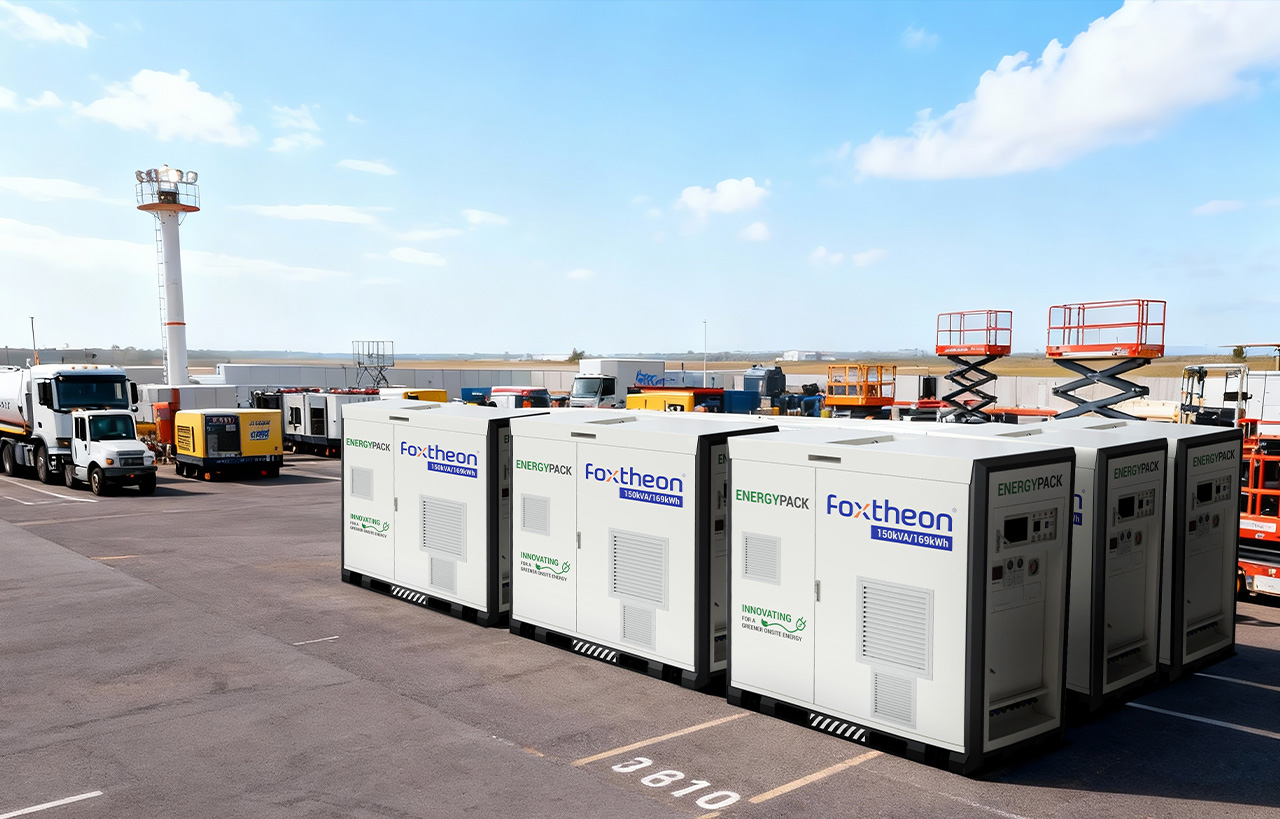
Large-scale cooling is a necessity for modern industry. From keeping data centers operational during grid maintenance to ensuring comfort at massive outdoor music festivals, temporary chillers are vital. However, powering these beasts has historically been loud, expensive, and incredibly inefficient.
The traditional method involves renting a massive diesel generator. You size the generator to handle the startup surge of the chiller’s compressor. The result? A generator that runs at low capacity for most of the day, burning fuel and creating noise unnecessarily.
The industry is shifting. The integration of BESS for temporary chiller power (Battery Energy Storage Systems) is rewriting the rules of rental HVAC.
Companies like Foxtheon are at the forefront of this transition. By combining smart battery technology with traditional generation, they provide solutions that stabilize power, reduce emissions, and save substantial amounts of money. This article explores why battery storage is the perfect partner for temporary cooling.
The Inefficiency of Standard Generator Deployments
To understand the value of batteries, we must look at how a chiller operates. An industrial chiller does not pull a constant amount of power. It cycles. The compressor turns on, cools the loop, and then cycles off or modulates down.
When the compressor kicks on, it demands a massive spike of electricity. This is known as “inrush current.”
Because of this spike, site managers often rent generators that are two or three times larger than the chiller’s running load.
Oversizing: A chiller might run on 100kW but needs 300kW to start. You have to rent a 350kVA generator.
Low Loading: Once the chiller is running, that big generator sits at 30% load.
Wet Stacking: Diesel engines hate low loads. Unburned fuel collects in the exhaust, leading to engine damage and black smoke.
This is where BESS for temporary chiller power solves the equation. It acts as a buffer. It handles the peaks so the generator doesn’t have to.
How BESS for Temporary Chiller Power Works
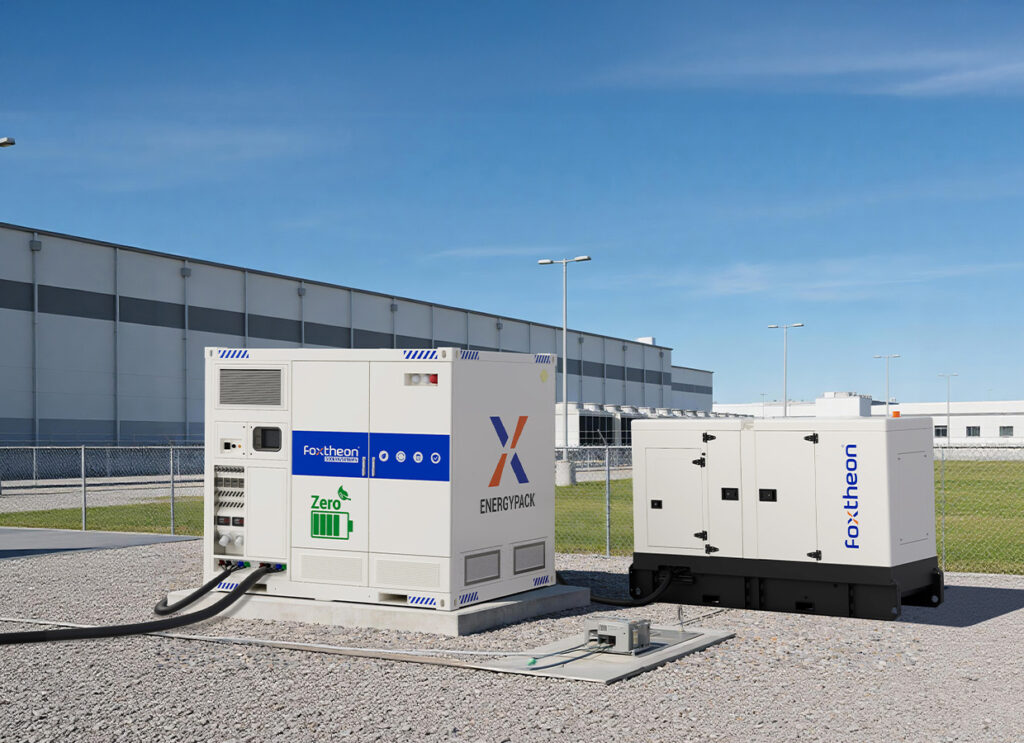
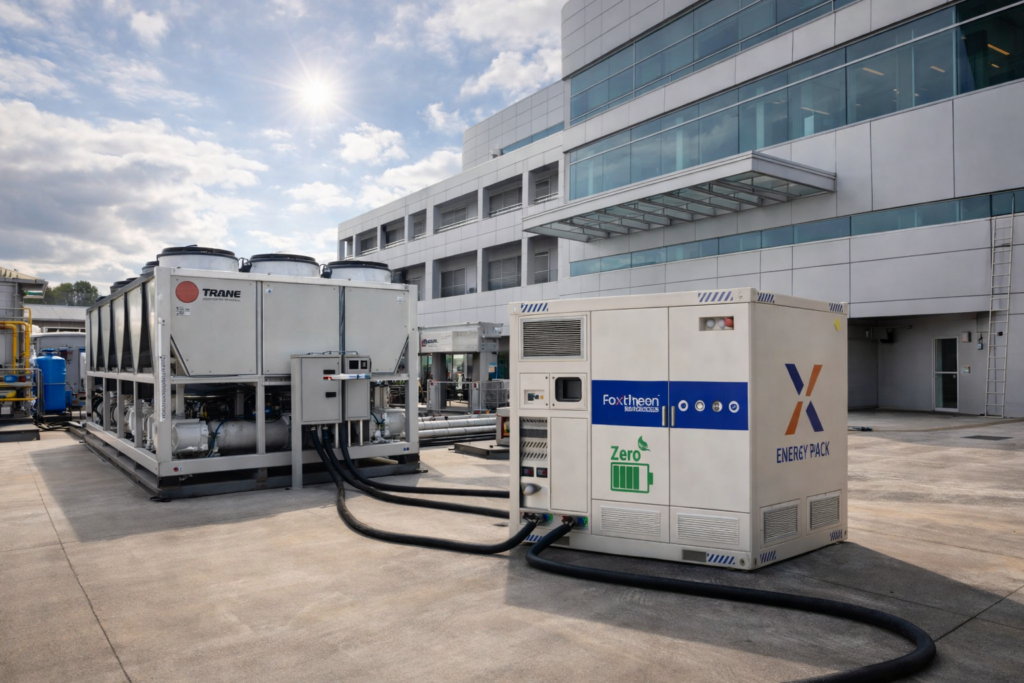
The concept is simple but the technology is sophisticated. In a hybrid setup, the Battery Energy Storage System sits between the power source (generator or grid) and the load (the chiller).
When the chiller is in steady-state operation, the generator charges the batteries and runs the cooling fans. The load is constant.
However, the moment the compressor tries to start, the BESS for temporary chiller power detects the surge. In milliseconds, the inverter discharges high-current power to meet that inrush demand.
The generator never feels the hit. It continues to hum along at a steady, efficient RPM.
This allows you to downsize your generator significantly. Instead of that 350kVA unit, you might only need a 150kVA unit combined with a battery. The generator runs at an optimal 80% load, burning fuel cleanly and efficiently.
Economic Advantages of Hybrid Cooling
The primary driver for adopting BESS for temporary chiller power is cost. While the daily rental rate for a battery plus a generator might be higher than a generator alone, the operational savings are massive.
Fuel is often the single biggest line item on a temporary power bill.
Fuel Reduction: By using a smaller generator and running it efficiently, users often see fuel reductions of 40% to 60%.
Runtime Reduction: In some scenarios, the generator can turn off completely. The chiller fans and pumps run off the battery. The generator only starts when the battery needs a charge.
Maintenance Savings: Fewer engine run-hours mean fewer oil changes and less service downtime.
For long-term rental projects, such as seasonal cooling for industrial plants, the return on investment is rapid. The savings on diesel cover the cost of the BESS for temporary chiller power rental within weeks.
Foxtheon: Innovating in the Smart Energy Sector
In the international market for intelligent energy solutions, hardware quality matters. Foxtheon has established itself as a key player by designing systems specifically for these high-demand applications.
Generic batteries often struggle with the inductive loads presented by large HVAC motors. Foxtheon’s systems are different. They utilize advanced Battery Management Systems (BMS) that can handle high discharge rates safely.
Their focus on “all-in-one” hybrid solutions makes deployment easy. A Foxtheon unit can synchronize with the generator automatically. This plug-and-play capability is crucial for rental companies that need to set up temporary cooling fast.
When deploying BESS for temporary chiller power, having a system that intelligently communicates with the diesel asset ensures maximum fuel efficiency and system longevity.
Environmental Impact and Noise Reduction
Sustainability is no longer optional. Cities are imposing strict emissions limits on construction sites and events.
A massive diesel generator chugging smoke all day is a liability. It creates noise complaints and carbon emissions that clients want to avoid.
Implementing BESS for temporary chiller power drastically reduces the carbon footprint of a project.
By allowing the generator to cycle off during low loads—such as at night when cooling demand drops—the site becomes silent. The chiller pumps continue to circulate water using silent battery power.
This “silent running” capability is a major selling point for:
Film sets requiring absolute quiet.
Outdoor weddings and corporate events.
Urban construction near residential zones.
The battery system effectively cleans up the power profile of the job site.
Technical Reliability and Power Quality
Chilliers are sensitive machines. Modern HVAC units are packed with electronics, sensors, and Variable Frequency Drives (VFDs).
Dirty power from a struggling generator can fry these circuit boards. Voltage sags during startup can cause the chiller to trip on a safety fault.
BESS for temporary chiller power acts as a power conditioner. The inverter provides a pure sine wave that is often cleaner than grid power.
Furthermore, the battery acts as an Uninterruptible Power Supply (UPS). If the generator stalls or runs out of fuel, the battery takes over the load instantly. The chiller keeps running.
This redundancy is critical for mission-critical applications like hospital cooling or server room temperature control. A loss of cooling for even ten minutes can be catastrophic in these environments.
Sizing the System Correctly
To get the benefits, you must size the BESS for temporary chiller power correctly. This is not a guessing game.
You need to know the Locked Rotor Amps (LRA) and the Running Load Amps (RLA) of the chiller.
Step 1: Determine the running load. This dictates the size of the generator (or the charging source).
Step 2: Determine the startup surge. This dictates the inverter power rating of the BESS.
Step 3: Determine the duration of silent running desired. This dictates the kWh capacity of the battery bank.
If you undersize the inverter, it will trip when the compressor starts. If you undersize the battery capacity, the generator will cycle on and off too frequently.
Working with experienced providers ensures that the BESS for temporary chiller power is matched perfectly to the thermal load.
Use Cases in International Markets
The adoption of this technology is global. In Europe, high fuel costs and strict noise regulations drive the market. In developing nations, grid instability makes hybrid systems essential.
Data Centers
When performaning maintenance on main cooling towers, data centers bring in rental chillers. They cannot risk a power blip. Batteries provide the necessary bridge power.
Agriculture
Post-harvest cooling often happens in remote fields. BESS for temporary chiller power allows farmers to flash-cool produce without needing a grid connection or a massive megawatt generator.
Disaster Relief
After a hurricane or earthquake, fuel logistics are a nightmare. Every gallon of diesel is precious. Hybrid systems stretch fuel supplies, keeping field hospitals and food storage cool for days longer than standard generators.
Overcoming Integration Challenges
While the benefits are clear, integrating BESS for temporary chiller power requires some knowledge.
The most common issue is synchronization. The inverter and the generator must “shake hands.” The generator needs a remote start capability controlled by the battery’s computer.
Another challenge is cable management. You are introducing another piece of heavy equipment into the layout. Site managers need to plan for the footprint of the battery container.
However, modern units are becoming more compact. High-density Lithium Iron Phosphate (LFP) cells pack more power into smaller boxes.
Companies are also improving the software interfaces. Foxtheon, for example, provides intuitive monitoring platforms. Operators can see exactly how much load is coming from the battery versus the generator in real-time.
Future Trends in Temporary Cooling
The future involves even less diesel. We are moving toward “Green Hydrogen” generators and solar-integrated cooling.
However, for the next decade, the hybrid diesel-battery model will dominate. The efficiency gains are too good to ignore.
We will likely see BESS for temporary chiller power becoming the standard rental spec rather than the premium option. As battery costs fall, it will simply be uneconomical to rent a standalone generator for variable loads.
Smart load shedding will also improve. The BESS will communicate directly with the chiller controls. It might tell the chiller to ramp down slightly if battery reserves are getting low, preserving uptime.
This intelligent dialogue between the load and the power source is the next frontier of smart energy.
The era of oversizing generators and wasting fuel is ending. The technology to run cleaner, quieter, and cheaper operations is here.
BESS for temporary chiller power addresses the fundamental mismatch between static power generation and dynamic cooling loads. It saves money on fuel, protects expensive HVAC equipment, and allows for operations in noise-sensitive environments.
For businesses looking to improve their bottom line and their environmental profile, the switch to hybrid power is a logical step.
Innovators like Foxtheon continue to refine these systems, making them more accessible and reliable for users worldwide. Whether for a summer event or a critical industrial shutdown, hybridizing your power supply ensures you keep your cool when the heat is on.
The integration of storage into the temporary power chain is not just a trend; it is the new standard for efficiency.
Frequently Asked Questions
Q1: How much fuel can I save using BESS for temporary chiller power?
A1: Savings vary based on the load profile, but typical projects see a fuel reduction between 40% and 60%. By preventing the generator from running at inefficient low loads and allowing it to turn off completely during low demand, the BESS for temporary chiller power drastically cuts diesel consumption.
Q2: Can the battery power the chiller entirely on its own?
A2: Yes, for a limited time. This depends on the battery’s capacity (kWh) and the chiller’s load. Many sites use the battery to run fans and pumps during low-load periods or at night, running the chiller in “silent mode” without the generator running at all.
Q3: Is the setup for a hybrid system complicated?
A3: Modern systems are designed for rapid deployment. Providers like Foxtheon offer “plug-and-play” solutions where the BESS and generator communicate easily. However, it does require correct cabling and initial configuration of the start/stop thresholds to ensure the BESS for temporary chiller power operates seamlessly.
Q4: Does the BESS help with the chiller’s inrush current?
A4: Absolutely. This is one of its main functions. The battery inverter can provide the instantaneous surge of power (Locked Rotor Amps) needed to start the compressor. This allows you to use a significantly smaller generator than you would otherwise need.
Q5: What happens if the generator fails?
A5: The BESS for temporary chiller power acts as a large Uninterruptible Power Supply (UPS). If the generator has a mechanical fault or runs out of fuel, the battery instantly takes over the full load, keeping the chiller running and giving site crews time to fix the generator or refuel.