

Industrial welding remains one of the most energy-intensive processes in modern manufacturing and construction. The sudden, high-intensity power draw required to strike and maintain an arc creates significant challenges for local electrical grids. Standard infrastructure often struggles to handle these rapid fluctuations, leading to voltage drops and equipment interference. Implementing BESS for welding applications provides a robust solution by acting as a high-speed energy buffer. These Battery Energy Storage Systems absorb the shock of heavy loads, ensuring that the welding machine receives a constant, clean power supply. Foxtheon specializes in delivering these advanced energy solutions, helping facilities maintain high production standards without overloading their existing electrical systems.
Why Traditional Power Grids Struggle with Welding Loads
Welding machines are notorious for their non-linear power consumption. Whether it is MIG, TIG, or heavy-duty arc welding, the process involves pulling massive amounts of current in millisecond bursts. This behavior creates a series of problems for the facility’s power distribution.
When a welder starts, the initial inrush current can be several times higher than the operating current. This causes a localized “brownout” where voltage dips across the entire circuit. Nearby sensitive electronics, such as CNC machines or computers, may glitch or reboot due to this instability. Furthermore, utility companies often penalize industrial sites for these sudden peaks through demand charges.
A BESS for welding applications solves this by decoupling the welder’s demand from the utility grid. Instead of the grid feeling the full force of the arc strike, the battery system provides the instantaneous power needed. This keeps the voltage line steady and prevents the utility meter from spiking into expensive territory.
Key Benefits of Using BESS for Welding Applications
Integrating energy storage into a welding workflow offers more than just electrical protection. It changes the economic and operational feasibility of large-scale projects.
Peak Shaving: The battery system caps the amount of power drawn from the grid. It fills the gaps during high-demand moments and recharges during idle periods.
Voltage Stabilization: By providing reactive power support, a BESS ensures that the arc remains stable, which directly improves the quality of the weld bead.
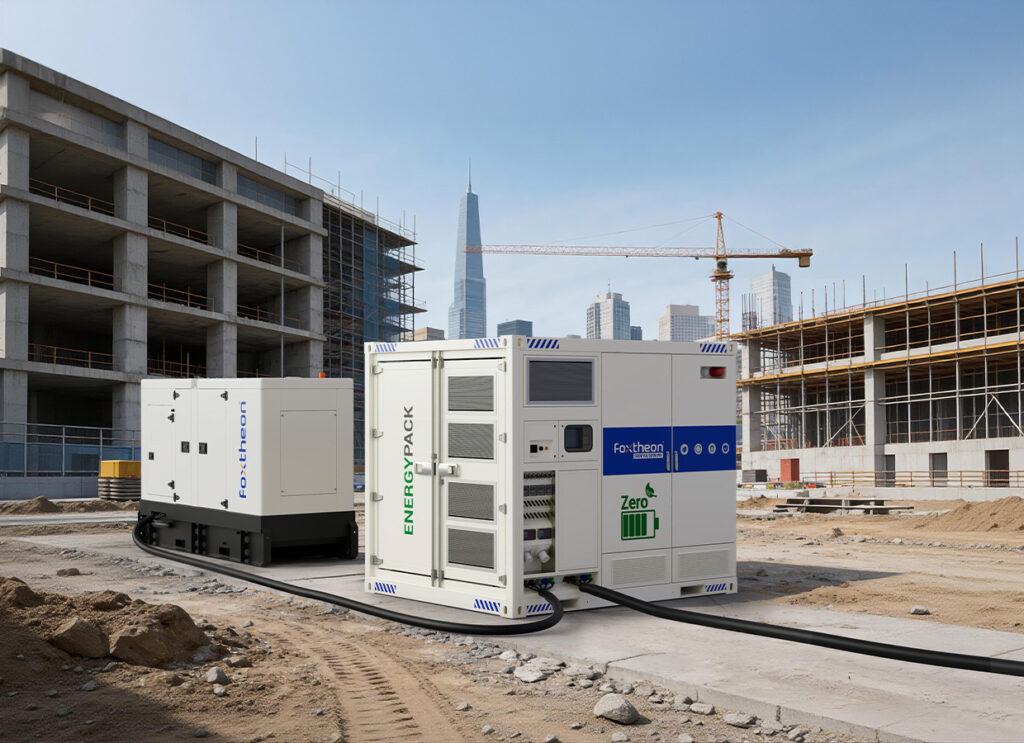
Portability for Remote Sites: In construction areas where grid access is limited, a BESS can replace or supplement noisy, polluting diesel generators.
Reduced Infrastructure Costs: Facilities can expand their welding capacity without upgrading expensive transformers or switchgear.
Enhancing Arc Stability and Weld Quality
Consistency is the most critical factor in professional welding. If the input voltage fluctuates, the heat output of the arc varies, leading to poor penetration or porosity in the metal. This is particularly problematic in precision industries like aerospace or automotive manufacturing.
Using BESS for welding applications ensures that the inverter inside the welding machine sees a perfectly flat voltage profile. Because the battery can discharge energy much faster than a utility transformer can respond to load changes, it fills the micro-gaps in power delivery. The result is a smoother arc and a significantly lower rate of rework or scrap.
Reducing Operational Costs via Peak Shaving
Most industrial energy bills are calculated based on the single highest point of consumption during a month. One heavy afternoon of welding on a large structural project can set a peak that inflates the bill for the next thirty days.
Foxtheon’s energy storage units allow managers to set a “hard ceiling” on grid draw. When the welding machines attempt to pull power above that ceiling, the BESS kicks in automatically. This “peak shaving” strategy can reduce monthly utility costs by 20% to 40% in high-activity shops.
Implementing BESS for Welding Applications in Remote Sites
Construction sites, shipyards, and pipeline projects often operate far from a reliable power source. Traditionally, these sites rely on large diesel generators to run their welding rigs. However, generators are inefficient when idling and struggle with the “step loads” of welding.
Replacing Diesel Generators
A generator must be oversized to handle the starting current of a welder, meaning it often runs at low efficiency for most of the day. By utilizing BESS for welding applications, contractors can use a much smaller generator or even a solar array to charge the batteries. The BESS then handles the heavy lifting of the welding tasks.
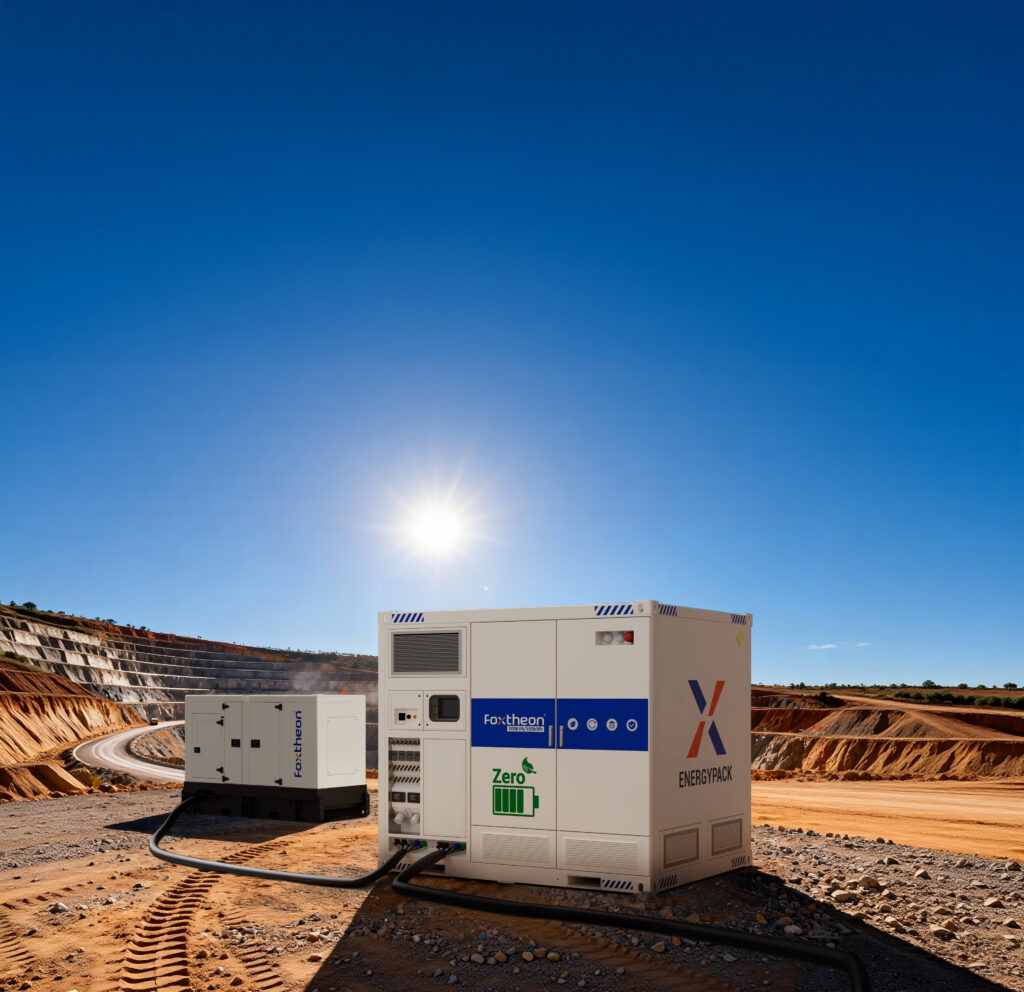
This hybrid approach slashes fuel consumption and reduces the carbon footprint of the project. Foxtheon’s portable energy storage units are designed specifically for these harsh environments, providing silent, emission-free power that matches the performance of a high-end grid connection.
Maintaining Equipment Longevity
Generators and weak grids produce “dirty” power with high total harmonic distortion (THD). This electrical noise heats up the internal components of modern digital welding machines, leading to premature board failure. A BESS acts as a filter, delivering pure sine wave power that protects the investment in high-end welding equipment.
Technical Integration of Energy Storage and Welding Machines
Integrating a BESS for welding applications requires a smart control interface. The system must be capable of sensing a load increase in microseconds. Most modern BESS units use high-speed power electronics that monitor the bus voltage.
When the welder’s contactor closes, the BESS inverter switches from standby to discharge mode instantly. This transition is so fast that the welding machine never detects a drop in available energy. For DC welding applications, some advanced setups even allow the BESS to connect directly to the DC bus of the welding inverter, bypassing one stage of conversion and increasing efficiency.
Scaling the System
The modular nature of Foxtheon’s energy storage allows for easy scaling. A small fabrication shop might only need a 50kWh unit to manage two or three stations. In contrast, a massive shipyard might deploy several megawatt-scale containers to support dozens of heavy-duty welders working simultaneously.
Environmental Impact and Sustainability
The push for “Green Welding” is gaining momentum globally. Reducing the reliance on fossil-fuel-powered generators is a major step toward meeting ESG (Environmental, Social, and Governance) goals.
Because BESS for welding applications can be charged via renewable sources like onsite solar panels, the entire welding process can become carbon-neutral. Even when charged from the grid, the increased efficiency and reduced need for oversized infrastructure lead to a smaller overall environmental impact. This shift not only helps the planet but also makes a company more competitive when bidding on government or eco-conscious contracts.
Safety and Reliability in Industrial Settings
Safety is paramount in any welding environment. Battery systems used in these applications must be ruggedized to handle dust, metal shavings, and high temperatures. Modern LFP (Lithium Iron Phosphate) chemistry is the preferred choice for these systems due to its thermal stability and long cycle life.
A well-designed BESS for welding applications includes sophisticated fire suppression, cooling systems, and electrical isolation. These features ensure that the power source is just as tough as the welding machines it feeds. Foxtheon integrates these safety protocols into every unit, ensuring that industrial operators can focus on their craftsmanship without worrying about power failure or safety hazards.
Economic Analysis: ROI of BESS in Welding
The initial investment in a battery system is often offset by several revenue streams. First, the direct savings on demand charges provide an immediate reduction in monthly overhead. Second, the reduction in machine downtime and maintenance extends the life of the welding fleet.
Third, in many regions, businesses can receive incentives or tax credits for installing energy storage. When you factor in the ability to operate in off-peak hours or even sell stored energy back to the grid during peak times, the return on investment (ROI) becomes very attractive. Most heavy-duty welding operations find that the system pays for itself within three to five years.
The Future of Industrial Metalwork
The adoption of BESS for welding applications marks a turning point for the manufacturing sector. By solving the dual problems of power instability and high energy costs, storage technology allows companies to work faster and more reliably. As the grid becomes more stressed and the demand for high-quality, sustainable production increases, the battery buffer will become a standard component of the industrial toolkit.
Foxtheon remains at the forefront of this transition, providing the smart energy storage needed to power the next generation of industrial projects. By decoupling the arc from the grid, companies gain the freedom to weld anywhere, at any time, with perfect precision. Investing in a BESS for welding applications is not just about saving money—it is about securing the power needed to build the future.
Frequently Asked Questions (FAQ)
Q1: How do I choose the right size BESS for my welding shop?
A1: To size a BESS for welding applications correctly, you must analyze your “peak load” and the duration of your typical welding duty cycle. Calculate the total amperage of all welders running simultaneously and compare that to your grid limit. Foxtheon offers consultation services to help determine the exact kWh capacity and kW discharge rate required for your specific workflow.
Q2: Can a BESS really replace a generator on a construction site?
A2: Yes, a BESS can replace a generator if there is a way to recharge it, such as through portable solar panels or a smaller, more efficient generator used only for charging. This setup is often called a “Hybrid Power System.” It allows you to run welders silently and without emissions for most of the workday, using the battery as the primary power source.
Q3: Will using a battery system void the warranty on my welding machines?
A3: No, it should not. In fact, a BESS for welding applications provides cleaner and more stable power than the standard grid or a traditional generator. By reducing voltage spikes and harmonic distortion, the battery system actually protects the internal electronics of your welding machines, likely extending their operational life.
Q4: What maintenance is required for an industrial BESS?
A4: Modern BESS units are designed for low maintenance. They primarily require regular software updates and occasional inspections of the cooling system and electrical connections. Because they have few moving parts compared to a diesel generator, the ongoing maintenance costs are significantly lower, making them an efficient choice for long-term industrial use.
Q5: How does the BESS handle the high heat of a welding environment?
A5: Industrial energy storage systems like those from Foxtheon are built with advanced thermal management systems. These include liquid cooling or high-airflow fans that keep the battery cells within their optimal temperature range. The enclosures are also rated (e.g., IP54 or higher) to protect against the dust and metallic particles common in welding shops.