
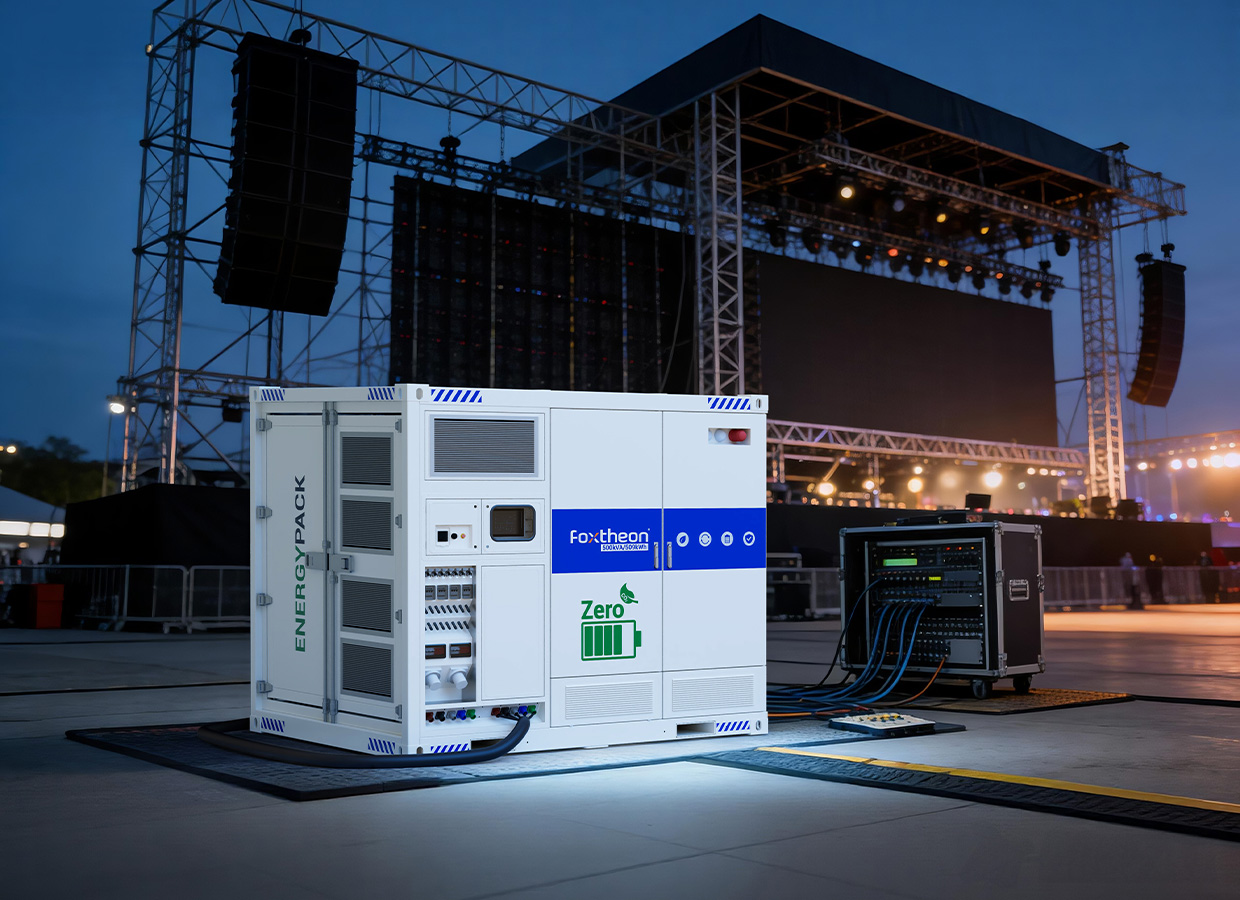
The industrial energy sector is undergoing a paradigm shift. Standby and prime power solutions are no longer evaluated solely on kilowatt capacity; they are scrutinized through the lens of return on investment (ROI), carbon abatement, and long-term operational resilience. At the center of this evaluation lies a critical financial instrument: the hybrid generator ROI calculator. This tool moves beyond simplistic fuel savings estimates, incorporating battery degradation curves, solar variability, demand charge mitigation, and the time value of money. For energy managers, CFOs, and project developers, mastering the hybrid generator ROI calculator is the prerequisite for securing capital and transitioning fleets toward low-carbon, cost-effective architectures.

The Economic Imperative for Hybridization
Hybrid generator systems—typically integrating diesel or gas generators with battery energy storage, and often photovoltaic (PV) arrays—address the fundamental inefficiencies of conventional thermal generation. Traditional generators operate efficiently only within a narrow load band (typically 70–85%). At low loads, they suffer from wet stacking, increased specific fuel consumption (g/kWh), and accelerated carbon buildup. A hybrid system dispatches the battery to handle transient loads and low-demand periods, allowing the generator to either run at optimal efficiency or shut down entirely. Quantifying these benefits, however, requires the sophisticated algorithms embedded in a hybrid generator ROI calculator.
CapEx, OpEx, and the Hybrid Premium
The primary barrier to hybrid adoption is the incremental capital cost—the battery packs, power conversion systems, and energy management controllers. While a diesel-only generator set might cost $300/kW, a hybridized system with one hour of lithium-ion storage can exceed $600/kW. The hybrid generator ROI calculator reconciles this premium by modeling the operational expenditure (OpEx) reductions over the asset’s life: lower fuel consumption, extended maintenance intervals, reduced generator runtime, and potential participation in demand response programs. The payback period, often between three to six years in high-utilization scenarios, becomes the pivotal metric.
Critical Inputs for Accurate Hybrid ROI Modeling
An ROI calculation is only as reliable as its assumptions. Generic calculators that apply a flat “30% fuel savings” are insufficient for board-level presentations. A defensible hybrid generator ROI calculator must ingest site-specific data and engineering parameters.
Load Profile Granularity
High-resolution load data (preferably in one-minute intervals) reveals the peaks, valleys, and ramp rates that a hybrid system must manage. A site with frequent, short-duration high loads (e.g., a quarry crusher starting) benefits more from a battery that provides “peak shaving” than a site with a flat, continuous load. The calculator analyzes this profile to determine the optimal battery capacity (kWh) and power rating (kW) that maximize diesel displacement without over-sizing the storage asset.
Generator Specific Fuel Consumption (SFC) Curves
Different generator sets have unique efficiency maps. A modern, electronically controlled diesel engine may achieve 210 g/kWh at 80% load but consume 280 g/kWh at 20% load. The ROI model integrates these SFC curves to calculate the fuel penalty of low-load operation. By running the hybrid generator ROI calculator, you quantify how many liters are saved each time the battery enables a generator shut-off or load shift.
Battery Degradation and Replacement Cost
Lithium-ion batteries have a finite cycle life, typically 4,000 to 6,000 cycles at 80% depth of discharge (DoD). A sophisticated TCO/ROI model includes a battery degradation curve and accounts for the future replacement cost (or augmentation cost) of the energy storage system. This prevents an overly optimistic payback calculation that ignores the eventual capital outlay for new cells. The hybrid generator ROI calculator should discount these future cash flows to present value using the weighted average cost of capital (WACC).
Fuel Price Volatility and Carbon Pricing
In remote or mining applications, diesel transport costs can double the price paid at the pump. Additionally, jurisdictions like Canada, the EU, and parts of Africa are imposing carbon taxes that escalate annually. The ROI calculator must allow for multi-year fuel price escalation and carbon cost scenarios, providing a sensitivity analysis that shows project resilience under adverse market conditions.
Case Study: Hybrid ROI in a Telecommunications Tower Network
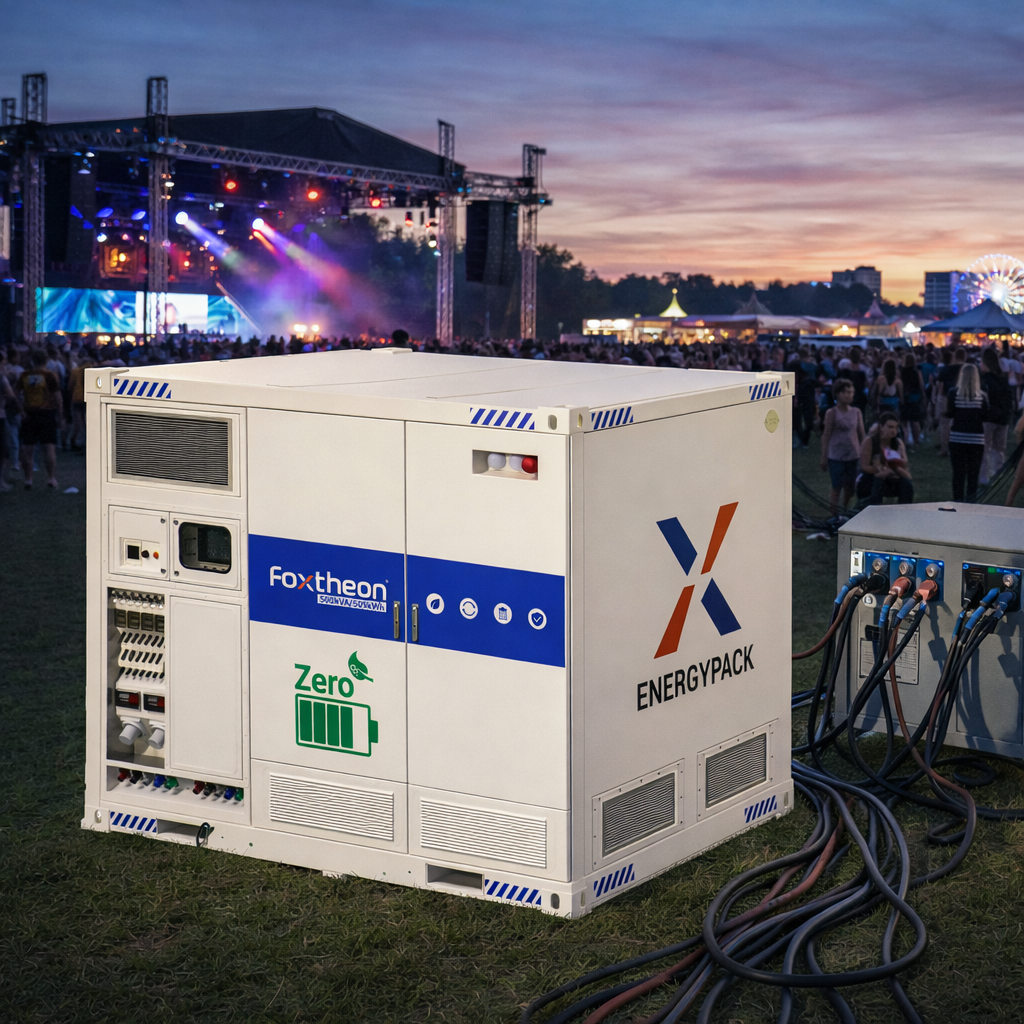
A West African telecom tower company operated 500 sites with diesel generators running 24/7 due to unreliable grid power. Each site consumed 12,000 liters of diesel annually at a delivered cost of $1.50/L. The company evaluated retrofitting with a 20 kW / 40 kWh lithium-ion hybrid system from Foxtheon, a leader in international smart energy solutions. The upfront hybrid premium was $25,000 per site.
Using a hybrid generator ROI calculator that incorporated solar PV potential and battery cycling, the analysis showed:
- Generator runtime reduction: from 8,760 hours/year to 3,500 hours/year.
- Annual fuel savings: 7,500 liters per site ($11,250).
- Maintenance cost reduction: 40% (fewer oil changes, overhauls deferred).
- Simple payback period: 2.8 years.
- 10-year internal rate of return (IRR): 28%.
The depth of this analysis, validated by the hybrid generator ROI calculator, enabled the company to secure green financing and roll out the hybrid retrofit program across 200 sites within two years.
Hybrid Generator ROI vs. Diesel TCO: A Complementary View
It is critical to distinguish between TCO (Total Cost of Ownership) and ROI. A diesel generator TCO calculator (discussed previously) establishes the baseline—the “do nothing” or “replace with new diesel” scenario. The hybrid generator ROI calculator then measures the incremental return of the hybrid investment above that baseline. The ROI calculation subtracts the diesel-only lifecycle cost from the hybrid lifecycle cost (including battery replacement) and divides by the incremental capital. This differential analysis isolates the value created by the hybridization itself, avoiding the pitfall of attributing base generator costs to the hybrid “upgrade.”
Addressing Industry Pain Points with Hybrid ROI Analysis
Pain Point 1: Budget Uncertainty
CFOs often resist hybrid CapEx because fuel and maintenance are “below the line” operational costs, while batteries appear as large capital items. An authoritative hybrid generator ROI calculator converts operational uncertainty into a predictable, discounted cash flow. By showing the net present value (NPV) positive over the asset life, it shifts the conversation from cost to investment.
Pain Point 2: Technology Risk Perception
Some engineers worry about battery reliability in high-temperature or dusty environments. ROI calculators from reputable firms like Foxtheon incorporate warranty terms and proven degradation data from similar installations (e.g., 10+ years of field data from telecom and mining sites). This data-driven approach mitigates perceived technology risk and builds confidence among stakeholders.
Pain Point 3: Emissions Compliance
With Scope 1 and Scope 2 emissions reporting becoming mandatory for publicly traded companies, the ROI calculation now includes “carbon cost avoidance.” By modeling the carbon tax or offset cost per ton of CO2, the hybrid generator ROI calculator demonstrates how the hybrid system contributes to ESG (Environmental, Social, Governance) targets while improving the bottom line.
The Foxtheon Approach: Integrated ROI Tools and HybridPack Solutions
Foxtheon has established itself as a trusted partner in the international smart energy solutions sector by offering not only hardware but also the financial analytics to justify it. The HybridPack series is engineered for seamless integration with existing generator fleets or new installations. Each proposal from Foxtheon includes a customized hybrid generator ROI calculator output, detailing:
- Projected fuel savings in liters and dollars.
- Maintenance interval extension (hours between overhauls).
- Battery end-of-life replacement schedule.
- IRR, NPV, and discounted payback under multiple fuel price scenarios.
This transparency aligns with the E-E-A-T principles that Google prioritizes, demonstrating firsthand experience and authoritative financial modeling.
Frequently Asked Questions (FAQs) about Hybrid Generator ROI Calculators
Q1: What is the difference between a hybrid generator ROI calculator and a simple payback calculator?
A1: A simple payback calculator divides the upfront cost by annual savings, ignoring the time value of money, battery degradation, and future replacement costs. An ROI calculator, in contrast, produces discounted cash flow metrics (NPV, IRR) over the project life, typically 10–20 years, accounting for the fact that a dollar saved in year 10 is worth less than a dollar saved today. It also includes capital events like battery replacement, offering a more realistic return picture.
Q2: How accurate are hybrid ROI calculators for solar + battery + generator systems?
A2: Accuracy is contingent on input data quality. Professional calculators incorporate site-specific solar irradiation (TMY data), load variability, and generator efficiency maps. With high-resolution data and proper calibration, these models can predict fuel savings within ±5% of actual performance, making them suitable for financial close.
Q3: Can the hybrid generator ROI calculator handle different battery chemistries (LFP vs. NMC)?
A3: Yes. Advanced calculators allow selection of battery type—Lithium Iron Phosphate (LFP) offers longer cycle life but lower energy density, while Nickel Manganese Cobalt (NMC) provides higher density but faster degradation. Each chemistry affects the replacement schedule and, consequently, the long-term ROI. Foxtheon’s HybridPack primarily utilizes LFP for its safety and longevity in industrial applications.
Q4: What typical payback periods should I expect from a hybrid generator system?
A4: In high-utilization scenarios (e.g., prime power >4,000 hours/year), payback periods range from 3 to 5 years. In standby applications (<500 hours/year), the financial case is weaker (often >8 years) unless there are significant demand charges or grid export tariffs. The ROI calculator quantifies exactly where your specific operation falls on this spectrum.
Q5: Does Foxtheon provide a hybrid generator ROI calculator for third-party systems, or only for HybridPack?
A5: Foxtheon’s engineering team can model ROI for hybrid configurations involving third-party generators, provided the necessary technical data (load profile, generator models, site constraints) is shared. However, the most accurate projections are achieved when using Foxtheon’s HybridPack, as the battery performance and controller algorithms are precisely characterized and validated.
Q6: How do I handle inflation and fuel price volatility in the ROI model?
A6: A robust hybrid generator ROI calculator includes sensitivity analysis features. You can define a base fuel price and then apply annual escalation factors (e.g., 2% real escalation). Additionally, “what-if” scenarios can model low, medium, and high fuel price trajectories, allowing investors to see the project’s break-even points under different market conditions.
Q7: Is the ROI from hybrid generators purely financial, or does it include non-economic benefits?
A7: While the calculator focuses on financial ROI (dollars saved vs. dollars invested), the outputs can be extended to quantify non-economic benefits such as CO2 emissions reduction (tonnes/year), noise reduction (dB), and compliance with future emissions mandates. Many companies now monetize these intangibles through green bonds or sustainability-linked loans, effectively converting them into financial value.