
The equipment rental industry is undergoing a silent financial restructuring. For decades, the business model was straightforward: buy a diesel generator, rent it out by the week, and service the engine when it hit a certain number of hours. Competition was fierce, and margins were often thin because the product was a commodity.
Today, the arrival of Battery Energy Storage Systems (BESS) is disrupting that old math. Fleet owners are no longer just selling “power capacity”; they are selling “efficiency.” This shift has sparked a serious debate regarding BESS vs generator rental revenue potential. While the upfront cost of battery units is higher, the long-term profitability story is turning heads in boardrooms across the international smart energy sector.
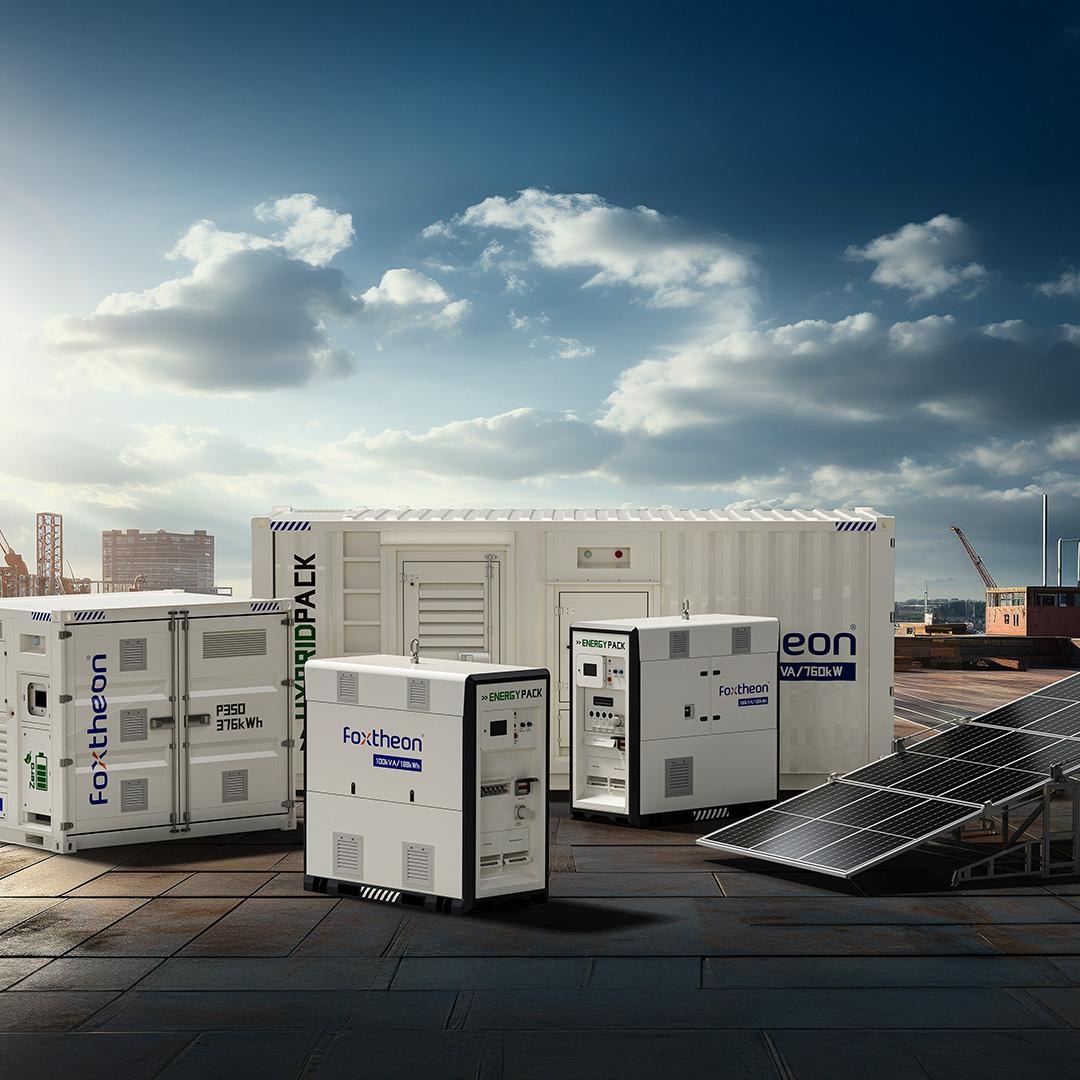
Companies like Foxtheon are supporting this transition by engineering storage solutions that are rugged enough for rental yards, allowing business owners to rethink their ROI calculations.
The Diesel Commodity Trap
To understand the revenue potential of batteries, we first have to look at the limitations of the traditional diesel generator business.
Standard generators are relatively cheap to buy. Because the barrier to entry is low, the market is flooded. To win a contract, rental companies often have to lower their prices. This “race to the bottom” compresses margins.
Furthermore, a diesel generator only makes money when it is on rent, but it costs money even when it is sitting in the yard (depreciation) and costs a significant amount to maintain when it is running. The revenue ceiling is low because customers view it as a basic utility. They will not pay a premium for a standard 100kVA diesel unit.
The Financial Shift: BESS vs Generator Rental Revenue
The comparison of BESS vs generator rental revenue reveals a different dynamic for battery systems. A BESS unit is not a commodity; it is a problem solver.
When you rent out a battery system, you are often pairing it with a generator to create a hybrid solution. This allows the customer to save massive amounts of money on fuel—sometimes up to 60% or 80%.
Value-Based Pricing
Because the customer is saving thousands of dollars on diesel, the rental company can charge a premium rate for the BESS. You are no longer competing on the lowest price; you are competing on the highest savings.
For example, if a hybrid setup saves a construction site $2,000 a month in fuel, the rental company can easily increase the rental rate of the equipment package by
800.Thecustomerstillsavesmoney(800. The customer still saves money (1,200 net), and the rental company increases its top-line revenue significantly compared to renting a standalone generator.
Utilization Rates
Generators suffer from “wet stacking” and damage if they run at low loads. This limits where they can be used effectively.
BESS units are versatile. They can be used for:
Load leveling at festivals.
Silent power for film sets.
Grid services and frequency regulation.
EV charging support.
High versatility leads to higher utilization rates. A piece of equipment that works on five different types of job sites will generate more annual revenue than a piece of equipment that only works on one.
Operational Costs and Net Profit
Revenue is vanity; profit is sanity. When analyzing the profitability of a fleet, you must deduct the operational costs (OpEx) from the rental income.
Maintenance Savings
This is where the BESS shines. A diesel generator has hundreds of moving parts. It needs oil changes, filter replacements, and coolant checks every 250 to 500 hours. If a generator runs 24/7, that is a service call every two weeks. Service calls require mechanics, trucks, and downtime.
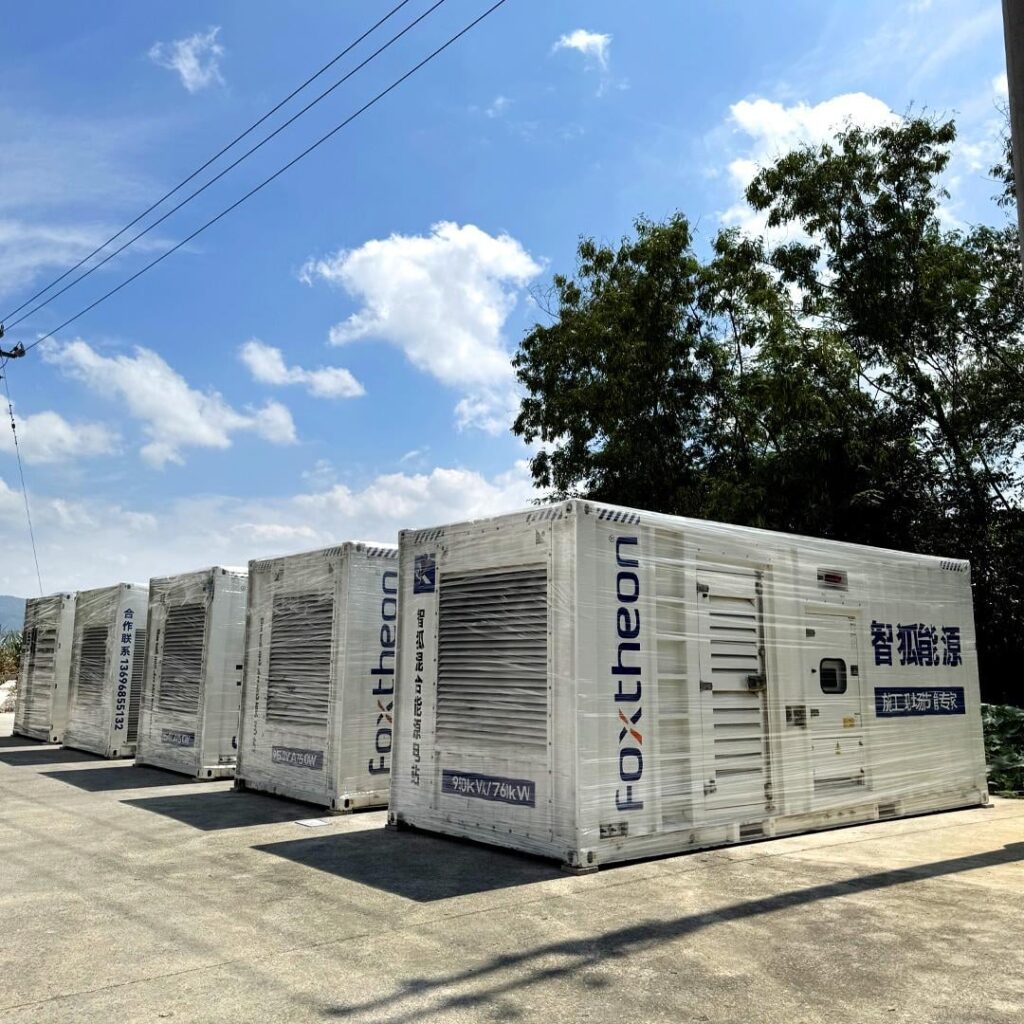
A BESS unit from a manufacturer like Foxtheon has virtually no moving parts. It requires minimal maintenance. It does not need oil. It does not have filters that clog.
When you look at BESS vs generator rental revenue, the “net” revenue for the battery is much closer to the “gross” revenue because the maintenance costs are near zero. You keep more of the money you make.
Lifespan and Resale Value
Diesel engines wear out. After 10,000 to 20,000 hours, a generator often needs a major overhaul or is sold for scrap value.
Modern Lithium Iron Phosphate (LFP) batteries used in commercial BESS units are rated for 6,000 to 8,000 cycles. In a typical rental application, this can translate to 10 years of life or more. Even at the end of its “rental life” (when capacity drops to 80%), the battery still holds significant value for second-life stationary storage applications. The asset retains value longer on the balance sheet.
Strategic Applications for Maximum Revenue
To maximize the return on BESS assets, rental companies need to target the right applications. Putting a battery on a site with a constant, high-load demand (like a large pump running 24/7) does not make sense.
The “Low Load” Opportunity
The “sweet spot” for revenue generation is sites with variable loads. Construction offices, tower cranes, and security setups are perfect examples.
These sites have high peaks but very low averages. A generator alone must be sized for the peak, meaning it runs inefficiently 90% of the time. By renting a BESS, the client cuts engine runtime. The rental company provides a specialized solution (BESS + smaller Generator) and commands a higher price for the logic and efficiency of the system.
Urban Low-Emission Zones
Cities are increasingly banning loud, polluting engines in downtown areas. In some zones, you cannot run a diesel generator at night.
In this scenario, there is no BESS vs generator rental revenue debate—the generator is simply not an option. The BESS becomes the only viable product, giving rental companies with battery fleets a monopoly on lucrative urban contracts.
Technology Factors Influencing Profit
Not all BESS units are created equal. To protect revenue, the equipment must be reliable.
Durability in the Field
Rental equipment gets abused. It gets dropped, covered in mud, and exposed to extreme heat. If a BESS unit fails, the revenue stops, and the reputation damage begins.
This is why hardware selection is critical. Foxtheon designs their units specifically for these mobile, rugged environments. Their systems integrate robust thermal management and shock protection, ensuring that the asset remains rentable week after week, regardless of the site conditions.
Software and Telemetry
The ability to monitor the fleet remotely is a direct revenue driver. Advanced telemetry allows the rental company to:
Prove the fuel savings to the client (justifying the rental rate).
Prevent misuse of the battery (protecting the asset).
Troubleshoot issues remotely (saving the cost of a truck roll).
If a rental company cannot see data from their units, they are leaving money on the table.
overcoming the CapEx Barrier
The primary argument against BESS is the high Capital Expenditure (CapEx). A 100kWh battery costs significantly more to purchase than a 100kVA generator.
However, savvy fleet owners calculate the payback period. Due to the higher rental rates and lower maintenance costs, a BESS unit often pays for itself in 3 to 4 years. After that point, because the maintenance is so low, it becomes a “cash cow” for the remainder of its 10-year life.
Furthermore, many governments offer tax incentives or grants for purchasing green energy equipment, which can effectively lower the CapEx and accelerate the ROI.
The Hybrid Future of Rental Fleets
The market is not eliminating generators; it is resizing them. The future rental yard will not be “BESS vs Generator.” It will be “BESS + Generator.”
However, the revenue center is shifting. The generator is becoming the backup accessory, while the BESS is becoming the primary power source and the primary profit generator.
Rental companies that cling solely to diesel will find their margins squeezed by rising fuel costs and maintenance overheads. Those who pivot to energy storage will find themselves with a more diverse, profitable, and resilient business model.
The transition to smart energy is reshaping the financials of the rental industry. When analyzing BESS vs generator rental revenue, the data points clearly toward storage as the higher-margin asset for the future.
While diesel generators provide raw power, BESS units provide intelligence, efficiency, and compliance. By reducing maintenance overheads and enabling value-added pricing models, batteries offer a path to healthier balance sheets.
Partnering with experienced manufacturers like Foxtheon ensures that fleet owners have the durable, intelligent technology needed to capitalize on this shift. As the demand for cleaner, quieter, and cheaper power grows, the rental companies that invest in BESS today will be the market leaders of tomorrow.
Frequently Asked Questions
Q1: Why is the rental rate for a BESS unit higher than a generator of similar capacity?
A1: The rental rate is higher because the BESS provides value beyond just power—specifically, fuel savings, silence, and emissions reduction. Additionally, the upfront purchase cost of battery technology is currently higher than diesel engines, requiring a higher rental yield to ensure a return on investment.
Q2: Does a BESS unit require a specialist technician to maintain?
A2: Generally, no. Daily operations require very little intervention. However, internal repairs to the inverter or battery modules do require high-voltage training. Most rental companies rely on the manufacturer’s warranty and support for internal issues, meaning their standard yard crew only handles basic external checks.
Q3: How long does it take for a BESS rental unit to pay for itself (ROI)?
A3: Depending on utilization rates and the rental pricing model, the typical ROI for a rental BESS unit is between 3 to 4 years. Given that modern LFP batteries can last 10 years, this leaves 6+ years of highly profitable, low-maintenance revenue generation.
Q4: Can I rent a BESS to a customer who doesn’t have a generator?
A4: Yes, provided they have another way to charge it. This is common on sites with grid connections that are too small for peak loads (peak shaving), or for sites that have solar arrays. The BESS charges from the weak grid or solar and discharges during high demand.
Q5: How does the resale value of a BESS compare to a diesel generator?
A5: BESS units generally hold value well because the battery cells have a “second life” value. Even when they are too degraded for rental use (e.g., 70% capacity), they are valuable for stationary storage projects. Diesel generators, conversely, often have very low value after high engine hours due to mechanical wear and tear.