
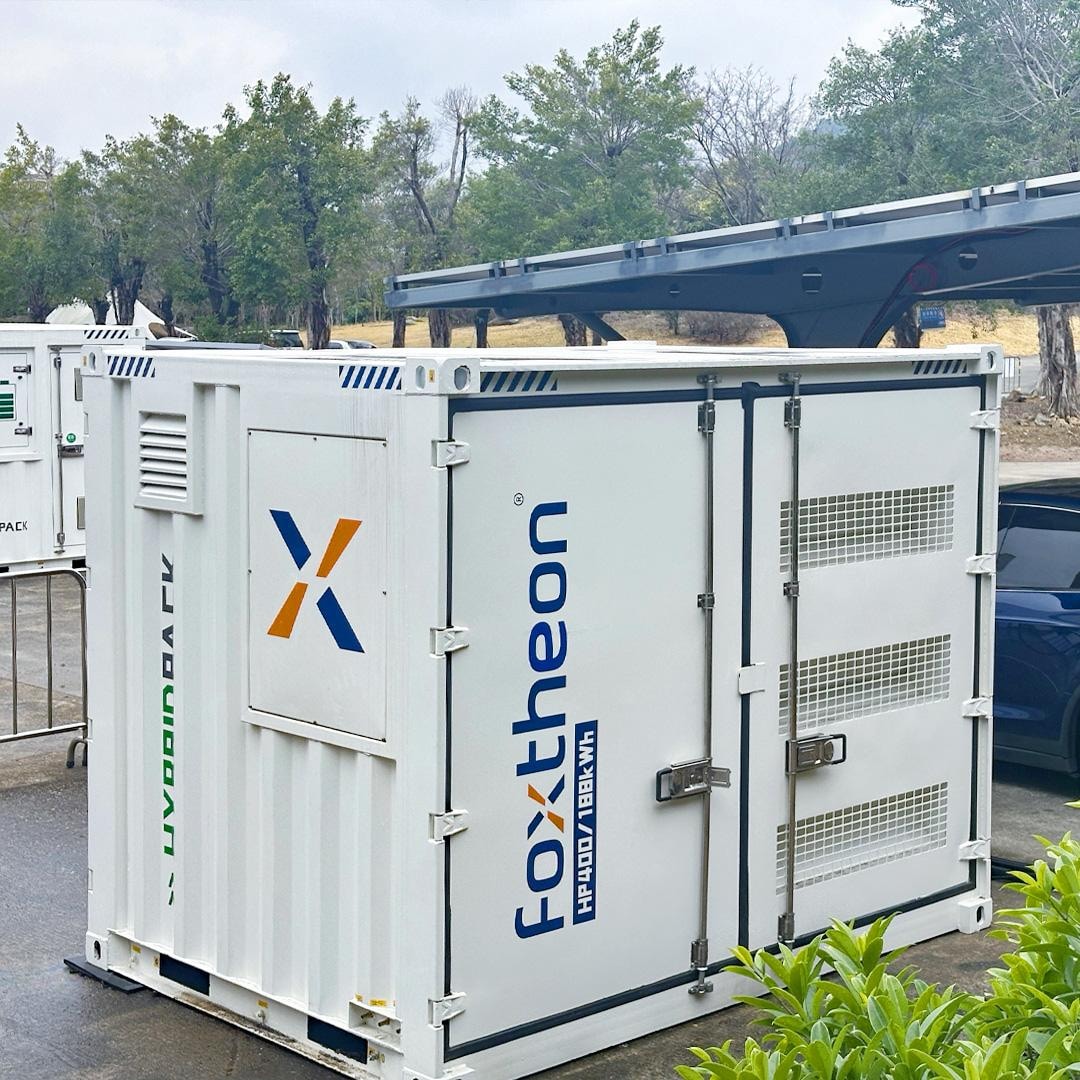
Temporary cooling and heating are essential for industries ranging from construction to large-scale events. However, powering industrial HVAC units has traditionally relied on oversized diesel generators. These generators often run inefficiently, leading to high fuel bills and excessive carbon emissions.
This is where Battery Energy Storage Systems (BESS) are changing the game.
By integrating a battery unit with traditional power sources, companies can stabilize loads and significantly improve efficiency. A BESS rental for HVAC setup allows project managers to handle power spikes without oversizing their generators. Companies like Foxtheon are at the forefront of this shift, providing intelligent energy solutions that make temporary climate control cleaner and more affordable.
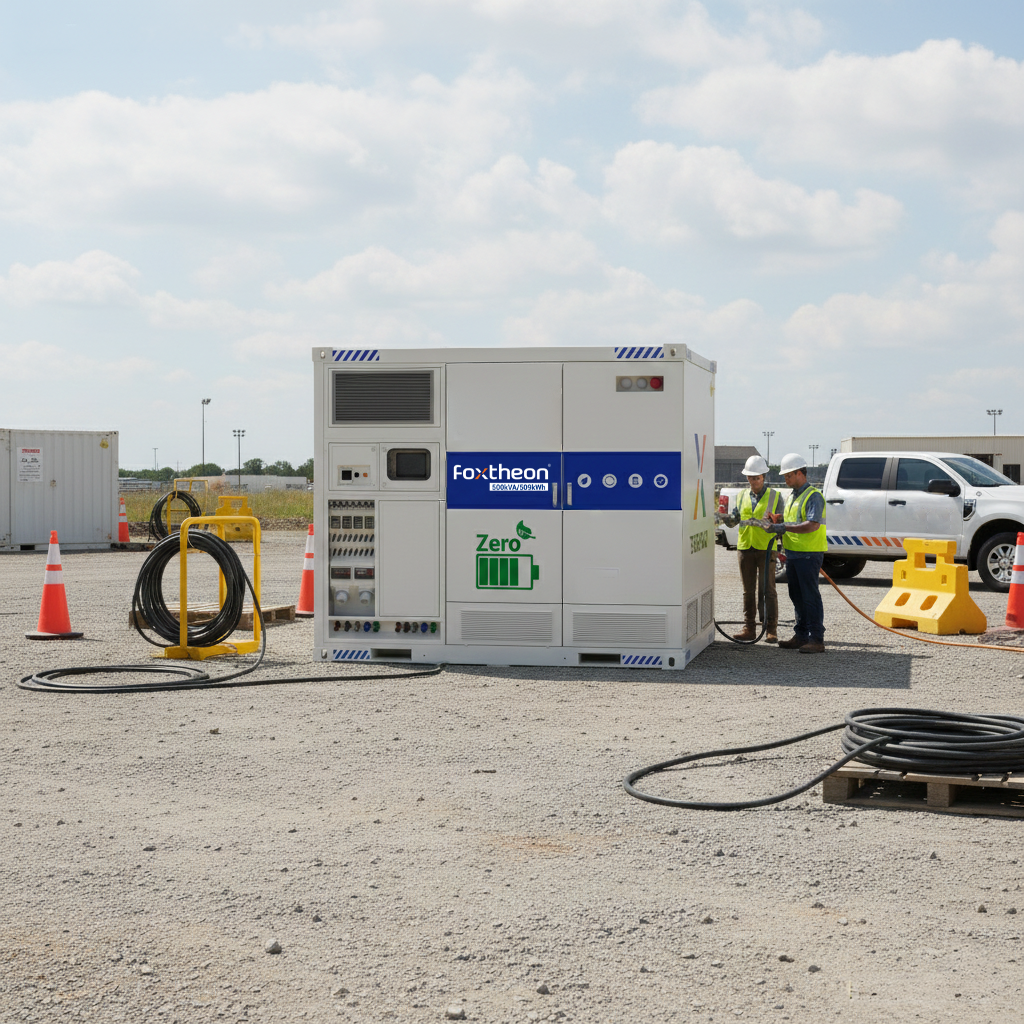
Understanding the Role of BESS in HVAC Operations
To understand why batteries are necessary, we must look at how HVAC systems consume power. Large chillers and air handling units do not draw a constant amount of electricity. They cycle on and off based on the temperature requirements.
The Inefficiency of Generators
When you run an HVAC system solely on a diesel generator, you must size the generator to handle the peak starting current (inrush current) of the motors. This often means the generator is twice the size needed for the running load.
Most of the time, the generator runs at a low load (often below 30%). Diesel engines hate low loads. It causes “wet stacking,” where unburned fuel builds up in the exhaust system, damaging the engine and increasing maintenance costs.
Hybridization with Batteries
Adding a battery storage unit solves this. The battery handles the high inrush currents required to start the HVAC motors. This allows you to use a much smaller generator. During periods of low demand, the generator can turn off completely, and the BESS rental for HVAC system runs the cooling load silently.
Top Benefits of Choosing BESS Rental for HVAC Projects
Switching to a hybrid power model offers immediate tangible benefits. It is not just about being “green”; it is about operational efficiency.
Significant Fuel Savings
Fuel is often the single largest expense in temporary power projects. By using a battery to manage the load, the generator runs at its optimal efficiency range (usually 80% load) to recharge the battery and then shuts off.
Field data suggests that integrating energy storage can reduce generator runtime by up to 60%. This directly translates to a massive reduction in diesel purchasing.
Noise Reduction for Urban and Event Settings
HVAC systems are loud, but generators are louder. If you are cooling a tent for a wedding, a corporate event, or a movie set, background noise is a major problem.
A BESS rental for HVAC allows the system to run on pure battery power during the most critical times of the event. The noisy generator can run during setup or breaks to recharge the system, ensuring silent operation when it matters most.
Carbon Footprint Reduction
Sustainability is a requirement for many modern contracts. Clients want to see a reduction in CO2 and NOx emissions. Using a battery system reduces the total fuel burned, which lowers the carbon output of the project. This helps construction firms and event organizers meet strict environmental regulations.
Key Applications for Battery-Assisted Cooling
Different industries have unique power needs, but the physics of cooling remains similar. Here is how different sectors utilize these rentals.
Construction Sites
Construction projects often rely on temporary heating and cooling for drying drywall or keeping workers safe. These sites operate 24/7, but the cooling load drops significantly at night.
Instead of running a generator all night for a minimal load, a battery system takes over during off-hours. This saves fuel and prevents noise complaints from neighboring residential areas.
Major Events and Festivals
Festivals require massive amounts of power for short periods. The cooling load fluctuates wildly depending on the crowd size and the time of day.
Rentals allow event planners to scale their power needs up or down without purchasing expensive equipment. Foxtheon offers solutions that integrate seamlessly with existing event power grids, ensuring the lights and the AC stay on without interruption.
Emergency Response and Disaster Relief
In disaster zones, fuel supply lines are often disrupted. Every gallon of diesel is precious. Efficient power management is not a luxury; it is a necessity. Battery systems stretch the available fuel supply, keeping field hospitals and shelters cool for longer periods.
Technical Considerations When Renting Energy Storage
Not all battery systems are compatible with every HVAC setup. There are technical specifications to check before signing a rental agreement.
Sizing the System Correctly
You need to know the Load Profile of your HVAC unit. This includes the peak kW (kilowatts) needed to start the unit and the average kWh (kilowatt-hours) consumed over an hour.
If the battery is too small, it will drain too quickly and force the generator to run constantly, defeating the purpose. If it is too large, you are paying for capacity you do not need.
Compatibility with Chillers and Air Handlers
Modern BESS units come with intelligent inverters. These must be able to sync with the voltage and frequency of your specific HVAC equipment (usually 480V or 208V in commercial settings).
Foxtheon’s Approach to Hybrid Efficiency
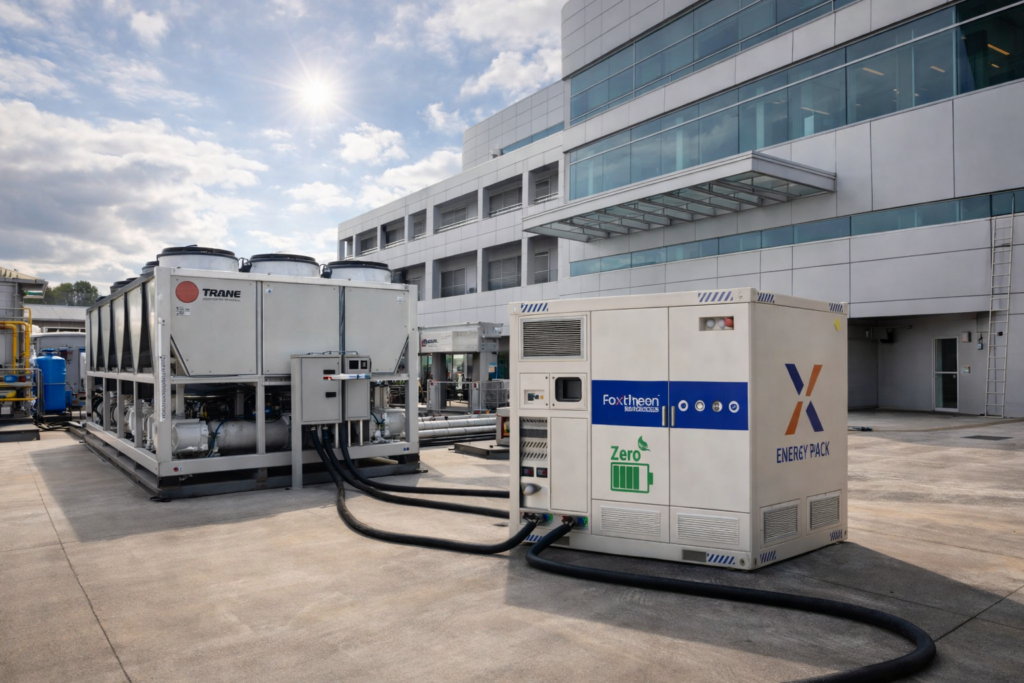
It is important to look for units with smart energy management systems (EMS). Providers like Foxtheon design their systems to automatically detect when the load increases. The EMS decides instantly whether to draw power from the battery, the generator, or both. This automation removes the need for manual switching and reduces human error.
The Financial Case: Renting vs. Buying
For most temporary applications, renting is the logical financial choice.
OPEX vs. CAPEX
Battery technology is evolving rapidly. Buying a system today might leave you with outdated tech in three years.
Renting classifies the cost as an Operating Expense (OPEX), which is often easier to approve than a Capital Expense (CAPEX). It also includes maintenance and support, shifting the risk away from your company.
Flexibility in Project Timelines
Construction and events are project-based. You may need a 100kW system for one month and a 300kW system for the next. A BESS rental for HVAC agreement gives you the flexibility to swap units based on the specific demands of the current job.
Future Trends in Temporary Power for HVAC
The industry is moving away from “diesel-only” setups. We are seeing a shift toward fully integrated microgrids.
Intelligent Load Management
Future rentals will likely include AI-driven prediction software. The system will look at the weather forecast. If a heatwave is predicted for tomorrow, the system will automatically charge the batteries to 100% tonight to prepare.
Solar Integration
The next step is adding portable solar arrays to the mix. On sunny days, the HVAC system can run entirely on solar energy stored in the BESS, eliminating the need for the generator during daylight hours.
The days of letting a massive diesel generator idle all day to power a thermostat are over. It is expensive, wasteful, and bad for the environment. Adopting a BESS rental for HVAC strategy offers a practical solution that saves money and improves performance.
Whether you are managing a construction site or an outdoor festival, hybrid energy storage provides silent, reliable, and clean power. By partnering with innovative solution providers like Foxtheon, businesses can access state-of-the-art energy storage without the burden of ownership. As the pressure to reduce emissions grows, battery rentals will become the standard for temporary climate control.
Frequently Asked Questions (FAQ)
Q1: Can a BESS rental for HVAC run the air conditioning without a generator?
A1: Yes, for a certain period. The BESS can power the HVAC unit alone until the battery is depleted. However, for continuous long-term operation, a generator or grid connection is usually needed to recharge the battery. The BESS significantly reduces how often the generator needs to run.
Q2: How much fuel can I expect to save?
A2: While it depends on the specific load profile, most projects see fuel savings between 30% and 60%. This is because the generator runs at optimal efficiency to charge the battery and then shuts off, rather than idling at low efficiency all day.
Q3: Is the setup complicated for site managers?
A3: generally, no. Modern BESS units are designed as “plug-and-play” solutions. They sit between the generator and the HVAC load. Once the cables are connected, the internal management system handles the switching automatically.
Q4: Does the battery system work in extreme temperatures?
A4: Yes, high-quality industrial BESS units are built with internal thermal management systems. They can operate effectively in both freezing winters and hot summers, which is essential since they are powering heating and cooling equipment.
Q5: What happens if the battery fails?
A5: Most hybrid systems have a “pass-through” mode. If the battery system encounters an error or goes offline, the generator bypasses the battery and powers the HVAC unit directly, ensuring you never lose cooling capabilities.