
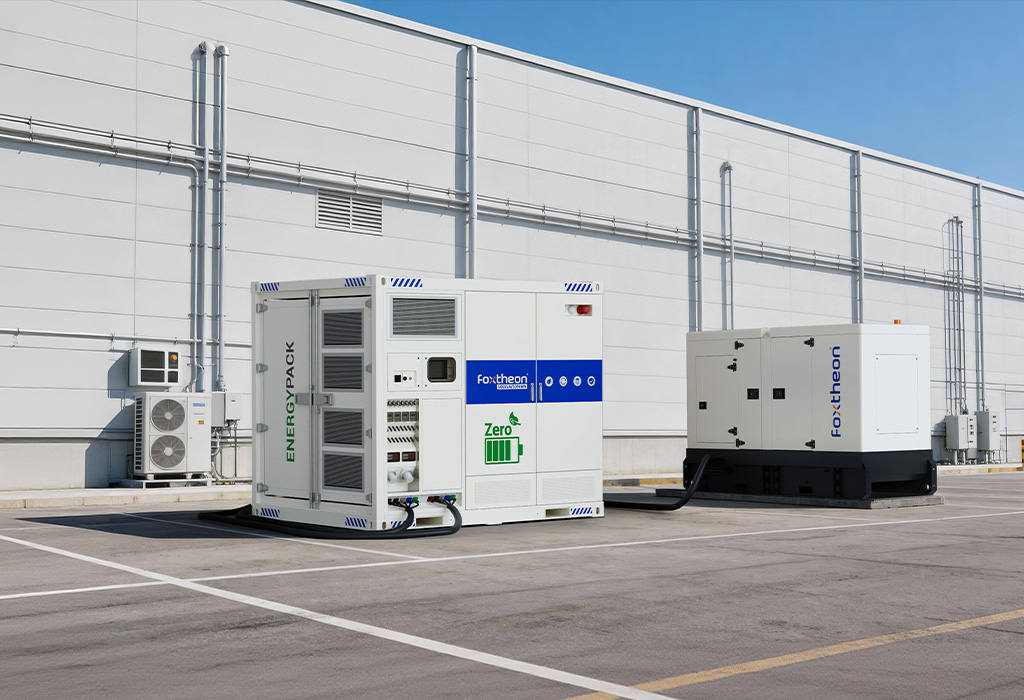
International infrastructure, humanitarian, and industrial projects face a common challenge: securing reliable, scalable electricity in environments where grid infrastructure is absent, unstable, or prohibitively expensive to extend. From mining concessions in the Atacama Desert to bridge construction in Southeast Asia, the ability to rapidly deploy power assets determines project timelines, safety, and profitability. Deployable power solutions for international projects have evolved far beyond simple diesel generators; today they integrate battery storage, renewable sources, and intelligent controls into modular, containerized units that can be airlifted, trucked, or shipped to the most remote sites. This article examines the technological backbone, application scenarios, and economic drivers behind these systems, with a focus on how Foxtheon is setting new benchmarks through its EnergyPack P500 series.
The Technological Foundation of Modern Deployable Power
A true deployable power solution for international projects must balance portability, robustness, and efficiency. The underlying architecture typically comprises three core subsystems:
1. Hybrid Generation & Storage
- Battery Energy Storage Systems (BESS): Lithium-ion (particularly LFP) or emerging solid-state batteries provide the primary energy buffer. They absorb excess renewable generation, deliver instantaneous power for heavy loads, and enable generator-off periods. Energy density and cycle life are critical—modern units offer 5,000–8,000 cycles at 80% depth of discharge.
- Integrated Gensets: Diesel or HVO‑ready generators act as backup or primary charging sources. Advanced controllers synchronize multiple gensets and batteries to run at optimal load (70–80%), reducing fuel consumption by up to 30% and maintenance intervals by half.
- Renewable Integration: Solar PV arrays or small wind turbines can be directly coupled via hybrid inverters. Some containerized solutions include rooftop PV panels, turning the unit itself into a generation asset.
2. Modular Power Conversion & Controls
Bi‑directional inverters with silicon carbide (SiC) or gallium nitride (GaN) semiconductors achieve efficiencies above 98%. They manage island mode, grid tie‑in (if available), and seamless transfer during faults. The Energy Management System (EMS) uses predictive algorithms to optimize dispatch based on load forecasts, weather data, and fuel costs—all accessible via satellite or cellular IoT dashboards.
3. Enclosure & Logistics Engineering
Units are housed in ISO standard containers (10ft, 20ft, or 40ft) rated IP54 or higher, with integrated forklift pockets, corner castings, and lifting lugs. For air transport, some systems are designed to fit inside military cargo aircraft (C‑130, A400M). Internal climate control (heating/cooling) ensures operation from -30°C to +50°C, critical for Arctic or desert deployments.
Why Standard Generators Fall Short in International Contexts
Traditional temporary power—multiple standalone diesel gensets—presents several drawbacks for large‑scale international projects:
- Fuel logistics burden: In remote areas, fuel transport can account for 40–60% of total energy cost, with risks of theft, spillage, and supply interruption.
- Maintenance complexity: Each genset requires regular oil changes, filter replacements, and repairs, multiplying labor and spare parts inventory.
- Environmental non‑compliance: Emissions and noise regulations (e.g., IFC performance standards, EU non‑road mobile machinery limits) increasingly prohibit continuous diesel operation.
- Scalability inflexibility: Adding capacity means procuring and connecting another genset, often leading to over‑ or under‑provisioning.
Critical Applications Across International Project Types
Deployable power solutions for international projects have proven their value across diverse sectors. Below are three representative use cases with quantified outcomes.
Mining & Mineral Exploration
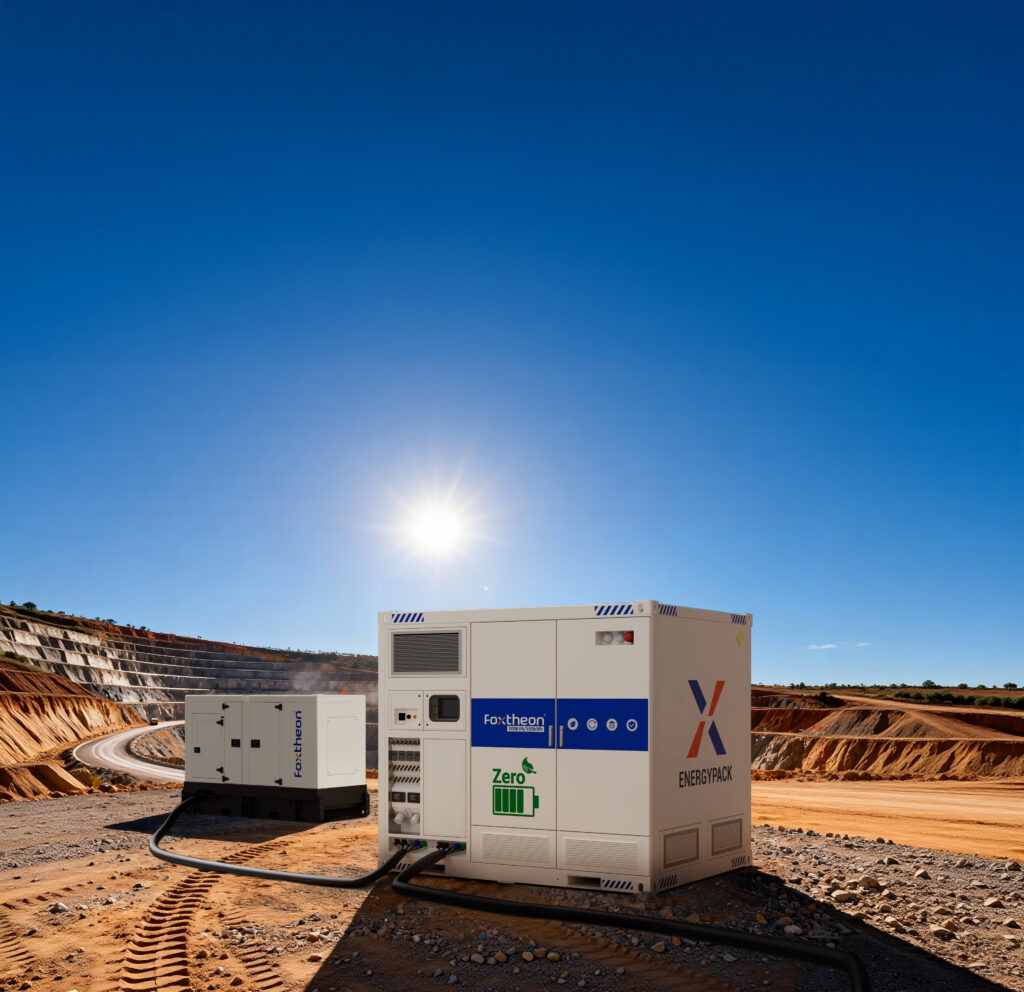
Mines in Chile, DRC, and Western Australia operate far from national grids. A 500 kW / 1 MWh containerized hybrid system (such as Foxtheon’s EnergyPack P500) can replace three 250 kVA gensets running 24/7. In one Andean copper project, the hybrid solution reduced diesel consumption by 1.2 million liters annually, cutting CO₂ emissions by 3,200 tons and energy costs by 38%. The system also provides “spinning reserve” for crusher motors, preventing voltage sags.
Large‑Scale Infrastructure Construction
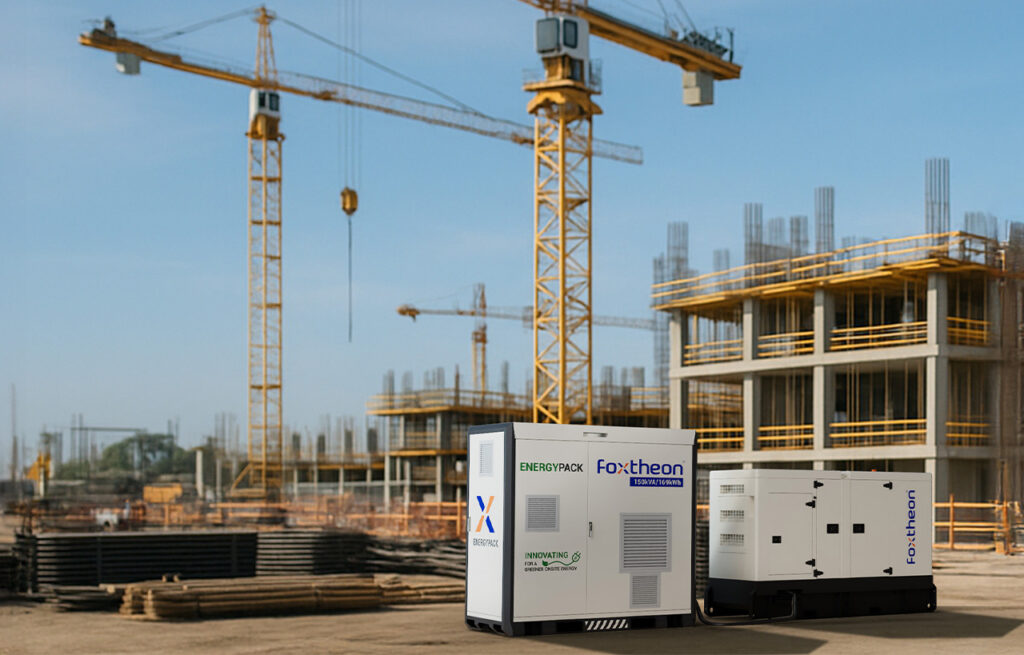
Highway tunnels, bridges, and dam projects often have multi‑year durations with fluctuating power demands. During the construction of a major bridge in Bangladesh, a fleet of 20ft containerized power stations powered pile drivers, welding equipment, and site camps. The modular design allowed incremental capacity additions as work progressed, and the battery buffer enabled night‑time operation without genset noise, complying with local community agreements.
Humanitarian & Disaster Relief
After natural disasters, rapid electrification is vital for field hospitals, water purification, and communication. Air‑transportable 10ft units with integrated solar and battery storage can be deployed within 48 hours. The International Federation of Red Cross and Red Crescent Societies has adopted such systems in hurricane‑affected islands, ensuring continuous power for cold chains and medical devices without relying on donated diesel.
Remote Camps & Oil & Gas Exploration
Worker camps in the Permian Basin or Siberian tundra require reliable power for living quarters, kitchens, and security. Combined heat and power (CHP) variants recover waste heat from gensets for space heating and hot water, raising overall fuel efficiency to over 80%.
How Foxtheon’s EnergyPack P500 Addresses Industry Pain Points
To meet the rigorous demands of international project sites, Foxtheon engineered the EnergyPack P500—a fully integrated deployable power solution for international projects that combines high‑density storage, multi‑fuel genset compatibility, and enterprise‑grade controls.
Unmatched Scalability & Redundancy
The P500 is built around a 500 kW / 1.2 MWh core, but up to eight units can be paralleled via a common AC bus to form a 4 MW / 9.6 MWh virtual power plant. N+1 redundancy ensures that failure of one unit does not interrupt critical loads—an essential feature for hospital or data center backup.
Intelligent Fuel Optimization
Its EMS incorporates machine learning trained on thousands of site load profiles. It predicts peak demand and pre‑charges batteries during low‑tariff periods or when solar generation is high. In hybrid mode, the system turns gensets off during light load, achieving fuel savings of 25–40% compared to conventional genset fleets.
Ruggedized for Extreme Environments
With a wide‑temperature BMS and optional cold‑start kits, the P500 operates reliably at -40°C. Dust filtration meets MIL‑STD‑810 for desert sand, and the enclosure is salt‑spray resistant for offshore or coastal installations.
Remote Monitoring & Global Support
Foxtheon’s cloud platform provides real‑time telemetry, predictive maintenance alerts, and over‑the‑air firmware updates. A global service network ensures that spare parts and technical assistance are available in over 50 countries, reducing downtime risk.
Technical Specifications: Foxtheon EnergyPack P500
- Rated power: 500 kW continuous, 650 kW peak (10 s)
- Stored energy: 1,200 kWh (LFP, 6,000 cycles @ 80% DoD)
- Fuel options: Diesel, HVO, natural gas (dual‑fuel ready)
- AC output: 480V / 400V / 208V 3‑phase, 50/60 Hz
- Round‑trip efficiency: 87% (AC‑to‑AC)
- Dimensions: 20 ft ISO container (external)
- Weight: ~14,500 kg
- Certifications: UL 9540, IEC 62477, CE, ISO 14001
Future Trends: Hydrogen, Second‑Life Batteries, and Microgrid Autonomy
The next generation of deployable power solutions for international projects will incorporate hydrogen fuel cells for extended zero‑emission runtime. Foxtheon is piloting a hybrid container that pairs a 200 kW PEM fuel cell with 500 kWh of battery storage, providing up to three days of silent, emission‑free power from green hydrogen. Additionally, second‑life EV batteries are being repurposed in stationary containers, lowering upfront costs for projects with less stringent cycle requirements. As AI‑driven energy management matures, we will see fully autonomous microgrids that self‑heal, trade energy with neighboring systems, and adapt to evolving site conditions without human intervention.
In an era where project timelines tighten and environmental scrutiny intensifies, deployable power solutions for international projects have moved from a niche offering to a strategic necessity. They enable organizations to cut costs, meet sustainability goals, and operate with resilience in the world’s most challenging locations. With proven engineering and a commitment to innovation, Foxtheon continues to lead the transition toward smarter, cleaner temporary power. Whether powering a mine, a hospital, or a mega‑dam, these containerized power stations are the silent workhorses of global development.
Frequently Asked Questions (FAQ)
Q1: What defines a “deployable power solution” in the context of international projects?
A1: It refers to modular, transportable energy systems—typically containerized—that can be rapidly installed and commissioned in remote or off‑grid locations. They integrate generation (diesel, solar, etc.), storage (batteries), and intelligent controls to provide reliable, scalable electricity for construction, mining, humanitarian, or industrial applications.
Q2: How quickly can a Foxtheon EnergyPack P500 be deployed on site?
A2: Upon arrival, a crane or flatbed places the container on a prepared pad. Electrical connections and commissioning take less than one day, thanks to factory pre‑integration and plug‑and‑play cabling. Remote EMS configuration can be completed within hours.
Q3: Can these systems operate without any diesel generator, purely on batteries and renewables?
A3: Yes, if the site has sufficient renewable generation and battery capacity to cover the load cycle. For continuous 24/7 operations, a hybrid approach with a small genset or fuel cell as backup is often more cost‑effective, but full renewable‑plus‑storage configurations are feasible for daytime‑dominant loads or sites with excellent solar/wind resources.
Q4: What kind of maintenance do containerized power stations require?
A4: Maintenance is minimal compared to multiple standalone gensets. Quarterly inspections include cleaning air filters, checking coolant levels, and testing safety systems. The BMS automatically balances cells, and remote diagnostics alert operators to potential issues before failure. Genset maintenance follows standard intervals (e.g., every 500 hours), but total runtime is reduced due to battery usage.
Q5: How does Foxtheon ensure compliance with local regulations and grid codes?
A5: Foxtheon’s systems are designed to meet or exceed international standards (IEC, UL, ISO). The EMS can be configured to adhere to local grid codes for grid‑tied operation, including frequency and voltage ride‑through, anti‑islanding, and power quality requirements. The company also provides documentation to assist with permitting.
Q6: Are there financing or leasing options available for these solutions?
A6: Yes, many providers, including Foxtheon, offer flexible financing models such as power‑purchase agreements (PPA), equipment leasing, or pay‑per‑use contracts. This allows project owners to avoid large upfront capital expenditure and instead pay for energy as an operating expense.
Q7: Can the systems be integrated with existing site generators or solar arrays?
A7: Absolutely. The EnergyPack P500 includes interfaces for third‑party genset control and PV inputs. Its EMS can retrofit older generators, optimizing their operation without replacing them—preserving prior investments while adding efficiency and reducing emissions.
For a detailed feasibility study or to discuss your project’s specific power requirements, visit Foxtheon and explore the deployable power solutions for international projects product page.