
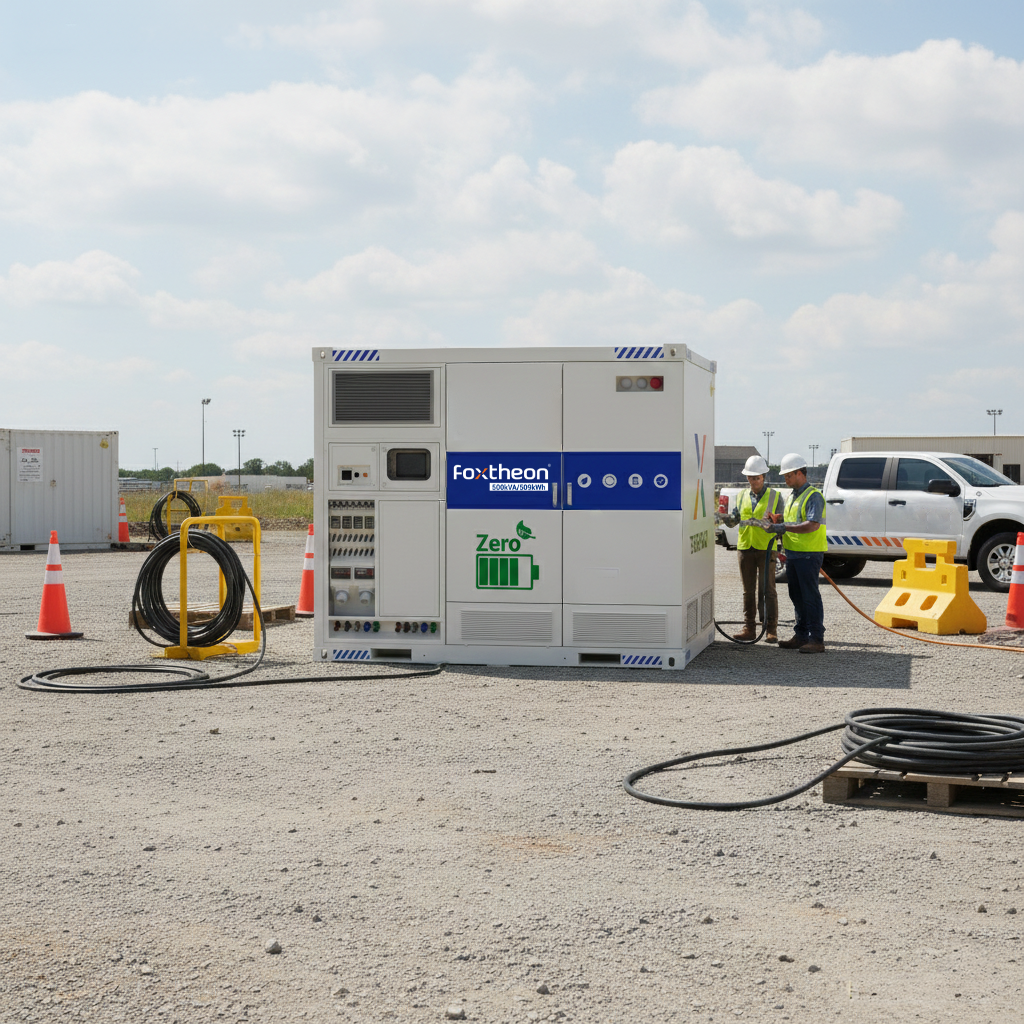
Operating an independent power system brings immense freedom, but it also introduces technical hurdles that grid-tied users rarely face. One of the most significant obstacles is handling surge current off-grid. Unlike the traditional utility grid, which acts as an infinite reservoir of power, off-grid systems rely on limited inverter and battery capacities. When a heavy motor or a large compressor starts up, it demands a massive, instantaneous burst of energy. Companies like Foxtheon provide the advanced energy storage technology necessary to bridge these gaps, ensuring that your system remains stable even under the most demanding loads.

The Physical Reality of Handling Surge Current Off-Grid
Surge current, often called inrush current, occurs the moment an inductive load switches on. This peak can be five to seven times the device’s normal operating wattage. For those handling surge current off-grid, this phenomenon is more than just a technical detail. It is a threat to system longevity. If your inverter cannot provide that sudden pulse, the voltage will sag, and the system might shut down entirely to protect itself. This creates a cycle of frustration and potential damage to sensitive electronics.
In an off-grid environment, the “bottleneck” is usually the inverter’s peak rating. Most high-quality inverters can handle a surge for a few seconds. However, handling surge current off-grid effectively requires more than just a robust inverter. You must also consider the battery bank’s ability to discharge quickly. If the batteries cannot keep up with the inverter’s demand, the system fails. This is why choosing high-discharge-rate lithium cells is a critical part of handling surge current off-grid for industrial or residential applications.
Inductive vs. Resistive Loads
Understanding the nature of your appliances is the first step in handling surge current off-grid. Resistive loads, like heaters or traditional light bulbs, do not have a surge. They draw the same power from the moment they turn on. Inductive loads are different. Devices with motors, such as air conditioners, well pumps, and power tools, require a magnetic field to stabilize before they run efficiently. This initial stabilization is what makes handling surge current off-grid so challenging for the average user.
When you analyze your power needs, always look at the “LRA” or Locked Rotor Amps on your equipment’s data plate. This number tells you exactly what you are up against when handling surge current off-grid. If your LRA is higher than your inverter’s peak capacity, the motor will never start. Instead, it will hum, generate heat, and eventually trip a breaker or fry a component. Planning for these peaks is the cornerstone of professional off-grid design.
Proven Hardware Solutions for Handling Surge Current Off-Grid
The most straightforward method for handling surge current off-grid is simply oversizing the inverter. If your continuous load is 3kW but your surge load is 12kW, you need an inverter rated for that peak. However, this is often expensive and inefficient. A better approach involves using smart energy storage solutions. Foxtheon offers modular battery systems that provide high burst currents, allowing smaller inverters to perform like much larger units by maintaining stable DC voltage during the spike.
Another common tool for handling surge current off-grid is the soft starter. These devices are installed between the power source and the motor. They gradually ramp up the voltage, reducing the initial current draw by up to 70%. This makes handling surge current off-grid much easier on the batteries and the inverter. It also extends the mechanical life of the motor by reducing the physical shock of a hard start. Soft starters are almost mandatory for large well pumps in off-grid settings.
The Importance of Battery C-Ratings
Battery performance is the secret weapon in handling surge current off-grid. A battery’s C-rating indicates how fast it can be discharged relative to its maximum capacity. A 1C rating means the battery can discharge its full capacity in one hour. For handling surge current off-grid, you often need batteries capable of 2C or 3C bursts. Lead-acid batteries often struggle here because their voltage drops sharply under heavy load. Lithium Iron Phosphate (LiFePO4) batteries are far superior for this specific task.
- Voltage Stability: High-quality batteries prevent the “brownout” effect during surges.
- Thermal Management: Rapid discharge creates heat; proper cooling is essential for handling surge current off-grid safely.
- Cycle Life: Frequent high-current surges can wear out cheap batteries; invest in premium cells.
- BMS Integration: A smart Battery Management System can communicate with the inverter to optimize surge response.
Advanced Management for Handling Surge Current Off-Grid
Technology has moved beyond simple hardware fixes. Smart energy management systems (EMS) are now central to handling surge current off-grid. These systems can prioritize loads through a process called load shedding. If the EMS detects a high-surge device is about to start, it can temporarily disconnect non-essential loads like water heaters. This frees up the necessary overhead for handling surge current off-grid without requiring a massive hardware upgrade.
Capacitor banks also play a niche role in handling surge current off-grid. While less common in residential setups, they are vital in industrial off-grid microgrids. Capacitors store a small amount of energy but can release it nearly instantly. When a massive motor starts, the capacitor bank provides the “kick,” taking the pressure off the chemical batteries. This hybrid approach is a sophisticated way of handling surge current off-grid for heavy machinery or mining operations.
Wiring and Connection Integrity
Even the best inverter will fail at handling surge current off-grid if the wiring is too thin. High current requires thick conductors. If your DC cables are undersized, the resistance will cause a significant voltage drop during a surge. This drop often triggers the inverter’s low-voltage disconnect, even if the batteries are full. For handling surge current off-grid, you must use high-gauge copper cables and ensure every connection is tight and corrosion-free.
Resistance is the enemy of handling surge current off-grid. Think of your wiring like a water pipe. If you need a massive burst of water, a tiny pipe will restrict the flow no matter how much pressure is behind it. In the context of handling surge current off-grid, this means using short cable runs and high-quality busbars to minimize every possible point of resistance in the DC circuit.
Real-World Applications and Success Stories
Consider a remote construction site. They often use large saws and compressors that create massive spikes. Handling surge current off-grid in this scenario requires a mobile power station that is both rugged and responsive. By using Foxtheon’s portable energy solutions, these sites can run high-surge tools without a noisy, fuel-hungry diesel generator. This shift not only saves money but also reduces the environmental footprint of the project.
In residential off-grid luxury homes, handling surge current off-grid is about comfort and transparency. Owners want their air conditioning and deep-well pumps to work just as they would in the city. They should not have to think about which appliance is turning on. Achieving this level of reliability requires a system designed specifically for handling surge current off-grid. It involves a balanced synergy between PV input, battery capacity, and inverter surge ratings.
Monitoring and Diagnostic Tools
Modern off-grid users should utilize data to refine their approach to handling surge current off-grid. Oscilloscopes or high-speed data loggers can show you exactly how high your surge peaks are. Once you have this data, handling surge current off-grid becomes a math problem rather than a guessing game. You can see if a specific motor is starting to fail by observing its increasing inrush current over time, allowing for predictive maintenance before a total system failure occurs.
- Peak Current Tracking: Record the maximum amps drawn over a 24-hour period.
- Waveform Analysis: Check for “clipping” or distortion during motor starts.
- Efficiency Audits: Determine if a soft starter could replace a larger battery bank.
- Remote Monitoring: Use cloud-based apps to check system health from anywhere.
Common Mistakes in Handling Surge Current Off-Grid
The most frequent error is underestimating the actual surge. Many people read the “running watts” on a label and assume that is all they need. Handling surge current off-grid requires looking for the peak or surge rating, which is rarely printed in bold. Another mistake is neglecting the battery temperature. Batteries have higher resistance when cold, making handling surge current off-grid much harder in winter months. Keeping your battery bank in a temperature-controlled environment is vital.
Finally, avoid “daisy-chaining” inverters to increase surge capacity unless they are specifically designed for parallel operation. Trying to improvise a solution for handling surge current off-grid without the right sync-logic can lead to catastrophic hardware failure. Always follow the manufacturer’s guidelines for parallel stacking. Professional solutions like those from Foxtheon are designed for scalability, making the process of handling surge current off-grid safe and predictable as your power needs grow.
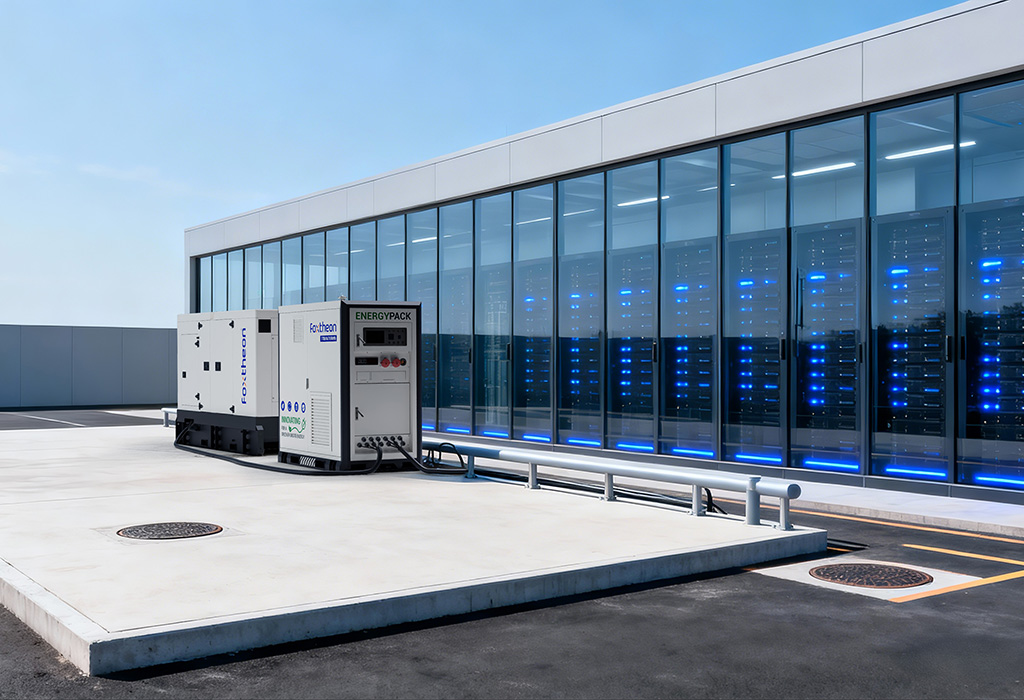
The Future of Off-Grid Energy Management
We are entering an era of “Software-Defined Power.” The future of handling surge current off-grid lies in AI-driven inverters that can predict load patterns. These devices will prepare the battery bank for an expected surge by optimizing the voltage beforehand. As solid-state batteries become more common, handling surge current off-grid will become even easier due to their incredible discharge capabilities and thermal stability. The boundary between grid-tied and off-grid performance is blurring.
For those currently living or working away from the grid, the focus remains on resilience. Handling surge current off-grid is the ultimate test of an energy system’s design. By combining high-quality components from Foxtheon with smart engineering practices, anyone can achieve a stable, reliable power environment. Whether you are powering a remote research station or a family home, mastering the art of handling surge current off-grid ensures that your lights stay on, your motors keep spinning, and your equipment remains protected for years to come.
Frequently Asked Questions
Q1: What exactly is surge current in an off-grid context?
A1: It is the instantaneous peak in electrical demand when an inductive device, like a motor, starts. Handling surge current off-grid is difficult because the source has a limited capacity compared to the utility grid.
Q2: Can I use a standard UPS for handling surge current off-grid?
A2: Generally, no. Most consumer-grade UPS units are designed for computers (resistive loads) and cannot provide the massive burst needed for heavy motors. Dedicated off-grid inverters are required.
Q3: Does a soft starter help with handling surge current off-grid?
A3: Yes, it is one of the most effective tools available. It reduces the peak current draw by gradually increasing the motor speed, which takes the stress off your inverter and batteries.
Q4: Why does my inverter trip even if the battery is full?
A4: This is often a sign of poor wiring or high internal resistance. Even with a full battery, if the cables are too thin, the voltage will drop too low during the surge, causing the inverter to shut down.
Q5: How do Foxtheon products assist in handling surge current off-grid?
A5: Foxtheon provides high-performance lithium energy storage and smart power systems designed with high C-rates. Their technology ensures that the energy is available exactly when the surge happens, maintaining system stability.
Q6: Is it better to oversize the battery or the inverter for surges?
A6: Both must be balanced. An oversized inverter is useless if the battery cannot discharge fast enough, and a massive battery cannot help if the inverter’s peak rating is too low. A balanced system is key to handling surge current off-grid.