

Industrial climate control presents a unique challenge for power systems. Whether you are managing a construction site, a remote mining camp, or a large outdoor event, the demand for heating and cooling is constant. However, the energy required to run these units is not steady. The most critical moment occurs right when you flip the switch.
This specific moment creates a massive spike in energy demand, often threatening to overload the power supply. Traditionally, facility managers solved this by renting massive diesel generators. They would size the generator for the startup spike, not the running load. This results in waste, noise, and high fuel bills.
There is a smarter way to handle these loads. The industry is rapidly adopting BESS for HVAC starting (Battery Energy Storage Systems) to manage these peaks. Innovative companies like Foxtheon are at the forefront of this shift, providing hybrid power solutions that stabilize grids and reduce heavy machinery reliance. This article explores how battery storage is transforming the way we power climate control.
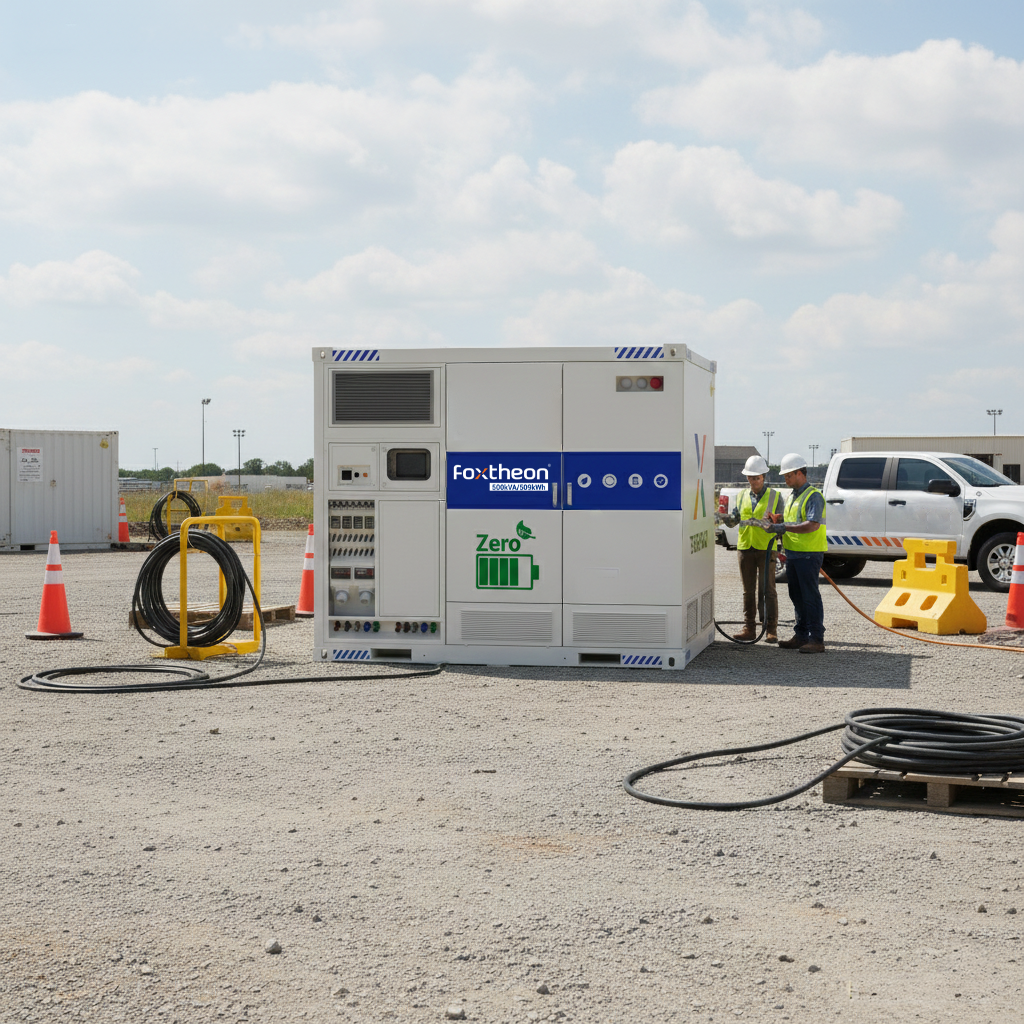
The Challenge of Inrush Current
To understand why we need batteries, we must first understand the motor. Large air conditioners and chillers use powerful electric motors to drive compressors. When a motor is stationary, it requires a significant amount of force to get moving.
This initial surge of power is known as “inrush current” or Locked Rotor Amps (LRA). This surge can be five to seven times higher than the power the unit uses while running normally. For example, an AC unit that consumes 20 amps to run might demand 120 amps for a split second to start.
If the power source cannot supply that instantaneous burst, the voltage drops. This causes lights to flicker, computers to crash, and the HVAC unit itself to stall.
Common issues with traditional generator setups include:
Oversizing: You rent a 100kVA generator for a 20kVA load just to handle the startup.
Wet Stacking: Large generators running at low loads (after the AC starts) damage their own engines.
Fuel Waste: You burn diesel to spin a massive engine that is barely doing any work 90% of the time.
Implementing BESS for HVAC starting solves this physics problem. Batteries are chemical, not mechanical. They can release energy almost instantly, bridging the gap that generators struggle to fill.
How BESS for HVAC Starting Works
A Battery Energy Storage System acts as a buffer. It sits between the power source (grid or generator) and the load (the HVAC unit). The battery charges during times of low demand and discharges instantly when high power is needed.
When the AC compressor kicks on, the BESS detects the sudden demand. It immediately injects stored energy into the system to cover the inrush current. Once the motor is running and the demand stabilizes, the BESS steps back.
This process is seamless. Modern inverters react in milliseconds, ensuring the voltage remains stable.
The operational flow typically looks like this:
Monitoring: The intelligent controller watches the load profile in real-time.
Discharge: As the HVAC starts, the battery provides the high amperage surge.
Stabilization: The generator or grid connection picks up the steady running load.
Recharge: When the HVAC cycles off, the system recharges the battery for the next start.
By utilizing BESS for HVAC starting, you remove the stress from the generator. This allows you to use a much smaller, more efficient generator effectively. Solutions from providers like Foxtheon integrate these controls automatically, so the user doesn’t need to manually manage the power flow.
Financial Benefits of BESS for HVAC Starting
The primary driver for adopting this technology is cost. While battery systems have an upfront rental or purchase cost, the operational savings are massive. The math favors hybridization.
Consider a construction site running a job trailer. The AC turns on and off all day. Without a battery, the generator runs at full speed 24/7 to be ready for the AC to start. With a battery, the generator can turn off completely when the AC is not running, or run at a lower, more efficient RPM.
Key financial advantages include:
Fuel Savings: Users often see a 40% to 60% reduction in diesel consumption.
Maintenance Reduction: Generators run fewer hours, extending service intervals from weeks to months.
Smaller Equipment: You can downgrade from a 100kW generator to a 30kW unit paired with a battery.
Equipment Longevity: Stable voltage protects expensive HVAC circuit boards from damage.
When you calculate the total cost of ownership, utilizing BESS for HVAC starting usually pays for itself within the first few months of operation.
Environmental Impact of Intelligent Power
Sustainability is no longer optional. Clients and municipalities demand lower emissions. A massive diesel generator puffing black smoke is a liability.
Batteries provide a silent, clean alternative for the heavy lifting. By handling the startup load with stored energy, you eliminate the black smoke often seen when a generator takes a heavy hit.
Furthermore, BESS for HVAC starting allows for the integration of renewables. You can connect solar panels to the battery unit. On sunny days, the solar array can handle the HVAC fans and controls, while the battery handles the compressor starts. This can lead to periods of zero-emissions cooling.
Environmental benefits include:
Noise Reduction: Perfect for events, film sets, or residential areas.
Carbon Footprint: Less fuel burned directly equals fewer tons of CO2 released.
Compliance: Meets strict anti-idling laws found in many major cities.
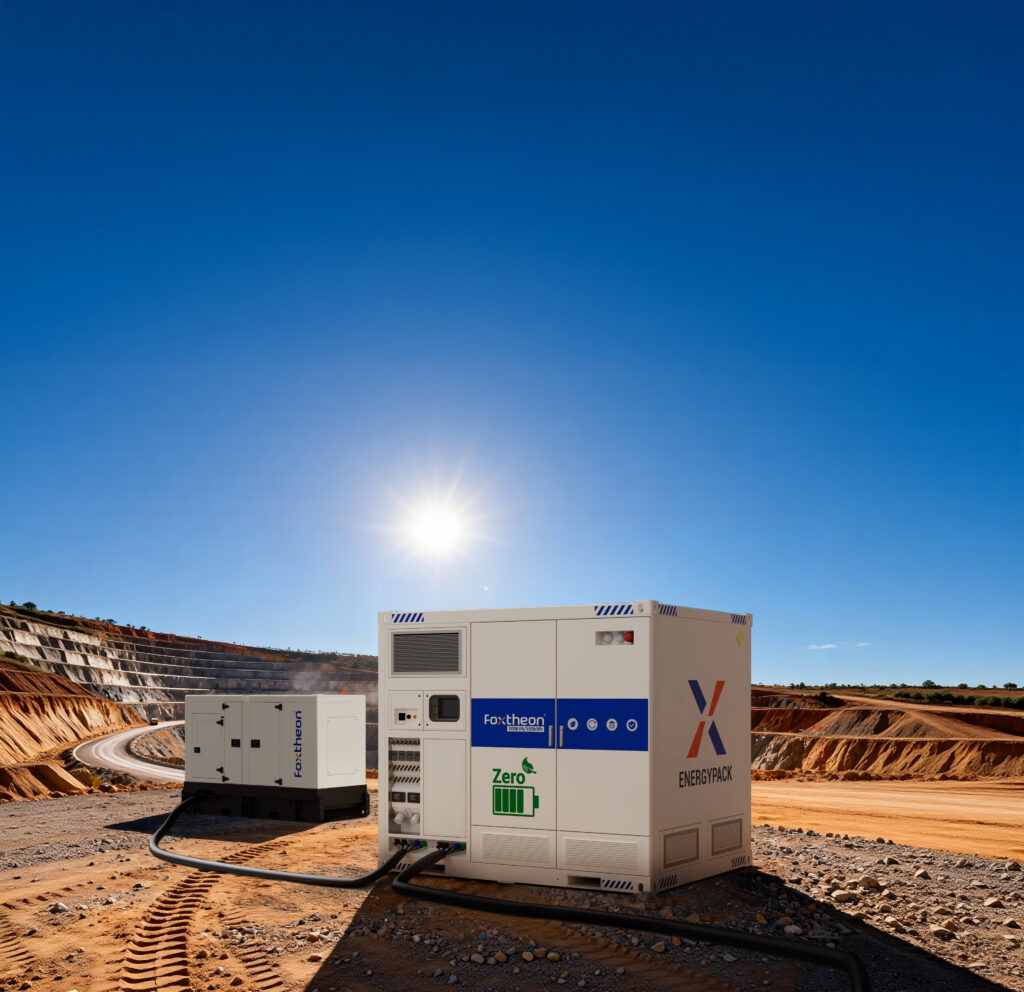
Sizing Your System for BESS for HVAC Starting
Selecting the right battery requires technical diligence. You cannot simply guess the size based on the dimensions of the AC unit. You need specific electrical data.
Engineers at Foxtheon typically recommend looking at the “LRA” rating on the HVAC data plate. This number tells you exactly how many amps the battery inverter needs to push for that critical first second.
Steps for proper sizing:
Identify the LRA: Find the Locked Rotor Amps.
Determine Running Amps: Calculate the steady-state load.
Check Inverter Capacity: Ensure the BESS inverter can handle the peak surge (often 2x its rated continuous output).
Calculate Autonomy: Decide how long you want the system to run on pure battery if the generator fails.
Proper sizing ensures reliability. If the battery is too small, the system will trip. If it is too big, you are paying for capacity you do not need.
The Role of Hybridization
The most common application for BESS for HVAC starting is not a pure battery setup, but a hybrid one. A hybrid generator combines a diesel engine with a lithium-ion battery bank.
This is the “best of both worlds” approach. The battery handles the instant reaction required for starting motors. The engine handles the long-term energy replenishment.
In a hybrid setup, the generator might only run for 4 hours a day to charge the batteries, while the HVAC runs for 12 hours. The battery carries the load for the remaining 8 hours.
Advantages of the hybrid approach:
Redundancy: You have two power sources backing each other up.
Efficiency: The generator always runs at its optimal load (80-90%) to charge the battery, rather than idling.
Flexibility: The system adapts to changing weather and cooling demands automatically.
BESS in Extreme Conditions
HVAC systems are most needed in extreme weather—blistering heat or freezing cold. Ideally, your power solution must be just as tough as the climate.
Lithium Iron Phosphate (LFP) batteries, commonly used in these systems, are robust. However, they do have temperature limits. High-quality BESS units come with their own internal climate control. They cool the batteries in summer and heat them in winter to maintain performance.
When BESS for HVAC starting is deployed in a desert environment, the internal cooling system ensures the inverter does not overheat while delivering that massive current spike.
Future Trends in Temporary Power
The market is moving away from standalone diesel generation. The future is intelligent, connected, and hybrid. We are seeing more “Plug and Play” solutions where the battery and the generator communicate digitally.
Data analytics is playing a huge role. Users can now log in to a web portal to see exactly how much power their HVAC utilized. They can see the exact moment the compressor started and how the battery responded. This data helps in refining operations and proving environmental compliance to stakeholders.
Companies like Foxtheon are continuing to refine the software algorithms that manage this handoff. As the software gets smarter, the hardware becomes more efficient, driving down costs further.
The era of oversizing generators to catch a startup spike is ending. It is inefficient, expensive, and environmentally irresponsible. The technology to do better is readily available and proven in the field.
Implementing BESS for HVAC starting solves the fundamental physics problem of inrush current. It allows for smaller generators, massive fuel savings, and a quieter job site. It protects sensitive equipment from voltage dips and lowers the carbon footprint of any operation.
Whether for a temporary event or a long-term industrial project, intelligent energy storage is the superior choice. By partnering with experienced providers like Foxtheon, businesses can ensure their climate control systems run reliably, efficiently, and sustainably. The power is in the storage, not just the generation.
Frequently Asked Questions (FAQ)
Q1: What exactly is “inrush current” and why does it matter for BESS?
A1: Inrush current is the instantaneous surge of power required to start an electric motor, such as an AC compressor. It can be 5 to 7 times the normal running current. BESS for HVAC starting matters because batteries can deliver this surge instantly without the voltage drop or mechanical lag associated with diesel generators.
Q2: Can a BESS unit run an HVAC system entirely without a generator?
A2: Yes, provided the battery capacity is large enough and the runtime requirements are limited. For continuous 24/7 operation, a standalone battery would need a massive capacity or a renewable charging source like solar. However, for shorter events or workday shifts, a BESS can run HVAC units silently and independently.
Q3: How does using a battery reduce generator maintenance costs?
A3: By handling low loads and startup spikes, the battery allows the generator to turn off completely when demand is low. This significantly reduces engine runtime hours. Instead of running 24 hours a day, the generator might only run 4 hours to recharge the battery. This extends the time between oil changes and filter replacements.
Q4: Is Foxtheon’s equipment compatible with any brand of HVAC unit?
A4: Generally, yes. The electrical output from these energy storage systems is standard AC power (voltage and frequency). As long as the voltage (e.g., 208V, 480V) matches the HVAC unit and the inverter is sized to handle the LRA (Locked Rotor Amps), the brand of the air conditioner does not matter.
Q5: Is it difficult to install a BESS for HVAC starting on an existing site?
A5: No, modern units are designed for rapid deployment. They typically feature standard cam-lock connections or terminal blocks similar to a standard generator. You simply connect the BESS between the power source and the distribution panel powering the HVAC equipment. Setup is usually completed in minutes.