
Heavy industry relies on movement. From the massive crushers in a mining pit to the conveyor belts in a logistics hub, electric motors are the muscles behind the operation. However, getting these heavy loads moving requires a massive burst of energy. Powering high torque motors is one of the most significant challenges in electrical engineering and facility management today. The initial startup phase places immense stress on the power supply, often leading to voltage dips or tripped breakers.
Traditional methods usually involve oversizing generators or upgrading grid connections, both of which are expensive. Fortunately, the landscape of energy management is shifting. Companies like Foxtheon are introducing intelligent hybrid energy solutions that combine battery storage with traditional power. These systems provide the necessary “kick” to start heavy machinery without destabilizing the rest of the network. This article explores how modern technology is changing the way we handle these demanding electrical loads.
Understanding the Challenge of High Inrush Currents
To find the right solution, we must first understand the physics. When a large electric motor sits idle, it resists movement. Overcoming this inertia requires a surge of current that can be five to ten times higher than the motor’s standard running current.
This phenomenon is known as inrush current. For a few seconds, the demand on the power source skyrockets. If the grid or generator cannot supply this instantaneous power, the voltage drops.
The Consequences of Voltage Sags
Voltage sags are dangerous for industrial equipment. They create a ripple effect throughout the facility.
Equipment Shutdowns: Sensitive electronics and control panels may reset if the voltage drops below a certain threshold.
Motor Damage: Repeated exposure to low voltage during startup causes overheating and degrades the insulation in motor windings.
Operational Downtime: If a main breaker trips, the entire production line stops, leading to lost revenue.
Powering high torque motors effectively means ensuring the voltage remains stable during these critical few seconds.
The Limitations of Traditional Generators
For decades, the standard solution for off-grid sites or facilities with weak grid connections was to buy a bigger diesel generator. If a motor required 100kW to run but 500kW to start, the site manager would install a 500kW generator.
This is highly inefficient. Once the motor is running, the generator operates at a fraction of its capacity.
Problems with Oversizing
Running a large diesel generator at a low load leads to a condition known as “wet stacking.” Unburned fuel accumulates in the exhaust system, leading to engine damage and increased maintenance costs. Furthermore, the fuel consumption is significantly higher than necessary. This approach is costly and environmentally damaging.
Utilizing Battery Storage for Powering High Torque Motors
This is where Battery Energy Storage Systems (BESS) revolutionize the process. Batteries are excellent at delivering immediate power. Unlike a generator, which relies on mechanical physics to ramp up speed, a battery releases energy via a chemical reaction. This happens in milliseconds.
Integrating a BESS specifically for powering high torque motors creates a hybrid buffer. The battery sits between the power source (grid or generator) and the load. When the motor starts, the battery discharges rapidly to handle the spike.
The Role of Foxtheon in Hybrid Solutions
Innovators in the field, such as Foxtheon, design systems that manage this interplay seamlessly. Their hybrid energy storage units monitor the load in real-time. As soon as the system detects the surge associated with a motor startup, the batteries kick in.
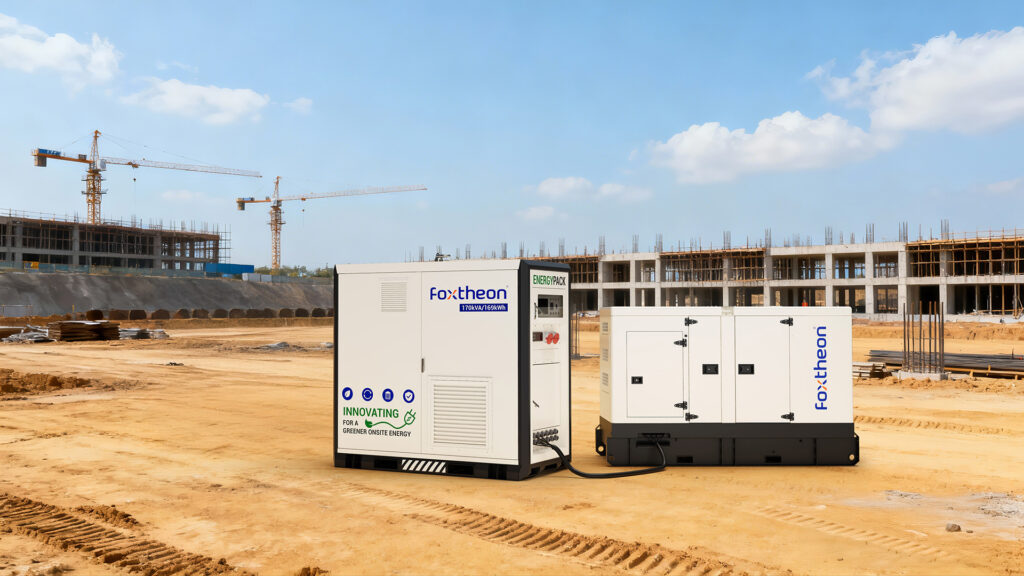
This allows the facility to use a much smaller generator. The generator handles the average running load, while the battery handles the startup peaks. The result is a generator that runs at its optimal efficiency point, saving fuel and extending engine life.
Technical Considerations for Surge Power
Not all batteries are built the same. When designing a system for powering high torque motors, engineers focus on power density rather than just energy density.
C-Rate and Discharge Capability
The C-rate indicates how fast a battery can discharge. For solar storage, a low C-rate is fine. For starting a rock crusher, you need a high C-rate.
High Power Output: The system must deliver hundreds of kilowatts for a duration of 10 to 30 seconds.
Thermal Management: Rapid discharge creates heat. Liquid cooling systems are often necessary to keep the battery cells within a safe operating range.
Inverter Capacity: The inverter must be capable of handling significant overload percentages for short periods.
Variable Frequency Drives (VFDs)
While batteries supply the power, VFDs manage how that power is applied. A VFD controls the frequency and voltage supplied to the motor. It allows the motor to ramp up speed gradually rather than instantly.
Combining a VFD with a BESS is the gold standard for powering high torque motors. The VFD reduces the severity of the inrush current, and the BESS supplies whatever surge remains. This combination ensures the smoothest possible startup with minimal grid impact.
Economic Benefits of Smart Motor Management
Implementing intelligent solutions requires an initial capital expenditure. However, the return on investment is often realized quickly through operational savings.
Reducing Demand Charges
Utility companies often charge industrial clients based on their highest peak usage in a billing cycle. A single motor startup can set the peak for the entire month.
By using a battery to absorb that spike, the grid sees a flat, consistent load. The peak demand charge is calculated on the baseline usage, not the startup surge. This can result in thousands of dollars in savings each month.
Lowering Maintenance Costs
Stable power means less wear and tear on equipment.
Longer Motor Life: Less thermal stress on windings.
Reduced Generator Maintenance: No wet stacking or carbon buildup from low-load running.
Circuit Breaker Longevity: Fewer trips mean less mechanical wear on switchgear.
Applications in Key Industries
Many sectors struggle with the dynamics of powering high torque motors. The application of hybrid storage technology varies across different environments.
Mining and Extraction
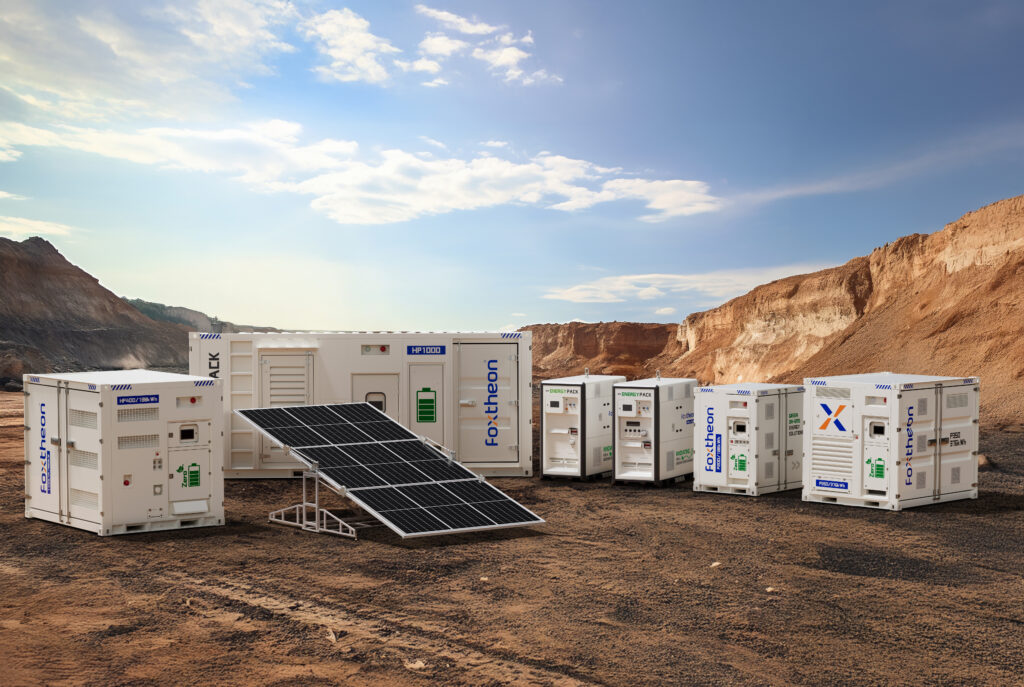
Mines are often located in remote areas relying on diesel power. They use massive crushers, mills, and hoists. A hybrid system ensures that starting a conveyor belt doesn’t black out the accommodation camp.
Construction and Cranes
Tower cranes function in cycles. They need high power to lift a load and generate energy when lowering it. A battery system can capture the regenerative energy from the descent and use it to assist in the next lift. This reduces the size of the required grid connection significantly.
Manufacturing and Pumps
Industrial pumps for water treatment or chemical processing often cycle on and off. A dedicated storage system stabilizes the voltage bus, protecting sensitive PLCs (Programmable Logic Controllers) that control the plant.
Environmental Impact and Sustainability
Efficiency translates directly to sustainability. By downsizing generators and optimizing fuel use, companies drastically reduce their carbon footprint.
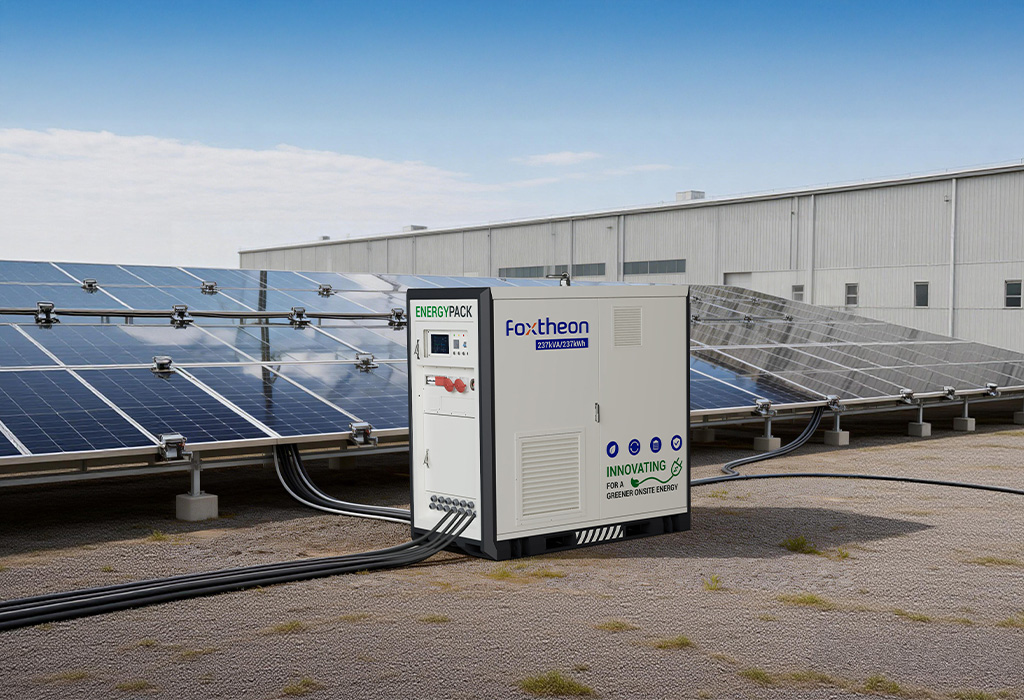
Furthermore, these systems facilitate the integration of renewable energy. Solar panels can charge the batteries during the day. That stored solar energy is then available for powering high torque motors during the night shift. This reduces reliance on fossil fuels and moves the industry toward a greener future.
The industrial sector is moving away from brute-force power generation toward intelligent energy management. The challenges associated with powering high torque motors—voltage sags, high costs, and equipment stress—are no longer solved by simply buying more copper and iron.
Battery storage, combined with advanced control logic, offers a sophisticated way to manage energy. It protects the grid, saves money, and ensures reliability. Companies that adopt these technologies gain a competitive edge through lower operating costs and improved uptime.
Leading solutions providers like Foxtheon continue to push the boundaries of what these systems can do. By integrating high-power batteries with smart inverters, they enable industries to operate heavy machinery more efficiently than ever before. As the world electrifies, the ability to manage the surge will be the defining factor in successful industrial power systems.
Frequently Asked Questions (FAQ)
Q1: Why do electric motors draw so much current when they start?
A1: When an electric motor is at a standstill, it has zero back-electromotive force (EMF) to limit the current flow. To overcome the mechanical inertia of the rotor and the attached load, the motor draws a massive “inrush current,” which can be 5 to 7 times its rated running current.
Q2: Can solar panels alone be used for powering high torque motors?
A2: Generally, no. Solar panels produce energy steadily but cannot provide the instantaneous high-current surge required to start a large motor. You need a battery system to store the solar energy and release it rapidly during the startup phase.
Q3: How does a Soft Starter differ from a VFD?
A3: A Soft Starter temporarily reduces the voltage to limit the inrush current during startup but runs the motor at full speed once started. A Variable Frequency Drive (VFD) controls both voltage and frequency, allowing for speed control during operation and offering more precise control over the startup profile.
Q4: Is it necessary to replace my current generator to use a hybrid system?
A4: Not necessarily. You can often retrofit a Battery Energy Storage System (BESS) to work alongside your existing generator. The battery will handle the startup spikes, allowing your current generator to run more smoothly, or enabling you to downsize the generator when it eventually needs replacement.
Q5: What is the typical lifespan of a battery system used for surge loads?
A5: Modern Lithium Iron Phosphate (LFP) batteries used in industrial applications typically last between 4,000 to 6,000 cycles. Since surge loads are brief, the calendar life often dictates the lifespan, usually ranging from 10 to 15 years depending on the thermal management and maintenance provided.