
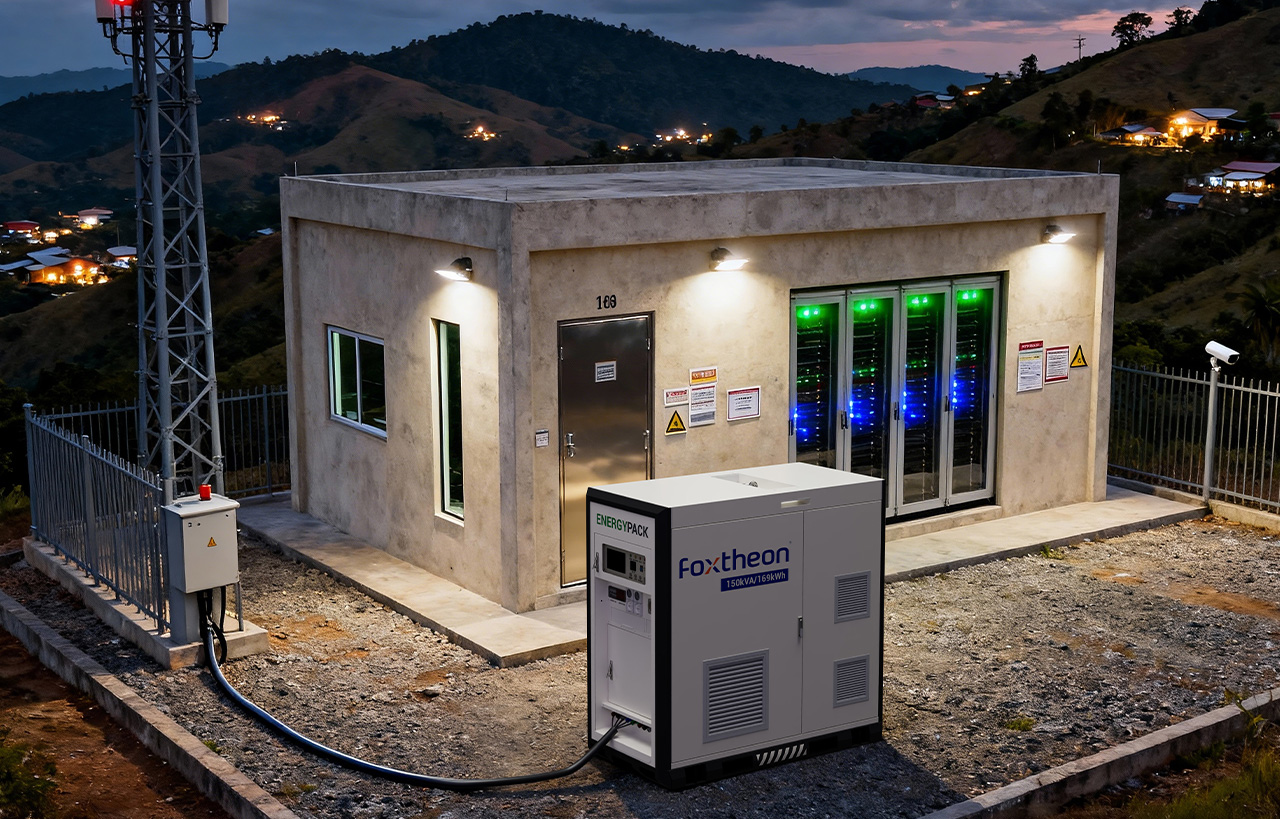
The reliability of power in isolated regions has long been a challenge for engineers and local communities alike. When an off-grid system suffers a total collapse due to extreme weather, equipment failure, or maintenance errors, the process of bringing that system back to life is often fraught with difficulty. In the past, this required physical intervention by skilled technicians. However, the emergence of remote black start for off-grid BESS is fundamentally changing the recovery protocol for distributed energy resources.
As global energy trends shift toward decentralized microgrids, the ability to recover from a “dark” state without local human presence has become a benchmark for advanced systems. Companies like Foxtheon are currently at the forefront of this transition, developing integrated solutions that combine high-density battery storage with intelligent control layers capable of autonomous recovery.
The Critical Need for Autonomous Recovery
In a traditional grid, “black start” refers to the process of restoring a power station to operation without relying on the external electric power transmission network. In an off-grid scenario, the stakes are even higher. If a remote mine, a rural hospital, or an island community loses its primary power source and the battery system shuts down, the entire local economy or life-support infrastructure comes to a halt.
Deploying a technician to a remote site can take hours or even days. This delay is not just an inconvenience; it can be a matter of safety and significant financial loss. This is where the capability of remote black start for off-grid BESS proves its worth. By utilizing secure communication channels and sophisticated inverter management, operators can initiate the restoration process from a central command center hundreds of miles away.
How Remote Black Start Functions in Battery Systems
To understand how this works, we must look at the difference between grid-following and grid-forming inverters. Most standard solar inverters are “grid-following,” meaning they require an existing voltage and frequency signal to function. If the grid goes down, they shut off to prevent safety issues.
A Battery Energy Storage System (BESS) equipped with black start capabilities uses “grid-forming” technology. This allows the battery to act as the “heartbeat” of the microgrid. When a remote command is issued, the BESS begins to produce its own internal voltage and frequency reference.
Establishing the Voltage Reference
The first step in a remote black start for off-grid BESS is the activation of the internal DC-to-AC conversion process. The system must be able to withstand the “inrush current” from transformers and motors that may still be connected to the lines.
Modern systems are designed with high peak-power ratings to handle these initial spikes. Once the BESS establishes a stable 50Hz or 60Hz signal, other components in the microgrid, such as rooftop solar arrays or wind turbines, can detect this signal and begin to synchronize their output.
The Role of Communication Layers
None of this is possible without a robust communication backbone. Whether through satellite links, 4G/5G industrial routers, or dedicated fiber optics, the command to initiate a black start must be delivered securely. Foxtheon integrates these communication protocols directly into their energy management systems, ensuring that even if the main power is out, the “brain” of the system remains reachable via low-power auxiliary backup.
Technical Challenges of Remote Execution
While the concept sounds straightforward, the execution of a remote black start for off-grid BESS involves balancing complex variables in real-time. One of the primary hurdles is the “State of Charge” (SoC) management. If the battery is completely depleted, a black start is impossible without an external charge.
Managing Minimum Energy Reserves
To mitigate the risk of a permanent “dark” state, intelligent BESS units maintain a “black start reserve.” This is a dedicated portion of the battery capacity—perhaps 5% to 10%—that is never discharged during normal operations. This reserve ensures there is always enough energy to power the control electronics and the initial energization of the local transformers.
Inrush Current and Load Sequencing
Another challenge is preventing the system from tripping immediately after it starts. If too many loads (like air conditioners or industrial pumps) are left in the “on” position, the initial surge of demand can overwhelm the BESS.
Advanced remote black start protocols include “load shedding” or “sequenced connection.” The operator or an automated script ensures that only the most critical circuits are energized first. Once the system stabilizes and renewable generation (like solar) kicks in, secondary loads are gradually brought back online.
The Economic Impact of Remote Intervention
For commercial and industrial (C&I) operators, the return on investment for a remote black start for off-grid BESS is measured in reduced downtime. In the mining industry, for example, an hour of power loss can equate to hundreds of thousands of dollars in lost productivity.
By eliminating the need for a physical “truck roll”—sending a technician to the site—the O&M (Operations and Maintenance) costs are significantly reduced. This is particularly relevant in the international smart energy sector, where projects are often located in geographically challenging environments like the Australian Outback, the Saharan regions, or remote Indonesian islands.
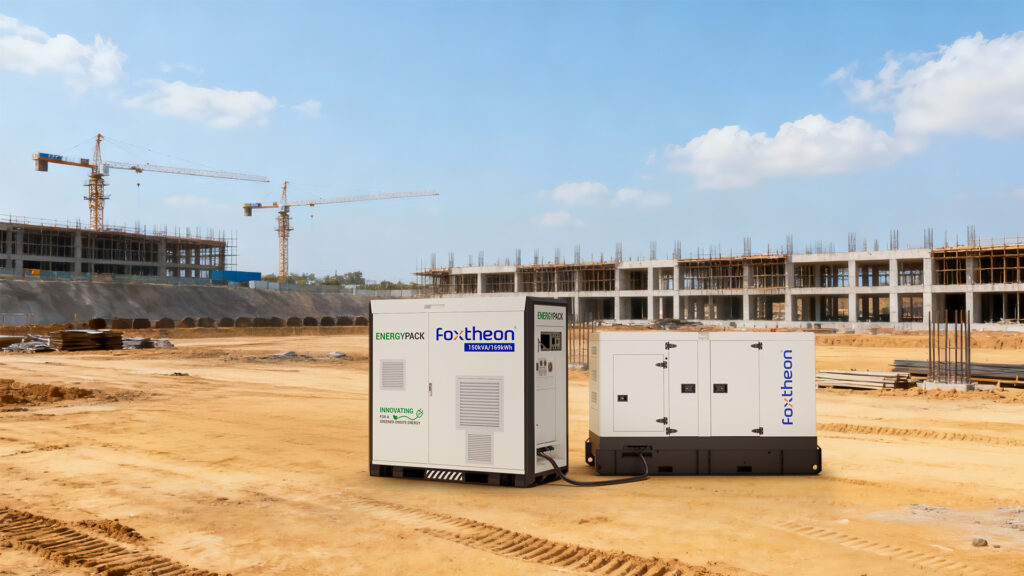
Foxtheon has recognized this economic driver by focusing on “all-in-one” systems. These units integrate the battery, inverter, and thermal management into a single containerized solution that is pre-configured for remote management. This reduces the complexity for installers and ensures that the black start logic is tested and verified before the unit even leaves the factory.
Security Protocols in Remote Power Restoration
Any system that can be controlled remotely is, by definition, a target for cyber threats. In the context of critical infrastructure, a remote black start for off-grid BESS must be protected by multi-layer security.
This includes end-to-end encryption for all commands sent from the cloud to the BESS. Furthermore, “hardware-in-the-loop” security ensures that certain commands require physical digital signatures or multi-factor authentication from authorized personnel. This prevents a malicious actor from causing a “yo-yo” effect on the grid by repeatedly starting and stopping the system.

The Future of Grid-Forming BESS
As we look toward the future, the integration of Artificial Intelligence (AI) will further refine the process. Instead of a human operator deciding when to initiate a remote black start for off-grid BESS, the system may eventually use predictive analytics.
If the system detects an incoming storm or a potential grid instability, it could automatically increase its black start reserve. If a collapse occurs, the AI could analyze the nature of the fault and execute the most efficient recovery sequence based on the current weather conditions and predicted solar availability.
Environmental Benefits of Advanced BESS Recovery
Beyond the technical and economic advantages, there is a clear environmental benefit. Many off-grid locations currently rely on diesel generators for black start capabilities. These generators are noisy, require constant fuel deliveries, and emit significant CO2.
By transitioning to a remote black start for off-grid BESS, these communities can move closer to a 100% renewable reality. The battery replaces the diesel engine as the primary restorer of power, drastically reducing the carbon footprint of the microgrid’s emergency protocols.
Why Integration Matters
The success of a remote recovery strategy depends on how well the components talk to each other. A “piecemeal” system—where the battery, the inverter, and the controller come from different manufacturers—often struggles with the nuances of black start synchronization.
Integrated solutions provided by companies like Foxtheon solve this by ensuring that the firmware across all components is optimized for the same goal. When a remote command is sent, there is no “translation error” between the communication gateway and the battery management system. This level of harmony is what makes the difference between a successful restart and a system that remains dark.
Conclusion: A New Era of Energy Autonomy
The ability to perform a remote black start for off-grid BESS is no longer a futuristic concept; it is a standard requirement for resilient, modern energy infrastructure. It represents the shift from passive energy storage to active, intelligent grid management.
By utilizing the latest in grid-forming technology and secure remote communications, we can ensure that remote regions are never left in the dark for longer than necessary. Brands like Foxtheon are proving that with the right combination of hardware and software, the goal of 24/7 reliable, green energy is achievable even in the most isolated corners of the globe. As we continue to innovate, the “dark start” will become a relic of the past, replaced by the seamless, automated, and remote restoration of our global power assets.
Frequently Asked Questions (FAQ)
Q1: Is a special type of inverter required for remote black start?
A1: Yes. A standard grid-following inverter cannot perform a black start because it needs an external signal to operate. You need a “grid-forming” inverter. This type of inverter can create its own voltage and frequency, acting as the primary source of power for the microgrid during the restart process.
Q2: Can I perform a remote black start if the battery is at 0% charge?
A2: Generally, no. To initiate a remote black start for off-grid BESS, the system needs a small amount of “internal” energy to power its own control boards and to energize the local grid. Most professional systems reserve a small percentage of capacity specifically for this purpose to prevent a total lock-out.
Q3: How long does the remote black start process usually take?
A3: Once the command is received and verified, the actual energization of the BESS can happen in seconds. However, the full restoration of the microgrid—including reconnecting solar arrays and various building loads—is usually done in stages and may take 5 to 15 minutes to ensure system stability.
Q4: Is it possible to initiate a black start via a smartphone?
A4: While technically possible through secure mobile apps provided by manufacturers like Foxtheon, most industrial-grade black starts are performed via a secure Energy Management System (EMS) dashboard. This ensures that the operator has a full view of all system diagnostics before and after the restart.
Q5: What are the risks of a remote black start?
A5: The main risk is an “overload trip.” If there is a short circuit on the line or if too many heavy appliances are turned on at the moment of restart, the BESS might detect a fault and shut down again to protect itself. This is why sequenced load management is a critical part of the black start protocol.
Q6: Does remote black start work during extreme weather?
A6: Yes, and that is often when it is most needed. As long as the physical infrastructure (wires and battery) is intact and the communication link (like satellite or cellular) is functioning, a remote black start for off-grid BESS can be executed regardless of the weather conditions outside.