
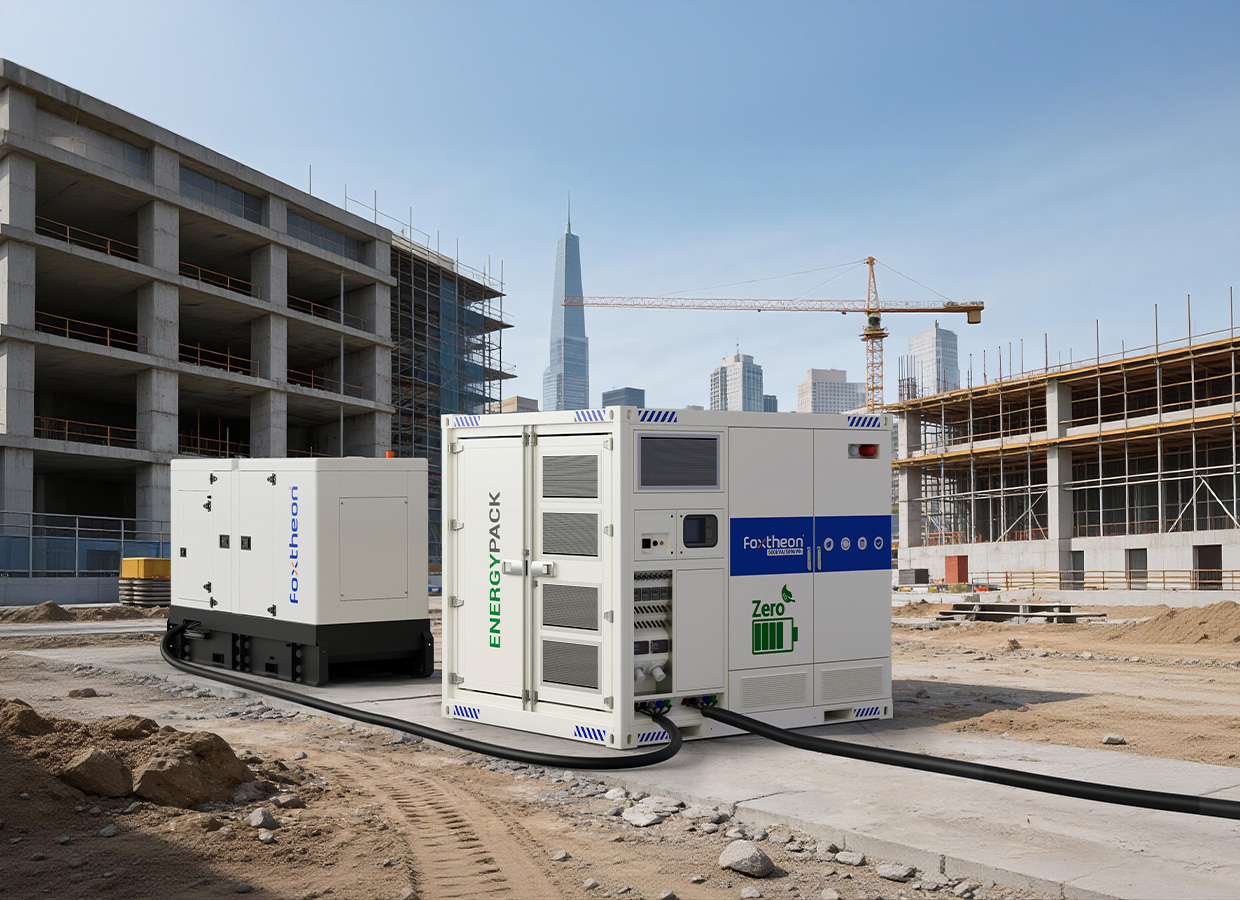
Industrial operations rely heavily on electric motors. From rock crushers in mines to tower cranes on construction sites, these machines are the muscles of industry. However, getting them moving presents a massive challenge for power systems. This is where generator assist for motor starting becomes a critical technology.
Standard generators often struggle to handle the initial surge required to start heavy machinery. This struggle leads to voltage dips, stalled engines, and disrupted operations. Many businesses resort to buying massive, inefficient generators just to handle these few seconds of startup power.
There is a better way. Modern hybrid energy solutions, such as those pioneered by Foxtheon, utilize battery energy storage to assist generators during these peak moments. By understanding how generator assist for motor starting works, you can drastically reduce your fuel consumption, lower maintenance costs, and improve the reliability of your power supply.
The Physics Behind the Startup Problem
To understand the solution, we must first look at the problem. An electric motor requires significantly more energy to start spinning than it does to keep spinning.
The Surge of Inrush Current
When you flip the switch on a large pump or compressor, it draws a massive spike of electricity known as “inrush current” or Locked Rotor Amps (LRA). This spike can be 6 to 10 times higher than the motor’s normal running current.
For a utility grid, this is a minor ripple. For a local diesel generator, it is a shock to the system.
Why Generators Struggle
Generators are mechanical devices. When a sudden electrical load hits, the engine must physically inject more fuel and work harder to maintain the standard 50Hz or 60Hz frequency. This mechanical reaction takes time.
Because the electrical surge happens faster than the engine can react, the generator’s voltage drops. If the drop is too severe, the magnetic contactors in your motor control center may open, shutting down the equipment. In worse cases, the generator stalls completely.
Implementing a generator assist for motor starting solution bridges this gap. It provides immediate electrical power from a battery, giving the generator time to ramp up smoothly.
How Generator Assist for Motor Starting Works
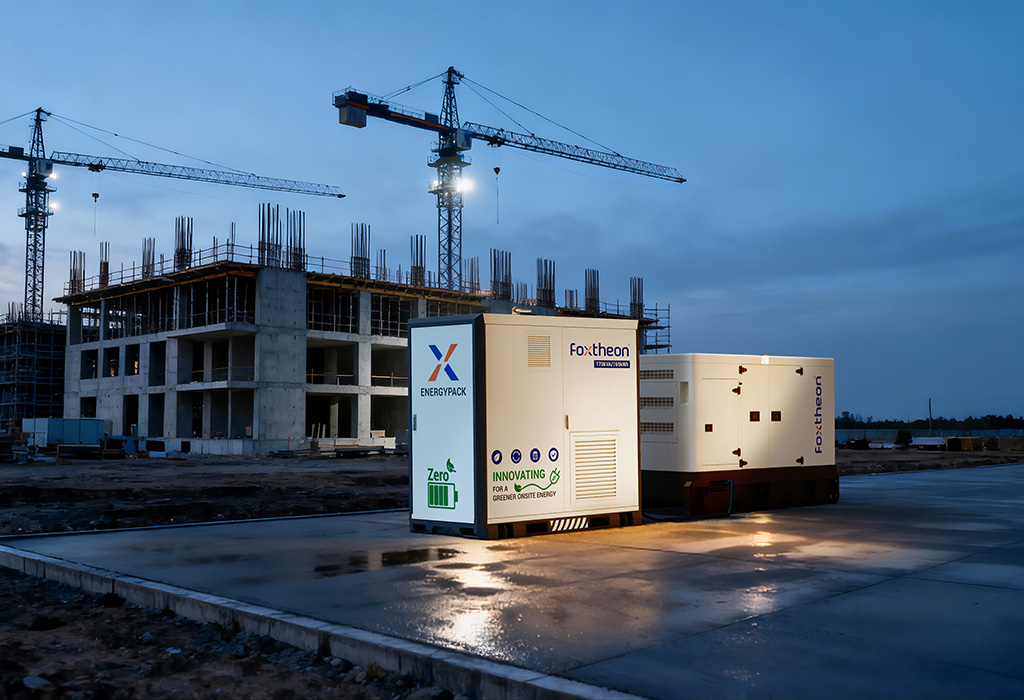
The concept is similar to a hybrid car, but for industrial power. A Battery Energy Storage System (BESS) runs in parallel with your diesel generator.
When the system detects a sharp rise in demand—such as a motor starting—the battery inverter instantly injects power.
Immediate Response: The battery delivers power in milliseconds, far faster than a diesel engine governor can react.
Load Sharing: The battery handles the spike (the “assist”), while the generator handles the base load.
Smoothing: Once the motor reaches its running speed and the current drops, the battery backs off, and the generator takes over the full load.
Companies like Foxtheon design their power management systems to execute this “handshake” seamlessly. The result is a stable voltage curve, even when starting the heaviest loads.
The Economic Benefits of Hybrid Assistance
Using generator assist for motor starting is not just an engineering fix; it is a financial strategy. The cost savings come from three distinct areas.
1. Eliminating Generator Oversizing
This is the biggest source of savings. Traditionally, if you had a 50kW running load but a 150kW startup spike, you had to buy a 150kW generator.
This means you are paying for capacity you only use for a few seconds a day. With generator assist, you can use a 50kW or 60kW generator. The battery handles the 150kW spike. You save significantly on the initial capital expenditure (CAPEX) of the generator.
2. Reducing Fuel Consumption
Large generators are thirsty. Furthermore, diesel engines are least efficient when running at low loads.
If you run a 150kW generator to power a 50kW load, the engine operates at 33% capacity. This is an inefficient fuel burn zone. By downsizing the generator and using generator assist for motor starting, your smaller generator runs closer to its optimal 75-80% load capacity.
You burn less fuel per kWh produced.
You waste less energy on thermal losses.
You extend the runtime of your fuel tank.
3. Lower Maintenance Costs
Running a diesel generator at low load leads to a condition called “wet stacking.” Unburned fuel accumulates in the exhaust system, leading to carbon buildup, reduced performance, and frequent maintenance intervals.
By using a properly sized generator assisted by a battery, you avoid low-load operations. The engine runs hotter and cleaner, extending its lifespan and reducing the frequency of service calls.
Technical Requirements for Effective Assistance
Not all battery systems can perform this task. Generator assist for motor starting requires specific hardware capabilities. A standard home backup battery usually lacks the power density required for industrial surges.
High C-Rate Batteries
The “C-rate” measures how fast a battery can discharge. For motor starting, you do not need hours of energy; you need massive power for 10 to 30 seconds.
The system must use batteries capable of high discharge rates (2C or higher) without overheating. Lithium Iron Phosphate (LFP) chemistry is often preferred for its safety and ability to handle these high-current pulses.
Advanced Inverters with Surge Capacity
The inverter is the gateway between the battery and the motor. It must be robust enough to withstand the overload.
A suitable inverter for this application might be rated for:
100% load continuously.
150% load for one minute.
200% load for 5 seconds.
Foxtheon integrates these high-surge inverters into their hybrid units, ensuring the electronics do not trip exactly when they are needed most.
Smart Control Logic
The brain of the system is the Energy Management System (EMS). It must monitor the voltage and current thousands of times per second.
When the EMS detects the inrush current, it commands the battery to discharge immediately. If the software lags, the generator will feel the hit, and the voltage will dip. Speed is everything in generator assist for motor starting applications.
Real-World Applications
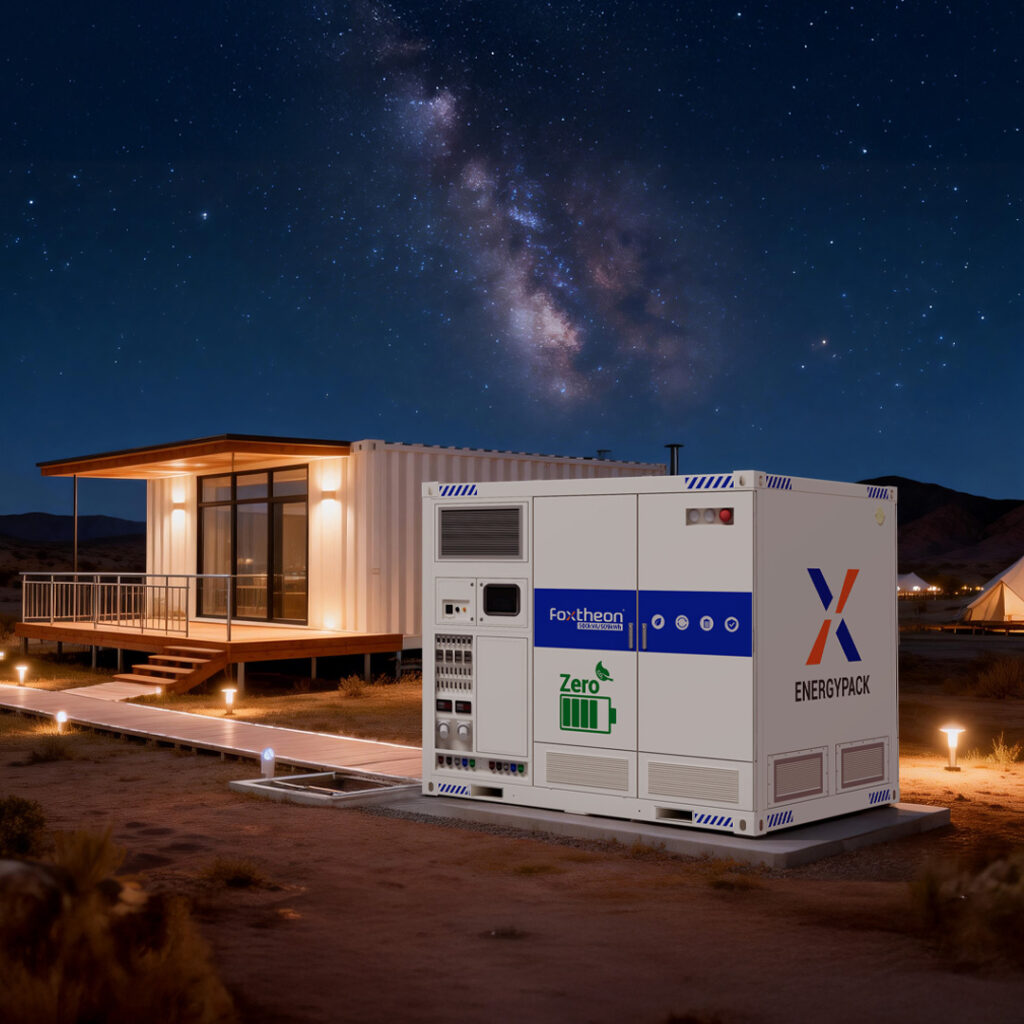
Where is this technology making the biggest impact? Any industry that combines heavy rotating machinery with off-grid power generation is a candidate.
Construction Sites
Tower cranes are notorious for their power demands. Every time the operator lifts a load, the power draw spikes. Without battery assist, the site generator runs at full speed all day just to be ready for these lifts, wasting fuel. Hybrid systems allow the generator to idle or turn off, kicking in only when the battery needs recharging.
Mining Operations
Mines use massive rock crushers, ball mills, and ventilation fans. These are located in remote areas relying on diesel power. A voltage dip here can stop a production line for hours. Generator assist for motor starting ensures the crushers start smoothly without destabilizing the camp’s power grid.
Agriculture and Irrigation
Large water pumps often sit at the end of long, weak rural power lines or rely on diesel gensets. Starting these pumps can dim the lights for neighbors or stall the farm’s generator. Battery assistance provides the necessary reactive power to get the water flowing without electrical drama.
Environmental Impact and Sustainability
Reducing the size of generators directly translates to lower carbon emissions. By burning less diesel, companies reduce their Scope 1 emissions.
Furthermore, these hybrid systems cut down on noise pollution. A smaller generator is quieter than a large one. Additionally, during periods of low load, the generator can shut off completely, allowing the site to run silently on battery power. This is crucial for construction sites in urban areas or night operations.
The integration of generator assist for motor starting is a practical step toward greener industrial practices. It maximizes the utility of fossil fuels while we transition to fully renewable sources.
Choosing the Right Partner for Hybrid Power
Implementing this solution requires careful planning. You cannot simply plug a battery into a generator and hope for the best. The system voltage, phase synchronization, and capacity ratings must match.
You need to analyze your load profile:
What is the peak amperage of your largest motor?
How long does the startup phase last?
How many times per hour does the motor start?
Foxtheon specializes in this type of load analysis. They assist customers in sizing the battery and inverter to match the specific inrush requirements of their equipment. Rather than selling a generic battery, they provide a power quality solution.
The days of buying oversized generators “just in case” are over. The technology now exists to decouple power capacity from energy capacity. Generator assist for motor starting allows you to use a generator sized for your average load, while a battery handles the heavy lifting during startup.
This approach saves money on hardware, reduces operational fuel costs, and protects your equipment from the damaging effects of voltage instability. It transforms a crude power system into a smart, efficient energy hub.
For businesses looking to modernize their off-grid or weak-grid operations, partnering with experts like Foxtheon ensures access to the hardware and engineering support needed to master these high-power challenges. By adopting hybrid assistance today, you prepare your infrastructure for a more efficient and sustainable future.
Frequently Asked Questions (FAQ)
Q1: What is the main advantage of using generator assist for motor starting?
A1: The primary advantage is the ability to use a significantly smaller generator. Instead of sizing the generator for the momentary peak current (inrush), you can size it for the continuous running load. The battery system provides the extra power needed during the startup spike, saving on capital costs and fuel.
Q2: Can this system work with an existing diesel generator?
A2: Yes, in most cases, a hybrid BESS (Battery Energy Storage System) can be retrofitted to work with an existing generator. The system connects to the common bus and uses current transformers to monitor the load. When the system detects high demand, it automatically synchronizes and injects power to assist the generator.
Q3: How fast does the battery respond when the motor starts?
A3: The response time is virtually instantaneous. Advanced inverters and control systems can detect the load spike and begin discharging within milliseconds (often less than 20ms). This speed is crucial because it prevents the generator’s voltage from collapsing before the engine governor can react physically.
Q4: Does Foxtheon provide custom solutions for specific heavy machinery?
A4: Yes, Foxtheon offers modular energy storage solutions that can be scaled to meet specific power requirements. Whether you are starting a small irrigation pump or a massive industrial crusher, their engineering team can configure the battery capacity and inverter power to match your specific inrush current profile.
Q5: Will generator assist for motor starting extend the life of my equipment?
A5: Absolutely. By preventing severe voltage dips during startup, the system reduces electrical stress on the motor’s windings and the control electronics. Additionally, because the generator is not subjected to sudden, violent load steps, the engine undergoes less mechanical wear and wet stacking, extending the lifespan of both the motor and the generator.