
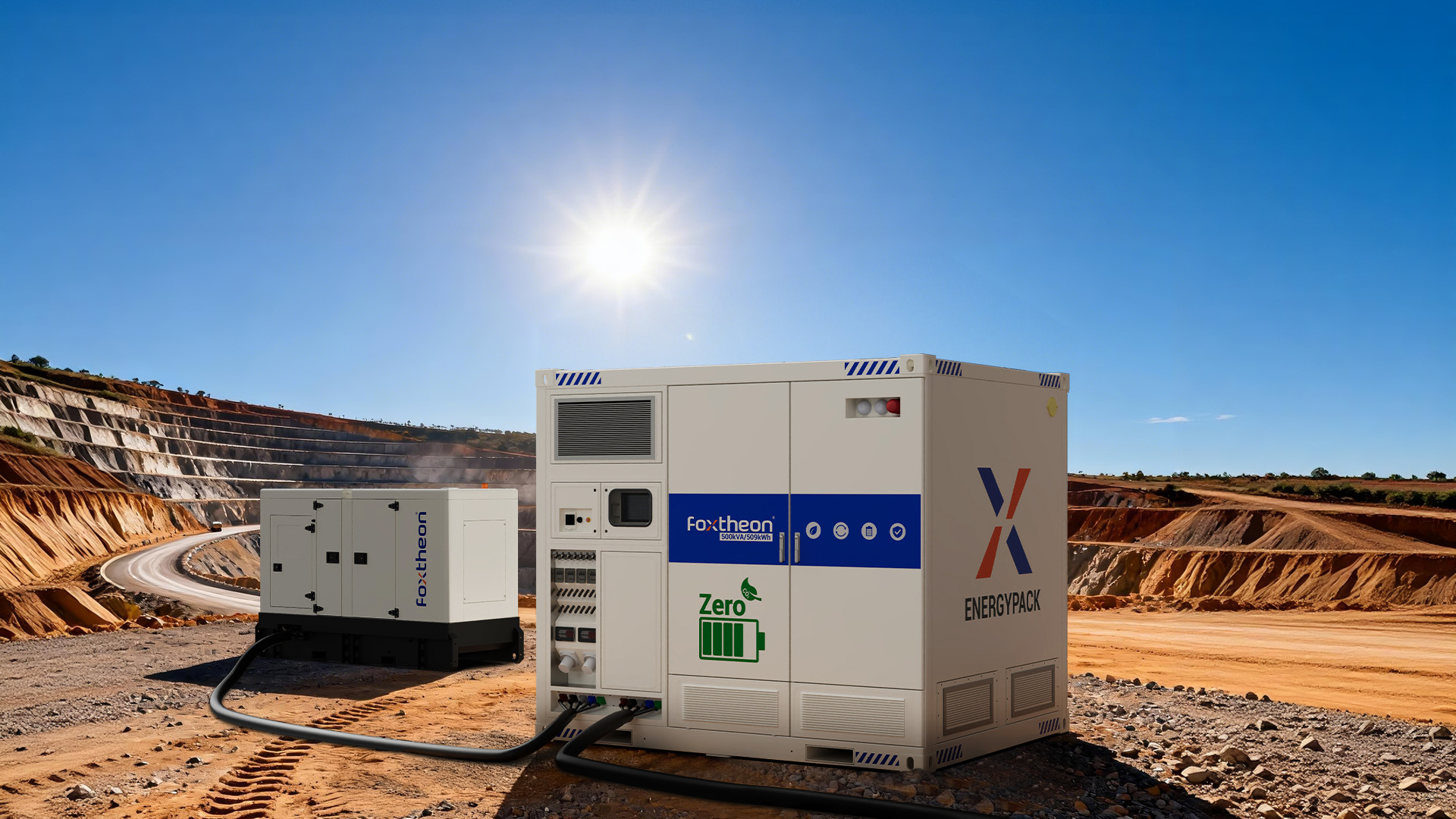
Every site manager has experienced that sinking feeling. You press the start button on a massive industrial compressor or a rock crusher, and immediately, the site power trips. The lights go out, the silence is deafening, and operations grind to a halt.
This isn’t just a nuisance; it is a costly operational failure. The culprit is almost always inrush current. Electric motors require a massive surge of energy to overcome inertia and reach their operating speed. This surge can be five to seven times higher than the machine’s standard running wattage.
Finding a reliable power solution for high starting load equipment is one of the most complex challenges in off-grid and industrial energy management. It requires moving beyond simple generator sizing and looking at intelligent load management. Companies like Foxtheon are increasingly addressing this by integrating battery buffers with traditional generation, changing how we handle these massive power spikes.
Understanding the Physics of the Surge
To solve the problem, we first have to understand the mechanics. When an AC induction motor is stationary, it acts essentially like a short circuit. The moment power is applied, the motor draws the maximum possible current to magnetize the coils and break the force of friction.
This is known as Locked Rotor Amps (LRA). While this phase only lasts for a few seconds (or even milliseconds), the demand on the power source is instantaneous and violent.
If your power source—whether it is a diesel generator or a grid connection—cannot supply this LRA instantly, the voltage drops. This voltage dip causes the motor to struggle to reach speed, which in turn causes it to draw even more current. It is a vicious cycle that usually ends with a tripped breaker or a stalled generator.
The Problem with Traditional Generator Sizing
Historically, the only way to deal with this was oversizing. If you had a pump that ran at 50kW but required 250kW to start, you bought a 300kVA generator.
Once the motor was running, that massive generator would sit there idling at 20% capacity. This is terrible for the engine. It leads to “wet stacking” (unburned fuel accumulation), high maintenance costs, and massive fuel waste. You are essentially paying for capacity you only use for ten seconds a day.
Hybrid Systems: A Smarter Approach
The industry is shifting away from massive iron engines toward smarter hybrid technologies. This is where battery energy storage systems (BESS) shine.
Batteries have excellent discharge characteristics. Unlike a diesel engine, which needs physical air and fuel to mix and explode to create torque, a battery can release energy almost instantly.
How Battery Buffering Works
In a hybrid setup, the battery acts as a shock absorber. When that heavy motor kicks on, the battery system detects the spike immediately. It dumps high amperage into the system to cover the inrush current.
Once the motor stabilizes and drops back to its nominal running load, the generator (or grid connection) takes over the steady-state work and slowly recharges the battery.
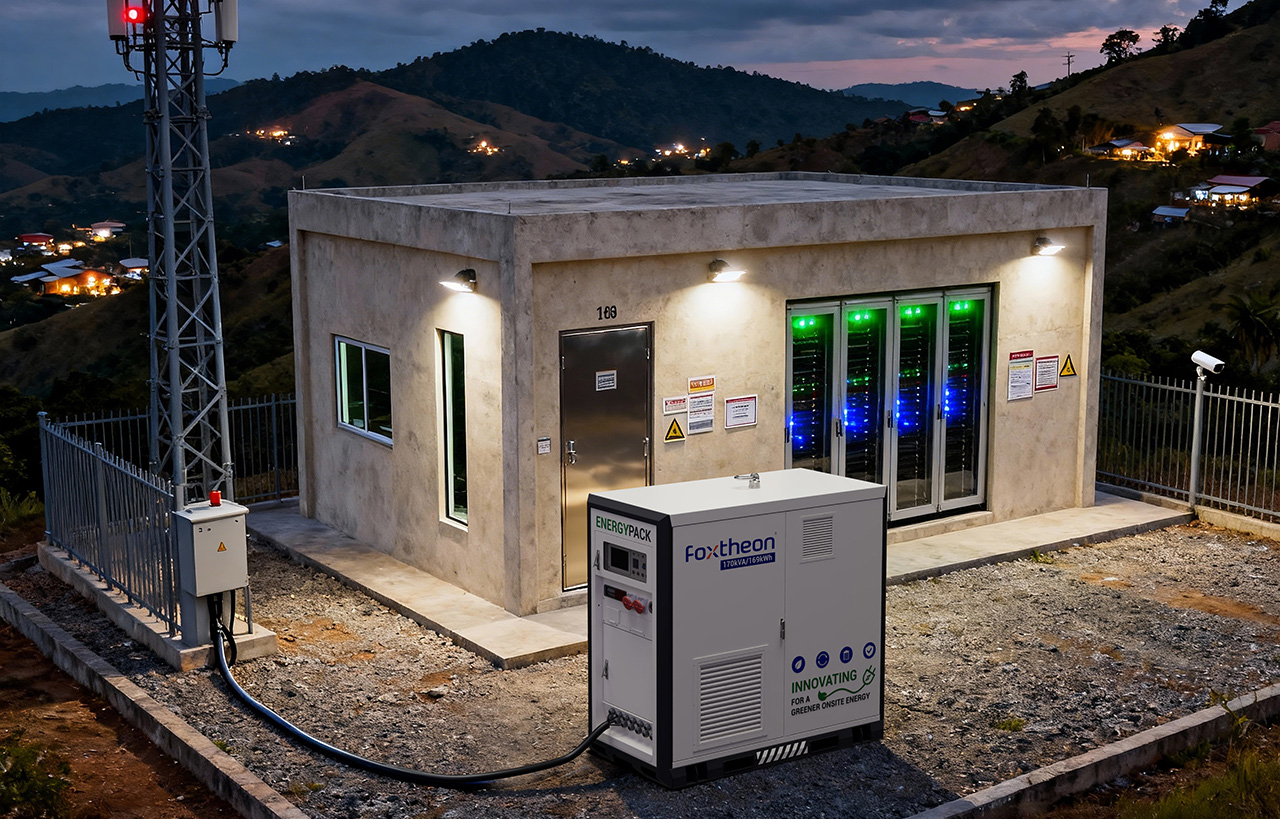
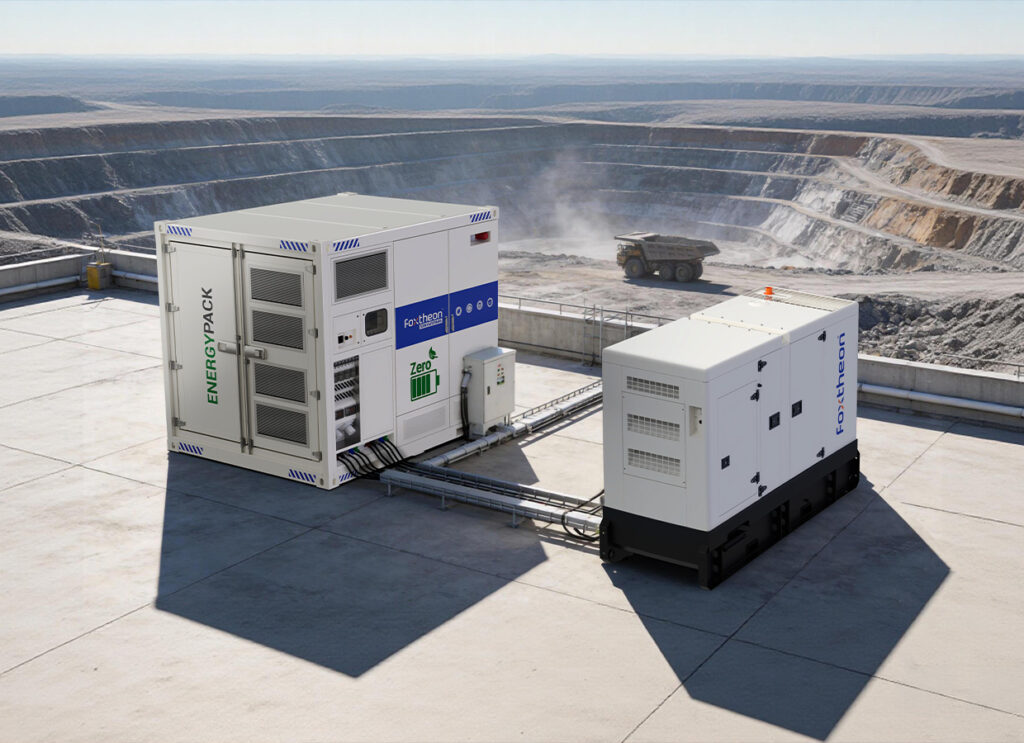
This approach allows you to size the generator based on the running load, not the starting load. You might be able to replace that 300kVA generator with a Foxtheon hybrid unit pairing a smaller 60kW generator with a robust battery pack. The result is a generator that runs at optimal efficiency, saving huge amounts of fuel.
Key Technologies for Managing High Startup Loads
Beyond just batteries, there are other electrical components that contribute to a robust power solution for high starting load equipment. A holistic approach usually combines storage with voltage control devices.
Variable Frequency Drives (VFDs)
A VFD is often the first line of defense. Instead of hitting the motor with full voltage instantly, a VFD ramps up the frequency and voltage gradually.
This allows the motor to accelerate smoothly. It keeps the inrush current much lower, sometimes less than 1.5 times the full load current. However, VFDs can introduce harmonic distortion back into the power line, which can confuse sensitive electronics if not filtered correctly.
Soft Starters
Soft starters are a simpler, less expensive alternative to VFDs. They use thyristors to control the voltage supplied to the motor during startup. They don’t offer the speed control of a VFD, but they effectively limit the mechanical torque snap and the electrical surge.
While these devices help, they do not create energy. If the grid or generator is too weak, a VFD might not save you. That is why the power source itself remains the critical foundation.
Why Battery Chemistry Matters
Not all batteries are created equal when it comes to high-power discharge. For high starting loads, you need a battery chemistry that can handle a high “C-rate” (the rate at which a battery is discharged relative to its maximum capacity).
Lithium Iron Phosphate (LFP)
LFP batteries have become the industry standard for stationary energy storage. They offer a great balance of safety, longevity, and discharge capability. They can sustain high current bursts without overheating, making them ideal for handling the “kick” of a crane lifting a load or a compressor firing up.
Supercapacitors
For extreme applications where the surge happens frequently—like a port crane that starts and stops every minute—supercapacitors are sometimes used alongside batteries. They can discharge huge amounts of power in milliseconds but have very low total energy storage.
Designing a Power Solution for High Starting Load Equipment
When planning your power infrastructure, general estimates are dangerous. You need specific data to build a system that won’t fail.
Step 1: Analyze the Load Profile
You need to know the specific LRA (Locked Rotor Amps) of your largest motor. If you have multiple large motors, you must determine if they will ever start simultaneously.
If they do, your peak requirement is the sum of their startup surges. A smart control system can often be programmed to stagger these starts, preventing a cumulative disaster.
Step 2: Account for Environmental Factors
Temperature affects battery performance and generator efficiency. In extreme cold, diesel engines struggle to start, and battery chemistry slows down.
In extreme heat, cooling systems work overtime, adding to the parasitic load. A robust solution from a provider like Foxtheon will typically include integrated thermal management to ensure the batteries can deliver that necessary punch regardless of the weather.
Step 3: assess the Power Factor
Inductive loads (motors) cause a poor power factor. This means the current and voltage are out of phase, making the system work harder to provide the same amount of useful power.
If your power factor is 0.7, your generator has to work significantly harder than if it were 0.95. Capacitor banks or active power factor correction can mitigate this, allowing you to get more real work out of your power source.
Real-World Applications and Benefits
Implementing a hybrid power solution for heavy equipment is not just theoretical; it is changing operations across several heavy industries.
Construction and Mining
On a construction site, a tower crane is the classic “high starting load” problem. It sits idle for minutes, then demands massive power to lift a steel beam.
Running a diesel generator 24/7 to catch these intermittent spikes is incredibly wasteful. Hybrid units allow the generator to turn off completely during idle times, with the battery handling the controls and small loads. When the lift begins, the battery and generator work in tandem.
Industrial Pumping Stations
In remote agriculture or dewatering projects, large pumps cycle on and off based on water levels. The startup current is massive.
Using a battery-assisted power system ensures that the voltage remains stable during these starts. This protects the windings in the pump motors, extending the lifespan of the equipment and reducing the frequency of burnt-out motors.
Events and Entertainment
Large concerts use massive amplifiers and lighting rigs. While not “motors,” these systems can have significant inrush currents when fired up. Furthermore, audio equipment is very sensitive to voltage fluctuation.
A hybrid solution provides a stable, pure sine wave that protects expensive AV gear while handling the sudden load steps of a light show.
Economic Implications
The initial capital expenditure (CAPEX) for a hybrid system or a high-end energy storage unit is higher than a standard diesel generator. However, the operational expenditure (OPEX) tells a different story.
Fuel Savings
By downsizing the generator engine and running it at a constant, efficient load to recharge batteries, fuel consumption often drops by 40% to 60%. For a remote mine site where fuel delivery is expensive, the return on investment can be less than two years.
Maintenance Reduction
Diesel engines degrade faster when they run at low loads (under-loading). By using the battery to handle low loads and peaks, the engine runs fewer hours and always in its “sweet spot.” This extends service intervals from 250 hours to potentially 500 or 1000 hours depending on the system logic.
The era of simply buying the biggest diesel generator available to prevent tripping breakers is ending. It is economically inefficient and environmentally unsustainable.
Managing inrush current requires a blend of physics and smart technology. By understanding the demands of your motors and integrating modern storage technologies, you can secure a reliable power solution for high starting load equipment.
Whether through Variable Frequency Drives, soft starters, or advanced hybrid energy storage systems like those engineered by Foxtheon, the tools exist to tame the surge. The result is a site that is quieter, cleaner, and significantly cheaper to run, without the fear of the power going out right when you need it most.
Q&A: Common Questions about High Starting Loads
Q1: Why does my generator trip even though it is rated for the equipment’s running wattage?
A1: Generators are rated for continuous power. Motors often require 3 to 7 times their running wattage just to start (inrush current). If the generator cannot supply this instantaneous surge, the voltage drops, and the breaker trips to protect the system.
Q2: Can I just use a larger fuse or breaker to stop it from tripping?
A2: No, this is dangerous. Breakers are sized to protect the wiring from melting and causing a fire. If you install a larger breaker than the wire is rated for, you risk an electrical fire. The solution is to improve the power supply’s capacity to handle the surge, not to bypass safety mechanisms.
Q3: What is the difference between a Soft Starter and a VFD?
A3: A Soft Starter ramps up the voltage to limit the mechanical shock and electrical surge during startup but runs the motor at full speed. A Variable Frequency Drive (VFD) controls both voltage and frequency, allowing for speed control during operation and even smoother startups, though VFDs are generally more expensive.
Q4: How does a battery energy storage system help with motor starting?
A4: Batteries can discharge energy instantly, much faster than a diesel engine can ramp up. A hybrid system uses the battery to provide the immediate “kick” of energy needed for the startup, allowing the generator to stay smaller and run more efficiently.
Q5: Is a hybrid power solution worth the extra cost compared to a standard generator?
A5: For applications with high starting loads or variable demand, yes. While the upfront cost is higher, the savings in fuel (often 40%+) and reduced engine maintenance usually pay for the system within 1 to 3 years, while also providing better reliability.