
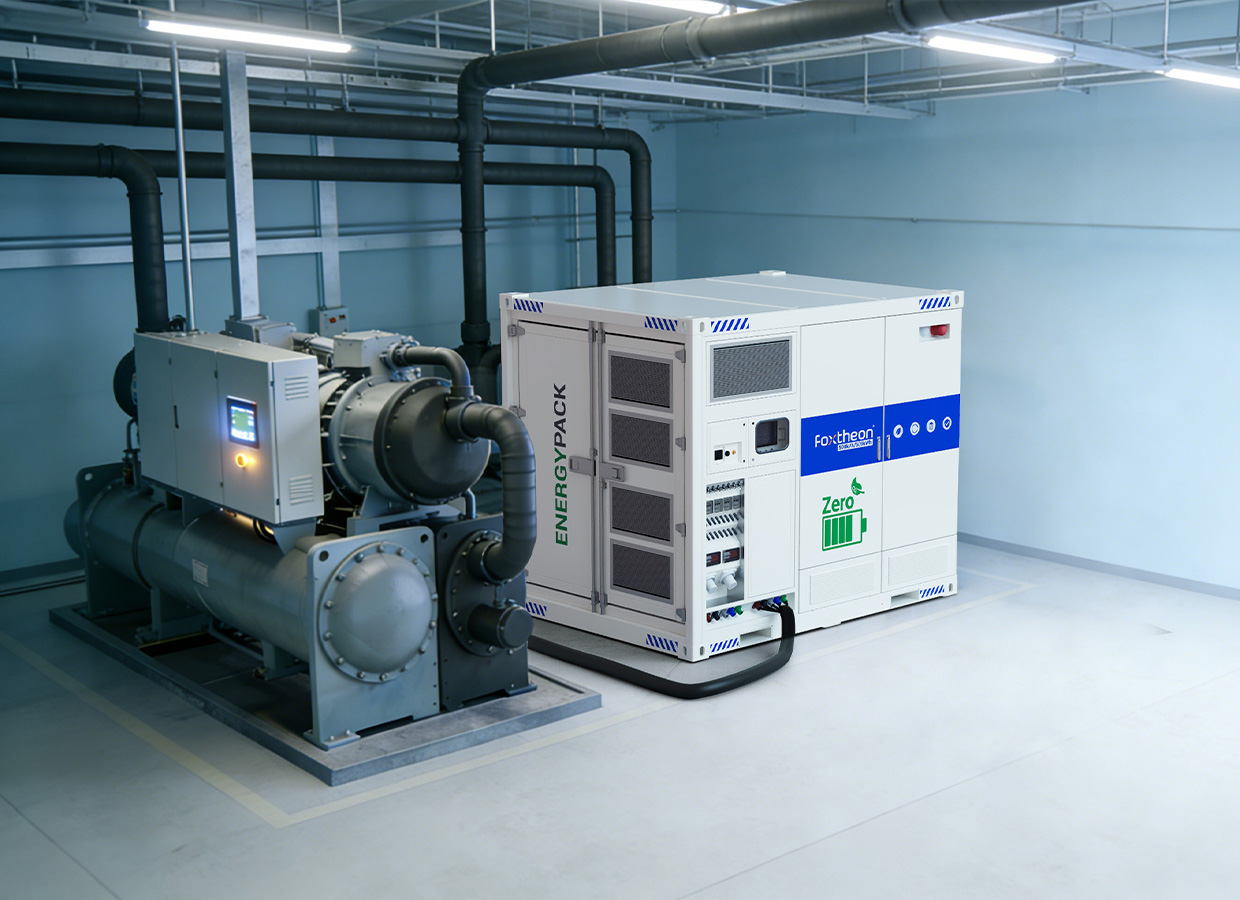
Industrial operations rarely run on a flat, predictable energy curve. Large motors start up, heavy machinery engages, and multiple systems activate simultaneously. These events create massive, instantaneous spikes in power demand. For facility managers and grid operators, these transients are more than just technical blips; they are financial liabilities and reliability risks.
This is where BESS for surge loads becomes a critical component of modern energy infrastructure. Unlike traditional power sources that react slowly, battery energy storage systems (BESS) respond in milliseconds. They inject power exactly when it is needed to smooth out these erratic peaks.
Companies like Foxtheon are increasingly focusing on these intelligent solutions, recognizing that grid stability requires more than just generation—it requires rapid-response storage. This article explores how using a BESS for surge loads protects equipment, lowers operational costs, and secures power reliability.
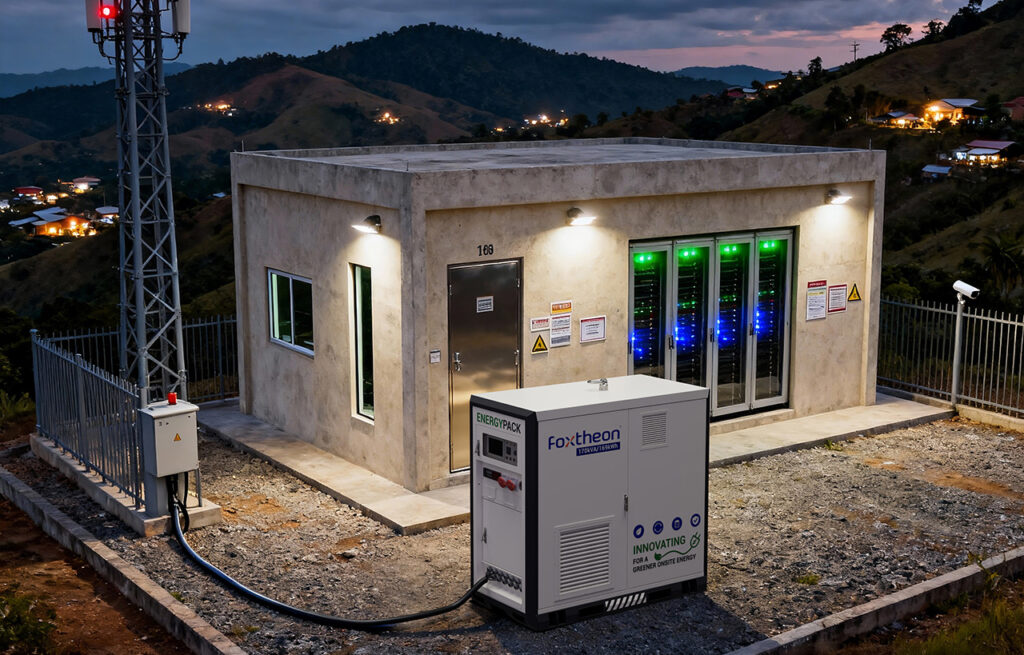
What Are Surge Loads and Why Do They Matter?
Before understanding the solution, we must define the problem. A surge load, often referred to as an inrush current or transient load, occurs when electrical equipment draws a significant amount of power for a very short duration. This typically happens during the startup phase of inductive loads.
When a large electric motor connects to the supply, it can draw five to seven times its rated running current. While this spike lasts only a few seconds or even milliseconds, the impact on the local grid is profound.
The Impact on Equipment and Grids
The grid—or a local generator—must instantly supply this massive burst of energy. If the supply cannot match the demand, voltage sags occur.
Voltage Dips: A sudden drop in voltage can cause sensitive electronics to reset or fail.
Equipment Stress: Repeated exposure to poor power quality shortens the lifespan of motors and drives.
Tripped Breakers: Protective devices may interpret the surge as a fault, shutting down operations unnecessarily.
Implementing BESS for surge loads acts as a buffer. The battery absorbs the shock, ensuring the main grid or generator sees a smooth, manageable load profile.
Common Sources of Transient Power Spikes
Surge loads are prevalent in various heavy industries. Identifying these sources is the first step toward mitigation.
HVAC Systems: Large compressors starting up in commercial buildings.
Manufacturing Conveyors: Assembly lines that start and stop frequently.
Pumps and Compressors: Essential utilities in mining and oil sectors.
EV Fast Charging: The moment an electric vehicle plugs in, demand skyrockets.
How BESS for Surge Loads Works to Stabilize Power
The mechanics of a BESS for surge loads differ slightly from batteries designed for long-duration backup. The priority here is power density (kW) rather than just energy density (kWh). The system must deliver a high current almost instantly.
When a load spike is detected, the BESS control system—often an advanced Energy Management System (EMS)—triggers a rapid discharge. This happens within milliseconds. The battery supplies the difference between the grid’s capacity and the load’s demand.
Instantaneous Response vs. Generator Ramping
Generators are mechanical devices. To produce more power, they must burn more fuel and spin faster. This physical process takes time, known as “ramp-up” time.
Generators: React in seconds or minutes. They often lag behind the spike, causing a frequency dip.
BESS: Reacts in sub-cycles (milliseconds). It bridges the gap instantly.
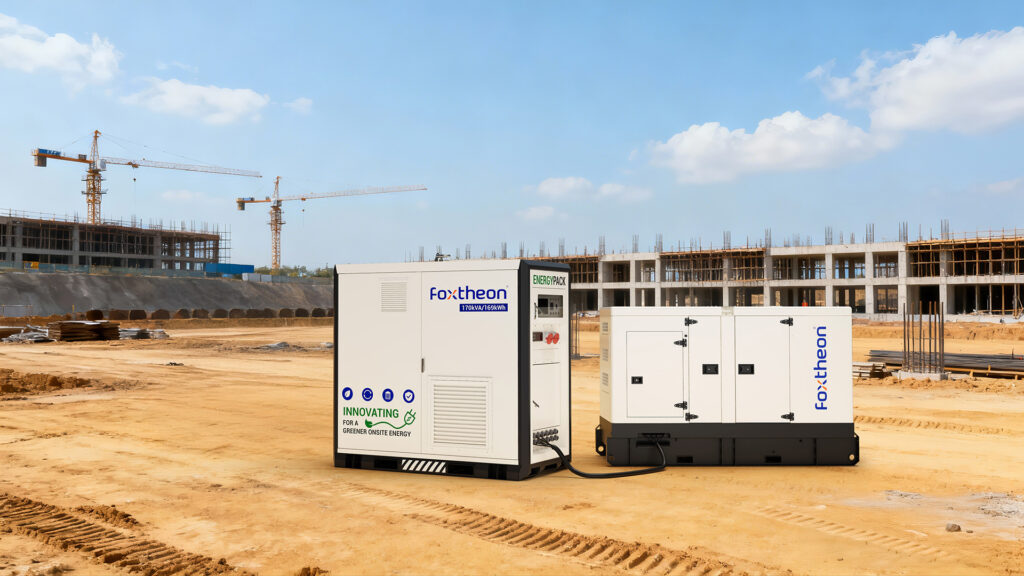
By pairing a generator with BESS for surge loads, operators can keep the generator running at a steady, efficient baseline. The battery handles the messy, transient work. This hybrid approach is a core part of the strategies advocated by innovators like Foxtheon, who aim to optimize fuel efficiency in off-grid and hybrid setups.
Financial Benefits of Using BESS for Surge Loads
Deploying a battery system is a capital investment, but the return on investment (ROI) regarding surge management is measurable and often rapid. The financial argument rests on reducing operational expenditures and avoiding penalties.
Reducing Demand Charges
Utility companies often bill commercial and industrial clients based on their highest peak usage within a billing cycle. This is known as a demand charge.
If a facility runs at 100kW on average but spikes to 500kW for just 15 minutes due to motor startups, the utility bills them based on the 500kW peak. A BESS for surge loads shaves off this peak. The battery discharges during the surge, keeping the grid draw low. The facility effectively pays for the 100kW baseline rather than the 500kW spike.
Deferring Infrastructure Upgrades
As a facility grows, its power needs increase. Eventually, the existing grid connection or onsite transformers become insufficient to handle peak loads.
The Traditional Fix: Pay millions to upgrade transmission lines and transformers.
The BESS Fix: Install a battery to handle the peaks.
Using BESS for surge loads allows companies to utilize their existing infrastructure more efficiently, delaying or eliminating the need for costly grid upgrades.
Technical Requirements for Handling High Inrush Currents
Not every battery is suitable for surge applications. A standard battery designed for solar self-consumption might not have the power output required to start a rock crusher or a large elevator.
The Importance of C-Rate
The “C-rate” measures how fast a battery can discharge. A 1C battery discharges its full capacity in one hour. For surge loads, you often need 2C, 3C, or even higher ratings.
High C-Rate Cells: These allow for massive energy release in short bursts without overheating.
Thermal Management: Surge loads generate heat. Liquid cooling systems are often preferred to maintain safety.
Inverter Capabilities
The battery is only as good as its inverter. The Power Conversion System (PCS) must be capable of handling high overload capacities. A robust BESS for surge loads will feature inverters that can sustain 150% or 200% of their rated load for short durations to accommodate inrush currents.
Applications of BESS for Surge Loads in Key Industries
The versatility of battery storage makes it applicable across various sectors. However, industries with heavy inductive loads see the most immediate benefits.
Manufacturing and Heavy Machinery
Factories utilizing injection molding machines, welders, and robotic arms face constant power fluctuations. These fluctuations destabilize the local voltage, potentially ruining production batches. A dedicated BESS for surge loads smooths the voltage profile, ensuring consistent product quality and protecting sensitive PLCs (Programmable Logic Controllers).
EV Fast Charging Stations
Electric Vehicle (EV) charging plazas are the new frontier for surge management. When multiple cars plug in simultaneously, the load on the grid is immense and immediate.
Grid Constraint: Many locations lack the grid capacity for multiple 350kW chargers.
Battery Buffer: A BESS charges slowly from the grid during quiet times and discharges rapidly when cars arrive.
This application essentially utilizes BESS for surge loads to create a virtual power plant, allowing high-speed charging in locations where the grid is weak.
Marine and Port Operations
Cranes at shipping ports lift massive containers, creating enormous regenerative energy spikes on the way down and demand spikes on the way up. Batteries capture the braking energy and reuse it for the lifting phase. This cycle dramatically reduces the net energy consumption and stabilizes the port’s microgrid.
Integrating Smart Energy Management
Hardware alone does not solve the problem. The software controlling the BESS for surge loads determines its success. An intelligent Energy Management System (EMS) monitors the load in real-time.
Advanced algorithms predict when a surge is likely to occur—based on production schedules or shift changes—and pre-charge the battery to ensure availability. Companies like Foxtheon integrate these smart analytics into their storage units, ensuring that the transition between grid power and battery power is seamless.
Data-Driven Decisions
Modern systems provide data logs that allow facility managers to see exactly when surges happen.
Identify the “worst offender” equipment.
Schedule staggered startups to reduce aggregate peaks.
Optimize battery sizing for future expansions.
The demand for cleaner, more reliable power is driving the adoption of energy storage at an unprecedented rate. However, beyond just storing solar energy for the evening, the ability to manage transient spikes is what truly secures industrial reliability. BESS for surge loads offers a pragmatic solution to a physical problem: how to supply massive power instantly without breaking the bank or the grid.
By smoothing out inrush currents, these systems protect valuable infrastructure and slash demand charges. Whether for a remote mining site or a bustling EV charging station, the technology provides the necessary buffer to operate efficiently.
As the industry evolves, reliable partners such as Foxtheon continue to refine these technologies, making them more accessible and efficient. Investing in a robust battery system is no longer just about green energy; it is a strategic operational decision to ensure stability in an increasingly electrified world.
Frequently Asked Questions (FAQ)
Q1: What is the main difference between peak shaving and handling surge loads?
A1: Peak shaving typically involves reducing energy consumption over longer periods (15 minutes to an hour) to lower demand charges. BESS for surge loads specifically targets momentary, high-intensity spikes (milliseconds to seconds) caused by equipment startup, requiring a faster response time and higher power output.
Q2: Can any battery chemistry be used for a BESS for surge loads?
A2: Not effectively. While many chemistries exist, Lithium-ion (specifically Lithium Iron Phosphate or LFP) is currently the standard due to its high power density, fast response time, and cycle life. Lead-acid batteries generally cannot handle the rapid, high-current discharge required for surge loads without significant degradation.
Q3: How does a BESS protect against voltage sags?
A3: When a heavy load starts, it pulls down the voltage on the line. A BESS for surge loads detects this drop instantly and injects real power (kW) and reactive power (kVAR) to support the voltage level, preventing lights from flickering and sensitive electronics from resetting.
Q4: Will installing a BESS eliminate the need for a diesel generator?
A4: In some cases, yes, but often they work best together. A BESS allows you to use a smaller generator by handling the temporary peaks that would otherwise require a massive generator. The battery handles the surge, while the generator handles the average load.
Q5: What is the typical ROI for a BESS focused on surge management?
A5: The ROI varies based on local utility rates and the severity of demand charges. However, facilities with frequent motor starts or high peak demand penalties often see a return on investment in 3 to 5 years. This does not include the savings from prevented equipment downtime or damage.