
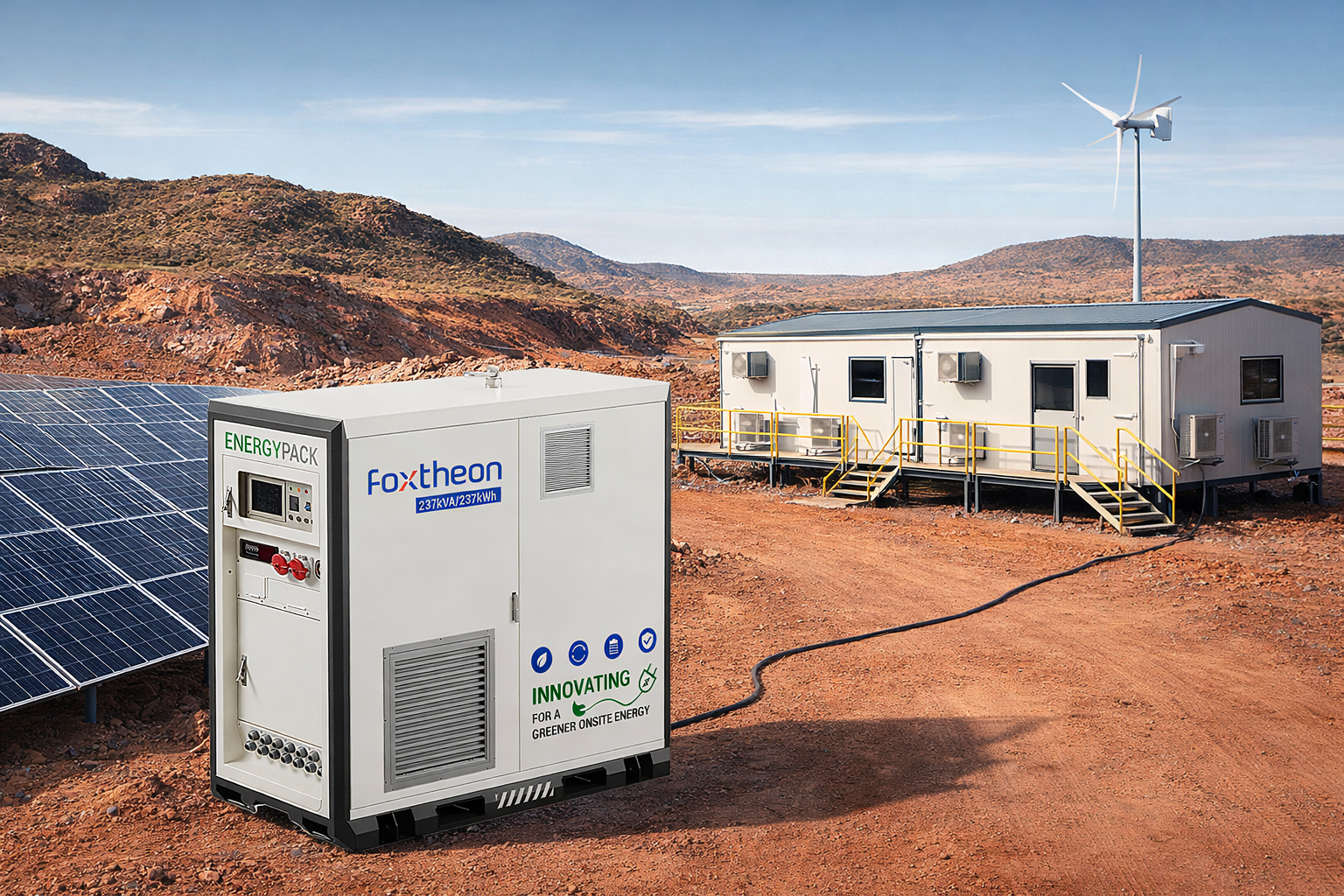
Temporary cooling is a cornerstone of modern industry. From keeping festival tents comfortable in the summer heat to managing critical temperatures during refinery shutdowns, rental chillers are essential. However, the traditional method of powering these units—relying solely on oversized diesel generators—is becoming increasingly unsustainable.
The financial and environmental costs of running diesel engines efficiently are driving a major shift in the market. This is where hybrid power for chiller rental comes into play. By integrating battery energy storage systems (BESS) with generators, operators can solve the age-old problem of load mismatch.
Leading energy solution providers, such as Foxtheon, are observing a rapid uptake in this technology. The industry is moving away from simple “power generation” toward “smart power management.” This article explores why this shift is happening and how it benefits rental companies and end-users alike.
The Inefficiency of Traditional Chiller Power
To understand the value of a hybrid approach, we must first look at the inherent problems with standard generator setups. Chillers and HVAC units have a specific power profile that makes them difficult to power efficiently with a standalone generator.
The Inrush Current Challenge
When a large chiller starts up, it requires a massive surge of power to get the compressor moving. This is known as inrush current. This spike can be three to five times higher than the unit’s standard running wattage.
To prevent the system from tripping during this startup phase, rental companies typically size the generator to handle the peak spike. For example, a chiller that runs on 100kW might require a 300kVA generator just to handle the startup.
The Consequence: Wet Stacking
Once the chiller is running, the load drops significantly. If the ambient temperature cools down (like at night), the chiller cycles down even further. The massive generator is now running at 10% or 20% capacity.
Diesel engines are designed to run hot and hard. When they run under light loads for extended periods, unburned fuel accumulates in the exhaust system, a condition known as “wet stacking.” This leads to engine damage, increased maintenance costs, and excessive fuel consumption.
How Hybrid Power for Chiller Rental Works
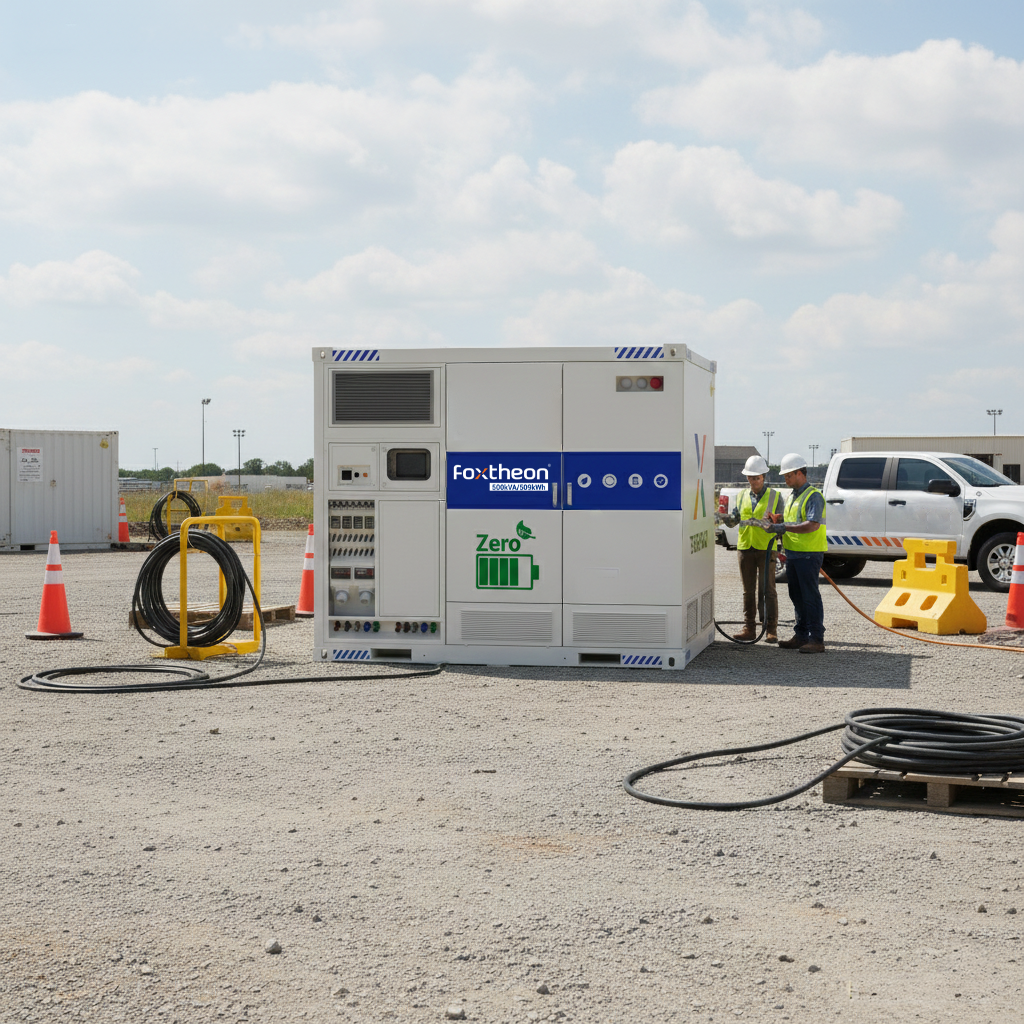
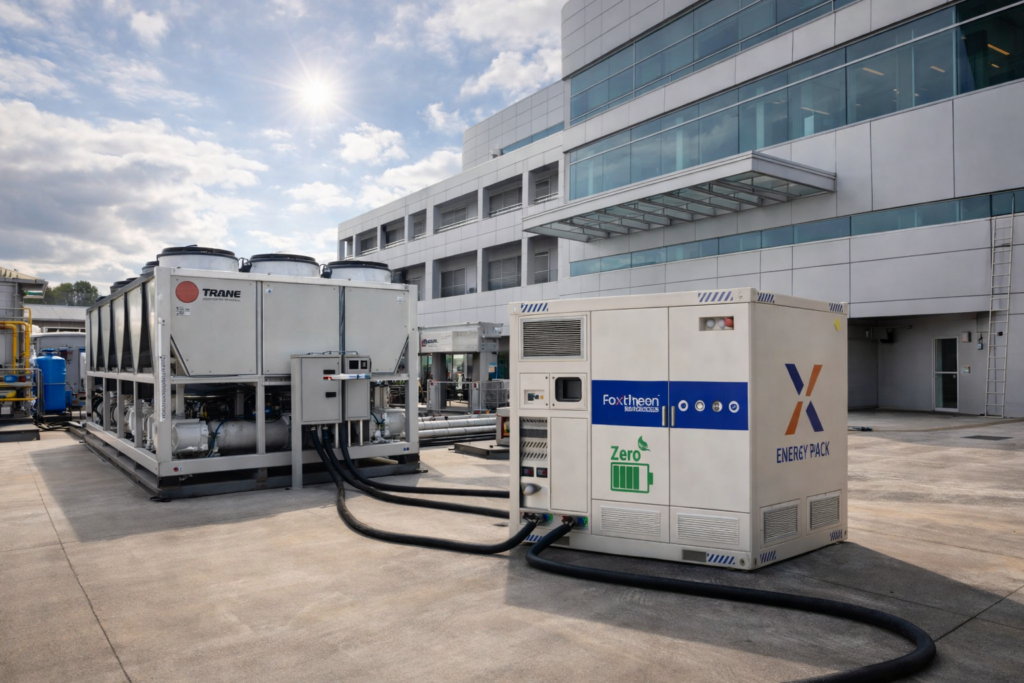
The solution lies in decoupling the energy supply from the energy generation. A hybrid system places a Battery Energy Storage System (BESS) between the generator and the chiller.
In this configuration, the battery handles the variable needs of the load. When the chiller demands a massive spike of power for startup, the battery discharges instantly to meet that demand. This capability is a key feature of advanced systems like those engineered by Foxtheon, which are designed to handle high discharge rates.
Because the battery handles the peak, the generator no longer needs to be oversized. You can use a smaller generator that runs at its optimal efficiency (usually 80% load) to keep the battery charged. Once the battery is full, the generator shuts off completely.
Financial Benefits of the Hybrid Approach
For rental companies and project managers, the adoption of hybrid power for chiller rental is rarely just about being “green.” It is about protecting margins. The operational savings in a hybrid setup are measurable and significant.
Drastic Fuel Reductions
Fuel is often the single largest expense in a temporary cooling project. By allowing the generator to turn off during low-load periods (such as overnight or on cooler days), fuel consumption drops dramatically.
Industry data suggests that for variable load applications like HVAC, switching to a hybrid system can reduce fuel usage by 40% to 60%. Over a month-long rental, this saving alone can offset the cost of renting the battery unit.
Reduced Maintenance and Logistics
Generators require service based on hours of operation. A standard unit running 24/7 needs an oil change and filter replacement every 250 to 500 hours—roughly every two to three weeks.
In a hybrid setup, the generator might only run for 4 hours a day to top up the batteries. This extends the service interval from weeks to months. Fewer mechanic visits mean lower labor costs and less downtime for the equipment. Additionally, less fuel consumption means fewer fuel deliveries, reducing the logistical complexity of the site.
Operational Advantages in Noise-Sensitive Areas
Beyond the balance sheet, hybrid power for chiller rental opens up opportunities in sectors where noise is a dealbreaker.
The Silent Night Advantage
Events, film sets, and urban construction sites often have strict noise ordinances. A diesel generator chugging away through the night to keep a server room or a VIP tent cool can result in noise complaints or fines.
With a hybrid system, the generator can be scheduled to run only during the day or when noise is less intrusive. During the night, the BESS takes over, powering the chillers in near silence. This “silent power” capability allows rental companies to charge a premium for their services in residential or high-end event sectors.
Improved Power Quality
Generators can experience voltage dips when a heavy load kicks in. Sensitive electronic equipment sharing the same bus as a large chiller can be damaged by these fluctuations.
Batteries provide a much more stable voltage reference. They act as a buffer, smoothing out the power delivery. This ensures that the chiller operates efficiently and that any other equipment connected to the microgrid remains safe from power quality issues.
Navigating Emissions Regulations
The regulatory landscape is tightening. Major cities across Europe and North America are implementing Low Emission Zones (LEZ) and banning continuous diesel engine operation in city centers.
Meeting Carbon Caps
Many construction tenders now require a detailed carbon management plan. A traditional diesel setup often fails to meet these new, stricter criteria.
By utilizing hybrid power for chiller rental, companies can bid on contracts that specify low CO2 emissions. The battery allows the system to operate with zero emissions for long periods. Furthermore, hybrid units can be easily integrated with solar arrays if the site allows, further reducing the carbon footprint.
Future-Proofing the Fleet
Investing in BESS technology is a way to future-proof a rental fleet. As diesel prices fluctuate and carbon taxes increase, the Total Cost of Ownership (TCO) for diesel-only solutions will rise. Hybrid systems provide a hedge against these rising costs.
Technical Considerations for Implementation
Transitioning to hybrid power requires a shift in mindset regarding sizing and deployment. It is not as simple as swapping one machine for another; it requires data analysis.
Sizing the Battery and Generator
Proper sizing is critical. If the battery is too small, it will discharge too quickly, causing the generator to start and stop frequently (short-cycling), which eliminates the efficiency gains.
Operators need to analyze the load profile of the chiller. Is it a steady process cooling load, or is it a variable comfort cooling load? Understanding the peaks and troughs allows for the correct pairing of the Foxtheon energy storage unit with the right-sized generator.
Telematics and Monitoring
Modern hybrid systems come equipped with advanced telematics. This allows fleet managers to monitor fuel levels, battery state of charge, and load consumption remotely.
This data is invaluable. It allows rental companies to prove the savings to their clients. Being able to show a customer a report detailing exactly how much fuel was saved and how many tons of CO2 were avoided adds immense value to the rental service.
The Role of Intelligent Control Systems
The hardware—the battery cells and the engine—is only half the equation. The software that manages the interaction between the two is where the magic happens.
Intelligent energy management systems (EMS) automatically decide when to run the generator, when to discharge the battery, and how to handle load spikes. This automation removes the need for manual intervention. The system optimizes itself in real-time based on the current demand of the chiller.
Reliability in this software is paramount. This is why established manufacturers are preferred over makeshift solutions. The integration must be seamless to ensure that the cooling never stops, especially in critical applications like hospital cooling or server room climate control.
The era of running oversized diesel generators 24/7 for variable cooling loads is coming to an end. The economic and environmental arguments against it are simply too strong to ignore.
Hybrid power for chiller rental represents the new standard in temporary energy. It solves the technical challenges of inrush currents, eliminates the waste of wet stacking, and provides a silent, clean energy alternative that modern clients demand.
As the technology matures, we will see these systems become the default choice rather than the alternative. Companies that partner with robust technology providers like Foxtheon will be well-positioned to lead this transition. They will be able to offer their customers not just equipment, but a smarter, cleaner, and more cost-effective cooling solution.
Frequently Asked Questions
Q1: Can a hybrid system really handle the startup current of a large chiller?
A1: Yes. Batteries are excellent at delivering high bursts of power instantly. A properly sized BESS can handle the high inrush current required to start the chiller compressor, allowing the generator to remain off or idle until the load stabilizes.
Q2: How much fuel can I expect to save with hybrid power for chiller rental?
A2: Savings typically range from 40% to 60%, depending on the load profile. If the cooling demand varies significantly (e.g., high during the day, low at night), the savings are on the higher end because the generator can stay off for longer periods.
Q3: Is the setup process more complicated than a standard generator?
A3: Slightly, but modern systems are designed for “plug-and-play” deployment. The BESS and generator are connected via power cables and a communication data link. Once the parameters are set, the system operates automatically without manual switching.
Q4: Can I use hybrid power for heating applications as well?
A4: Absolutely. The principle is the same. whether you are powering chillers, resistive heater banks, or heat pumps, the hybrid system manages the electrical load to optimize generator efficiency and reduce fuel consumption.
Q5: What happens if the battery runs out of power?
A5: The system is automated to prevent this. The Energy Management System (EMS) monitors the battery’s State of Charge (SoC). When the battery level drops to a pre-set threshold, the generator automatically starts up to take the load and recharge the battery simultaneously.