
Mining operations operate in some of the most unforgiving environments on Earth. Whether situated in the Australian outback, the deserts of Chile, or the mountains of Canada, one constant remains: the need for reliable energy. Specifically, the rock crusher represents the heart of production and the biggest challenge for power generation. Finding the right mining crusher power solution is not just about keeping the lights on; it is about maintaining profitability.
Crushers are notoriously difficult loads to manage. They require massive surges of power to start and subject the grid to violent load fluctuations as they process rocks of varying hardness and size. A standard generator often struggles to cope.
This article explores advanced strategies for powering these heavy industrial beasts. We will look at hybrid technologies, sizing methodologies, and how industry leaders like Foxtheon are changing the way miners approach energy management.
The Unique Challenge of Powering Crushers
To understand why a specialized mining crusher power solution is necessary, you must first understand the load profile of a crusher. Unlike a water pump or a conveyor belt which has a relatively steady draw, a crusher is dynamic.
Dealing with High Inrush Currents
When a crusher starts, it is essentially a dead short on the power system. The motor needs to overcome immense inertia to get the heavy flywheels and jaws moving.
The Spike: The startup current (Locked Rotor Amps) can be 6 to 7 times the running current.
The Voltage Dip: This surge causes a voltage drop on the generator. If the drop is too deep, the generator protection trips, shutting down the entire site.
The Oversizing Trap: Historically, engineers solved this by buying a generator three times larger than necessary just to handle the first ten seconds of operation. This is incredibly wasteful.
Managing Transient Loads
Once running, the load is never stable. A large boulder enters the jaw, and the amperage spikes. The chamber clears, and the amperage drops.
These rapid changes wreak havoc on diesel engines.
Diesel engines prefer a steady load (around 70-80% capacity).
Constant cycling causes “wet stacking” (incomplete combustion), leading to engine damage and frequent maintenance.
The Evolution of the Mining Crusher Power Solution
The industry is moving away from simple diesel setups toward intelligent energy systems. The goal is to decouple the generation source from the mechanical stress of the load.
The Problem with Standalone Diesel
In a traditional setup, the diesel generator is directly coupled to the load. If the crusher hits a hard rock, the engine governor must react instantly to inject more fuel. There is a mechanical lag. This results in frequency instability. Furthermore, running a large generator at light loads (when the crusher is idling) glazes the cylinder liners.
The Hybrid Advantage
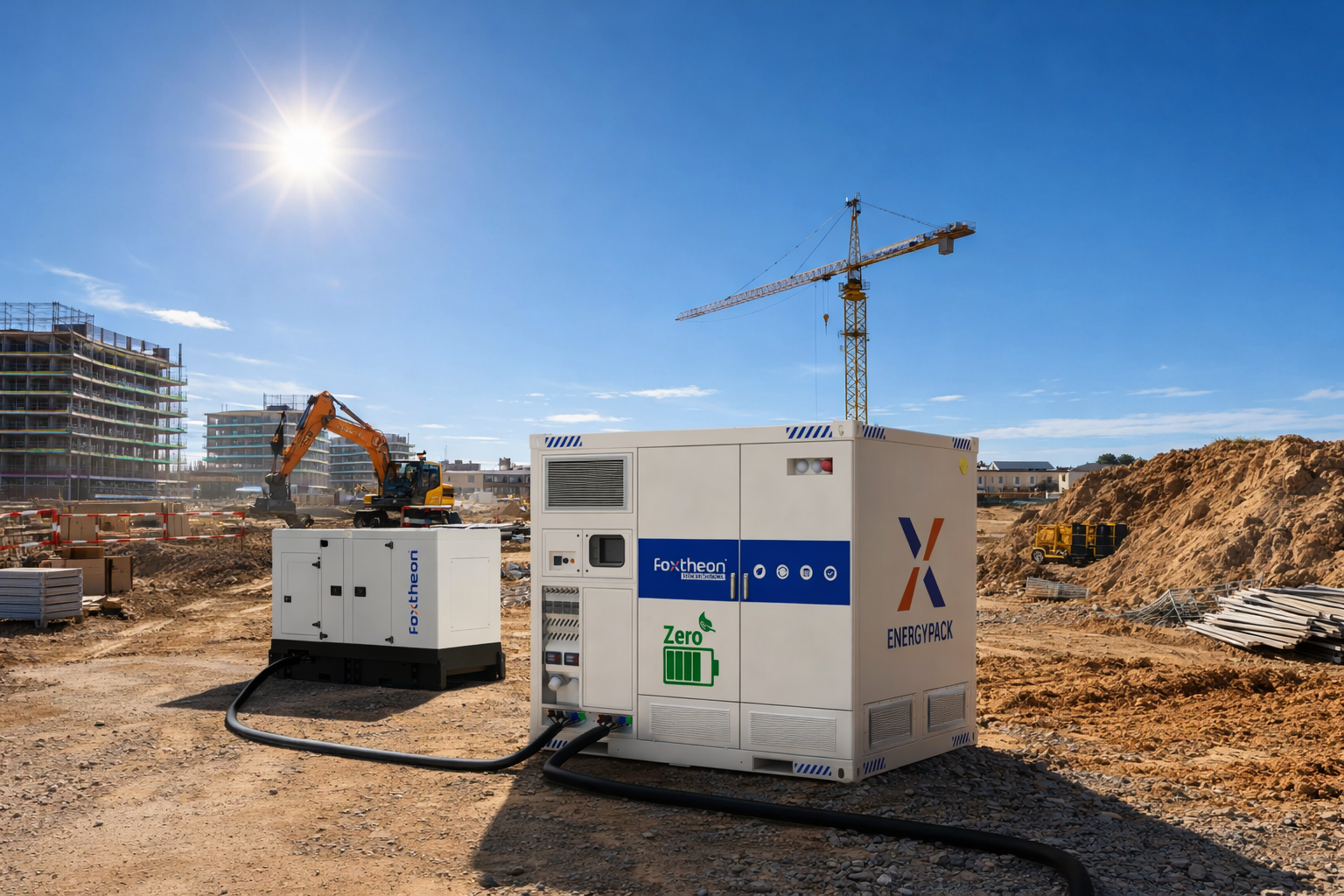
A modern mining crusher power solution often involves a hybrid approach. This combines a diesel generator with a Battery Energy Storage System (BESS).
Peak Shaving: The battery handles the instant surge of starting the motor or crushing a hard rock.
Generator Efficiency: The diesel generator runs at a constant, optimal speed to recharge the battery and supply the average load.
Downsizing: Since the generator only needs to cover the average kW rather than the peak kVA, you can often use a significantly smaller engine.
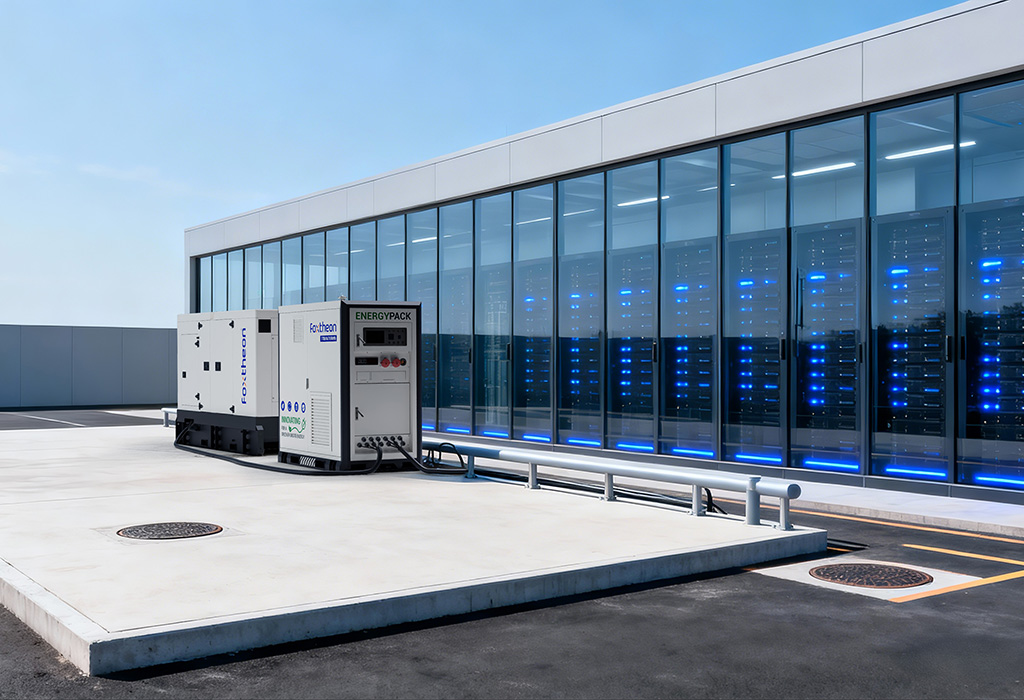
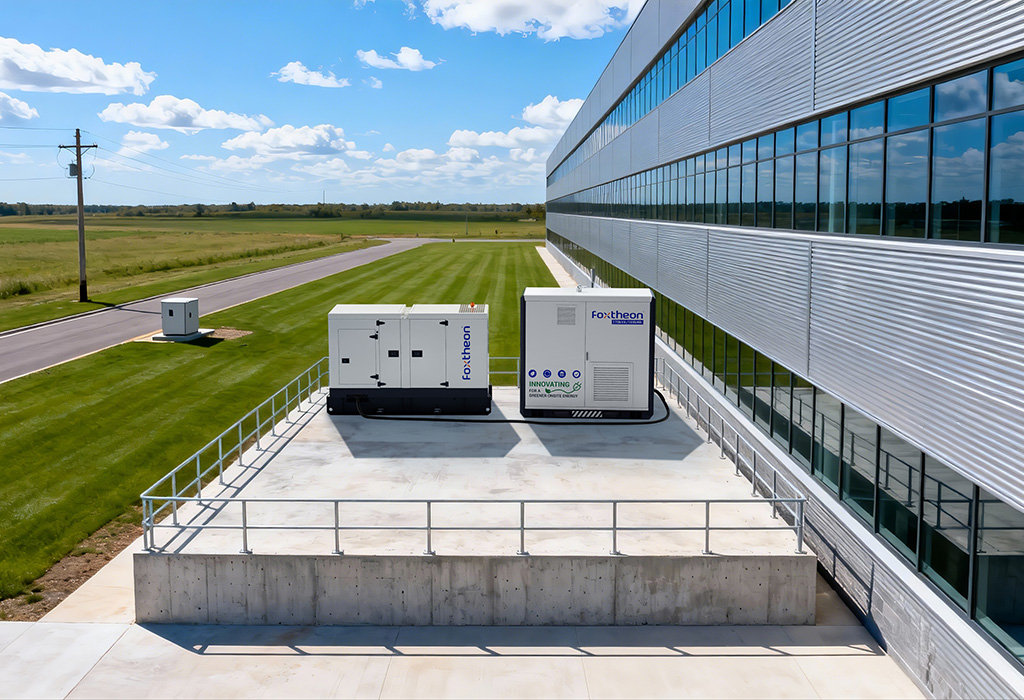
Companies like Foxtheon have pioneered this integration. Their smart hybrid units detect the load demand in milliseconds, discharging battery power to stabilize the microgrid before the generator even feels the strain.
Sizing Your Power System Correctly
Selecting the correct equipment requires more than just adding up the nameplate ratings of your motors. You need a detailed analysis of the duty cycle.
Analyzing the Load Profile
You must calculate the starting method. A Direct On Line (DOL) start requires the most power. A Soft Starter reduces this requirement, and a Variable Frequency Drive (VFD) offers the smoothest start.
DOL: Requires ~300% generator oversizing.
Soft Starter: Requires ~200% oversizing.
VFD: Requires ~130-150% oversizing.
However, even with VFDs, regenerative power is a concern. When a conveyor or crusher acts as a brake, it sends energy back into the line. A standard diesel generator cannot absorb this energy and will overspeed. A robust mining crusher power solution must include braking resistors or battery storage to absorb this regenerative current.
The Role of Alternators
Do not overlook the alternator. The engine provides the watts (Real Power), but the alternator provides the VArs (Reactive Power) needed to create the magnetic fields in the motors.
Ensure your alternator is oversized relative to the engine.
Look for Permanent Magnet Generator (PMG) excitation. This isolates the control power from the load, ensuring the Automatic Voltage Regulator (AVR) keeps the voltage steady even during heavy spikes.
Operational Benefits of Smart Power Solutions
Implementing a dedicated, intelligent mining crusher power solution transforms daily operations. It moves the site from a reactive stance to a proactive one.
Reduced Fuel Consumption
Fuel is usually the single largest operational expense for off-grid mines. By utilizing a hybrid system, the generator runs at its peak efficiency point on the fuel curve.
No more idling large engines.
Fuel savings often range between 20% to 40% compared to traditional setups.
Logistics costs drop because you need fewer fuel deliveries to remote sites.
Extended Equipment Lifespan
Clean power saves motors. Voltage imbalances and frequency dips generate heat in the crusher motors, degrading insulation over time.
A stable microgrid protects expensive mining assets.
The generator engine lasts longer because it avoids the thermal stress of constant load cycling.
Maintenance intervals can be extended, reducing downtime.
Integrating Renewables into the Mix
While crushers are energy-intensive, solar power is becoming a viable part of the mining crusher power solution.
The Solar-Diesel-Battery Triad
You cannot run a crusher on solar alone due to the intermittency. However, solar can offset the daytime load.
Daytime: Solar panels feed the BESS and take the load off the diesel engine.
Nighttime: The diesel generator takes over, supported by the battery.
Cloud Cover: The smart controller (like those developed by Foxtheon) seamlessly switches sources without disrupting production.
This integration reduces the carbon footprint of the mining operation, which is increasingly important for compliance with international environmental standards.
Harmonics and Power Quality
One technical aspect often ignored is harmonic distortion. Variable Frequency Drives (VFDs) are great for starting motors, but they create “electrical noise” (harmonics) that flows back into the supply.
The Threat of Harmonics
If the Total Harmonic Distortion (THD) gets too high, it confuses the generator’s voltage regulator. This can cause the generator to hunt (rev up and down) or shut down unexpectedly.
Filtration: A high-quality mining crusher power solution includes active or passive harmonic filters.
Alternator Pitch: Using a 2/3 pitch alternator winding helps neutralize third-order harmonics.
Isolation: Transformers can be used to isolate sensitive electronics from the “dirty” power used by the crusher motors.
Economic Analysis: CAPEX vs. OPEX
Site managers often balk at the initial price tag of a hybrid or smart power system. It is cheaper to rent a basic diesel generator. However, the Total Cost of Ownership (TCO) tells a different story.
The Payback Period
Initial Cost: Hybrid systems cost more upfront due to batteries and smart inverters.
Running Cost: Diesel generators burn cash every hour.
Break-even: For a continuously running crushing plant, the fuel savings usually pay for the upgrade difference within 12 to 18 months.
After the payback period, the savings go directly to the bottom line. Furthermore, the resale value of a smart hybrid unit remains high, whereas a high-hour diesel generator depreciates rapidly.
Key Considerations for Remote Sites
When deploying a mining crusher power solution in isolated areas, reliability is paramount. You cannot wait three days for a technician.
Redundancy is Key
Never rely on a single source of failure.
N+1 Configuration: If you need 1000 kVA, install two 500 kVA units or three 350 kVA units.
Synchronization: Modern controllers allow multiple small generators to synchronize and act as one large unit. If one fails, the others keep the critical loads running.
Remote Monitoring
You need eyes on the system. Modern solutions offer telemetry that sends data via satellite or 4G.
Monitor fuel levels, oil pressure, and battery health from headquarters.
Receive alerts before a failure occurs.
Foxtheon systems usually come equipped with advanced telematics, allowing engineers to troubleshoot software issues remotely, saving the cost of flying a technician to the site.
Future Trends in Mining Power
The sector is moving toward full electrification and automation.
Trolley Assist and Electric Fleets
Mines are replacing diesel haul trucks with electric ones. This increases the electrical demand on the site’s microgrid. The mining crusher power solution of the future will likely be part of a wider “mining grid” that charges trucks, powers crushers, and manages ventilation simultaneously.
Hydrogen Potential
Hydrogen fuel cells are being tested as a replacement for diesel engines in the hybrid mix. While still early, this technology offers the high density needed for crushing without the emissions.
Powering a rock crusher is one of the most demanding tasks in electrical engineering. It requires a robust understanding of physics, mechanics, and load management. Relying on oversized, standalone diesel generators is a relic of the past—it is too expensive and too inefficient.
The optimal mining crusher power solution today is intelligent, hybrid, and scalable. By integrating battery storage to handle inrush currents and transient loads, miners can downsize their generators and stabilize their voltage. This protects the crushing equipment and slashes fuel bills.
Innovators like Foxtheon are leading this charge, providing the hardware and software necessary to build these resilient microgrids. Whether you are setting up a temporary aggregate plant or a long-term gold mine, investing in the right power infrastructure is the first step toward a profitable operation.
Frequently Asked Questions (FAQ)
Q1: What is the biggest challenge when designing a mining crusher power solution?
A1: The biggest challenge is handling the “inrush current” and load fluctuations. A crusher requires massive power to start spinning, often 6 times its running load. Additionally, as rocks enter and leave the crusher, the load spikes and drops rapidly. A standard generator struggles to react fast enough, leading to voltage dips or engine stalling.
Q2: Can I use solar power to run a mining crusher?
A2: You cannot run a crusher on solar power alone because the load is too heavy and solar is intermittent. However, you can use a hybrid system where solar panels charge a battery bank. The batteries then assist a diesel generator. This reduces fuel consumption during the day, but a fuel-based engine is usually still required for the heavy lifting.
Q3: How much fuel can a hybrid power solution save a mining site?
A3: A well-designed hybrid mining crusher power solution can save between 20% and 40% on fuel costs. By using batteries to handle the peak power demands, the diesel generator can run at a constant, efficient speed rather than revving up and down. It also prevents the generator from running efficiently at low loads during idle times.
Q4: Why do generators often fail or “wet stack” in mining applications?
A4: Wet stacking occurs when a diesel engine runs with a light load (under 30% capacity). In mining, a crusher might run hard for 5 minutes and then idle for 10 minutes while trucks reload. During idle times, the engine doesn’t get hot enough to burn all the fuel. This unburned fuel accumulates in the exhaust system, leading to damage and failure.
Q5: How does Foxtheon technology improve crusher operations?
A5: Foxtheon provides advanced hybrid energy storage systems. Their technology acts as a buffer between the crusher and the generator. When the crusher demands a sudden spike of power, the Foxtheon system discharges energy from batteries instantly. This protects the generator from the shock, ensures steady voltage for the crusher, and allows the use of a smaller, more efficient generator.