
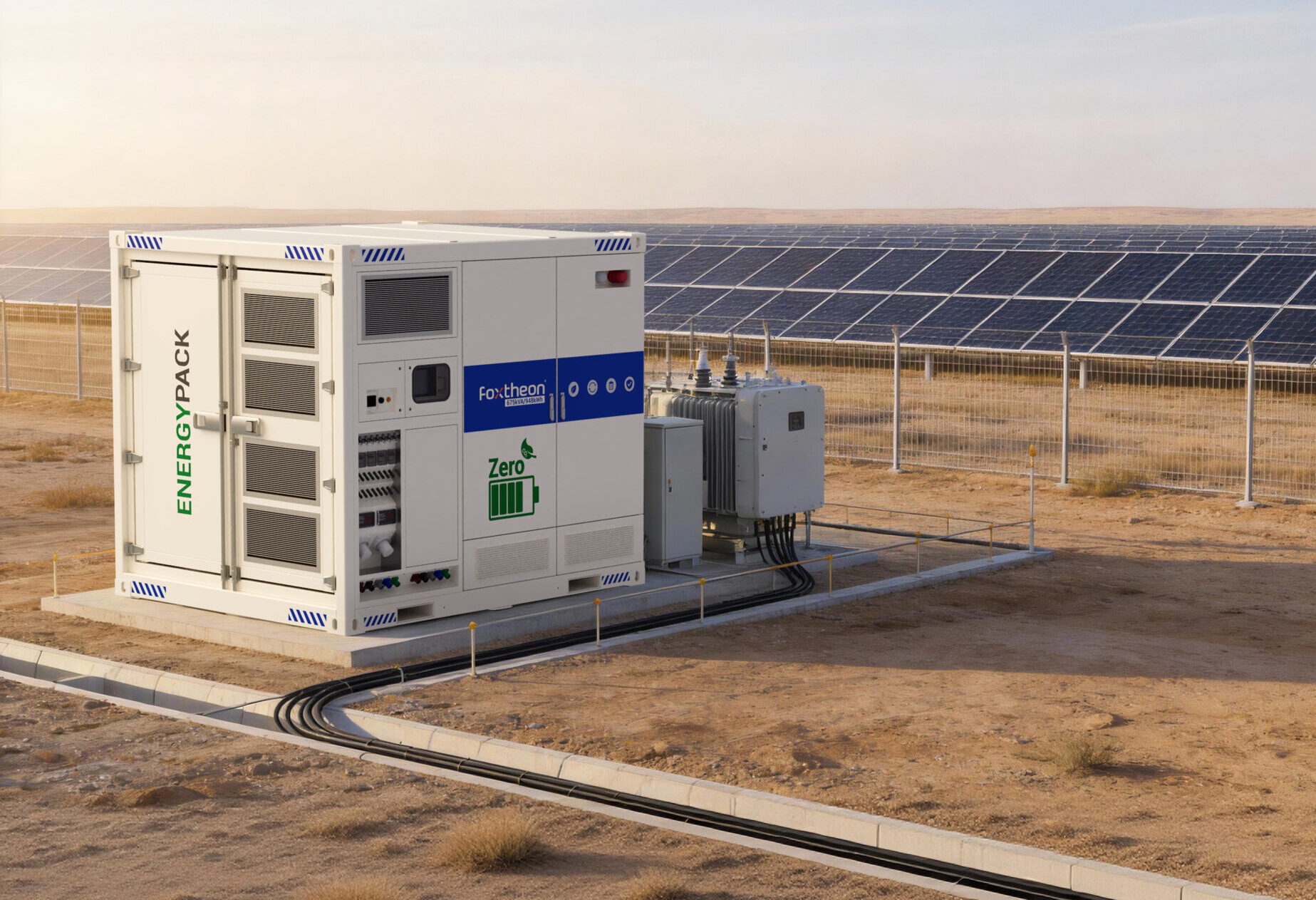
The global mining sector stands at a significant crossroads, facing the dual pressures of rising energy costs and stringent environmental mandates. Traditionally, remote mining sites have relied almost exclusively on diesel-generated electricity, a model that is increasingly fragile due to volatile fuel prices and logistical vulnerabilities. The transition toward hybrid power for mining operations represents a fundamental shift in how heavy industry manages its energy lifecycle, moving from centralized fossil-fuel dependence to decentralized, resilient microgrids.
The Current Energy Challenge in Remote Mining
Energy consumption accounts for approximately 15% to 40% of total operating expenses in mining. In off-grid locations, the Levelized Cost of Energy (LCOE) is often inflated by the “diesel penalty”—the cost of transporting fuel over vast distances, coupled with the maintenance overhead of thermal generators running at suboptimal loads. Furthermore, carbon taxation and ESG (Environmental, Social, and Governance) reporting requirements have made traditional power generation a financial liability.
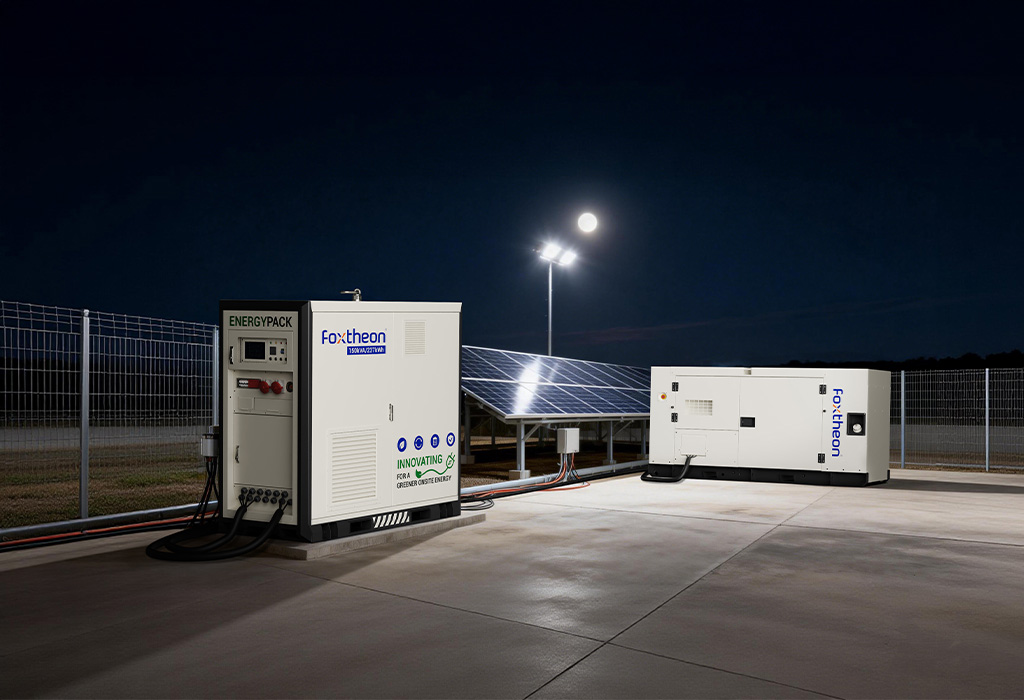
Integrating renewable assets—primarily solar photovoltaics (PV) and wind turbines—into existing diesel grids is no longer a peripheral strategy. It is a mandatory requirement for maintaining competitiveness. However, the intermittent nature of renewables introduces challenges regarding grid stability, frequency regulation, and power quality. This is where hybrid power for mining operations provides a cohesive solution, utilizing advanced storage and control systems to bridge the gap between variable generation and constant industrial demand.
Technical Components of an Integrated Hybrid Microgrid
A high-performance hybrid system is more than the sum of its parts. It requires a sophisticated orchestration of hardware and software to ensure 24/7 reliability. The primary components include:
- Renewable Generation Assets: Solar PV arrays and wind farms serve as the primary low-cost energy injectors during peak resource windows.
- Thermal Generation (Diesel/Gas): Gen-sets provide the baseline power and serve as a backup, though their role shifts from primary source to a secondary, “fill-in” role.
- Battery Energy Storage Systems (BESS): These units are the heart of the system, managing frequency response, ramping, and energy shifting.
- Microgrid Controller: The “brain” that utilizes predictive algorithms to balance load and supply in real-time.
Advanced manufacturers like Foxtheon provide the specialized energy storage hardware needed to withstand the harsh environments typical of mining sites, ensuring that the BESS can handle high-duty cycles and extreme temperature fluctuations without compromising longevity.
The Role of BESS in Optimizing Hybrid Power for Mining Operations
The implementation of hybrid power for mining operations hinges on the effectiveness of the storage medium. Battery systems do not just store excess solar energy; they provide vital “spinning reserve” functionality. In a traditional diesel setup, multiple generators often run at partial load to handle sudden surges in demand. This is highly inefficient.
By introducing a BESS, the mine can shut down redundant generators. The battery provides the immediate power surge needed for heavy machinery—such as electric shovels or crushers—allowing the remaining diesel engines to operate at their highest efficiency point. This process, known as peak shaving, significantly reduces fuel consumption and engine wear. Furthermore, the rapid response of modern lithium-ion systems ensures that frequency deviations are corrected within milliseconds, a speed that mechanical governors cannot match.
Economic Viability: LCOE and ROI Analysis
From a financial perspective, the transition to hybrid power for mining operations is driven by the declining CAPEX of renewable technologies. While the initial investment is higher than simply buying more diesel generators, the Total Cost of Ownership (TCO) tells a different story. Analysts observe that hybrid systems typically achieve a payback period of three to seven years, depending on fuel price volatility and the renewable penetration rate.
1. Reducing Fuel Consumption
A well-designed hybrid system can displace between 30% and 50% of diesel consumption. In high-penetration scenarios where “diesel-off” mode is achieved during daylight hours, these savings can be even more substantial. This directly impacts the bottom line by insulating the operation from global oil price shocks.
2. Maintenance and Lifecycle Extension
Diesel generators that run at optimal loads require less frequent overhauls. By reducing the run-time of thermal assets, mining companies extend the replacement cycle of their most expensive mechanical components. Solutions from Foxtheon are designed to integrate seamlessly with these varied assets, providing a stable DC-link or AC-coupled interface that minimizes electrical stress on the existing infrastructure.
Operational Stability and Power Quality
Mining operations involve massive inductive loads, such as large motors for milling and ventilation. These loads create power factor issues and voltage sags. In a hybrid power for mining operations framework, the inverter-based resources (the BESS and Solar Inverters) can provide reactive power compensation. This improves the overall power quality of the site, reducing the risk of equipment failure and unplanned downtime.
Modern Energy Management Systems (EMS) use machine learning to forecast weather patterns and load requirements. If a cloud bank is approaching a solar field, the EMS can preemptively ramp up the battery discharge or signal a diesel gen-set to start, ensuring that the transition is invisible to the mine’s operations. This level of automation is paramount for maintaining the “six-nines” (99.9999%) reliability required by the industry.
Strategic Implementation: A Phased Approach
Adopting hybrid power for mining operations does not require a complete overnight overhaul. Most successful projects follow a tiered implementation strategy:
- Phase 1: Fuel Saver Mode. Solar or wind is added to the diesel grid without large-scale storage. This reduces fuel use during the day but offers limited stability benefits.
- Phase 2: Reliability Enhancement. A BESS is introduced to manage transients and provide spinning reserve, allowing for higher renewable penetration.
- Phase 3: Deep Decarbonization. The system is expanded to allow for “diesel-off” operation during peak resource times, utilizing the BESS as the primary grid-former.
By partnering with specialists like Foxtheon, mining firms can select scalable storage solutions that grow alongside their renewable capacity, ensuring that the investment remains future-proof as the mine expands or as carbon targets become more aggressive.
Overcoming Technical Hurdles in Remote Environments
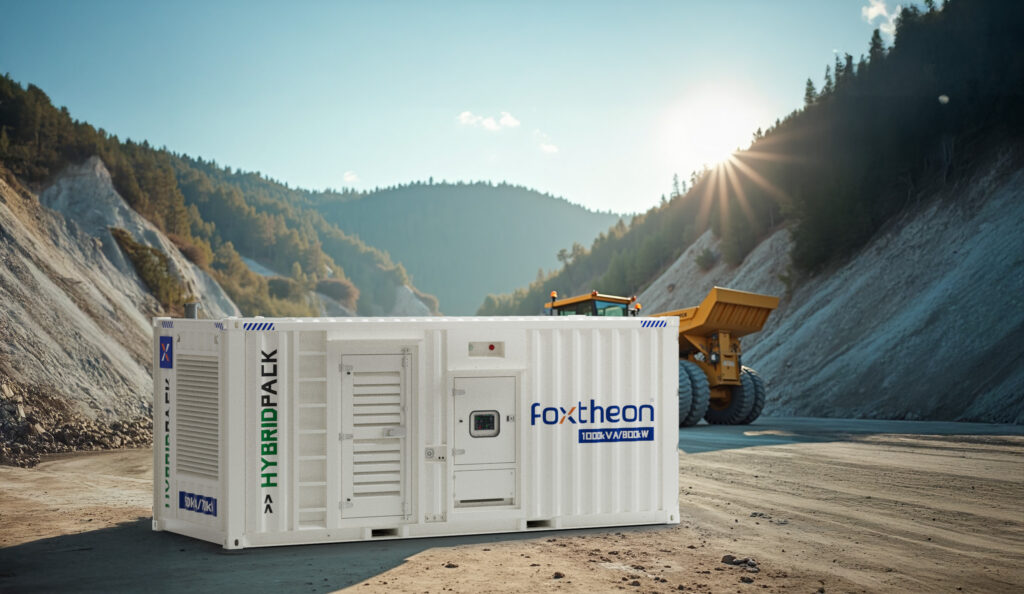
Mining sites are notoriously difficult environments for electronics. Dust, vibration, and extreme heat can degrade standard power equipment. For hybrid power for mining operations to succeed, the hardware must be “ruggedized.” This includes containerized solutions with advanced thermal management systems (liquid cooling vs. forced air) and high IP (Ingress Protection) ratings. These technical safeguards prevent premature aging of the lithium cells and ensure that the power electronics operate within their safe thermal limits, even in desert or tropical conditions.
The Future of Smart Mining Energy
As we look forward, the integration of green hydrogen and long-duration energy storage (LDES) will likely complement current hybrid models. While lithium-ion is excellent for short-term balancing and four-hour shifting, longer-term storage will allow mines to operate for days on stored renewable energy during seasonal lulls in wind or sun. The data-driven nature of these systems also paves the way for “Virtual Power Plants” (VPPs), where a mining company could potentially trade excess energy or provide grid services to local communities, creating new revenue streams.
The transition to hybrid power for mining operations is a sophisticated engineering response to a complex economic and environmental challenge. By combining the immediate response of battery storage with the low-cost generation of renewables and the reliability of thermal assets, mining companies can secure their energy future. The reduction in LCOE, coupled with the enhanced stability of the local microgrid, makes this an indispensable strategy for any modern extractive operation. With the support of technological leaders like Foxtheon, the path to a sustainable, low-carbon mine is technically feasible and financially compelling.
Frequently Asked Questions
Q1: What is the typical fuel saving associated with hybrid power for mining operations?
A1: While results vary based on resource availability, most operations see a reduction in diesel consumption of 30% to 50% after implementing a fully optimized hybrid system with integrated battery storage.
Q2: How does a hybrid system handle the high-starting currents of mining machinery?
A2: The Battery Energy Storage System (BESS) acts as a buffer. It can discharge high amounts of power nearly instantaneously to handle the inrush current of large motors, preventing voltage dips that would otherwise stress diesel generators.
Q3: Can a hybrid power system work in underground mining?
A3: Yes. While the generation assets (solar/wind) are above ground, the energy management system and battery storage can be configured to support the specific load profiles of underground ventilation, hoisting, and electric vehicle charging stations.
Q4: Is it possible to retrofit an existing diesel power plant into a hybrid system?
A4: Absolutely. Most hybrid projects are retrofits. A microgrid controller and a BESS are integrated with the existing gen-sets, and renewable generation is added as a supplemental source to the existing busbar.
Q5: What maintenance is required for the battery component of the hybrid system?
A5: Modern BESS units are designed for low maintenance, featuring remote monitoring and diagnostic systems. Periodic checks of the thermal management system (coolant levels or fans) and visual inspections are generally all that is required for a 10-15 year lifespan.
Q6: How does the system ensure power when there is no sun or wind?
A6: The system relies on a combination of stored energy in the BESS and the existing diesel or gas generators. The microgrid controller automatically starts the thermal generators if renewable output and battery levels fall below a predetermined threshold, ensuring zero interruption.