
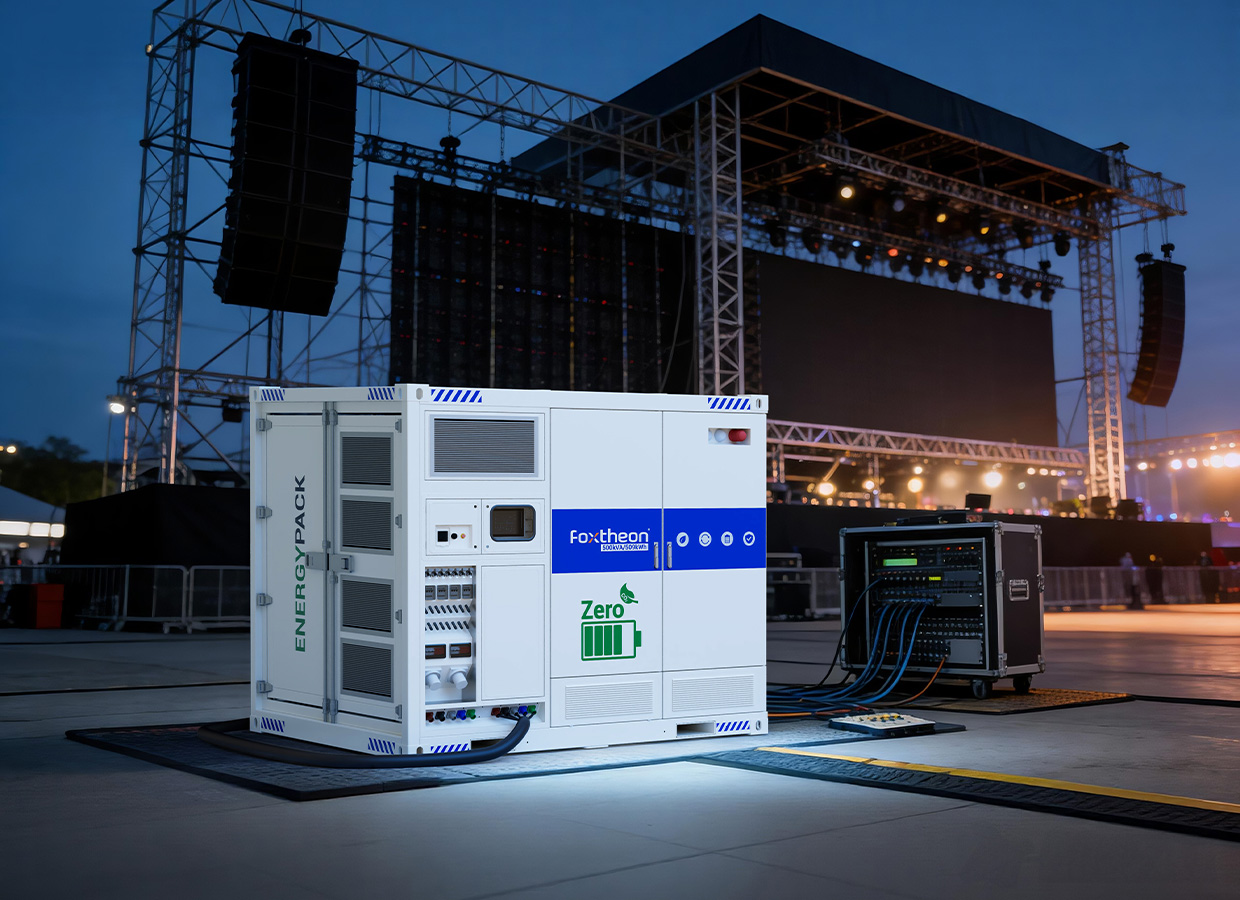
The modern industrial and commercial energy infrastructure faces increasing demands for stability, efficiency, and adaptability. As manufacturing facilities, data centers, and heavy industrial sites manage complex load profiles, relying on a static power distribution strategy limits operational flexibility. Energy requirements rarely remain constant; facilities expand, equipment is upgraded, and utility tariff structures evolve. In this context, implementing a scalable BESS solution provides a mathematically sound approach to power management, allowing organizations to dynamically align their energy storage capacity with actual site demands.
Rather than requiring a massive upfront capital expenditure for fixed-capacity infrastructure, modular storage systems allow capacity and power output to grow synergistically with the facility. This article examines the engineering principles, core technological components, and integration strategies that make modular energy storage a technically superior choice for modern B2B power architectures.
The Engineering Mathematics of Modularity in Energy Storage
When designing an industrial power system, engineers must account for both continuous base loads and transient peak loads. Historically, facilities relied solely on oversized infrastructure to handle peak demands, resulting in significant inefficiencies during normal operational hours. By introducing modular energy storage architectures, power system designers can separate energy capacity (kilowatt-hours) from power delivery (kilowatts), achieving precise load matching.
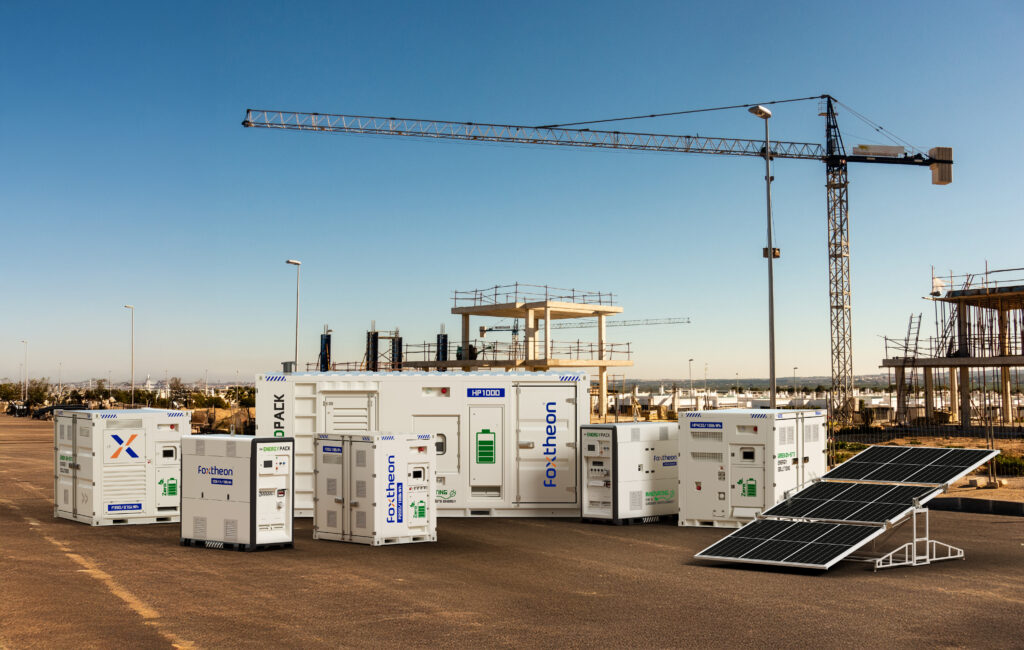
A fundamental advantage of modularity lies in the mitigation of stranding assets. In a fixed system, any overestimation of load profile leads to underutilized battery cells, while underestimation leads to premature capacity constraints. A scalable BESS solution solves this through standard building blocks—often configured in rack-mounted or containerized formats. If a facility increases its automated production lines, plant managers can seamlessly integrate additional battery strings onto the existing DC bus or add parallel AC-coupled units without redesigning the primary power topology.
Core Technical Components Driving System Performance
A reliable industrial storage system relies on the intricate coordination of multiple hardware and software subsystems. Understanding these components is vital for evaluating system longevity and operational safety.
Cell Chemistry and Thermal Dynamics
The foundation of a reliable system is the battery chemistry. Industrial applications predominantly utilize Lithium Iron Phosphate (LFP) cells due to their high thermal runaway threshold and extended cycle life. Compared to Nickel Manganese Cobalt (NMC), LFP exhibits superior chemical stability under heavy discharge rates. However, even with LFP, thermal management remains the most significant factor in degradation. Advanced scalable systems utilize active liquid cooling rather than passive air cooling. Liquid cooling maintains cell temperature variance within a strict 2°C to 3°C margin, actively preventing localized hot spots that accelerate Solid Electrolyte Interphase (SEI) layer degradation. This precise thermal control directly translates to a longer operational lifespan, often exceeding 6,000 to 8,000 cycles.
Power Conversion and Energy Management Systems (EMS)
The Power Conversion System (PCS) acts as the bridge between the DC battery racks and the AC facility grid. In a scalable BESS solution, the PCS operates bidirectionally, managing both the charging from the grid (or local generation) and discharging to the facility loads. Modern inverters offer high-frequency switching, providing rapid response times measured in milliseconds.
Governing the PCS is the Energy Management System (EMS). The EMS utilizes predictive algorithms, analyzing historical load data and real-time consumption metrics to optimize charge and discharge cycles. It executes complex commands such as peak shaving, load shifting, and reactive power compensation. Furthermore, a sophisticated EMS ensures seamless API integration with facility Supervisory Control and Data Acquisition (SCADA) networks, offering operators full visibility into system metrics at a highly granular level.
Synergistic Integration with Existing Power Infrastructure
A common misconception in power management is the assumption that new storage technologies must operate in isolation or entirely replace existing assets. On the contrary, a scalable BESS solution is explicitly designed to integrate harmoniously with established infrastructure, particularly diesel or natural gas generators. This hybrid approach optimizes the total power ecosystem.
Enhancing Generator Efficiency and Longevity
Generators operate at peak mechanical and fuel efficiency within a specific load range—typically between 70% and 85% of their rated capacity. When forced to handle dynamic, fluctuating loads or operate at low capacities (under-loading), generators consume disproportionate amounts of fuel and suffer from “wet stacking,” where unburned fuel accumulates in the exhaust system.
Integrating hybrid power system integration strategies completely alters this dynamic. The energy storage system functions as a dynamic buffer. When sudden motor starting currents or heavy transient loads occur, the BESS discharges instantaneously to absorb the spike. Conversely, during periods of low facility demand, the generator can run at its optimal 80% load, powering the facility while simultaneously charging the battery. By utilizing the battery to handle the variability, the generator maintains a steady, optimized output. This drastically reduces mechanical wear, lowers specific fuel consumption (liters per kWh), and significantly extends the intervals between necessary maintenance cycles. The result is a highly efficient, resilient microgrid where the battery and the generator enhance each other’s strengths.
Strategic Application Scenarios for Industrial Operators
The versatility of a scalable architecture allows it to address highly specific financial and operational challenges across different sectors.
- Peak Shaving in Heavy Manufacturing: Industrial facilities are often subjected to severe utility demand charges based on their highest 15-minute usage peak during a billing cycle. By deploying algorithmic peak shaving, the BESS discharges energy exactly when facility loads approach the predetermined threshold, capping the peak drawn from the utility grid. This directly reduces monthly operational expenditures (OPEX).
- Grid Ancillary Services: Facilities equipped with a robust storage system can participate in utility grid stabilization programs. By providing frequency regulation or voltage support, industrial operators can generate new revenue streams, turning a localized asset into an active participant in regional power stability.
- Microgrid Resilience in Remote Locations: For mining operations or remote telecommunications hubs operating independently of the main utility grid, a scalable BESS solution provides necessary spinning reserves. It prevents localized blackouts during abrupt load step changes and ensures continuous operation of sensitive industrial equipment.
Evaluating Total Cost of Ownership (TCO) and Financial Viability
When engineering procurement teams evaluate capital investments, the Total Cost of Ownership (TCO) metric supersedes initial hardware costs. A modular approach inherently optimizes TCO. By aligning the initial capital expenditure (CAPEX) with the immediate power requirement, organizations avoid paying for unused capacity. As the facility scales, the cost of adding subsequent battery racks or modules is proportionally lower than installing entirely separate, standalone systems.
Furthermore, the operational expenditure (OPEX) is heavily influenced by the system’s reliability and maintenance demands. Advanced systems minimize downtime through remote diagnostics and predictive maintenance alerts. Component failures in a modular system rarely result in total system downtime; a single faulty string can be isolated via the Battery Management System (BMS) while the rest of the unit continues to support the facility load.
Designing for Future Expansion: The Industry Standard Approach
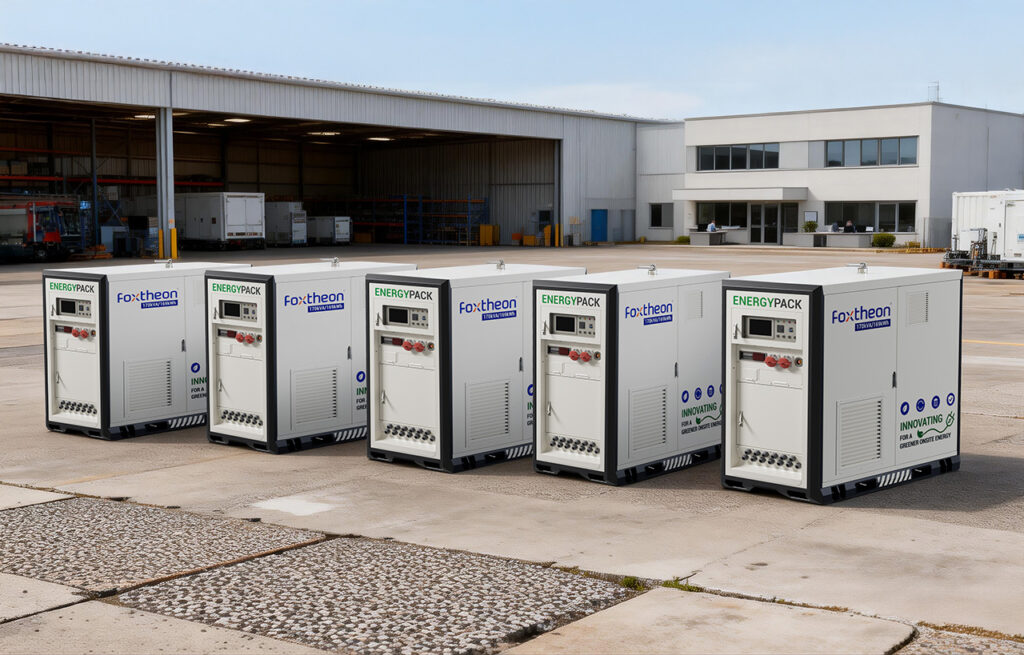
Engineering a system that is genuinely scalable requires strict adherence to standardization and interoperability. This is where Foxtheon demonstrates profound engineering capability. A system must be physically and software-ready for expansion from day one.
The architecture engineered by Foxtheon prioritizes plug-and-play topology. When expanding capacity, facility managers do not need to rewrite complex EMS logic or overhaul the primary switchgear. The standardized communication protocols (such as Modbus TCP/IP or CAN bus) automatically recognize and integrate newly installed battery clusters, rebalancing the State of Charge (SOC) algorithms across the entire expanded array. By utilizing high-density, containerized formats, a scalable BESS solution minimizes the physical footprint required on-site, simplifying civil engineering preparations and accelerating deployment timelines.
Compliance with rigorous international safety standards is non-negotiable in B2B environments. Systems must strictly adhere to protocols such as UL 9540, IEC 62619, and NFPA 855. These standards mandate comprehensive safety mechanisms, including off-gas detection, deflagration venting, and integrated aerosol fire suppression systems, ensuring the absolute safety of facility personnel and adjacent physical assets.
The design and implementation of industrial power infrastructure demand rigorous analysis, technical foresight, and absolute reliability. Transitioning away from rigid, single-capacity hardware toward a scalable BESS solution provides organizations with the agility required to manage fluctuating utility costs and evolving operational parameters.
By optimizing the performance of existing generating assets, performing precise peak shaving, and maintaining stringent thermal management, these systems represent a highly logical infrastructural investment. Partnering with a technically proficient manufacturer like Foxtheon ensures that your facility is equipped with a resilient, data-driven power architecture built to adapt to future demands.
Ready to optimize your facility’s power architecture?
Contact our engineering team today with your load profile parameters to request a comprehensive technical consultation and highly detailed project inquiry. Secure your operational stability by investing in intelligent, modular power solutions.
Frequently Asked Questions (FAQ)
Q1: How does a scalable BESS mathematically reduce utility demand charges?
A1: Demand charges are billed based on the highest peak kilowatt (kW) draw during a specific interval. The Energy Management System monitors facility consumption in real-time. When it predicts the load will exceed a pre-set threshold, it dispatches battery power (peak shaving) to supply the difference. This flattens the consumption curve drawn from the utility grid, directly lowering the peak kW recorded by the utility meter.
Q2: What is the optimal method for integrating a modular BESS with existing diesel generators?
A2: The most effective integration utilizes the BESS as a buffer for transient loads and spinning reserves. The generator is programmed to run at its highest efficiency point (e.g., 80% load). The BESS handles sudden load spikes (like motor starts) and absorbs excess power when facility demand drops. This prevents generator under-loading, reduces fuel consumption per kWh, and significantly extends maintenance intervals.
Q3: Can battery capacity be expanded several years after the initial installation?
A3: Yes, this is the primary engineering advantage of a smart grid integration architecture. Facilities can add parallel battery racks to the DC bus or introduce new AC-coupled modules. The Battery Management System is designed to accommodate and balance cells of varying age and internal resistance, allowing phased capacity expansion without requiring a total system replacement.
Q4: What thermal management systems are utilized to ensure industrial safety and longevity?
A4: High-capacity industrial systems primarily utilize active liquid cooling. A network of coolant channels runs between the battery cells, continuously exchanging heat. This method maintains a highly uniform temperature distribution (within 3°C across the pack), which prevents localized degradation, maximizes cycle life, and virtually eliminates the risk of thermal runaway.
Q5: What level of operational data visibility does the EMS provide to facility managers?
A5: A professional EMS provides highly granular telemetry. Operators can monitor real-time State of Charge (SOC), State of Health (SOH), individual cell voltages, pack temperatures, and instantaneous charge/discharge rates. Furthermore, the system logs historical performance data, allowing engineers to analyze load profiles, calculate exact carbon emission reductions, and perform predictive maintenance on the hardware.