
Industrial cooling is the backbone of many operations, from remote mining sites to temporary agricultural processing centers. However, the electrical grid does not always extend to where cooling is needed most. This creates a significant engineering challenge. Facility managers must find a way to maintain consistent voltage and amperage for heavy-duty motors without a utility line. Powering industrial chillers off-grid requires a sophisticated approach that goes beyond simply parking a diesel generator next to a unit.
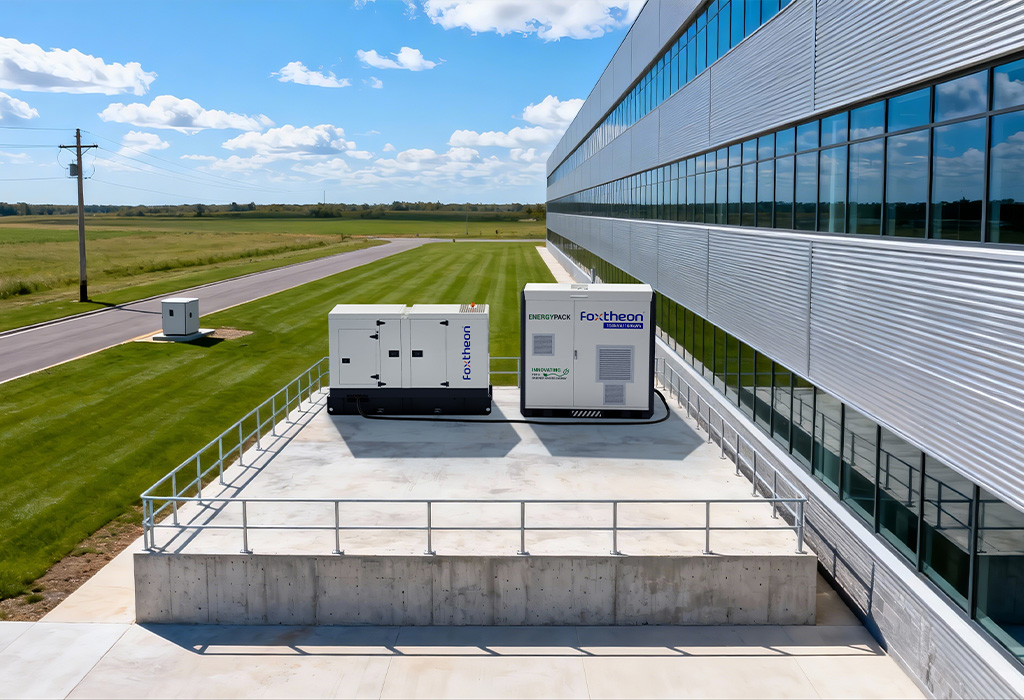
Modern solutions involve hybrid microgrids, advanced battery storage, and intelligent load management. These systems ensure that critical temperature control never falters. Companies like Foxtheon are leading the way in this sector, providing integrated energy systems designed specifically for high-demand loads.
This article examines the technical hurdles and effective strategies for running large-scale HVAC equipment in remote environments. We will explore how to size systems correctly, manage inrush currents, and utilize renewable energy to reduce operational costs.
The Challenge of Inrush Current
The most difficult moment for any off-grid power system is the startup. When a large chiller compressor engages, it demands a massive surge of power. This is known as Locked Rotor Amps (LRA). This surge can be five to seven times higher than the machine’s running current.
If your power source cannot handle this spike, the voltage will drop instantly. This causes the chiller to trip off on a safety fault. In worse scenarios, it can damage the generator’s alternator or the compressor windings.
Key factors to consider include:
Startup Duration: How long the surge lasts (usually milliseconds to seconds).
Voltage Stability: The allowable dip (usually no more than 10-15%).
Frequency Dip: Keeping the Hz stable to prevent motor overheating.
Successfully powering industrial chillers off-grid starts with mitigating this surge. Engineers often use Variable Frequency Drives (VFDs) or soft starters to ramp up the motor speed slowly. This reduces the mechanical and electrical stress on the primary power source.
Hybrid Microgrids: The New Standard
Relying solely on a diesel generator is becoming less common due to fuel costs and maintenance requirements. The industry is shifting toward hybrid microgrids. These systems combine multiple power sources to create a stable local grid.
A typical setup might include a solar array, a battery energy storage system (BESS), and a backup generator. The battery acts as a shock absorber. When the chiller starts, the battery discharges high power instantly to handle the inrush current.
Once the chiller is running, the solar panels or the generator takes over the steady load. This approach prevents the generator from having to run at full capacity just to be ready for a startup spike. It allows for a smaller, more fuel-efficient generator to be used.
Integrating Solar Energy for Cooling
Solar power is an excellent match for air conditioning and process cooling. The demand for cooling usually peaks when the sun is shining brightest. By aligning generation with consumption, operators can drastically reduce fuel usage.
However, solar is intermittent. Clouds can cause a drop in production within seconds. A direct solar-to-load connection is dangerous for sensitive compressor motors.
To safely utilize solar when powering industrial chillers off-grid, you need:
Robust Inverters: Capable of handling inductive motor loads.
Battery Buffering: To smooth out solar fluctuations.
Smart Controllers: To switch between solar and backup power seamlessly.
Intelligent energy solutions allow the system to prioritize solar usage. This reduces the carbon footprint of the operation and lowers the cost per kilowatt-hour.
The Role of Battery Energy Storage Systems (BESS)
Batteries are no longer just for small electronics. Lithium Iron Phosphate (LiFePO4) technology has made large-scale storage safe and dense. In an off-grid cooling application, the BESS is the heart of the system.
The battery system maintains a pure sine wave voltage. This is critical for modern chillers that rely on microprocessors and sensors. “Dirty” power from a struggling generator can fry these electronic components.
Foxtheon utilizes high-density battery storage in their mobile power stations. These units can detect a load spike and respond in milliseconds. This rapid response is faster than a generator governor can react, ensuring the voltage stays flat during the compressor startup.
Sizing the Power System Correctly
One of the most common mistakes is undersizing the power supply. You cannot size an off-grid system based on the chiller’s average running watts. You must design for the worst-case scenario.
Consider these variables:
Ambient Temperature: High heat de-rates generator and battery performance.
Altitude: Engines lose efficiency at higher elevations.
Continuous Duty: Will the chiller run 24/7 or cycle on and off?
If the system is undersized, the breakers will trip constantly. If it is drastically oversized, the generator may suffer from “wet stacking” due to light loading. This damages the engine over time.
Correct sizing requires a detailed load analysis. Engineers often apply a safety factor of 1.25 to 1.5 times the peak demand to ensure reliability when powering industrial chillers off-grid.
Intelligent Load Management
Hardware is only half the battle. Software controls constitute the other half. Smart Energy Management Systems (EMS) monitor the flow of electricity in real-time.
For facilities with multiple chillers, the EMS can stagger the startups. Instead of three compressors turning on simultaneously, the system waits for the first to stabilize before engaging the second. This drastically lowers the peak power requirement.
Advanced controllers can also manage “load shedding.” If the battery gets low and the generator fails, the system can cut power to non-essential lights or fans. This preserves energy for the critical cooling load until the backup is restored.
Reducing Operational Costs (OPEX)
Operating off-grid is historically expensive. Diesel delivery to remote sites drives up the price of cooling. By integrating storage and renewables, companies are changing the math.
Cost-saving strategies include:
Peak Shaving: Using battery power during short spikes instead of starting a second generator.
Generator Cycling: Turning the engine off completely during low-load periods and running on batteries.
Maintenance Reduction: Less generator runtime means fewer oil changes and overhauls.
While the initial investment (CAPEX) for a hybrid system is higher, the return on investment comes quickly through fuel savings.
Thermal Management of the Power Equipment
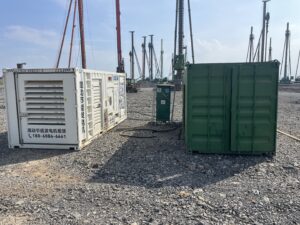
It is ironic, but the equipment used to power the chillers also needs cooling. Batteries and inverters generate heat. If they are housed in a hot steel container without ventilation, they will shut down.
When designing the site layout, ensure the power station has adequate airflow. Powering industrial chillers off-grid in desert environments often requires a secondary, smaller cooling loop just for the battery container.
Failure to keep the electronics cool will shorten the lifespan of the lithium cells and cause inverter faults.
Mobility and Rapid Deployment
Many off-grid applications are temporary. Disaster relief zones, military forward operating bases, and music festivals require cooling immediately.
Modular power solutions are essential here. Equipment that is containerized can be dropped off by a truck and plugged in within hours.
Benefits of modular systems:
Scalability: Add more battery modules if the cooling load increases.
Portability: Move the asset to a new site when the project ends.
Plug-and-Play: Pre-wired connections reduce the need for specialized electricians on site.
Selecting the Right Partner
Not all energy companies understand the specific demands of inductive motor loads. A standard residential solar installer is rarely equipped to handle industrial three-phase chillers.
You need a partner with experience in industrial power dynamics. They should offer simulation software to model how the chiller startup will affect the voltage curve.
Foxtheon stands out by providing hybrid energy storage systems that are specifically engineered for these rugged, high-demand applications. Their focus on smart integration ensures that the chiller and the power source talk to each other efficiently.
Future Trends in Off-Grid Cooling
The future lies in predictive analytics. AI-driven power controllers will predict when a chiller is about to start based on weather forecasts and historical data. The system will pre-charge the batteries or spin up the generator just seconds before the load hits.
We also see a move toward higher voltage systems. Operating at higher voltages reduces the current required, which allows for thinner cables and less copper loss.
Hydrogen fuel cells are also emerging as a potential long-duration backup, offering a zero-emission alternative to diesel for weeks where solar is insufficient.
The demand for cooling in remote areas is growing. Whether for preserving food, cooling servers, or keeping workers safe, reliability is the top priority. Powering industrial chillers off-grid is a complex task that demands a modern solution.
Old methods of oversizing diesel generators are inefficient and costly. The integration of battery storage, solar inputs, and smart management software offers a better way. It protects the equipment, stabilizes the voltage, and saves money on fuel.
By choosing robust technologies and experienced partners like Foxtheon, facility managers can ensure their cooling systems run smoothly, regardless of where they are located. Smart planning today prevents power failures tomorrow.
Frequently Asked Questions
Q1: Can I run an industrial chiller continuously on solar power alone?
A1: It is technically possible but economically challenging for 24/7 operations. Solar only works during the day. To run a chiller at night, you would need a massive battery bank. A hybrid approach, using solar to offset daytime usage and a generator or large battery for night operations, is usually the most practical and cost-effective method for powering industrial chillers off-grid.
Q2: How much larger should my generator be compared to the chiller?
A2: A general rule of thumb is 2.5 to 3 times the running capacity of the chiller if you are not using a soft starter or VFD. If you use a VFD or a hybrid system with battery assist, you can size the generator much closer to the actual running load, perhaps 1.2 to 1.5 times the capacity.
Q3: Do I need a special type of battery for starting motors?
A3: Yes, you need batteries with a high “C-rate,” which determines how fast they can discharge power. Lithium loads are superior to lead-acid for this application because they can handle deep discharges and high current spikes without significant voltage drop or long-term damage.
Q4: How does a soft starter help when powering chillers off-grid?
A4: A soft starter gradually increases the voltage supplied to the motor. This limits the inrush current, often reducing it by 60% or more. This reduction means your off-grid power source doesn’t need to absorb a massive shock, allowing you to use smaller generators and inverters.
Q5: What maintenance is required for a hybrid off-grid power system?
A5: Hybrid systems require less maintenance than standalone generators. You still need to service the generator engine (oil, filters), but less frequently. For the electrical side, you must regularly clean solar panels, check cable connections for tightness, and ensure the cooling fans on the inverters and battery systems are operational.