
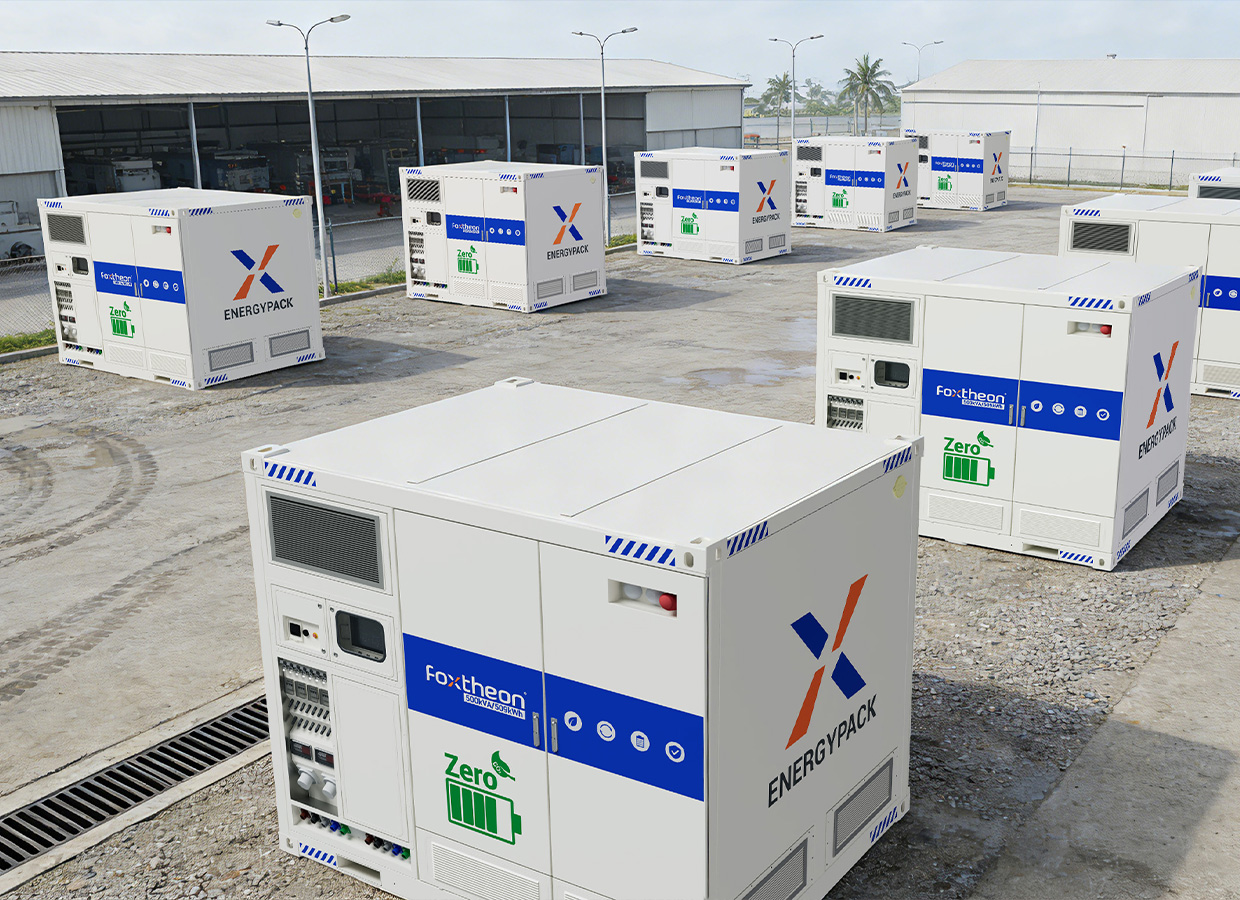
Industrial facilities face a persistent challenge when initiating heavy machinery. The moment a large motor powers up, it demands a massive surge of electricity, often six to ten times its rated operating current. This phenomenon, known as inrush current, places immense strain on the local electrical infrastructure and leads to expensive peak demand charges. Implementing a soft start for industrial motors using BESS (Battery Energy Storage Systems) offers a modern solution to these age-old engineering hurdles. By utilizing stored energy to buffer these startup spikes, companies can protect their equipment while maintaining a stable connection to the utility grid. Foxtheon provides advanced energy storage technology that integrates seamlessly into these high-demand industrial environments.
The Challenge of Motor Inrush Current in Heavy Industry
Traditional starting methods for large induction motors often fall short in the face of modern grid constraints. When a motor starts across-the-line, the sudden draw of current causes a significant voltage dip. This flicker can disrupt sensitive electronic equipment nearby and trigger protective relays.
While mechanical soft starters and Variable Frequency Drives (VFDs) assist in ramping up speed, they do not address the source of the power draw. They simply manage how the motor consumes what the grid provides. If the grid is weak or at capacity, even a controlled start can cause issues. This is where the integration of energy storage becomes a critical asset for facility managers.
Limitations of Conventional Starting Methods
Star-delta starters and autotransformers reduce voltage during startup but offer limited control. They often result in torque pulsations that stress the motor’s internal components. VFDs provide excellent control but generate significant heat and harmonic distortion, requiring additional cooling and filtering.
A soft start for industrial motors using BESS bypasses these limitations by acting as a local power reservoir. Instead of relying solely on the utility transformer, the system pulls the necessary surge from high-performance lithium-ion batteries.
How Soft Start for Industrial Motors Using BESS Works
The core of this technology lies in the coordination between the motor controller and the battery inverter. When the motor requires a high-torque start, the BESS detects the rising demand in milliseconds. It injects active power into the local bus, ensuring the grid sees a flat or gently rising load profile rather than a vertical spike.
Peak Shaving at the Point of Load
Most industrial electricity bills include a “demand charge” based on the highest peak recorded during a billing cycle. Starting a 500kW motor without assistance can set a peak that costs thousands of dollars in fees.
By using soft start for industrial motors using BESS, the facility performs “peak shaving” right at the source. The battery supplies the peak current, and the grid provides the base load. Foxtheon’s intelligent control systems manage this transition smoothly, ensuring the batteries recharge during low-demand periods.
Frequency and Voltage Support
Large motor starts often pull down the local frequency and voltage. This instability can lead to motor stalling or damage to contactors. The BESS acts as a stabilizer, providing reactive power support to maintain voltage levels. This ensures that the motor reaches its operational speed without the risk of an undervoltage trip.
Technical Advantages of Battery-Assisted Starting
Modern industrial plants require more than just a simple on/off switch. They need resilience. Integrating a battery system into the motor control center provides layers of protection that traditional hardware cannot match.
Reduced Thermal Stress: By managing the current ramp more effectively, the BESS reduces the heat generated in the motor windings during start-up.
Grid Compliance: Many utilities now impose strict limits on how much flicker a plant can produce. Stored energy keeps the plant within these regulatory boundaries.
Infrastructure Longevity: Reducing the physical shock to transformers and switchgear extends the life of the entire electrical distribution system.
Independent Operation: In cases where the grid is unstable or weak, the BESS provides the “kick” needed to get heavy loads moving without collapsing the local circuit.
Foxtheon designs its energy storage units to handle these high-discharge cycles repeatedly without significant degradation. This reliability is vital for industries like mining, water treatment, and heavy manufacturing.
Comparing BESS to Traditional VFD Solutions
While VFDs are excellent for continuous speed control, they are often oversized just to handle the starting torque of a motor. This leads to higher capital expenditure and lower efficiency at standard operating speeds.
A soft start for industrial motors using BESS allows engineers to size the VFD or soft starter for the running load rather than the starting surge. The battery handles the heavy lifting during the first few seconds of operation. This hybrid approach optimizes both cost and performance.
| Feature | Traditional Soft Starter | Variable Frequency Drive (VFD) | BESS-Assisted Start |
| Inrush Reduction | Moderate | High | Excellent |
| Grid Impact | Significant | Moderate | Minimal |
| Energy Recovery | No | Optional (Regenerative) | Yes (Inherent) |
| Harmonic Distortion | Low | High | Low |
| Emergency Backup | No | No | Yes |
Economic Impact and Return on Investment
Investing in energy storage for motor starting is a strategic financial move. The primary driver of ROI is the reduction in demand charges. In many regions, demand charges account for up to 50% of an industrial electricity bill.
Furthermore, the system provides a secondary benefit: backup power. If the grid fails, the soft start for industrial motors using BESS can facilitate a controlled shutdown or keep critical processes running. This prevents the costly downtime associated with sudden power loss.
Maintenance Savings
Mechanical wear is a silent profit killer. The jerk associated with direct-on-line starting damages belts, gears, and couplings. By providing a truly smooth electrical start through battery buffering, the mechanical stress is virtually eliminated. This leads to longer intervals between maintenance cycles and fewer emergency repairs.
Integration with Renewable Energy
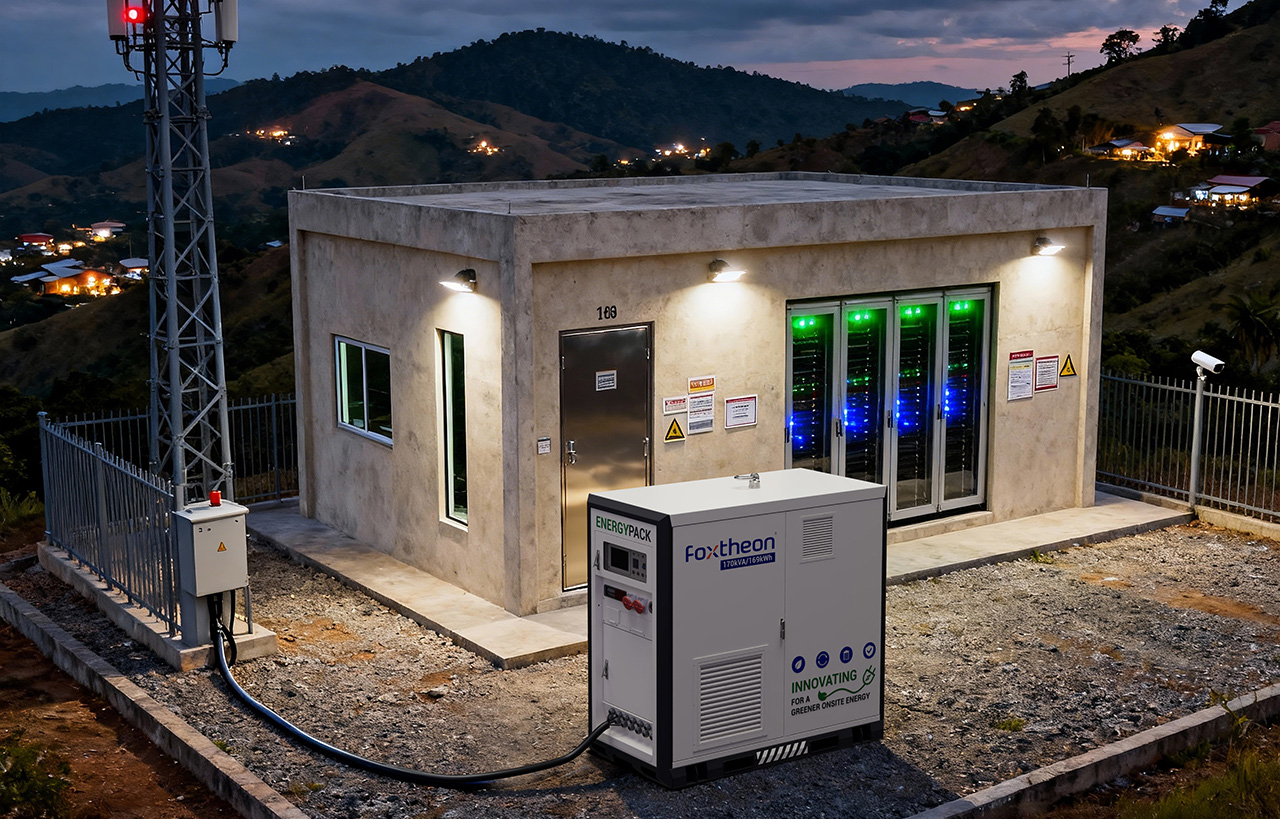
Many modern factories are installing onsite solar or wind power. These intermittent sources are not ideal for starting large motors. A soft start for industrial motors using BESS bridges the gap between green energy and heavy mechanical work.
The system can store excess solar energy produced during the day and use that specific energy to start a massive compressor or pump in the evening. This increases the “self-consumption” rate of the renewable system, making the entire plant more sustainable. Foxtheon specializes in these integrated ecosystems, ensuring that green energy works for heavy industry.
Practical Applications Across Various Sectors
The versatility of this technology makes it suitable for various high-torque applications. Anywhere a large motor starts and stops frequently, the benefits of BESS-assisted starting become apparent.
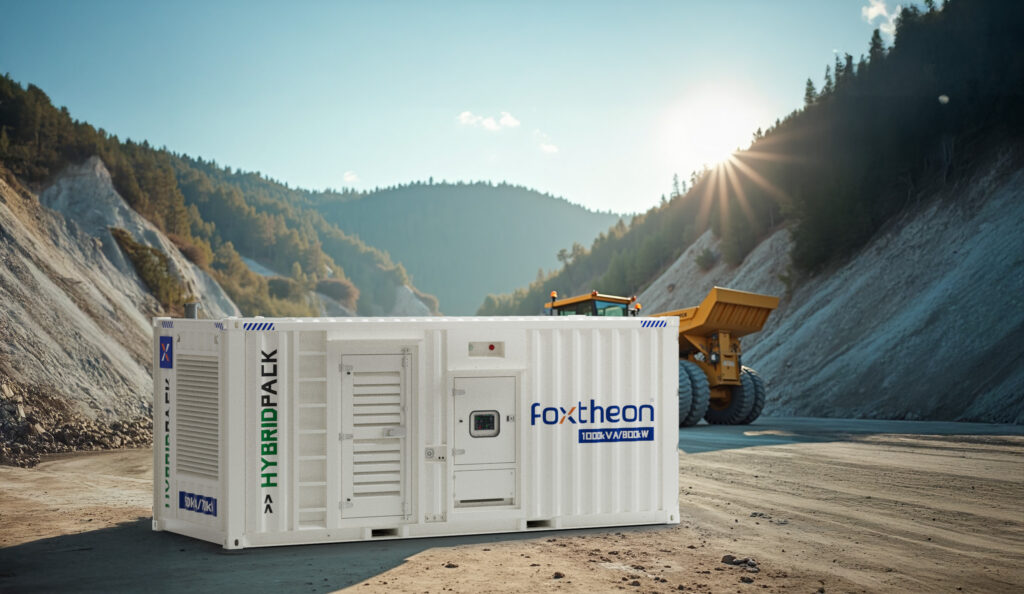
Mining Operations: Large crushers and conveyors require immense torque. Using a battery buffer prevents mine-wide power dips.
Water Treatment: High-capacity pumps often start multiple times an hour. A BESS manages these cycles without stressing the municipal grid.
HVAC in Commercial Buildings: Large chillers can cause light flicker in office towers. Battery-assisted starting eliminates this nuisance.
Marine and Offshore: On ships or oil rigs, the power plant is a limited “island” grid. Starting a large thruster or drill requires the instant power that only a BESS can provide.
Future-Proofing Industrial Power Systems
As the global energy transition continues, the grid will likely become more volatile. Industrial players who rely on stable, high-power starts must take control of their own energy destiny. Utilizing a soft start for industrial motors using BESS is not just an efficiency upgrade; it is a step toward energy independence.
By decoupling the motor’s peak demand from the utility’s supply, companies gain flexibility. They can participate in demand response programs, selling their “avoided demand” back to the grid for a profit. This transforms a cost center (the motor) into a potential revenue generator.
Foxtheon continues to innovate in this space, developing high-density battery systems that fit into existing industrial footprints. These systems are designed to be “plug-and-play,” allowing for rapid deployment with minimal disruption to existing operations.
Conclusion: The New Standard for Motor Control
The shift toward a soft start for industrial motors using BESS represents a significant advancement in industrial electrical engineering. By moving away from purely mechanical or power-electronic solutions and embracing energy storage, facilities can achieve unprecedented levels of efficiency. This approach solves the problem of inrush current at its source, protecting both the machinery and the grid.
Companies that adopt this technology find themselves better equipped to handle rising energy costs and stricter grid regulations. With the support of Foxtheon’s robust energy storage solutions, the transition to a smarter, more resilient industrial power strategy is well within reach. The era of stressing the grid to move heavy loads is ending, replaced by the precision and power of battery-integrated starting.
Frequently Asked Questions (FAQ)
Q1: Can I use a BESS to start multiple motors at once?
A1: Yes, a centralized BESS can be sized to manage the starting sequences of multiple motors. The control system prioritizes the loads and ensures that the total draw from the grid never exceeds a predefined limit. This is particularly useful in plants with many large pumps or compressors that may need to cycle frequently.
Q2: How does the lifespan of the battery handle high-current motor starts?
A2: While motor starts involve high current, they are typically very short in duration (usually 5 to 30 seconds). Modern Lithium Iron Phosphate (LFP) batteries, like those used by Foxtheon, are designed for high-power discharge pulses. Because the total energy (kWh) used during a start is relatively low, the thermal impact on the battery is manageable, ensuring a long service life.
Q3: Is it possible to retrofit an existing motor with a BESS-assisted soft start?
A3: Absolutely. One of the primary advantages of a soft start for industrial motors using BESS is that it can be integrated into the existing electrical distribution room. The battery system connects to the main busbar. No changes to the motor itself are required, making it an ideal solution for upgrading aging facilities.
Q4: How does this technology differ from a standard UPS (Uninterruptible Power Supply)?
A4: While a UPS is designed to provide continuous power during a failure, a BESS for motor starting is optimized for power density and rapid response. It is designed to handle repetitive, high-current surges and integrate with the motor’s control logic. Additionally, a BESS can perform active grid services like peak shaving, which a standard UPS typically cannot do.
Q5: What is the typical payback period for a BESS-assisted starting system?
A5: The payback period varies based on local utility rates and the frequency of motor starts. However, many industrial facilities see a return on investment within 2 to 4 years. This is achieved through the elimination of demand charge penalties, reduced energy consumption during peaks, and significantly lower maintenance costs for the motors and mechanical drive trains.