
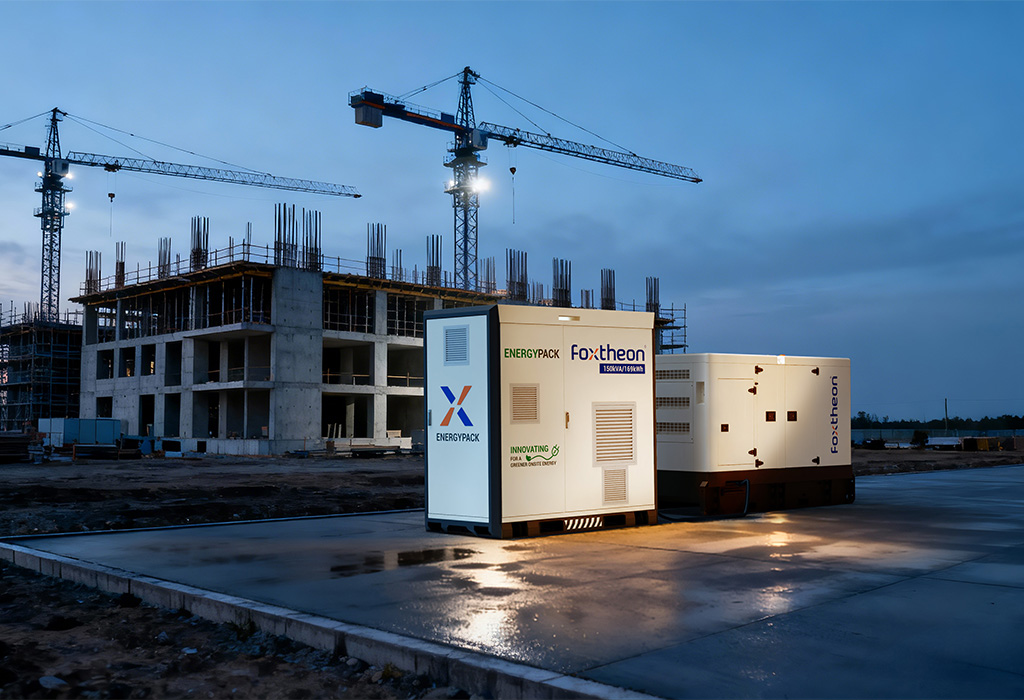
For industrial facility managers and construction site operators, powering HVAC systems is often the most demanding part of the energy equation. These systems are notorious for their massive power requirements during startup. The traditional reaction has been to buy the biggest diesel generator available to handle that split-second spike. However, this approach is costing you money.
When you install a generator capable of handling the peak startup load but only utilize a fraction of its power for the running load, you create inefficiencies. This is why the industry is shifting its focus to learn how to avoid oversizing generator for HVAC applications.
Oversized generators consume more fuel, require more maintenance, and have shorter lifespans due to engine glazing. By adopting modern power solutions, such as those offered by Foxtheon, businesses can right-size their infrastructure. This article explores technical strategies, hybrid solutions, and the financial logic behind sizing your power correctly.
The Root Cause: Why We Oversize Generators
To understand the solution, we must first understand the problem. Electric motors, which drive the compressors in HVAC units, behave differently when they start compared to when they run.
When an AC motor starts from a standstill, it must overcome inertia. To do this, it draws a massive surge of electricity known as “inrush current” or Locked Rotor Amps (LRA).
The Startup Spike vs. Running Load
Inrush Current: This can be 5 to 7 times the rated running current. It lasts only for a few seconds or even milliseconds.
Running Load: This is the steady amount of power the HVAC needs to keep cooling or heating once the motor is up to speed.
In the past, engineers had no choice. If the inrush required 500 kW, they specified a 500 kVA generator, even if the HVAC only used 80 kW to run. This led to massive inefficiency. Today, with better technology, we can avoid oversizing generator for HVAC setups by managing that spike differently.
The Hidden Dangers of “Wet Stacking”
Many operators believe that having “extra power” is a safety net. In reality, running a diesel generator at a low load (under 30% capacity) is harmful to the engine. This phenomenon is called “wet stacking.”
When a diesel engine runs with a light load, the internal cylinder temperature never gets high enough to burn the fuel completely. Unburned fuel deposits build up on the cylinder walls and injectors.
Consequences of Low Load Operation:
Carbon Buildup: The engine becomes clogged with soot, reducing performance.
Fuel Dilution: Unburned fuel can leak into the oil pan, degrading the lubrication quality.
White Smoke: The exhaust emits raw hydrocarbons, signaling poor combustion.
Increased Maintenance: You will need to perform load banking tests more frequently to burn off the deposits.
By implementing strategies to avoid oversizing generator for HVAC, you ensure your generator runs closer to its optimal load (70-80%). This keeps the engine hot, the combustion clean, and the maintenance costs low.
Solution 1: Variable Frequency Drives (VFDs) and Soft Starters
One of the most direct ways to reduce the generator size requirement is to attack the inrush current itself. You can modify how the HVAC equipment behaves electrically.
Soft Starters
A soft starter is a device installed between the power source and the motor. It gradually ramps up the voltage, extending the startup time.
Instead of an instant “hard” start, the motor accelerates smoothly.
This can reduce the inrush current by 30% to 40%.
With a lower peak, you can select a smaller generator.
Variable Frequency Drives (VFDs)
VFDs offer even more control. They vary the frequency and voltage supplied to the motor.
A VFD can reduce the starting amp draw to almost 1:1 with the running amps.
This completely eliminates the massive spike.
While VFDs are more expensive upfront, they allow for the most aggressive generator downsizing.
However, electronic devices like VFDs can introduce harmonic distortion. When you look to avoid oversizing generator for HVAC, you must ensure the generator’s alternator is sized to handle these non-linear loads.
Solution 2: Hybrid Power Systems (The BESS Advantage)
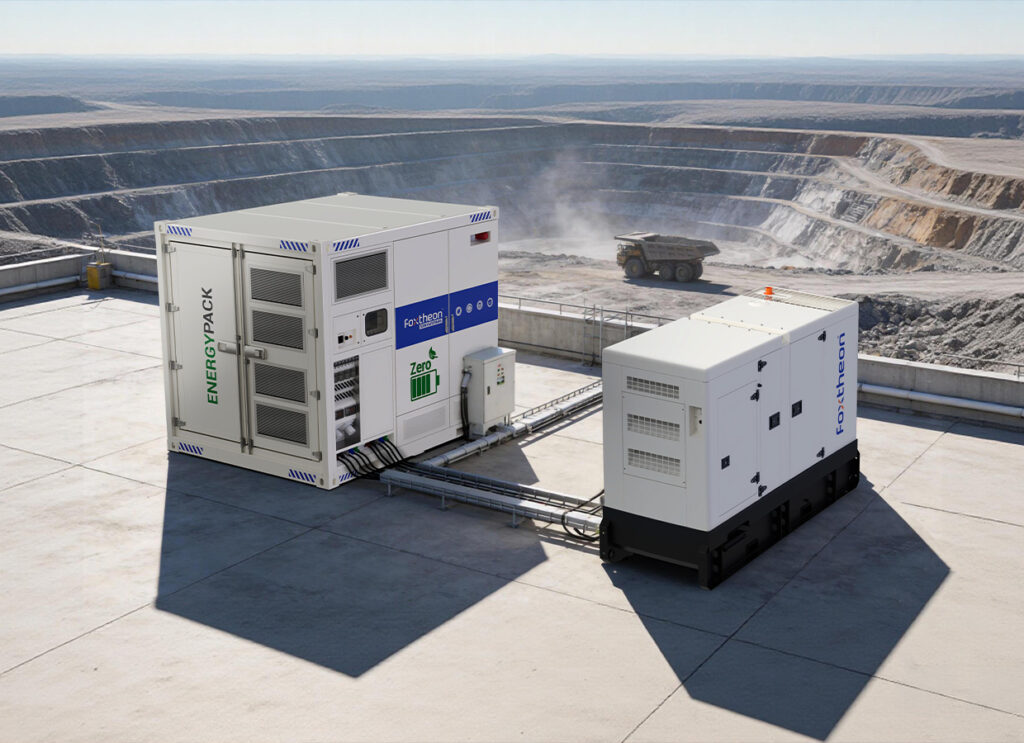
The most robust solution in the modern market is the integration of a Battery Energy Storage System (BESS). This is where companies like Foxtheon differ from traditional generator manufacturers. They combine storage and generation into a smart microgrid.
In a hybrid setup, the battery acts as a shock absorber. When the HVAC unit kicks on, the battery instantly discharges to handle the high inrush current.
How BESS Facilitates Smaller Generators:
Peak Shaving: The battery covers the 500 kW spike.
Base Loading: The generator is sized only for the 80 kW running load (plus a margin for battery charging).
Result: You might replace a 500 kVA generator with a 100 kVA unit.
This strategy is the most effective way to avoid oversizing generator for HVAC. The generator runs at a high, healthy load to power the HVAC and recharge the battery, then it shuts off. This creates a cycle of high efficiency.
Analyzing the Financial Impact
The decision to right-size your equipment is largely financial. The upfront cost of a massive generator is high, but the operational expenditure (OPEX) is where the real damage occurs.
Fuel Consumption Comparison
Consider a site running 24/7.
Oversized Unit: A 500 kVA unit running at 15% load burns significant fuel just to keep the large engine rotating. Friction and thermal losses are high.
Right-Sized Unit: A 100 kVA unit running at 80% load converts the majority of its fuel into electricity.
Over a single year, the fuel savings alone can pay for the integration of a smart control system or a hybrid battery. Furthermore, a smaller generator typically uses a smaller engine block, which is cheaper to overhaul and repair.
Load Management and Sequencing
If your facility has multiple HVAC units, you can avoid oversizing generator for HVAC simply by changing your control logic.
If three AC units start simultaneously, the generator sees the combined inrush current of all three. This is a massive hit.
By using a sequencer or a Building Management System (BMS), you can stagger the starts.
Unit 1 Starts: Generator handles one spike.
Delay (30 seconds): Unit 1 stabilizes.
Unit 2 Starts: Generator handles the second spike.
This means your generator only needs to be big enough to handle the single largest inrush plus the running load of the units already online. This is a “free” software-based solution that yields hardware savings.
Environmental Standards and Emissions
The world is moving toward stricter emission controls. In many jurisdictions, Tier 4 Final (USA) or Stage V (Europe) standards apply. These engines use complex after-treatment systems like Diesel Particulate Filters (DPF) and Selective Catalytic Reduction (SCR).
These systems hate low exhaust temperatures. If you oversize your generator, the exhaust is too cool. The DPF clogs, and the SCR fails to convert NOx. This puts the engine into “derate” mode, shutting down your HVAC.
To remain compliant and keep your site running, you must avoid oversizing generator for HVAC. A properly loaded engine produces the heat necessary for these emission control systems to function correctly.
Sizing Calculations: A Practical Example
Let’s look at the math to clarify the process.
Scenario: A 20-ton HVAC unit.
Running Watts: 25 kW.
Starting Watts (Direct Online): 125 kW.
The “Old School” Approach:
You buy a 150 kW generator. It handles the start effortlessly. However, for 99% of the day, it runs at 25 kW (16% load). This is disastrous for the engine.
The Hybrid/Smart Approach:
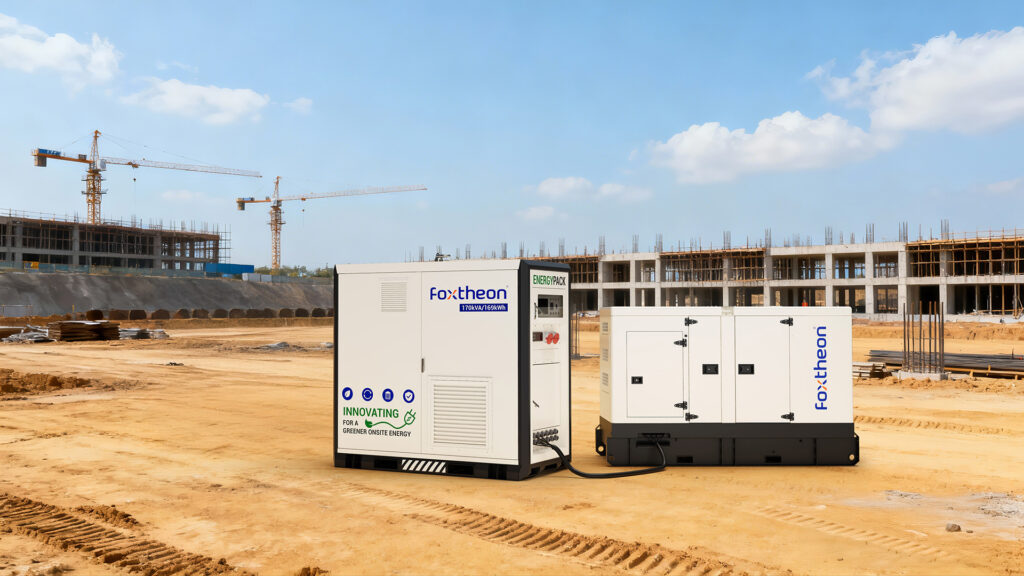
You install a Foxtheon hybrid energy unit. The battery inverter is rated for the 125 kW surge. The generator is sized for the running load plus 20% for charging.
Generator Size: 35 kW.
Result: The generator runs at 70-80% load. It is smaller, cheaper, quieter, and cleaner.
The Role of Power Factor Correction
HVAC motors are inductive loads. They consume “reactive power,” which lowers the Power Factor (PF). A low PF requires the generator to work harder to supply the same amount of useful power.
An oversized generator handles poor power factor easily simply due to its bulk. However, when you try to avoid oversizing generator for HVAC, you must address the Power Factor.
Adding capacitors or using active power factor correction ensures that the generator capacity is used for real work (kW) rather than reactive work (kVAR). This allows you to squeeze the maximum performance out of a smaller engine.
Future-Proofing with Foxtheon
As we look toward the future, energy flexibility is key. Installing a massive, standalone diesel generator is a rigid solution. It locks you into a specific fuel consumption rate for decades.
Foxtheon provides modular solutions that adapt to your needs. Their systems allow you to integrate solar panels, wind inputs, and grid power alongside the generator.
By using their advanced controllers, you can define exactly when the generator runs. You might prioritize silent battery running at night and generator running during the day. This flexibility is impossible if you simply buy a massive generator and hope for the best.
The era of “bigger is better” is over. In the context of energy, bigger is often wasteful, dirty, and expensive. Facility managers must take a proactive approach to avoid oversizing generator for HVAC systems.
By understanding the physics of inrush current and utilizing technologies like soft starters, VFDs, and Battery Energy Storage Systems, you can drastically reduce the physical size of your power plant. This leads to immediate CAPEX savings and long-term OPEX reductions.
Whether you are retrofitting an old site or planning a new one, partnering with forward-thinking brands like Foxtheon ensures you have the hardware and software necessary to manage these loads intelligently. Don’t pay for power you don’t use. Size for the load, manage the surge, and reap the rewards of efficiency.
Frequently Asked Questions (FAQ)
Q1: What is the main risk if I do not avoid oversizing generator for HVAC?
A1: The primary technical risk is “wet stacking,” where the engine runs too cold, causing carbon buildup and unburned fuel to damage the cylinders. The financial risk is wasted capital on a larger unit and significantly higher fuel consumption over the life of the system.
Q2: How much can a BESS reduce the required generator size?
A2: Depending on the specific HVAC unit and the battery discharge rate, a BESS can often reduce the generator size by 50% to 70%. The generator no longer handles the surge, only the running load.
Q3: Does a smaller generator affect the cooling performance of the HVAC?
A3: No, as long as the system is sized correctly to handle the voltage dip during startup. If you use soft starters or a hybrid battery buffer, the HVAC receives stable power and performs exactly as designed.
Q4: Can I use this strategy for residential HVAC systems too?
A4: Yes, the principles are the same. For home backup power, installing a “soft start” kit on your central air conditioner allows you to use a much smaller portable or standby generator to run the whole house.
Q5: Is it complicated to integrate a Foxtheon system with existing HVAC?
A5: Generally, no. Modern hybrid systems are designed as “plug and play” solutions. They sit between the power source and the load, managing the energy flow automatically without requiring complex rewiring of the HVAC internal controls.
Q6: What is the ideal load percentage for a diesel generator?
A6: Ideally, a diesel generator should run between 70% and 80% of its rated capacity. This range ensures optimal fuel combustion, proper engine temperature, and maximum fuel efficiency.