
In modern industrial operations, the reliance on diesel generators (gensets) remains high, particularly in remote mining sites, construction projects, and telecommunications infrastructure. However, the traditional operational model for these generators is inherently flawed due to the mismatch between static engine design and dynamic load profiles. The implementation of load leveling for diesel generator systems has transitioned from a niche technical optimization to a fundamental requirement for operational resilience and cost-efficiency.
The core of the problem lies in the physics of internal combustion. Diesel engines are thermal machines optimized for a specific operating point—usually around 75% to 80% of their rated capacity. When demand fluctuates or drops significantly below this threshold, the engine’s Brake Specific Fuel Consumption (BSFC) rises, leading to wasted energy and mechanical degradation. By utilizing energy storage to bridge the gap between supply and demand, operators can achieve a stable, efficient output regardless of the load’s volatility.
The Thermodynamics of Inefficiency: Why Diesel Generators Struggle
To appreciate the necessity of load leveling for diesel generator assets, one must examine the mechanical consequences of variable demand. Most industrial loads are not linear; they are characterized by high-starting currents (inrush loads) from motors and pumps, followed by periods of relative dormancy.
The Low-Load Penalty
When a generator runs at low loads (typically below 30%), the cylinder pressure and temperature are insufficient to ensure complete combustion and a proper seal of the piston rings. This leads to several critical failure modes:
- Wet Stacking: Unburnt fuel and carbon accumulate in the exhaust system, creating a thick, tar-like substance that reduces engine performance and poses a fire risk.
- Cylinder Glazing: The lack of expansion in the piston rings allows hot combustion gases to blow past, glazing the cylinder walls and causing permanent loss of compression.
- Lube Oil Dilution: Unburnt fuel can migrate into the oil sump, reducing the lubricant’s viscosity and leading to premature bearing failure.
These issues necessitate more frequent maintenance intervals and significantly shorten the Mean Time Between Overhauls (MTBO). By applying load leveling for diesel generator configurations, the engine is shielded from these low-load regimes, ensuring it only operates when it can do so at peak thermal efficiency.
Mechanisms of Load Leveling: The Role of Battery Energy Storage (BESS)
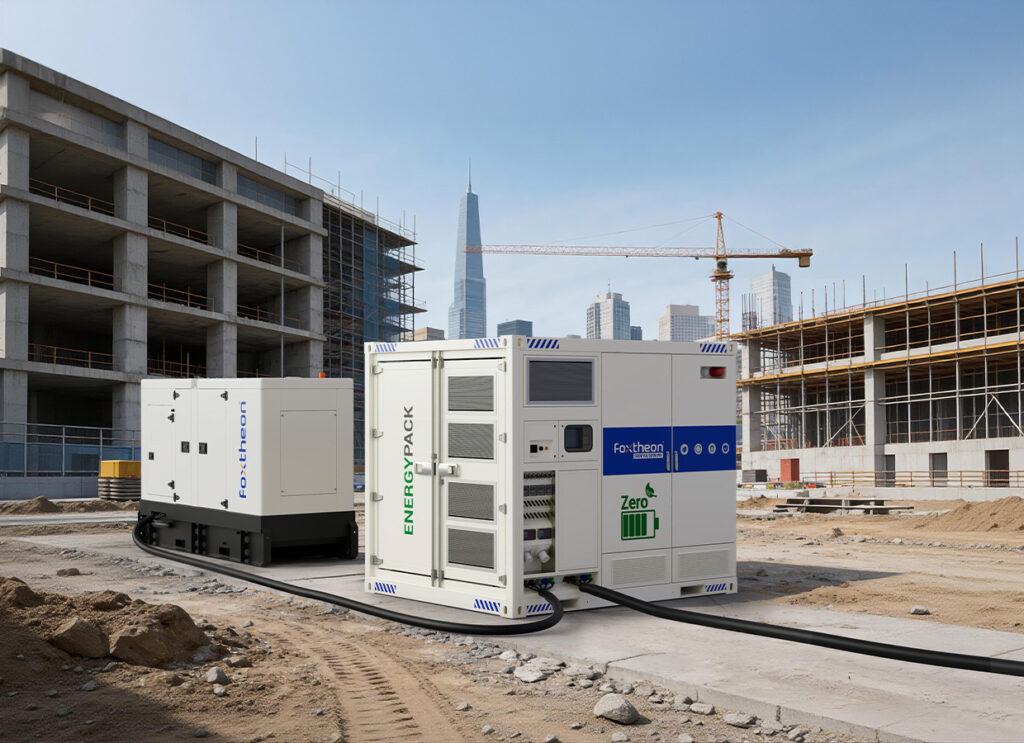
The primary architectural solution for load leveling for diesel generator systems is the integration of a Battery Energy Storage System (BESS) and a high-speed Energy Management System (EMS). This setup creates a “buffer” between the generator and the load, allowing for the decoupling of energy production from energy consumption.
Energy Buffering and Peak Shaving
In a load-leveled system, the generator is programmed to run at its “sweet spot”—the point of lowest fuel consumption per kilowatt-hour. If the actual load is lower than the generator’s output, the excess energy is used to charge the BESS. Conversely, if the load spikes above the generator’s capacity or its most efficient set point, the BESS discharges to provide the required “shaving” of the peak. This ensures the generator sees a flat, predictable demand curve.
Transient Response Management
One of the most challenging aspects of standalone generator operation is the transient response—the ability of the engine to react to sudden load changes without a drop in frequency or voltage. Massive motor starts can cause significant “sag” in the power quality. With load leveling for diesel generator hardware, the battery acts as the primary responder to high-frequency transients. Because power electronics react in milliseconds, whereas a mechanical governor takes seconds, the overall power quality of the microgrid is drastically improved.
Strategic Implementation: The Foxtheon Approach
Effective hybridization requires more than just connecting a battery to a generator. It requires a deep understanding of power electronics and control logic. As a leader in this sector, Foxtheon has developed integrated solutions that automate the complex task of load balancing. Their systems utilize advanced algorithms to monitor the State of Charge (SoC) of the battery and the real-time fuel map of the engine.
By using Foxtheon technology, operators can transition from “spinning reserve” models—where multiple generators idle just in case they are needed—to a storage-first model. In this scenario, the battery provides the reserve capacity, and the generator only starts when the SoC reaches a critical lower limit or when a sustained high load is predicted by the EMS. This approach can reduce engine run hours by up to 60%, directly translating to lower OPEX.
Economic Drivers and Return on Investment (ROI)
The financial justification for load leveling for diesel generator systems is multifaceted, focusing on fuel reduction, maintenance savings, and asset life extension.
Fuel Consumption Reduction
In a typical off-grid mining application, a generator might spend 40% of its time operating in an inefficient 10-25% load range. By utilizing load leveling, the engine is either off or running at 80% load. This change in duty cycle can result in fuel savings of 25% to 45% annually. Given the high cost of fuel delivery to remote locations, the payback period for the BESS component is often less than 24 months.
Optimized Maintenance Schedules
Maintenance is typically scheduled based on run hours. However, not all run hours are equal. A “low-load” hour is far more damaging to an engine than a “high-load” hour. By reducing total run hours and ensuring that the hours logged are at optimal temperatures, load leveling for diesel generator setups extend the time between oil changes and major engine rebuilds, significantly lowering the total cost of ownership (TCO).
Case Study: Remote Construction and Telecom
Consider a remote telecommunications tower that requires a constant 5kW load but experiences occasional 20kW spikes for cooling systems. Traditionally, a 30kVA generator would be installed to handle the 20kW peak, meaning for most of the day, it runs at a mere 16% load—a recipe for mechanical failure and fuel waste.
By implementing load leveling for diesel generator solutions, a much smaller generator (e.g., 10kVA) can be paired with a 20kWh BESS. The generator runs at 80% load for a few hours to power the tower and charge the battery, then shuts off completely. The battery then carries the 5kW load for the remainder of the cycle. This results in silent operation for 18 hours a day, zero fuel consumption during those hours, and an engine that stays in pristine condition.
The Environmental Imperative: Decarbonization and Compliance
Environmental regulations regarding Nitrogen Oxides (NOx), Particulate Matter (PM), and Carbon Dioxide (CO2) emissions are becoming increasingly stringent globally. Diesel engines produce their highest levels of particulate matter when operating outside their design temperature. load leveling for diesel generator systems ensures the engine stays within its “clean” operating zone. Furthermore, the total reduction in fuel burned directly correlates with a lower carbon footprint, assisting companies in meeting their ESG (Environmental, Social, and Governance) targets.
Moreover, these hybrid systems are inherently ready for renewable integration. Once a BESS and EMS are in place for load leveling, adding solar PV or wind turbines becomes a straightforward process. The infrastructure provided by Foxtheon allows for a phased transition where the diesel generator eventually becomes the secondary or tertiary backup rather than the primary energy source.
Technical Challenges and Mitigation Strategies
While the benefits are clear, implementing these systems requires addressing specific technical hurdles:
- Inverter Sizing: The inverter must be capable of handling the maximum surge currents of the load. Under-sizing the inverter defeats the purpose of the battery buffer.
- Thermal Management: Both batteries and power electronics generate heat. Systems must be designed with robust cooling to operate in the harsh environments where diesel generators are typically found.
- EMS Complexity: The software must be robust enough to handle communication failures. If the BESS loses communication with the generator, the system must fail-safe to ensure power continuity.
Companies like Foxtheon address these through industrial-grade enclosures and redundant control layers, ensuring that the transition to a hybrid model does not compromise the “five-nines” reliability required by industrial users.
The Standard for Modern Power Generation
The era of the “dumb” standalone diesel generator is coming to an end. The inefficiencies of variable load operation are too costly—both financially and environmentally—to ignore. Adopting load leveling for diesel generator systems represents a sophisticated evolution in power engineering. By treating the generator as a high-efficiency charging source rather than a reactive power slave, operators can maximize the lifespan of their assets, drastically reduce fuel expenditures, and prepare their infrastructure for a renewable-intensive future. With the expertise of Foxtheon, the path to energy optimization is clear, data-driven, and highly reliable.
Frequently Asked Questions
Q1: What is the primary difference between peak shaving and load leveling?
A1: While often used interchangeably, peak shaving specifically refers to reducing the maximum demand on the generator during high-use periods to avoid overloading. Load leveling is a broader strategy aimed at keeping the generator’s output as constant and efficient as possible by using a battery to absorb excess energy during low-demand periods and discharge it during high-demand periods.
Q2: Can I use load leveling for diesel generator systems in mobile applications?
A2: Absolutely. Mobile hybrid power units are increasingly popular for events, film sets, and mobile clinics. These systems allow the generator to be sized for the average load rather than the peak, making the entire trailer or skid lighter, quieter, and much more fuel-efficient.
Q3: How does the EMS decide when to turn the generator on?
A3: The EMS typically uses a “State of Charge” (SoC) trigger or a “Load Demand” trigger. For example, the generator might start when the battery reaches 20% SoC or when the load exceeds a threshold that the battery cannot safely sustain alone. Modern systems also use predictive modeling to start the engine ahead of anticipated high-load events.
Q4: Is it possible to completely eliminate wet stacking with this technology?
A4: Yes. By ensuring that the generator only runs when it has a significant load (either from the site or from the battery charging process), the engine temperatures remain high enough to prevent the unburnt fuel accumulation that causes wet stacking.
Q5: What is the typical lifespan of the batteries used in these systems?
A5: Most industrial-grade hybrid systems use Lithium Iron Phosphate (LiFePO4) chemistry. Depending on the depth of discharge and environmental conditions, these batteries typically last between 4,000 and 6,000 cycles, which equates to roughly 8 to 15 years of service in a standard load-leveling application.
Q6: Does a hybrid system require a specialized generator?
A6: No, most standard diesel generators can be integrated into a hybrid system. However, the generator must have a remote start/stop capability and an electronic governor to allow the Foxtheon EMS to control it effectively for maximum efficiency gains.