
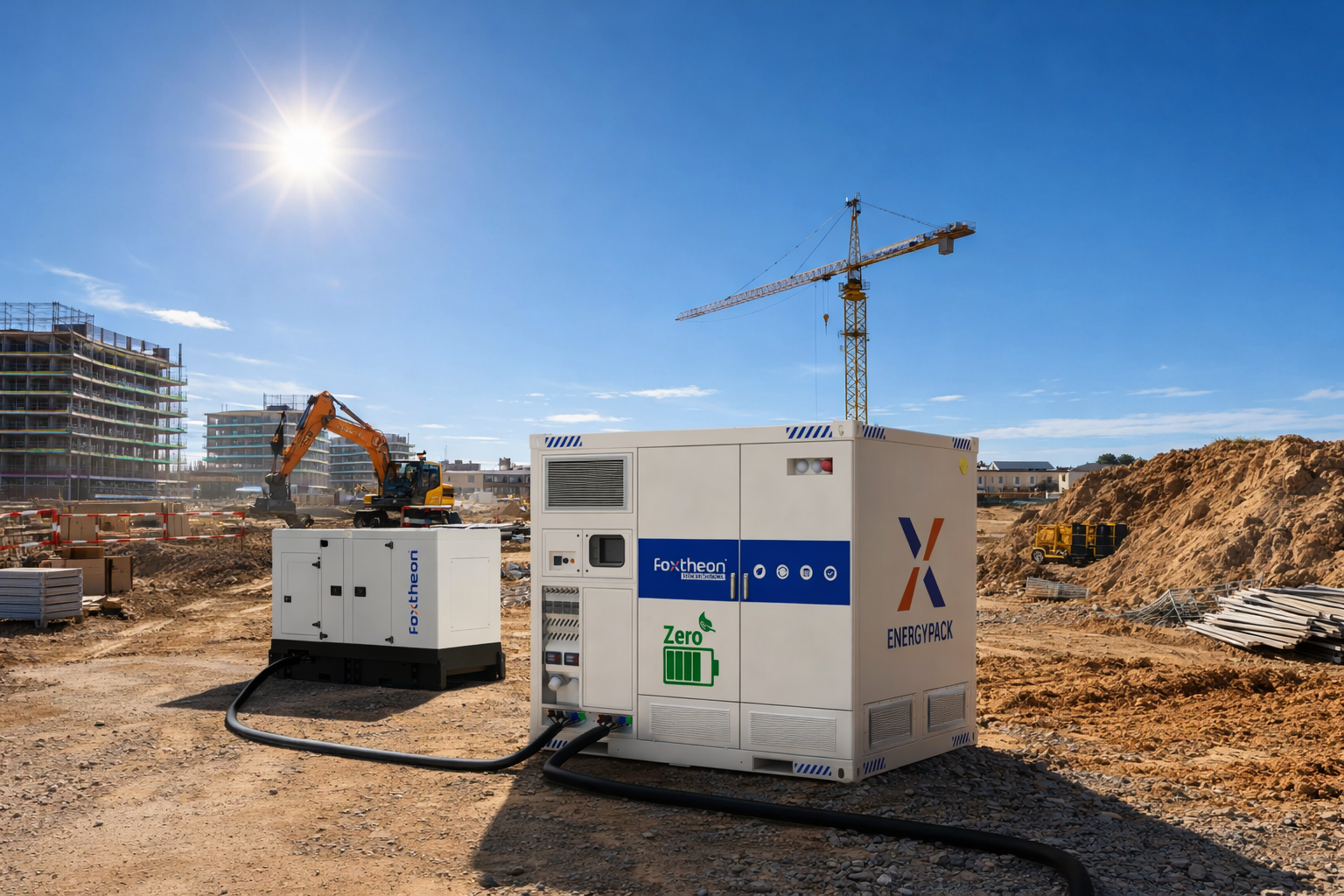
Managing energy storage today involves more than just installing batteries and hoping for the best. As renewable energy projects expand globally, operators are finding themselves in charge of widely dispersed assets. A single site might be easy to handle, but when you scale up, visibility becomes the primary challenge.
This is where telematics for BESS fleet management bridges the gap. It transforms a collection of static hardware into an intelligent, communicative network. By extracting real-time data from the Battery Management System (BMS) and transmitting it for analysis, operators can move from reactive repairs to proactive optimization.
Companies in the intelligent energy sector, such as Foxtheon, have long recognized that hardware is only half the battle. The ability to monitor, control, and optimize these assets remotely is what actually secures the return on investment.
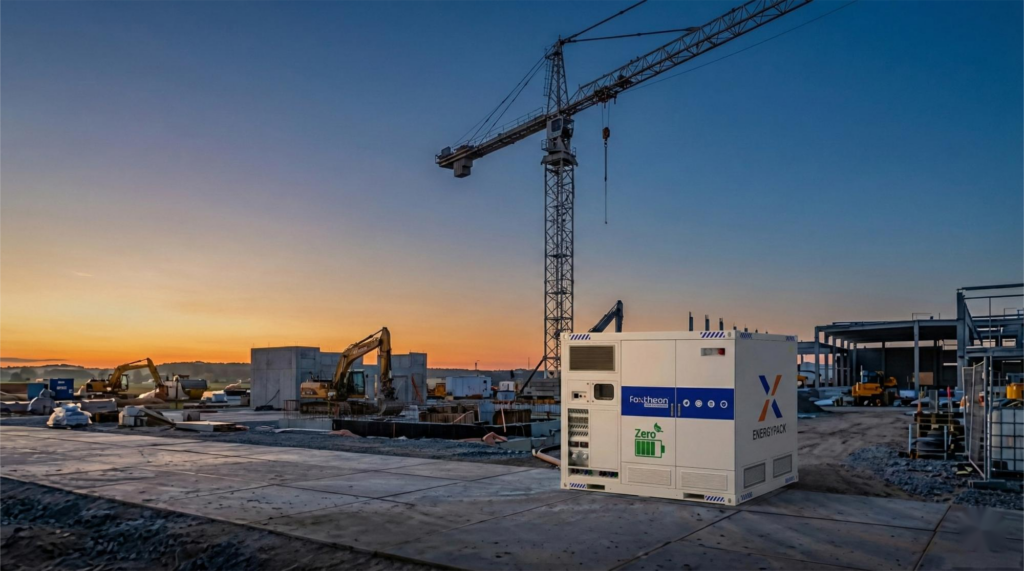
What is Telematics in the Context of Energy Storage?
When most people hear “telematics,” they think of GPS tracking for trucking logistics. However, in the energy sector, the definition goes much deeper. It involves the bidirectional transfer of data between the Battery Energy Storage System (BESS) and a central command center.
It is the nervous system of your energy infrastructure. It captures granular data points—voltage, current, temperature, and State of Charge (SoC)—and sends them to the cloud.
Beyond Basic Monitoring
Standard monitoring might tell you if a system is on or off. Advanced telematics provides a narrative of how the system is behaving. It contextualizes the data. For instance, it doesn’t just report that a battery is hot; it correlates that temperature with the current load and ambient weather conditions.
The Data Architecture
The architecture usually consists of an edge device (IoT gateway) installed on-site. This device communicates with the BMS and inverters. It compresses the data and transmits it via 4G/5G or satellite to a central platform. This ensures that even in remote areas, the telematics for BESS fleet remains active and reliable.
Operational Visibility and Asset Control
For fleet managers, the dashboard is their primary workspace. Having a unified view of assets across different continents or time zones allows for streamlined operations.
Real-Time Status Updates
Waiting for a monthly report to discover a failure is no longer acceptable. Telematics allows for second-by-second updates. If a specific cell module in a unit deviates from the expected voltage, an alert is triggered immediately.
Remote Troubleshooting
Sending a technician to a site is expensive. It involves travel time, truck rolls, and labor costs. High-quality telematics allows engineers to diagnose issues remotely. Often, a system reset or a firmware update can be pushed over the air (OTA) to resolve the glitch without anyone stepping foot on the site.
Why Telematics for BESS Fleet is Essential for ROI
Battery assets represent a significant capital expenditure (CapEx). Protecting that investment requires ensuring the equipment lasts as long as possible while performing at peak efficiency.
Predictive Maintenance
This is the biggest cost-saver. Instead of following a rigid maintenance schedule, operators can rely on condition-based maintenance. Algorithms analyze trends in the telematics data to predict component failures before they happen.
For example, if the internal resistance of a battery rack starts climbing slowly over weeks, the system flags it. You can replace that specific module during a scheduled downtime rather than facing an unexpected outage during peak pricing hours.
Extending Battery Lifespan
Batteries degrade. It is an unavoidable chemical reality. However, how fast they degrade is controllable. By monitoring discharge depth and thermal stress through telematics for BESS fleet systems, operators can adjust usage profiles. keeping the battery within its “sweet spot” extends its cycle life, delaying the expensive need for augmentation or replacement.
Safety and Risk Mitigation
Safety is the non-negotiable aspect of energy storage. With lithium-ion technology, thermal management is critical.
Thermal Runaway Prevention
Thermal runaway often gives warning signs before a fire event occurs. Telematics systems monitor for rapid temperature spikes or gas detection within the container. sophisticated logic can automatically trigger fire suppression systems or disconnect the battery from the grid to isolate the threat.
Regulatory Compliance
Many jurisdictions now require detailed logs of battery performance and safety checks to grant operating permits. Telematics platforms automate this reporting. They create an immutable audit trail that proves the system has been operating within safety parameters, which is often required by insurance providers.
Foxtheon and the Integration of Smart Energy
In the crowded market of energy solutions, the difference often lies in software capabilities. Foxtheon has integrated advanced telemetry into their hybrid energy storage solutions to address these exact needs.
Rather than treating the software as an afterthought, effective providers build the hardware with connectivity in mind. This ensures that the data latency is low and the security protocols are high. When a fleet utilizes a native solution, the handshake between the hardware and the cloud is seamless, reducing the integration headaches often seen with third-party retrofits.
Revenue Generation: VPP and Grid Services
A BESS fleet is not just a backup power source; it is a revenue generator. To participate in energy markets, swift communication is required.
Virtual Power Plants (VPP)
To aggregate hundreds of small batteries into a Virtual Power Plant, you need tight synchronization. The aggregator needs to know exactly how much power is available in the fleet at any given second. Telematics provides this visibility, allowing the aggregator to bid into capacity markets with confidence.
Frequency Regulation
Grid services like frequency regulation require response times in milliseconds. While the local controller handles the immediate response, the telematics system tracks the performance to calculate revenue. It verifies that the service was delivered as promised, ensuring the operator gets paid.

Overcoming Connectivity Challenges
Deploying telematics for BESS fleet solutions is not without technical hurdles. The primary issue is often connectivity in remote locations.
Signal Reliability
Many large-scale BESS projects are located in rural areas near wind or solar farms. Cellular coverage can be spotty. Modern telematics gateways use “store and forward” technology. If the network drops, the device stores the data locally. Once the connection is restored, it uploads the backlog, ensuring no historical data is lost.
Data Security
Connecting critical infrastructure to the internet introduces cyber risk. Robust systems utilize end-to-end encryption. They use VPN tunnels for data transmission and require two-factor authentication for user access. This prevents unauthorized actors from sending control commands to the battery fleet.
The Role of Edge Computing
We are seeing a shift from pure cloud processing to edge computing.
Reducing Latency and Cost
Transmitting every single second of voltage data to the cloud uses massive bandwidth and storage. Edge computing allows the local device to process the raw data. It detects anomalies locally and only sends the “insights” or alerts to the cloud.
This reduces data transmission costs, which can be significant for large fleets using satellite or cellular connections. It also improves reaction speed for critical safety logic.
Financial Analysis: OpEx Reduction
When building the business case for advanced telemetry, look at Operational Expenditure (OpEx).
Without telematics, a fleet of 50 sites might require a team of five full-time engineers driving constantly. With telematics, one engineer can monitor all 50 sites from a desk, dispatching third-party contractors only when a specific part needs replacement.
The reduction in “truck rolls” alone often pays for the telematics subscription within the first year of operation.
Future Trends in BESS Management
The industry is moving toward AI-driven decision-making.
In the near future, the telematics for BESS fleet will not just report problems; it will solve them. We will see self-healing grids where the software automatically reconfigures the parameters of the fleet to compensate for a degrading asset without human intervention.
Furthermore, integration with weather forecasting will become tighter. The system will know a storm is coming and automatically charge the fleet to full capacity to prepare for potential grid outages, all based on predictive data streams.
The hardware of a battery system creates the potential for energy storage, but the software unlocks its value. As portfolios grow larger and more complex, manual monitoring becomes impossible.
Implementing a robust strategy for telematics for BESS fleet management is the only way to ensure safety, maximize battery life, and secure a solid ROI. It turns a liability into an asset.
Whether you are managing a small cluster of commercial units or a utility-scale deployment, visibility is power. Partners like Foxtheon understand this synergy between iron and code, helping operators navigate the complex landscape of modern energy storage with confidence.
Frequently Asked Questions
Q1: What is the main difference between a BMS and Telematics?
A1: The Battery Management System (BMS) is the local hardware/software that protects the battery at the cell level (preventing overcharging, balancing cells). Telematics is the layer above that; it extracts data from the BMS, transmits it to the cloud, and allows for remote monitoring, historical analysis, and fleet-wide management.
Q2: Can telematics work if the BESS is located in an area with no internet coverage?
A2: Yes, but it requires specific hardware. In areas without cellular (4G/5G) coverage, operators typically use satellite modems to transmit data. Additionally, local edge devices usually have internal storage to log data offline (“store and forward”) and upload it once a connection is established or manually retrieved.
Q3: How does telematics improve the safety of a BESS fleet?
A3: It provides real-time alerts for thermal anomalies. By monitoring temperature trends and voltage deviations continuously, the system can detect the early signs of thermal runaway before a fire starts. It also allows operators to initiate emergency shutdowns remotely if an external threat involves the site.
Q4: Is it possible to retrofit telematics onto older BESS assets?
A4: Generally, yes. Most modern BMS units speak standard industrial protocols like Modbus TCP/IP or CAN bus. A third-party IoT gateway can be installed to read these registers and transmit the data to a new cloud platform, bringing legacy assets into a modern dashboard view.
Q5: How much data bandwidth does a typical BESS telematics system consume?
A5: This depends on the polling frequency (how often data is sent). A system sending high-resolution data every second will consume significantly more data than one sending 15-minute intervals. However, modern systems use “report by exception” or edge processing to compress data, keeping monthly usage typically in the range of 100MB to 1GB per site, depending on complexity.