
The landscape of temporary power is undergoing a fundamental structural change. For decades, the construction, events, and utility sectors relied almost exclusively on diesel generators. While reliable, these machines are inefficient at low loads, noisy, and carbon-intensive. As fuel prices rise and emission regulations tighten, a new economic framework has emerged: the BESS rental business model.
This model treats energy storage not as a fixed asset to be purchased, but as a flexible service to be deployed. It allows companies to access advanced Battery Energy Storage Systems (BESS) without the heavy upfront capital expenditure (CapEx). By integrating storage into temporary power fleets, operators can dramatically reduce fuel consumption and improve power quality. Manufacturers like Foxtheon have stepped up to support this transition, providing the ruggedized, mobile hardware required to make this business model viable in harsh environments.
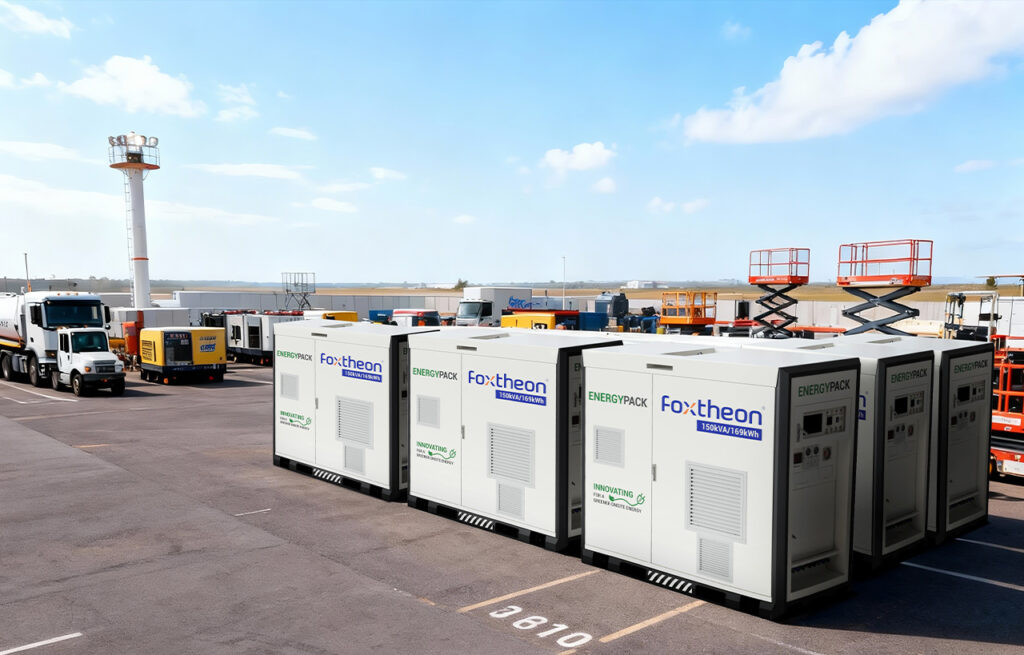
The Shift from CapEx to OpEx in Energy Storage
Historically, adopting new energy technology was risky. Buying a large-scale industrial battery required a massive upfront investment. If a construction company bought a unit, they were stuck with it, regardless of whether their next project required that specific voltage or capacity.
The BESS rental business model solves this liquidity problem. It moves the cost from Capital Expenditure (CapEx) to Operational Expenditure (OpEx). Project managers can now treat power storage exactly like they treat scaffolding or cranes: they pay for it only when they need it.
This shift lowers the barrier to entry. A site manager doesn’t need to convince a CFO to approve a $100,000 purchase. They simply need to approve a weekly rental rate that is often offset entirely by the savings in diesel fuel.
Mitigating Technology Risk
Battery technology evolves rapidly. A unit purchased today might be obsolete in five years. By renting, the end-user transfers the technology risk to the rental provider. The provider maintains the fleet and upgrades components, ensuring the customer always has access to efficient, modern lithium-ion solutions without worrying about asset depreciation or recycling costs.
Mechanics of the BESS Rental Business Model
Understanding how this model functions requires looking at the interplay between the rental provider (the asset owner) and the end-user (the operator).
The Hybrid Setup
Rarely does a BESS rental stand alone. The most common deployment is a hybrid setup. The battery is paired with a traditional diesel generator. The generator runs at full capacity to charge the battery rapidly—its most efficient state—and then shuts down. The BESS then powers the site silently for hours.
This “hybridization” is the economic engine of the rental model. It reduces generator run-time by 60% to 80%, slashing maintenance costs and fuel bills.
Revenue Streams for Rental Companies
For the rental company, the BESS rental business model offers multiple revenue avenues beyond the base rental fee:
Energy Management Services: Charging for the data and reporting provided by smart controllers.
Logistics and Setup: Fees for transporting heavy containerized batteries and integrating them into the site’s microgrid.
Fuel Savings Sharing: Some innovative contracts allow the rental company to take a percentage of the proven fuel savings in exchange for a lower base rental rate.
Key Applications Driving Demand
The demand for rented storage isn’t coming from a single sector. It is a diverse market requirement.
Construction and Infrastructure
Construction sites have highly variable loads. A tower crane might need massive power for 30 seconds to lift a beam, followed by ten minutes of idle time. A generator sized for the peak load is incredibly wasteful during the idle time.
A rented BESS handles the peak (“peak shaving”) and handles low loads like security cameras and lighting at night. This eliminates the need to run a 100kVA generator all night for a 1kW load.
Events and Film Production
The entertainment industry is under pressure to “go green.” Filming locations in city centers often have strict noise ordinances. A BESS unit is silent. Rental companies are seeing a surge in demand from festivals and movie sets that need power without the roar of an engine interrupting the audio recording.
Utility Grid Support
This is a growing niche. During heatwaves or storms, utility companies often rent mobile BESS units to support substations that are near capacity. These units are dropped in place for a season and removed once the grid upgrades are completed.
Financial Breakdown: Costs vs. Savings
To justify the BESS rental business model, the math has to work. Let’s look at the cost structure for a typical project.
The Premium for Batteries
Renting a battery and a smaller generator is generally more expensive upfront than renting a single large generator. The weekly rental rate for the hardware is higher.
The Fuel Offset
The savings come from the fuel bill. If a standard generator burns 100 liters of diesel a day, a hybrid system might burn 30. With diesel prices fluctuating, this saving is substantial.
For a six-month project, the total cost of operation (Rental + Fuel + Maintenance) for the hybrid system is often 20% to 40% lower than the traditional generator setup. This “Total Cost of Ownership” (TCO) calculation is the primary sales tool for rental providers.
Technical Requirements for Rental-Ready BESS
Not all batteries are suitable for the rental market. Equipment in this sector faces abuse. It is dragged onto trucks, dropped by forklifts, and exposed to dust, rain, and snow.
Ruggedized Enclosures
A standard indoor battery cabinet will not survive a construction site. The industry demands containerized solutions with reinforced steel frames. Companies like Foxtheon have focused on this specific aspect, designing units that feature forklift pockets, lifting eyes, and heavy-duty connectors that can withstand frequent plugging and unplugging.
Plug-and-Play Connectivity
Rental equipment is often set up by general technicians, not specialized electrical engineers. The interface must be intuitive. The best units feature external cam-lock connectors and simple touch-screen interfaces that allow the user to select their mode (e.g., “Solar Priority” or “Generator Backup”) without complex programming.
Remote Telemetry
You cannot run a rental business if you don’t know where your assets are. Modern BESS units must have 4G/IoT connectivity. This allows the rental company to monitor state of charge (SoC), health, and location. It also enables remote troubleshooting, which reduces the cost of sending a technician to the site.
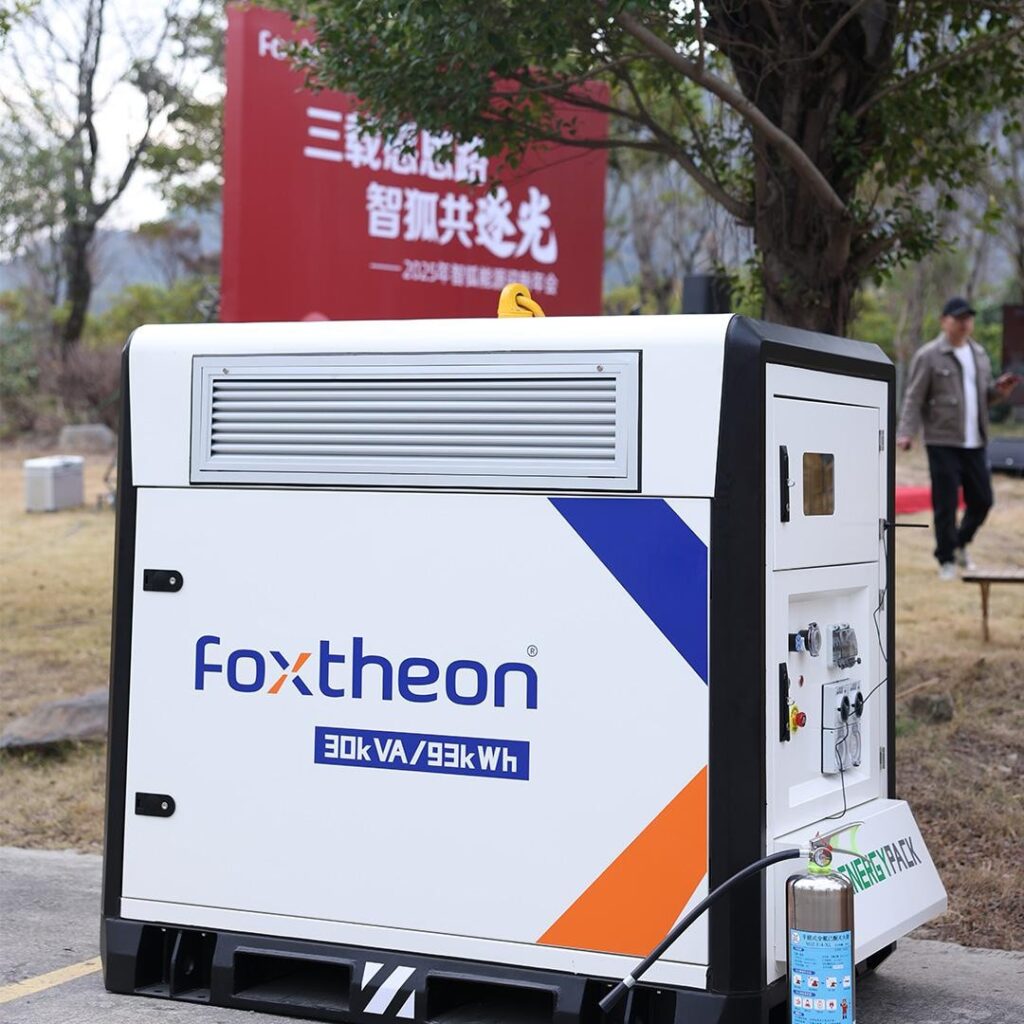
Challenges in the BESS Rental Market
While the model is profitable, it is not without hurdles.
Logistics and Weight
Batteries are heavy. A unit capable of powering a large site might weigh several tons. Transporting these units requires trucks with cranes or specialized flatbeds. This adds to the mobilization cost and logistical complexity compared to lightweight towable generators.
Technical Competence gap
There is a learning curve. Site operators are used to kicking a generator to start it. A BESS is a computer-controlled power electronic device. Rental companies must invest in training their customers to avoid “nuisance trips” or configuration errors.
Safety Concerns
Lithium-ion thermal runaway is a valid concern. Rental providers must ensure their fleet uses safe chemistries, such as Lithium Iron Phosphate (LFP), which is much more stable than the chemistries used in consumer electronics. They must also provide clear safety protocols to the end-user.
Selecting the Right Supplier for a Rental Fleet
For a rental company looking to build a fleet, or a construction firm looking to rent, the choice of manufacturer is critical.
Cycle Life and Warranty
In a rental environment, a battery cycles frequently. You need cells rated for thousands of cycles (typically 6,000+ for LFP). The warranty terms must cover commercial rental use, which some manufacturers exclude.
Integration Capability
The system needs to talk to other machines. Can the BESS automatically start a diesel generator from a different brand? Can it accept input from a temporary solar array?
Foxtheon has gained traction in this space because their systems are designed with this interoperability in mind. Their controllers are agnostic, meaning they can manage power from a variety of sources, making them highly adaptable for a rental fleet that contains mixed equipment.
Future Trends: Energy-as-a-Service
The BESS rental business model is evolving into a broader “Energy-as-a-Service” (EaaS) concept.
In the near future, we will see more decentralized rental fleets acting as Virtual Power Plants (VPP). When a rental unit is sitting in a yard between jobs, it could be plugged into the grid to trade energy, earning revenue for the rental company.
Furthermore, the integration of mobile EV charging is on the horizon. As construction machinery goes electric, the demand for mobile fast-chargers (buffered by batteries) will skyrocket. The rental companies that position themselves with the right hardware today will dominate this new market.
The transition to cleaner, more efficient temporary power is inevitable. The BESS rental business model is the financial mechanism enabling this change. It aligns the economic incentives of reducing fuel costs with the environmental goals of reducing emissions.
For rental companies, it represents a high-growth revenue stream. For end-users, it offers a way to modernize operations without capital risk. By leveraging robust technologies from suppliers like Foxtheon and adopting a data-driven approach to power management, the industry is moving toward a future where silence and efficiency are the standard on every job site.
Frequently Asked Questions (FAQ)
Q1: How does the cost of renting a BESS compare to a standard diesel generator?
A1: The weekly rental rate for a BESS is typically higher than a standalone diesel generator. However, when you factor in the 50-80% reduction in fuel consumption and reduced maintenance costs, the total monthly cost of the BESS hybrid solution is usually lower.
Q2: Can I use a BESS rental unit without a generator?
A2: Yes, provided you have a way to recharge it. This is common for short events (1-4 hours) where the battery is charged off-site and brought in fully charged. Alternatively, if the site has a small grid connection (like a standard wall outlet) or solar panels, the BESS can charge slowly over time and discharge high power when needed.
Q3: Is the BESS rental business model suitable for cold climates?
A3: Yes, but the equipment must be specified correctly. Lithium batteries cannot be charged below freezing temperatures without damage. High-quality rental units are equipped with internal heating systems and insulation to maintain the battery temperature, allowing them to operate in sub-zero environments.
Q4: How long do rental BESS units last before they need to be replaced?
A4: Modern rental units typically use Lithium Iron Phosphate (LFP) chemistry, which offers 4,000 to 6,000 charge cycles. Even with daily cycling, this translates to a lifespan of 7 to 10 years. After this, the batteries usually still hold 80% capacity and can be repurposed for less demanding stationary applications.
Q5: What safety features should I look for in a rental BESS?
A5: Key safety features include a built-in fire suppression system, continuous insulation monitoring, and a Battery Management System (BMS) that automatically disconnects the cells if voltage or temperature limits are exceeded. A physical emergency stop button on the outside of the enclosure is also mandatory for most sites.