
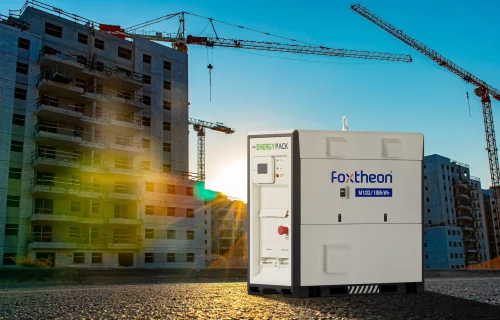
The civil engineering and construction sectors are undergoing a profound structural shift driven by stringent environmental mandates and ambitious corporate sustainability goals. Historically, heavy construction relied entirely on diesel-powered internal combustion engines for both earthmoving machinery and localized power generation. This reliance resulted in massive outputs of Nitrogen Oxides (NOx), fine Particulate Matter (PM2.5), and Carbon Dioxide (CO2). However, as urban centers implement strict Low Emission Zones (LEZs) and carbon pricing mechanisms mature, contractors and project managers are compelled to re-evaluate their operational architectures. Establishing a true zero emission construction site is no longer a theoretical concept but a rigorously enforced standard in pioneering municipal projects across Europe and North America.
Achieving zero localized emissions demands a highly synchronized integration of advanced battery chemistry, high-voltage charging infrastructure, and sophisticated energy management software. This technical analysis explores the foundational technologies, grid constraint solutions, and operational methodologies required to successfully eliminate fossil fuels from heavy construction operations.
The Regulatory and Economic Drivers Mandating Decarbonization
To understand the transition, one must analyze the specific constraints forcing the industry away from traditional diesel. Urban municipalities are targeting construction equipment because it routinely accounts for up to 15% of total localized air pollution in major metropolitan areas. Initiatives like the C40 Cities Clean Construction Declaration require participating cities to drastically reduce carbon outputs from municipal building projects by 2030.
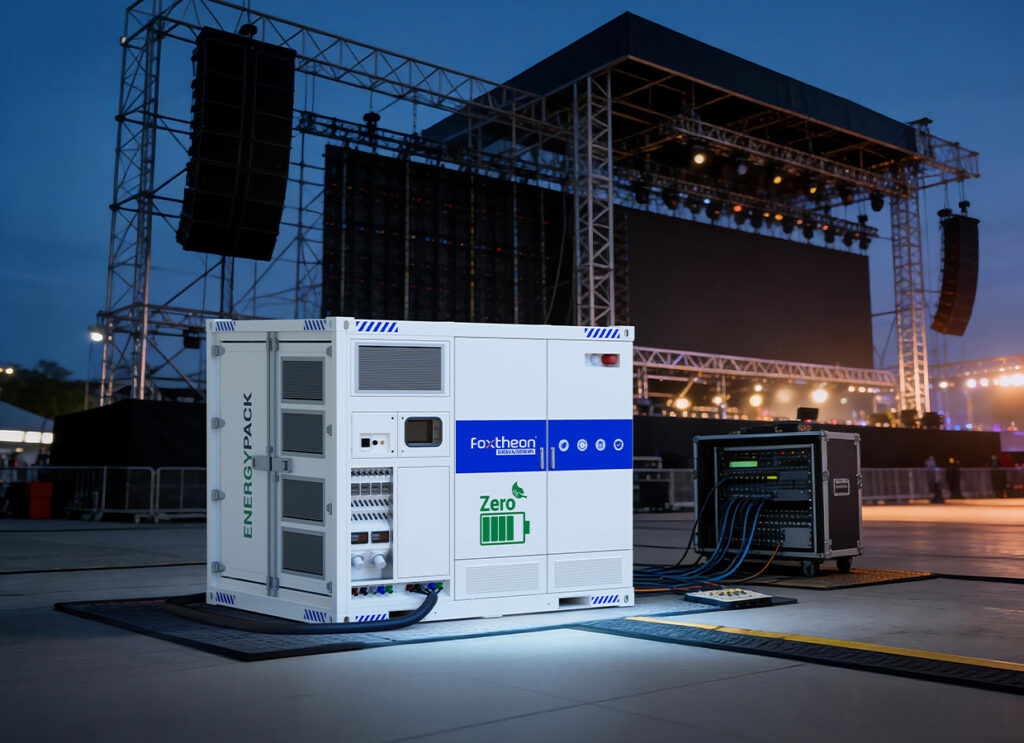
Furthermore, noise pollution regulations restrict the operating hours of traditional diesel equipment. Diesel generators operating at 80-90 decibels (dB) severely limit early morning or late-night operations in residential zones. By transitioning to electric alternatives, contractors reduce acoustic signatures to ambient levels, allowing for extended working hours, accelerated project timelines, and improved site safety due to better operator communication.
Core Technologies Enabling a Zero Emission Construction Site
Eliminating diesel requires a multi-tiered technological approach. It is not merely a matter of swapping an engine for a battery; it involves redesigning the entire energy supply chain of the project location.
Electrified Heavy Machinery
Original Equipment Manufacturers (OEMs) have rapidly scaled the production of Battery Electric Vehicles (BEVs) for construction. Compact excavators, wheel loaders, and site dumpers are fully commercialized. These machines utilize high-voltage Lithium Iron Phosphate (LiFePO4) or Nickel Manganese Cobalt (NMC) battery packs. Electric construction equipment provides instantaneous torque, eliminating the power lag associated with diesel turbochargers. The primary engineering challenge lies in operational duration: a standard 20-ton electric excavator requires a massive battery capacity (often exceeding 300kWh) to sustain an intensive 8-hour working shift.
Advanced Battery Energy Storage Systems (BESS)
To power electrified machinery without grid access, contractors must deploy robust localized energy storage. The diesel generator is directly replaced by a Battery Energy Storage System (BESS). These modular units consist of tightly packed battery cells governed by a Battery Management System (BMS) and paired with industrial-grade inverters that convert Direct Current (DC) from the batteries to Alternating Current (AC) for site distribution.
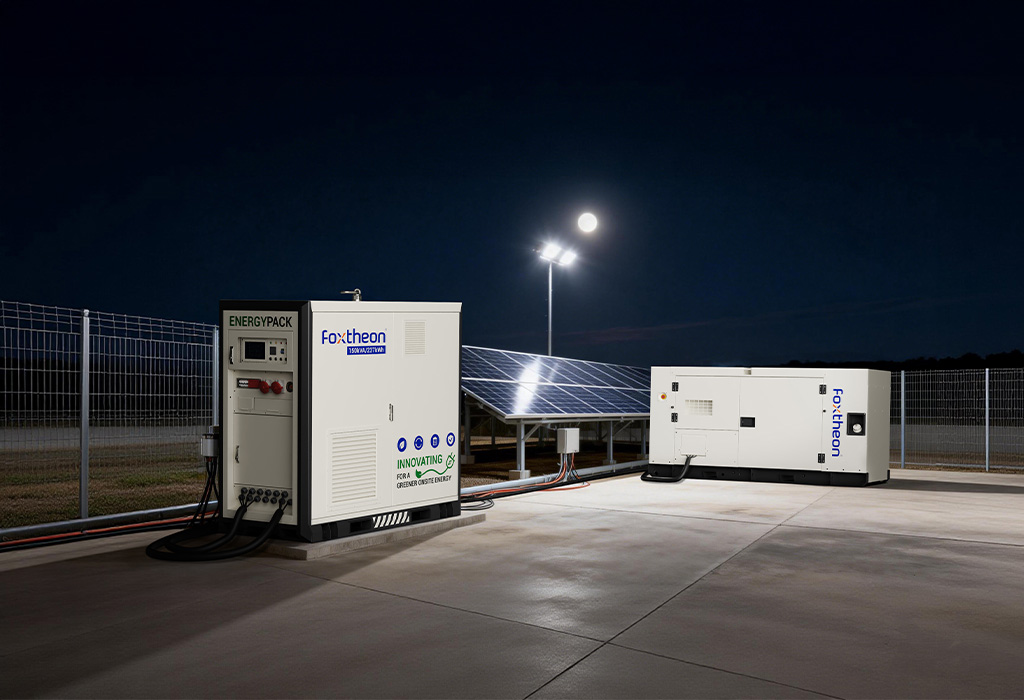
High-density energy storage is the fundamental backbone of any zero emission construction site. Specialized providers like Foxtheon engineer modular BESS units designed specifically for the harsh environmental conditions of active building sites, featuring IP65+ dust and water resistance, advanced liquid thermal management to prevent battery degradation, and reinforced chassis to withstand heavy vibrations.
Smart Microgrids and Dynamic Load Management
A construction site functions as an isolated microgrid. Without an intelligent control layer, simultaneous charging of multiple heavy electric machines would cause catastrophic voltage drops or trip localized circuit breakers. An Energy Management System (EMS) monitors the State of Charge (SoC) of every connected device. It utilizes dynamic load balancing to distribute power algorithmically, prioritizing the charging of machines that are required for the earliest shifts while throttling power to lower-priority loads, such as site cabin heating.
Overcoming Grid Constraints and Charging Infrastructure Bottlenecks
The most significant operational hurdle in heavy electrification is charging infrastructure. Urban construction sites rarely possess a robust, high-capacity grid connection (from the Distribution Network Operator, or DNO) during the early phases of groundworks. A site might only have a 50kVA temporary connection, but rapidly charging two electric excavators requires instantaneous power exceeding 300kVA.
To solve this, site engineers employ a technique known as “peak shaving” via BESS integration. The battery storage unit acts as a high-capacity buffer. It draws power from the weak grid connection continuously at a low rate (e.g., 40kVA) over a 24-hour period, storing the energy. When the electric heavy machinery connects for high-speed charging, the BESS discharges rapidly, providing the necessary 300kVA output without overloading the local grid. This specific deployment of energy buffering is what makes a localized zero emission construction site technically feasible even in infrastructure-poor locations.
For entirely off-grid locations, such as remote highway expansions or tunneling projects, power must be brought to the site. This is achieved through swappable battery modules or mobile BESS units transported via electric trucks from regional charging hubs. Furthermore, integrating temporary solar photovoltaic (PV) arrays on top of site cabins and acoustic barriers provides supplementary trickle-charging capability, optimizing the overall energy yield of the site.
Bridging the Gap: Hybridization and Renewable Fuels
While the goal is a fully battery-electric ecosystem, specific heavy-duty applications—such as 100-ton crawler cranes or continuous concrete pumping operations—currently face technological limitations regarding battery density. In these high-demand scenarios, contractors adopt transitional hybrid strategies.
By coupling a downsized internal combustion engine with a high-capacity BESS, the engine only runs to maintain the battery’s state of charge, operating within its most efficient load band. To maintain compliance with zero-carbon mandates, contractors replace standard fossil diesel with Hydrotreated Vegetable Oil (HVO). HVO is a synthetic, second-generation renewable fuel that functions as a direct drop-in replacement, cutting net lifecycle CO2 emissions by up to 90%. While not strictly zero-tailpipe-emission, pairing HVO with an intelligent microgrid architecture from industry leaders like Foxtheon represents the most pragmatic stepping stone toward total electrification.
Financial Feasibility: Analyzing CAPEX vs OPEX
Transitioning operational power hardware requires an objective analysis of Capital Expenditure (CAPEX) versus Operational Expenditure (OPEX). Electric heavy machinery and large-scale battery storage require a higher initial capital outlay compared to purchasing standard diesel equipment.
However, the total cost of ownership (TCO) rapidly balances out over a 3-to-5-year lifecycle. The OPEX reductions are profound, categorized into three distinct areas:
- Energy Arbitrage: Charging a BESS from the grid during off-peak night tariffs is substantially cheaper per kilowatt-hour (kWh) than purchasing, transporting, and storing volatile liquid diesel.
- Maintenance Reduction: Electric drivetrains possess a fraction of the moving parts found in internal combustion engines. They require no oil changes, exhaust fluid (DEF), fuel filter replacements, or complex transmission overhauls, slashing mechanic labor costs and machine downtime.
- Regulatory Savings: Operating a fully zero emission construction site frequently qualifies contractors for government subsidies, tax rebates, and exemptions from urban carbon emission penalties, directly improving project profit margins.
Telematics and Data-Driven Optimization
A modern digitized site relies heavily on data telemetry. Every asset on a zero-carbon site—from the electric wheel loader to the modular battery storage—is equipped with IoT (Internet of Things) sensors. These sensors feed real-time operational data back to central command dashboards.
Project managers analyze load profiles to identify energy wastage. For example, if telematics reveal that an electric excavator spends 30% of its shift idling, the EMS can re-calculate the exact battery capacity required for the next day, preventing the over-deployment of mobile charging assets. This high level of data transparency ensures that the energy architecture is precisely scaled to the daily workflow, maximizing efficiency and minimizing unnecessary energy degradation.
The elimination of fossil fuels from civil engineering workflows represents one of the most significant industrial advancements of the 21st century. The implementation of a zero emission construction site requires rigorous planning, deep knowledge of electrical microgrid topologies, and a willingness to invest in advanced battery storage technologies.
By leveraging high-capacity BESS systems, dynamic load-balancing software, and fully electrified heavy machinery, contractors can eliminate local air pollution, severely reduce acoustic disturbance, and drive down long-term operational costs. Partnering with dedicated energy storage innovators like Foxtheon provides the heavy-duty hardware and smart management systems required to execute this transition flawlessly. Ultimately, mastering the electrified construction site is not just an environmental obligation; it is a fundamental business strategy for securing future municipal contracts and maintaining a competitive edge in a rapidly decarbonizing global economy.
Frequently Asked Questions (FAQ)
Q1: What exactly qualifies a project as a zero emission construction site?
A1: A zero emission construction site is strictly defined as an operational area where no fossil fuels are combusted locally. This means all heavy machinery, tools, and site welfare facilities are powered entirely by battery electric systems, grid connections, or local renewable sources (like solar), resulting in zero tailpipe emissions of CO2, NOx, or particulate matter.
Q2: How do you charge heavy electric machinery if the site has no grid connection?
A2: In off-grid scenarios, project managers deploy mobile Battery Energy Storage Systems (BESS). These high-capacity batteries are charged off-site at grid-connected depots and transported to the construction location. Alternatively, swappable battery modules are used, where depleted batteries are physically removed from the excavator and replaced with fully charged units delivered by electric transport.
Q3: Does electric construction equipment offer the same hydraulic power as diesel machinery?
A3: Yes, and often it performs better. Electric motors deliver instantaneous torque, providing immediate power to the hydraulic pumps without the RPM ramp-up time required by diesel engines. This results in highly responsive, powerful, and precise earthmoving capabilities.
Q4: What is “peak shaving” and why is it used on construction sites?
A4: Peak shaving is an energy management technique used when a site has a weak grid connection. Instead of drawing massive, instantaneous power directly from the grid to charge a machine (which would cause a system overload), a BESS slowly draws power from the grid over time. When a machine needs to fast-charge, the BESS discharges its stored energy, satisfying the high power demand without stressing the local utility infrastructure.
Q5: How do freezing temperatures affect battery performance on a construction site?
A5: Cold weather increases the internal resistance of lithium-ion cells, which can reduce discharging capacity and slow down charging times. To counter this, industrial-grade BESS units and electric heavy machines utilize advanced liquid thermal management systems. These systems actively heat the battery pack to maintain an optimal internal temperature, ensuring consistent performance regardless of external weather conditions.