
The global transition toward renewable energy has placed battery energy storage systems (BESS) at the heart of the power revolution. As these systems grow more complex, the need for reliable, real-time data communication becomes non-negotiable. Companies like Foxtheon are currently at the forefront of this shift, integrating sophisticated hardware with advanced communication protocols to ensure seamless energy management.
Among the various protocols available today, one has emerged as the clear frontrunner for industrial and residential applications. Using MQTT for energy storage monitoring allows operators to track performance, health, and efficiency across distributed networks with unprecedented precision.
In this article, we will explore why this protocol is replacing traditional methods and how it provides the backbone for the next generation of smart energy solutions.

The Evolution of Communication in Energy Storage
For decades, industrial energy systems relied heavily on legacy protocols like Modbus or CAN bus. While effective for local, wired connections within a single container, these protocols often struggle when scaled to the cloud or across remote geographic locations.
The modern energy landscape is no longer centralized. We are seeing a rise in distributed energy resources (DERs) where thousands of small and medium-scale batteries need to talk to a central controller simultaneously. This is where the lightweight nature of the Message Queuing Telemetry Transport (MQTT) protocol changes the game.
By adopting MQTT for energy storage monitoring, developers can bypass the limitations of older polling-based systems. Instead of a server constantly asking a battery for its status, the battery simply “publishes” its data whenever a change occurs.
Real-Time Data and the Publish-Subscribe Model
The core strength of MQTT lies in its publish-subscribe (pub/sub) architecture. In a standard energy storage setup, the battery management system (BMS) acts as a publisher. It sends out critical metrics—such as State of Charge (SoC), State of Health (SoH), temperature, and voltage—to a central broker.
Any authorized application, whether it is a mobile app for a homeowner or a massive dashboard for a utility provider, can subscribe to these specific data topics. This decoupled nature means that the sender and receiver do not need to be connected at the same time, which is vital for maintaining data integrity in areas with unstable internet.
For a high-performance system, such as those developed by Foxtheon, this means that millisecond-level updates are possible without overloading the network. This real-time visibility is essential for frequency regulation and peak shaving, where every second counts.
Efficiency in Low-Bandwidth Environments
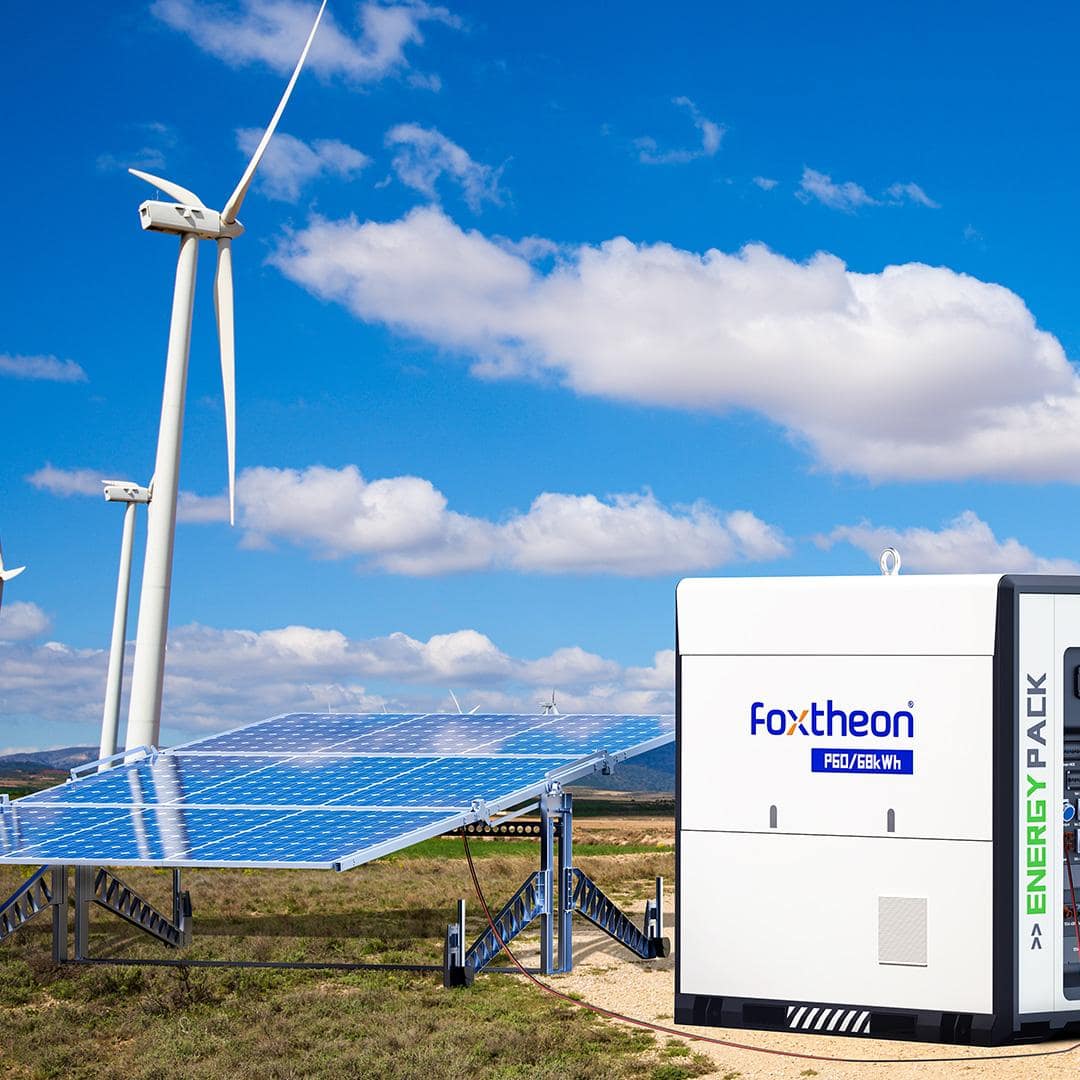
Many large-scale energy storage projects are located in remote areas—think solar farms in deserts or wind farms on high plains. In these environments, cellular connectivity is often the only option, and data costs can add up quickly.
MQTT for energy storage monitoring is designed specifically for these constraints. It has an extremely small packet overhead compared to HTTP. By minimizing the amount of data transmitted, it reduces power consumption of the communication hardware itself and significantly lowers operational costs associated with data plans.
This efficiency does not come at the cost of functionality. The protocol includes features like “Keep Alive” messages and “Last Will and Testament,” which notify the system immediately if a device goes offline. This ensures that operators are never left in the dark regarding the status of their assets.
Enhancing Security in Smart Energy Solutions
Security is a primary concern in the international energy sector. A breach in an energy storage system could lead to grid instability or physical damage to the batteries. When implementing MQTT for energy storage monitoring, security is handled through multiple layers.
Most modern implementations use TLS (Transport Layer Security) to encrypt data in transit. Furthermore, the use of client certificates and robust authentication ensures that only verified devices can publish data to the broker. Because the devices “push” data out rather than having open ports for “pulling” data in, the attack surface is significantly reduced.
Scalability: From Residential to Utility Scale
One of the biggest challenges in energy management is scaling. A system that works for one home might fail when managing a fleet of ten thousand units. However, MQTT is built for massive scale. It is the same technology used by major social media platforms and messaging apps to handle millions of concurrent connections.
In the context of energy, this means a service provider can start with a few pilot sites and grow to a national network without changing their underlying communication architecture. Foxtheon leverages this scalability to provide flexible solutions that cater to both individual users and large-scale industrial clients, ensuring that as the energy demand grows, the monitoring system remains stable.
Improving Battery Longevity through Granular Monitoring
The lifespan of a lithium-ion battery is heavily dependent on how it is treated. Overcharging, deep discharging, and operating in extreme temperatures all lead to premature degradation. Detailed monitoring is the only way to prevent these issues.
By using MQTT for energy storage monitoring, operators receive a constant stream of high-resolution data. This allows for the implementation of predictive maintenance algorithms. Instead of waiting for a battery to fail, the system can identify a single cell that is underperforming and trigger a maintenance alert.
This proactive approach saves millions in replacement costs over the lifetime of a project. It also ensures that the energy storage system provides the maximum possible Return on Investment (ROI) for the owner.
Interoperability and the Future of Energy
The energy grid of the future will be a mix of different brands and technologies. Interoperability is the key to making this work. Because MQTT is an open standard, it allows different components—inverters, batteries, and meters—to communicate in a common language.
This open-source nature fosters innovation. Developers can use various off-the-shelf tools to visualize data or integrate it into existing Enterprise Resource Planning (ERP) systems. It removes the “vendor lock-in” that has plagued the industrial sector for years, giving consumers and grid operators more freedom to choose the best hardware for their needs.
Setting the Standard for Energy Intelligence
As we move toward a decentralized and digitized grid, the importance of robust communication cannot be overstated. The transition to MQTT for energy storage monitoring represents a significant leap forward in how we manage and protect our power resources. It offers the perfect balance of speed, efficiency, and security required for the modern era.
By prioritizing these advanced communication standards, companies like Foxtheon are not just selling batteries; they are providing the intelligence needed to run a smarter world. Whether you are managing a small home setup or a massive utility-scale project, the right monitoring protocol is the foundation of your success.
FAQ: Common Questions about MQTT in Energy Storage
Q1: Why is MQTT preferred over HTTP for energy monitoring?
A1: HTTP is a “request-response” protocol, which creates significant overhead because the connection must be re-established for every data transmission. MQTT uses a “publish-subscribe” model with a much smaller header, making it faster, more efficient for battery-powered devices, and better at handling thousands of simultaneous connections.
Q2: Can MQTT work with existing Modbus-based hardware?
A2: Yes. Most modern energy storage systems use an “Edge Gateway.” This gateway talks to the local battery hardware via Modbus or CAN bus and then translates that data into MQTT packets to be sent to the cloud. This allows legacy hardware to benefit from modern cloud monitoring.
Q3: How does “Quality of Service” (QoS) work in energy storage?
A3: MQTT offers three QoS levels. For energy monitoring, QoS 1 (At least once) is often used for critical alerts to ensure the message reaches the broker. For standard telemetry data like temperature, QoS 0 (At most once) might be used to save bandwidth, as a single missed data point won’t compromise the system.
Q4: Is MQTT reliable if the internet connection is intermittent?
A4: Highly reliable. MQTT features a “Persistent Session” capability. If a battery system loses its connection, the broker can store messages and deliver them as soon as the connection is restored. Additionally, the “Last Will” feature alerts the operator immediately if a device goes offline unexpectedly.
Q5: Does using MQTT for energy storage monitoring affect battery life?
A5: It actually helps extend battery life. Because the protocol is so lightweight, the communication module consumes very little power. More importantly, the high-quality data it provides allows for better thermal management and charging cycles, which are the primary factors in battery longevity.