
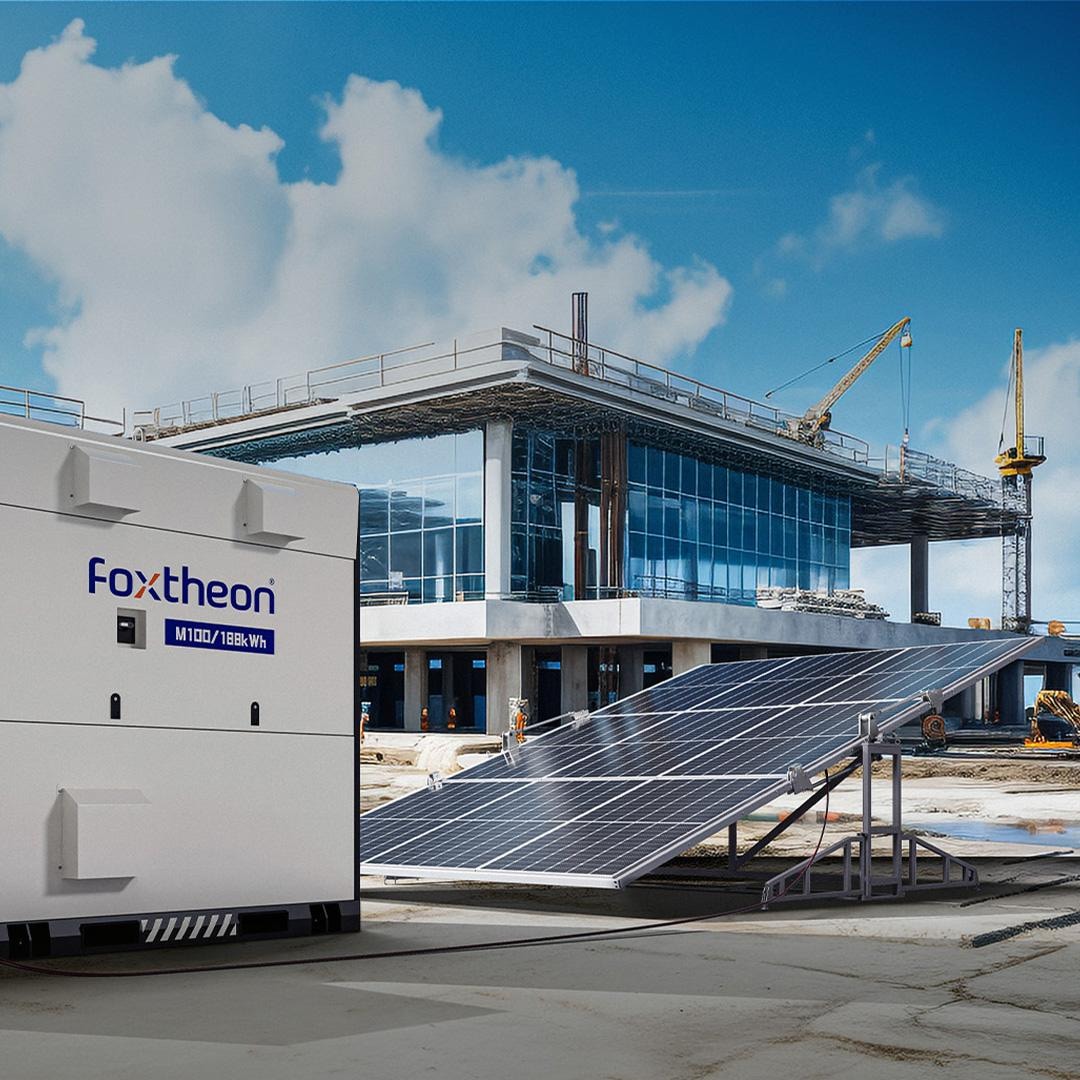
The construction and events industries are undergoing a quiet revolution. For decades, the sound of a diesel engine humming in the background was the heartbeat of any job site. Today, that sound is disappearing. As strict carbon regulations take hold across major cities in 2025, the demand for cleaner, quieter, and smarter energy is reshaping the equipment hire landscape.
This shift has given rise to the zero emission power rental sector. It is no longer just a niche for eco-conscious music festivals; it is a fundamental operational requirement for urban construction, film production, and grid-constrained projects.
Companies are realizing that going green does not mean sacrificing reliability. With advanced manufacturing from brands like Foxtheon entering the market, rental fleets now have access to robust Battery Energy Storage Systems (BESS) and hybrid units that rival traditional power sources in performance while eliminating tailpipe emissions.
The Business Case for Zero Emission Power Rental
Contractors often hesitate to switch technologies due to perceived costs. However, the financial landscape of 2025 looks very different from five years ago. Diesel prices remain volatile, and carbon taxes are increasing.
When you analyze the Total Cost of Operation (TCO) for a project, zero emission power rental often comes out ahead. While the daily rental rate for a battery unit might be higher than a standard diesel generator, the operational costs are virtually zero. There is no fuel to buy, no filters to change, and no wet-stacking issues to manage during low loads.
Solving the Low Load Problem
Traditional generators are notoriously inefficient at low loads. Running a 100kVA generator to power a few lights and a laptop at night wastes fuel and damages the engine.
A battery rental unit handles these low loads perfectly. It expends energy only when needed. For site managers, this means the meter stops spinning when the tools stop working. This efficiency is the primary driver for the adoption of clean energy hire.
Understanding the Technology Behind the Rental
To make an informed decision, you need to understand what you are hiring. The market is dominated by Battery Energy Storage Systems (BESS), but hydrogen is also making an appearance.
Battery Energy Storage Systems (BESS)
These are the workhorses of the modern fleet. They range from small, portable 5kWh units to containerized megawatt-scale systems. Most modern units use Lithium Iron Phosphate (LFP) chemistry, which is safer and has a longer cycle life than older battery types.
They are silent, emit no fumes, and provide instant power. In a rental scenario, they are often paired with a small diesel generator for backup (a hybrid setup) or charged via the grid during off-peak hours.
Hydrogen Fuel Cells
For projects requiring longer runtimes without grid access, hydrogen fuel cells are an option. They generate electricity through a chemical reaction between hydrogen and oxygen, emitting only water vapor. While the logistics of hydrogen fuel delivery are still developing, this sector is growing rapidly for specific off-grid applications.
Regulatory Pressures Driving Zero Emission Power Rental
Why is the market surging now? The answer lies in legislation.
Major metropolitan areas globally have implemented “Low Emission Zones” or “Zero Emission Construction Sites.” In these zones, burning diesel is either banned or heavily taxed. If a construction company wants to bid on a municipal project in a city center, they often must prove they can meet strict emission standards.
Utilizing zero emission power rental solutions is the fastest way to achieve compliance. It allows companies to bid on lucrative government contracts without the capital expenditure of buying a brand-new electric fleet. They can simply rent the compliance they need for the duration of the project.
Intelligent Energy Solutions and Remote Monitoring
The hardware is only half the story. The “intelligent” part of intelligent energy solutions comes from software. Modern battery units are essentially computers that store energy.
Leading manufacturers like Foxtheon have integrated sophisticated Energy Management Systems (EMS) into their units. When you rent these modern systems, you are not just getting a battery; you are getting data.
The Value of Data
Project managers can log in to a portal and see exactly how much power is being drawn, what the peak times are, and how much CO2 has been saved. This data is crucial for ESG (Environmental, Social, and Governance) reporting.
Furthermore, intelligent monitoring allows for remote troubleshooting. Rental companies can diagnose issues without sending a technician to the site, drastically reducing downtime.
Integrating Zero Emission Power Rental into Hybrid Microgrids
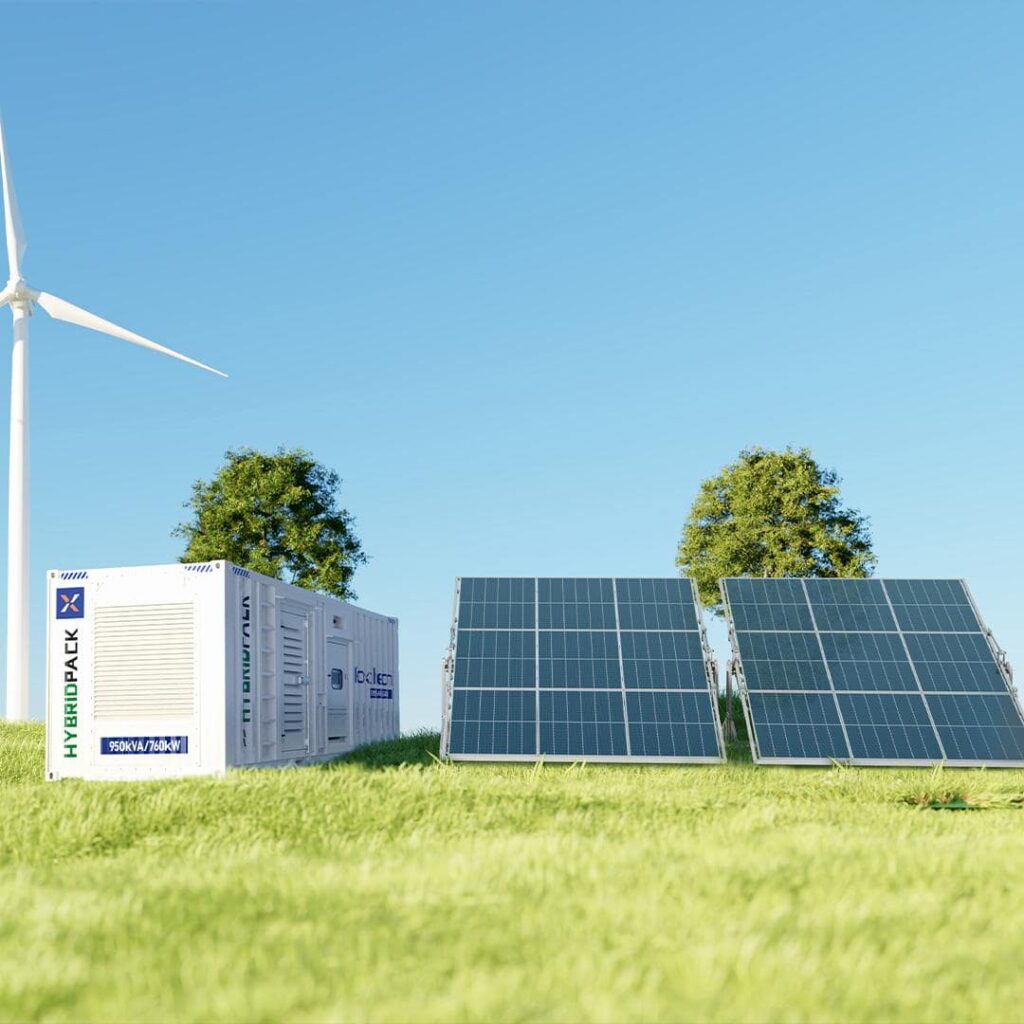
One of the most effective ways to utilize this technology is not to replace the generator entirely, but to support it. This is known as a hybrid microgrid.
In this setup, a diesel generator charges the battery unit at its optimal, most efficient load. Once the battery is full, the generator turns off. The site runs on pure battery power for the majority of the day.
Massive Fuel Reductions
This method can reduce generator run time by up to 80%. A generator that used to run 24 hours a day might now only run for 4 hours. This slashes fuel bills and extends the maintenance intervals of the diesel unit.
For rental businesses, offering a “hybrid package” (a generator plus a battery unit) is a high-value proposition. It solves the range anxiety of the client while delivering the benefits of zero emission power rental for the majority of the operating cycle.
Logistics and Deployment Challenges
Moving batteries is different from moving diesel engines. Batteries are dense and heavy. A 300kWh battery unit is significantly heavier than a 100kVA generator with an empty tank.
Transport Considerations
Rental operators must ensure their trucks and cranes are rated for the weight. Additionally, placement on site matters. Unlike diesel units which need ventilation for exhaust, battery units can be placed indoors or in enclosed spaces (safety codes permitting), offering more flexibility in tight urban job sites.
Charging Infrastructure
The first question a client will ask is, “How do I charge it?” If there is a weak grid connection on site, the battery can trickle charge overnight and discharge at high power during the day. This “peak shaving” capability allows sites with poor grid connections to run heavy machinery that the grid alone could not support.
Selecting the Right Equipment for Your Needs
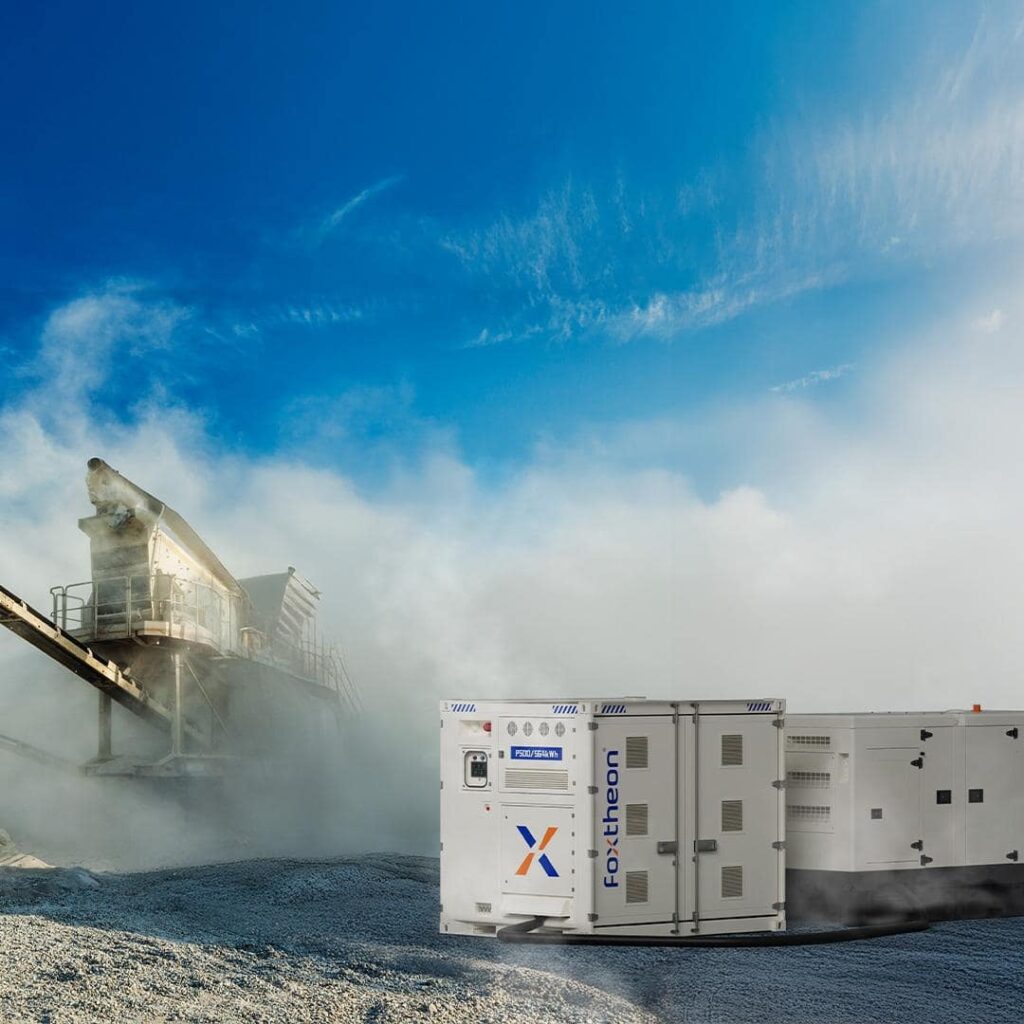
Not all batteries are created equal. When sourcing a zero emission power rental, look for ruggedness. Construction sites are dusty, wet, and rough environments.
You need equipment with high IP ratings (Ingress Protection) and robust steel enclosures. The internal climate control of the battery is also critical. Batteries hate extreme heat and extreme cold. Top-tier units utilize liquid cooling systems to keep the cells at an optimal temperature, ensuring consistent performance regardless of the weather.
This is where brand selection matters. Equipment from specialized manufacturers like Foxtheon is designed to withstand these harsh conditions while maintaining intelligent control over the power flow. Their focus on integrating storage with smart management systems makes their units particularly resilient in rental applications.
The Future of the Rental Market
As we look toward 2030, the rental yard will look very different. The rows of diesel engines will be replaced by stacks of modular battery packs.
We will see increased standardization in charging interfaces, making it easier to link different units together. We will also see “Energy as a Service” models, where clients pay for the kWh consumed rather than a flat daily rate for the iron.
The companies that succeed will be those that master the mix of logistics and software. They will not just be renting boxes; they will be energy consultants, helping clients optimize their power usage to save money and the planet.
FAQ: Frequently Asked Questions
Q1: What exactly is included in a zero emission power rental?
A1: Typically, this refers to renting Battery Energy Storage Systems (BESS). These units store electricity from the grid or renewable sources and release it silently. Some rentals may also include hydrogen fuel cells or mobile solar arrays, depending on the supplier’s inventory.
Q2: How long can a battery unit power my site?
A2: This depends entirely on your load (how much power you draw) and the capacity of the battery (kWh). A small office cabin might run for days on a medium-sized battery, while a tower crane might drain it in a few hours. A rental provider will perform a load calculation to recommend the right size.
Q3: Is it difficult to transport these units?
A3: It requires planning. Battery units are heavy due to the density of lithium cells. However, most rental-spec units are built into standard shipping container sizes (10ft, 20ft) or mounted on trailers, making them compatible with standard logistics equipment like flatbeds and forklifts.
Q4: Can I use zero emission units if I don’t have a grid connection?
A4: Yes, but you will need a generation source to recharge them. This is often done using a hybrid approach: a small diesel generator charges the battery efficiently, and the battery powers the site. You still drastically reduce emissions compared to running a generator 24/7. Alternatively, solar frames can be used for recharging in sunny locations.
Q5: Is this technology safe for crowded events?
A5: Yes, modern rental batteries use LFP (Lithium Iron Phosphate) chemistry, which is very stable and resistant to thermal runaway. They are encased in heavy-duty steel containers with built-in fire suppression and cooling systems, making them safer than storing large tanks of flammable diesel fuel at a crowded event.
The transition away from fossil fuels is gathering pace, and the equipment rental industry is at the forefront of this change. Adopting zero emission power rental strategies is no longer just an environmental decision; it is a smart commercial move. It opens doors to regulated urban projects, reduces fuel expenditures, and improves the working environment through noise reduction.
By leveraging intelligent energy solutions, businesses can ensure they are not left behind as the grid evolves. Whether you are a construction manager or an event planner, the technology is ready. With reliable manufacturing partners like Foxtheon providing the backbone for these green fleets, the power to work cleanly and efficiently is readily available. The future of rental power is silent, smart, and emission-free.