
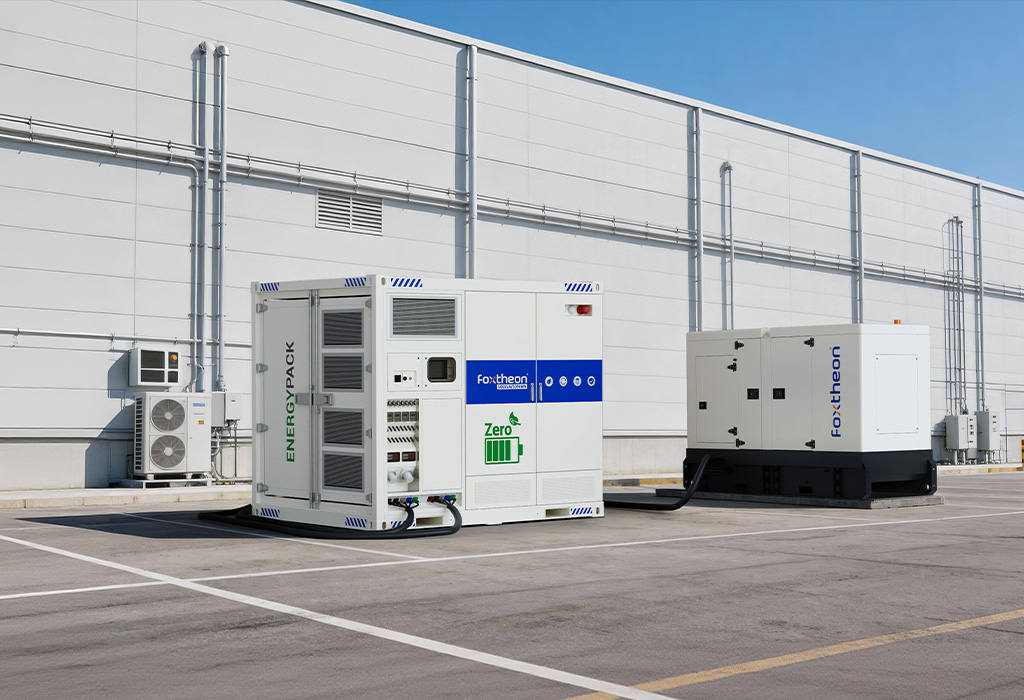
Energy costs continue to rise sharply across the globe. Commercial facilities face constant pressure to find reliable smart energy solutions to protect their profit margins. Many operators now turn toward renewable power sources to secure their operational future. A hybrid Battery Energy Storage System combines multiple energy generators like solar panels and wind turbines with advanced storage technology. This specific setup provides highly consistent and clean power to heavy industrial sites.
However, financial managers and site owners always ask one critical question before they approve large capital investments. They want to know the exact payback period hybrid BESS installations require to become profitable. Understanding this vital financial metric helps companies justify the high initial capital expenditure to their shareholders. It also clarifies the long-term operational savings they can expect over the next decade.
Innovative manufacturers like Foxtheon provide scalable hardware and software designed to accelerate this exact return on investment. Accurate baseline measurements and strategic daily deployment remain crucial for commercial success. Let us carefully examine how project developers can measure, analyze, and dramatically shorten this financial recovery timeframe.

Core Factors Influencing the Payback Period Hybrid BESS Systems Offer
Every large energy storage project relies on several key financial pillars. Recognizing these variables helps stakeholders build highly accurate financial forecasts before breaking ground.
Initial Capital Expenditures (CAPEX)
Every infrastructure project begins with heavy upfront equipment costs. Project owners must purchase battery racks, bi-directional inverters, and sophisticated energy management software. They also need essential balance of plant equipment to ensure safe daily operations.
Installation labor, specialized engineering, and local grid connection fees add significantly to this total cost. You must account for all physical hardware and human labor required to flip the switch successfully.
Consider these typical initial expenses:
High-capacity battery cells and structural modules
Power conversion systems (PCS) and commercial transformers
Extensive site preparation and civil engineering work
Local government permits, taxes, and utility interconnection fees
Lowering these initial procurement costs directly reduces the time required to break even on your commercial investment.
Operational Savings and Grid Revenue
Hybrid energy platforms generate immense financial value through multiple overlapping revenue streams. They store inexpensive electricity during off-peak night hours and discharge that same power when grid prices spike during the day.
This simple automated time-shifting process cuts down monthly utility bills drastically. Furthermore, advanced hardware configurations can sell excess renewable power back to the regional grid operator for a steady profit.
Some systems even provide critical frequency regulation services to local utility companies.
Significant peak demand charge reduction
Profitable time-of-use (TOU) energy arbitrage
Lucrative ancillary grid stabilization services
Generating consistent monthly operational savings serves as the primary engine that drives financial recovery.
Government Grants and Tax Incentives
Policymakers worldwide actively encourage corporate renewable energy adoption. State and federal governments currently offer substantial tax credits, accelerated asset depreciation, and direct cash grants for qualifying storage projects.
These powerful financial incentives offset a massive portion of the initial CAPEX. Smart financial planners always hunt for local state subsidies before finalizing their corporate infrastructure budgets.
Taking full advantage of these available programs drastically cuts down the payback period hybrid BESS developers calculate during the planning phase.
Step-by-Step Guide to Financial Calculations
Strict mathematical models dictate the ultimate success or failure of commercial energy installations. Investors rely on precise formulas to approve multimillion-dollar budgets.
The Simple Return Formula
Financial analysts often use a straightforward mathematical formula for quick preliminary project assessments. You simply divide the total initial project investment by the projected annual cash flow savings.
For example, consider a $200,000 commercial system that generates $40,000 in annual utility savings. This specific installation takes exactly five years to pay for itself under ideal operating conditions.
This basic calculation provides a highly helpful rough estimate. However, it completely ignores complex variables like inflation rates, annual maintenance costs, and gradual equipment degradation. A precise commercial analysis requires a much more detailed financial model.
Discounted Cash Flow (DCF) Analysis
Smart energy solution providers always look deeper into the mathematical performance data. They apply the strict Discounted Cash Flow method to evaluate long-term corporate profitability accurately.
This advanced approach accounts for the fundamental time value of money. A single dollar saved by your business today holds significantly more purchasing power than a dollar saved ten years from now.
Using DCF provides a highly realistic view of the overall investment timeline. Reputable companies like Foxtheon often assist their clients by providing highly detailed technical performance data. These accurate technical specifications allow project developers to build robust, bankable financial models.
Proven Strategies to Accelerate ROI
No successful business wants to wait a full decade to see a return on their infrastructure investment. Active management and strategic hardware usage speed up the financial recovery process significantly.
Mastering Peak Shaving Techniques
Commercial and heavy industrial facilities pay hefty demand charges every single month. Utility companies base these punitive fees on the highest single power draw recorded during a billing cycle.
A smart commercial battery discharges stored energy during these specific peak moments. This automated digital action flattens the facility’s overall grid load profile seamlessly. Consequently, the business completely avoids those steep utility demand penalties.
Maximizing your automated peak shaving capabilities remains the absolute fastest way to accelerate your return on investment.
Identify the exact facility peak consumption times
Program the internal software to discharge power automatically
Monitor seasonal utility rate schedule changes closely
Leveraging Solar Plus Storage Synergies
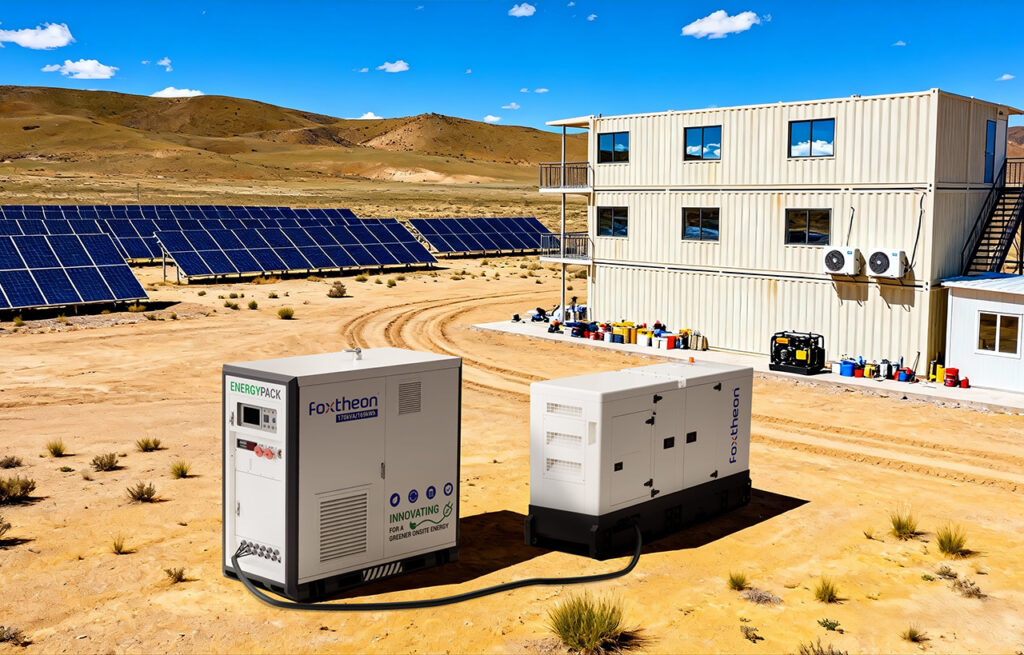
Pairing an industrial battery system with massive solar arrays creates a highly efficient financial engine. Solar panels generate completely free electrical power during the brightest daylight hours.
The connected battery system captures and stores this excess solar energy instead of sending it back to the utility grid for pennies. The facility then consumes this free stored energy after the sun goes down or during overcast weather.
This powerful hardware synergy dramatically improves the payback period hybrid BESS owners expect to see on their balance sheets.
Real-World Variables That Alter Financial Projections
Paper calculations often differ slightly from physical operational reality. Several external factors can positively or negatively influence your final commercial financial outcome.
Annual Battery Degradation Rates
All modern commercial lithium-ion batteries lose a fraction of their total storage capacity over time. Frequent deep power discharges and harsh outdoor climates accelerate this inevitable internal wear and tear.
A physically degraded battery simply stores less electrical energy. This means it generates slightly fewer financial savings in the later years of its operational lifespan. You absolutely must factor this continuous annual degradation into your long-term financial models.
High-quality thermal management systems slow down this internal aging process significantly.
Maintain optimal environmental operating temperatures
Avoid pushing the system to a 100% depth of discharge
Follow the strict manufacturer preventative maintenance schedules
Unpredictable Energy Market Volatility
Global electricity prices fluctuate constantly based on massive external pressures. Geopolitical events, fossil fuel shortages, and extreme weather patterns drive local utility rates up or down without any warning.
Rising regional grid prices actually improve your overall return on investment. The clean energy you generate locally and store internally suddenly becomes much more valuable to your daily operations.
Conversely, an unexpected sudden drop in grid electricity costs can slightly extend the financial recovery timeline. Building highly conservative utility pricing scenarios protects your critical financial projections from unexpected market shifts.
Integrating Alternative Financial Models
Many modern businesses prefer to avoid massive initial capital expenditures entirely. They opt for creative alternative financing structures to fund their renewable energy upgrades.
Energy-as-a-Service (EaaS) Agreements
Under the popular EaaS model, a third-party corporate developer owns and maintains the physical battery hardware. The host facility simply pays a flat monthly operational fee or shares a specific percentage of the generated utility savings.
This unique arrangement effectively eliminates the traditional payback period hybrid BESS operators worry about during the planning stages. It provides immediate positive operational cash flow from the very first day of system activation.
Zero upfront capital investment required
Highly predictable monthly operational expenses
Hardware maintenance risks shift entirely to the system provider
Equipment Leasing Options
Commercial leasing provides another excellent financial alternative to direct outright hardware purchasing. Companies lease the commercial battery equipment over a standard five to ten-year term.
The monthly lease payments generally cost much less than the monthly utility bill savings. This dynamic creates an immediate net-positive financial situation for the host facility.
Once the initial lease contract expires, the company can often purchase the hardware at a heavily depreciated cost. Evaluating these flexible financing routes offers business owners more creative avenues to adopt green energy.
Aligning Sustainability Goals with Financial Targets
Corporate sustainability mandates now carry very real financial weight. Companies face immense pressure from institutional shareholders to aggressively lower their carbon footprints.
Monetizing Carbon Credits
Operating a smart localized storage system drastically reduces reliance on dirty fossil-fuel power plants during peak hours. In many regulated regions, this verifiable carbon reduction generates highly tradable environmental credits.
Selling these valuable green carbon credits on the open market creates a completely new corporate revenue stream. Adding this unexpected income further reduces the payback period hybrid BESS investors initially projected.
Track precise facility carbon emission reductions
Register the commercial site with local environmental agencies
Sell generated green credits to heavy industrial polluters
Enhancing Brand Value and Public Relations
Consumers increasingly prefer to spend their money with environmentally responsible companies. Showcasing a heavy operational commitment to renewable energy builds immense brand loyalty.
While difficult to measure on a standard balance sheet, enhanced public relations drive overall corporate sales higher. A green corporate image attracts top-tier employment talent and eco-conscious business partners.
This indirect financial boost strongly strengthens the overall business case for massive renewable hardware investments.
Evaluating the Long-Term Financial Impact
Investing in heavy renewable energy infrastructure requires careful and deliberate financial planning. Project developers must deeply understand every single mathematical variable that affects their bottom-line profitability.
Calculating the payback period hybrid BESS setups demand gives corporate investors the required confidence to move forward. It successfully transforms a highly complex technical engineering project into a clearly defined financial asset.
As global electricity demands grow rapidly and regional grid stability wavers, localized power storage becomes an absolute operational necessity. Forward-thinking hardware brands like Foxtheon continuously build resilient, high-capacity systems that perform reliably year after year.
By actively optimizing your specific hardware setup and leveraging intelligent management software, you can achieve a rapid and highly profitable financial return.
Payback Period Hybrid BESS Frequently Asked Questions
Q1: What is a typical payback period hybrid BESS projects experience in the commercial sector?
A1: Most commercial storage projects see a full financial return within 4 to 7 years. This specific timeframe depends heavily on local utility rates, available government tax incentives, and the daily application of the hardware.
Q2: How does daily peak shaving affect the return on investment timeline?
A2: Peak shaving directly cuts highly costly demand charges from corporate utility bills. Lowering these massive monthly expenses creates immediate operational cash flow. This extra cash drastically shortens the overall time needed to recover the initial capital.
Q3: Do local government incentives improve the payback period hybrid BESS installations offer?
A3: Yes, they make a massive difference. Federal tax credits, state grants, and utility rebates directly offset the heavy upfront capital expenditure. Reducing your initial out-of-pocket cost automatically accelerates your financial break-even point.
Q4: Why is hardware degradation important when calculating financial returns?
A4: Commercial batteries lose a very small amount of their total storage capacity each operating year. A physically degraded battery holds slightly less power over time. Accurate long-term financial models must include this slight revenue reduction to remain completely realistic.
Q5: Can intelligent software systems change the financial recovery timeline?
A5: Absolutely. Advanced energy management platforms use machine learning algorithms to buy grid power when it is cheapest. They then discharge that power when grid rates hit their highest peak. This automated energy trading safely maximizes your daily revenue.