
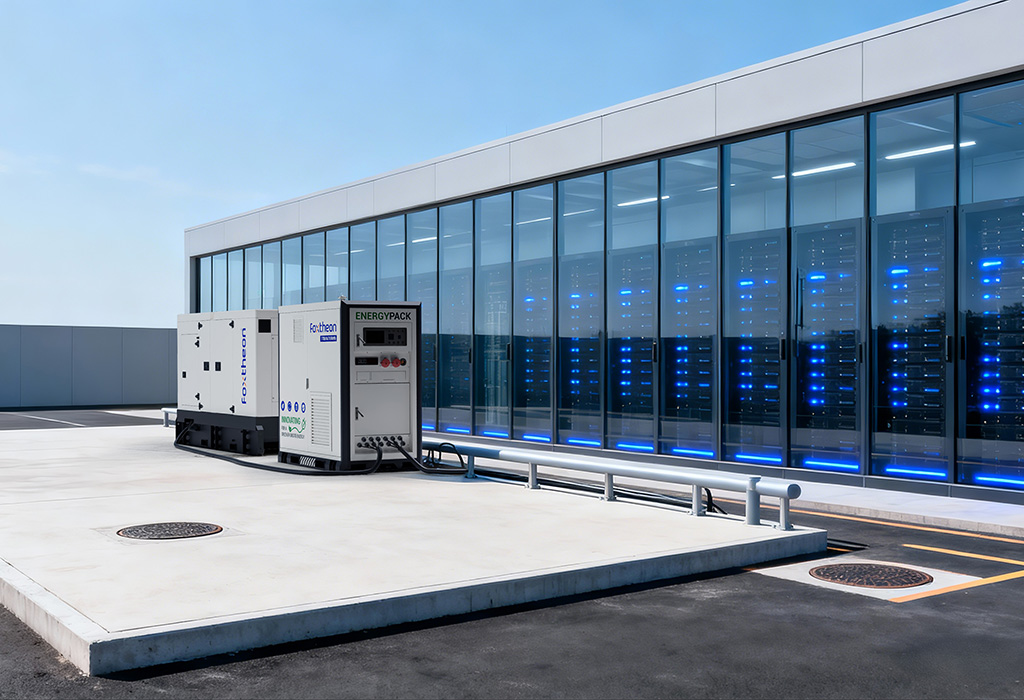
Walk onto almost any remote construction site, mine, or off-grid facility, and you will likely see the same thing. A massive diesel generator is thrumming away, creating noise and smoke. But if you look at the control panel, the load meter is barely moving. It might be sitting at 10% or 15% capacity.
This scenario is the industry standard, but it is also a massive financial leak. For decades, engineers have sized generators based on the worst-case scenario—usually the startup spike of a single large motor—rather than the actual running load.
While this ensures the lights don’t go out, it creates a host of mechanical and economic problems. Today, with the rise of smart energy storage and intelligent controls, we have better options. The goal for modern site managers is to avoid generator oversizing by leveraging technology rather than raw horsepower. Companies like Foxtheon are leading this shift, proving that smaller, smarter systems often outperform the giants of the past.
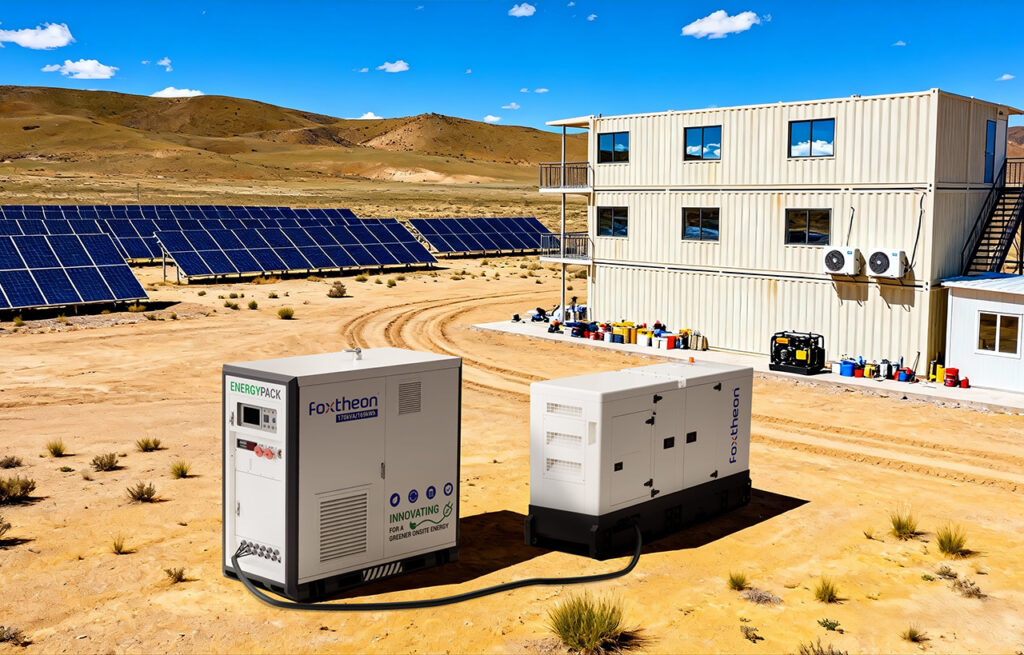
The Hidden Dangers of Running Too Light
Most people assume that having a generator that is too big is just a waste of initial purchase money. However, the operational reality is much worse. Diesel engines are designed to work hard. They rely on high cylinder pressure and heat to seal the piston rings and burn fuel completely.
Wet Stacking and Engine Glazing
When a generator runs at a low load (typically under 30%) for extended periods, the internal temperature never gets high enough. Unburned fuel and soot start to accumulate in the exhaust system. This is known as “wet stacking.”
Over time, this unburned fuel washes the lubricating oil off the cylinder walls. It creates a hard glaze on the cylinder liners. Once an engine is glazed, it loses compression. It burns more oil, delivers less power, and eventually fails prematurely. By trying to be “safe” with a big engine, you are actually killing it slowly.
Fuel Efficiency Curves
Diesel engines have a “sweet spot” for efficiency, usually between 70% and 80% load. A 500kVA generator running at 50kW (10% load) consumes significantly more fuel per kilowatt-hour produced than a 100kVA generator running at 50% load.
To avoid generator oversizing is to respect the efficiency curve of the machine. It is about matching the tool to the job, rather than using a sledgehammer to crack a walnut.
Analyzing the Load Profile Correctly
The first step in fixing this issue is data. Too many power systems are specified based on the nameplate ratings of the equipment being powered, rather than real-world usage.
A nameplate might say a pump draws 30 Amps. But does it run continuously? Does it cycle on and off? Does it ever run at full capacity?
Peak vs. Average Demand
There is often a massive gap between peak demand and average demand. A site might need 200kW for 10 seconds when a crane lifts a load, but only 40kW for the rest of the hour.
If you size the generator for that 200kW peak, you are oversizing it for 99% of the day. The modern approach is to log the load over time. By understanding the duty cycle, you can identify how much power is needed for the baseload (lights, HVAC, computers) versus the intermittent peaks.
The Role of Hybrid Energy Storage
This is where the industry has changed most dramatically in the last five years. Battery Energy Storage Systems (BESS) have moved from being expensive experiments to essential infrastructure.
Batteries are the perfect antidote to oversizing. They handle the peaks so the generator doesn’t have to.
How Peak Shaving Works
Imagine that same site with the 200kW peak and 40kW average. Instead of a 250kVA generator, you could install a 60kVA generator paired with a battery system.
When the crane lifts, the battery dumps the necessary high current instantly. The generator continues hum along at its efficient 40-50kW baseline. The battery “shaves” the peak off the top.
Once the lift is done, if the battery was drained, the generator can ramp up slightly to recharge it. This allows you to avoid generator oversizing drastically. You save on the initial cost of the engine, but more importantly, you save on fuel every single hour the system runs.
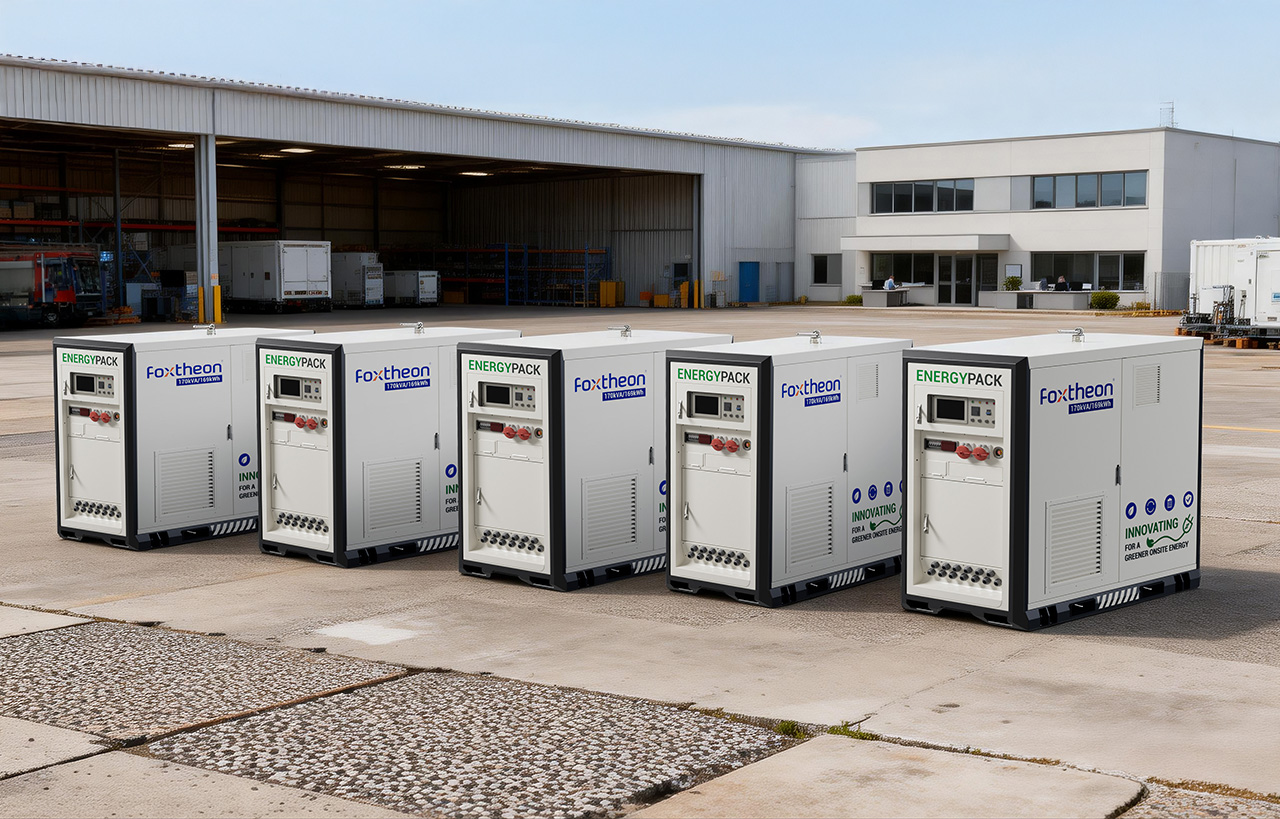
Innovators in the field, such as Foxtheon, integrate high-density battery packs directly with efficient diesel engines. This creates a hybrid unit that behaves like a large generator when needed, but sips fuel like a small one.
Managing Inrush Current with Soft Starters
Another major reason engineers choose oversized generators is “inrush current.” When an AC motor starts, it acts like a short circuit for a split second. It can draw 5 to 7 times its rated running current.
A 50kW motor might demand 300kW just to get moving. If the generator is too small, the voltage collapses, and the system trips.
Variable Frequency Drives (VFDs)
The mechanical solution to this electrical problem is the VFD. A VFD ramps up the frequency and voltage gradually. It prevents the motor from demanding that massive initial spike.
By installing VFDs on large pumps, fans, and crushers, you eliminate the massive startup spikes. If you flatten the spikes, you no longer need a massive generator just for those few seconds of startup time.
Sequential Startup Controls
Another low-cost method to avoid generator oversizing is simple logic control. If a site has four large fans, and they all turn on at 8:00 AM simultaneously, the power demand is huge.
By adding a simple delay timer—Fan 1 starts at 8:00:00, Fan 2 at 8:00:10, and so on—you reduce the peak demand significantly. You are spreading the load out over time, allowing the generator to handle it comfortably.
The Economic Case for Right-Sizing
It is often difficult to convince procurement departments to buy a smaller generator with a battery, rather than a big cheap generator. The big generator looks like “more for your money.”
However, the Total Cost of Ownership (TCO) tells a different story.
Reducing Maintenance Costs
An oversized generator that is wet-stacking requires frequent maintenance. It needs load banking (where you bring in an artificial load just to burn off the carbon deposits). It needs more frequent oil changes because the oil gets contaminated with soot.
A right-sized generator runs hot and clean. It burns its fuel completely. The service intervals can often be extended, and the engine life is prolonged.
Capital Expenditure vs. Operational Expenditure
While a hybrid system might have a higher upfront cost (CAPEX), the fuel savings (OPEX) are immediate. In remote locations where fuel has to be trucked or flown in, the cost of diesel can be astronomical.
Reducing fuel consumption by 40%—which is common when you avoid generator oversizing through hybridization—can pay for the new equipment in less than two years.
Environmental Regulations and Carbon Footprint
Beyond money, there is the carbon issue. Corporate social responsibility (CSR) goals are putting pressure on industries to lower emissions.
Burning diesel to spin a massive engine that is doing no work is hard to justify in sustainability reports. Right-sizing is the easiest way to immediately drop a facility’s carbon footprint without changing the actual operations. You are doing the same work, just with less waste.
Field Implementation Strategies
So, how does a facility manager actually make the switch? It requires a shift in thinking during the planning phase.
Step 1: Audit the Equipment
List every electrical load. distinct between “essential” (must run) and “non-essential” (can be shed if needed). Look at the startup characteristics of the big motors.
Step 2: Simulate the Hybrid Scenario
Work with solution providers who can model your load. They can show you what happens if you use a battery buffer.
Manufacturers like Foxtheon often use proprietary software to simulate how their hybrid units will react to your specific load profile. They can predict exactly how much fuel you will save.
Step 3: Future Proofing with Modularity
The old argument for oversizing was “what if we expand next year?”
The modern answer is modularity. Instead of buying one giant 1000kVA generator for a plant that might expand, buy two 250kVA units now. If you expand, add another unit and sync them.
Modular systems allow you to turn engines off completely when they aren’t needed. A 1000kVA unit burns fuel even when idling. Three 250kVA units allow you to run just one at night, two during the day, and three during peaks. This is the ultimate way to avoid generator oversizing.
Challenges and Considerations
Moving away from oversizing requires better site management. A massive generator is forgiving; a right-sized one requires the system to work as designed.
If you add a massive new load without checking the capacity, you might trip the breaker. This is why intelligent load management systems are crucial. These computers watch the total load and can automatically shed non-critical loads (like heating or extra lighting) if the generator gets close to its limit.
It creates a “smart grid” on a micro scale. It trades raw iron capability for silicon intelligence.
The days of the “bigger is better” mentality in power generation are fading. The costs—both financial and environmental—are simply too high.
We now have the technology to precisely match power generation to power consumption. Through the use of load profiling, Variable Frequency Drives, and specifically hybrid battery storage, we can stabilize power without relying on massive, inefficient engines.
To avoid generator oversizing is to embrace efficiency. It results in longer equipment life, lower fuel bills, and a quieter operation. Whether you are powering a remote telecom tower or a mining camp, solutions from forward-thinking brands like Foxtheon demonstrate that the future of power is compact, hybrid, and intelligent. By right-sizing your system today, you protect your budget and your operations for tomorrow.
Q&A: Common Questions on Generator Sizing
Q1: What is the main risk of running a generator at low load?
A1: The primary risk is “wet stacking.” This occurs when the engine doesn’t reach its optimal operating temperature, causing unburned fuel to accumulate in the exhaust and cylinder walls. This leads to carbon buildup, reduced power, and eventually permanent engine damage.
Q2: How much larger should a generator be compared to the running load?
A2: Traditionally, engineers sized generators at 2x or 3x the running load to handle startup spikes. However, with modern hybrid systems and soft starters, you can size the generator much closer to the actual running load—often just 1.1x to 1.2x—because the battery handles the spikes.
Q3: Can a battery really replace a larger diesel engine?
A3: A battery cannot replace the energy production of a diesel engine (it doesn’t generate fuel), but it can replace the peak capacity. It acts as a shock absorber, providing the surge power needed for starting motors, which allows you to use a much smaller engine for the steady work.
Q4: Does avoiding oversizing affect the reliability of my power?
A4: If done correctly, reliability actually increases. An oversized engine is prone to glazing and failure. A right-sized system, especially one with battery backup, is healthier for the engine and provides a backup source of power (the battery) if the engine momentarily stalls.
Q5: What is the first step I should take to right-size my current setup?
A5: Perform a data logging audit. Do not rely on label ratings. Install a power analyzer on your current system for at least a week to see your true peak usage versus your average usage. This data is the foundation for designing a more efficient system.