
Low-Load Generator Problems Explained | Reduce Fuel Waste with Hybrid Power Systems
Discover why low-load generator operation increases fuel consumption, causes wet stacking, and raises maintenance costs. Learn how hybrid power systems, battery energy storage systems, hybrid BESS platforms, and intelligent EMS controls like Foxtheon EnergyPack P150 and M150 improve generator efficiency, reduce diesel usage, and optimize off-grid power across construction, mining, telecom, infrastructure, rental power, and temporary industrial applications.
When “More Power” Becomes the Wrong Strategy
When people think about generator performance, most focus on maximum output. Bigger capacity, higher power, more runtime. But in real-world applications, one of the biggest hidden problems is not overload — it’s underload.
Across construction sites, mining operations, telecom stations, temporary events, infrastructure projects, rental fleets, and off-grid industrial applications, diesel generators are often forced to operate at very low load levels for long periods of time. While this may seem harmless, low-load operation is one of the fastest ways to destroy generator efficiency, increase diesel fuel consumption, raise generator maintenance costs, and shorten equipment lifespan.
The problem becomes even more serious as fuel prices rise, emissions regulations tighten, and operators face increasing pressure to improve sustainability and reduce carbon emissions.
Many companies are now searching for fuel-efficient generator solutions, hybrid power systems, and battery energy storage systems (BESS) that can optimize energy usage while reducing operating costs.
So why is low load such a major issue? And more importantly, how can hybrid energy systems solve it?
The Overlooked Reality of Low-Load Generator Operation
A diesel generator is designed to run within an optimal operating range, typically around 70%–80% of its rated capacity. At this level, the engine reaches proper combustion temperature, fuel burns efficiently, and the system operates smoothly.
However, many generators in the field spend most of their time running at far lower loads — sometimes below 30%.
This happens because operators usually size generators for peak demand rather than average demand. A construction site may require high power only during crane operation or equipment startup, but for most of the day, the generator is only supporting lighting, small tools, site offices, telecom equipment, or intermittent loads.
As a result, oversized generators continue running even when actual power demand is minimal.
This creates a major generator fuel efficiency problem.
In industries such as construction, mining, oil & gas, infrastructure, telecom, and events, low-load generator operation has become one of the most common hidden operational inefficiencies.
Why Running at Low Load Creates Bigger Problems Than Most Operators Realize
Fuel Consumption Rises Faster Than Expected
Diesel generators consume fuel even when little power is being used. The engine still needs energy to maintain rotation, cooling systems, lubrication, and internal operations.
At low load, fuel consumption per kilowatt-hour rises dramatically.
For example, a 500kVA generator operating at 20% load can consume disproportionately more fuel compared to a smaller generator operating at optimal load. In many cases, operators are effectively burning fuel simply to keep the engine alive.
This means operators face higher operational costs, poorer fuel economy, increased logistics pressure for fuel supply, and lower overall project profitability. Over time, excessive diesel consumption and reduced generator efficiency can significantly impact long-term operating budgets.
For companies operating remote power systems or temporary power solutions, these inefficiencies can significantly impact long-term project economics.
The Hidden Damage of Wet Stacking and Carbon Build-Up
One of the most damaging consequences of low-load operation is a phenomenon called wet stacking.
When combustion temperatures remain too low, diesel fuel does not burn completely. Unburned fuel and carbon residues accumulate inside the exhaust system, injectors, pistons, and turbochargers.
Over time, carbon deposits begin accumulating throughout the engine system, oil contamination increases, and overall engine performance gradually declines. Operators also experience more smoke emissions, more frequent maintenance requirements, premature engine wear, and reduced generator reliability.
Eventually, the generator becomes less reliable and more expensive to maintain.
Wet stacking is one of the leading causes of inefficient diesel generator performance in underloaded generator systems.
High Noise and Emissions With Very Little Useful Output
A large diesel generator running lightly loaded still produces significant noise and emissions.
In urban construction environments, infrastructure projects, events, and environmentally sensitive areas, this creates additional challenges. Even at low output levels, oversized diesel generators continue producing unnecessary noise, higher CO₂ emissions, and increased local pollution, while making environmental compliance and sustainability targets more difficult to achieve.
Many operators are now realizing that traditional generator-only power systems are no longer economically or environmentally sustainable.
This is one reason why hybrid power systems and battery-assisted generators are rapidly gaining adoption across global industrial markets.
The Core Issue: Real-World Power Demand Is Never Constant
Most job sites do not have stable, constant power demand.
Instead, energy usage fluctuates constantly throughout the day. Job sites may experience high loads during equipment startup, medium loads during active operation, extremely low demand during standby periods, and sudden peak spikes that last only a short time.
Traditional generators are not designed for this kind of dynamic load profile.
But hybrid energy systems are.
Modern energy management increasingly depends on intelligent power distribution, real-time load optimization, and energy storage integration.
Why Traditional Generators Struggle With Dynamic Load Profiles
Conventional diesel generators are built around a relatively simple operating principle: run continuously and respond to changing loads as they happen.
The problem is that modern job sites rarely behave in a predictable way.
A generator may experience large surge loads when heavy machinery starts up, followed by long idle periods with almost no demand. In many cases, power consumption rapidly changes between daytime and nighttime operation, while temporary spikes may last only a few seconds before dropping again.
To prepare for these situations, operators often install oversized generators. But this creates a cycle of inefficiency. Larger generators inevitably spend more time operating underloaded, which increases fuel waste, accelerates engine wear, and gradually raises maintenance requirements over time.
In other words, many operators are paying for maximum capacity they rarely use.
This is precisely where hybrid battery energy storage systems (BESS) provide a major advantage.
A Smarter Approach: How Hybrid Power Systems Eliminate Low-Load Inefficiency
Hybrid power systems combine diesel generators, battery energy storage systems (BESS), and intelligent energy management software into one integrated solution.
Instead of forcing the generator to run continuously at inefficient low loads, the hybrid system automatically optimizes power distribution.
This type of intelligent hybrid energy solution is becoming increasingly common in construction power systems, telecom backup power, off-grid microgrids, and remote industrial energy infrastructure.
Here’s how it works:
Let the Battery Handle Low-Demand Periods
During periods of low demand, the battery system supplies power independently while the generator shuts down completely.
This eliminates inefficient low-load runtime and dramatically reduces fuel consumption.
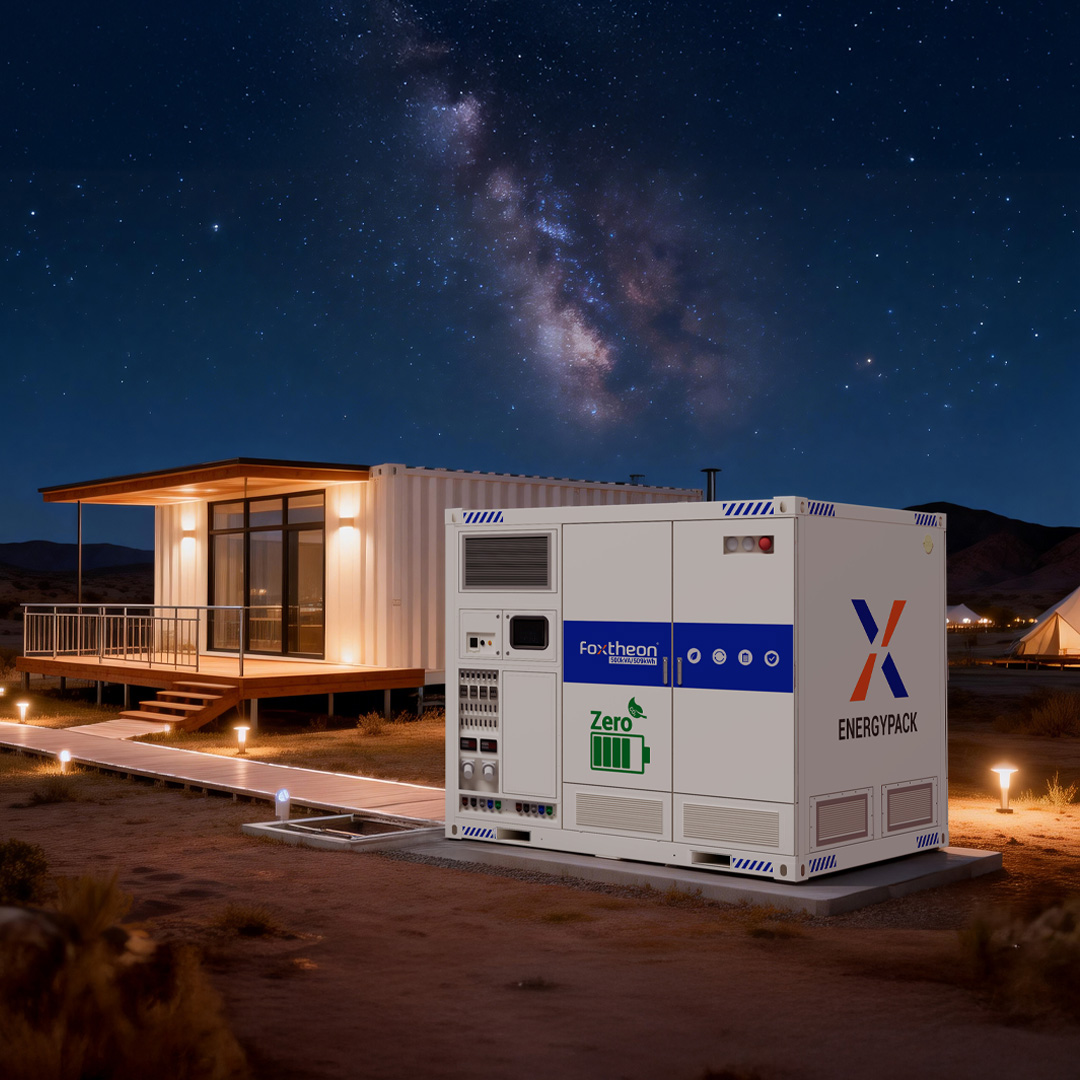
Solutions like the Foxtheon EnergyPack P150 are specifically designed for dynamic mobile applications such as construction sites, equipment rental fleets, temporary power, and events. Equipped with the FoxMind™ EMS, the system intelligently shuts down generators during low-load periods and switches to silent battery operation, helping operators reduce fuel consumption while minimizing noise and maintenance pressure.
The P150 also supports high surge loads, allowing contractors to avoid oversizing generators purely for temporary peak demand.
As a mobile battery energy storage system, the EnergyPack P150 helps improve generator efficiency while enabling quieter, cleaner, and more flexible temporary power deployment.
Keep the Generator Running Only Where It Performs Best
When battery capacity decreases or demand rises, the generator starts automatically and runs closer to its optimal efficiency range.
Rather than operating inefficiently all day, the generator works in shorter, high-efficiency cycles.
This operating strategy improves fuel efficiency, protects engine health, increases overall system reliability, extends generator lifespan, and helps reduce maintenance frequency while improving long-term operating economics.
For projects with longer-duration and more stable loads — such as remote offices, telecom sites, mining camps, and off-grid facilities — systems like the Foxtheon EnergyPack M150 provide an even more optimized solution.
With a 237kWh battery capacity and intelligent hybrid control, the M150 is designed to dramatically reduce generator runtime while maintaining stable continuous power. Its EMS keeps the genset operating only at peak efficiency points, helping eliminate wet stacking, reduce carbon buildup, and lower maintenance frequency over time.
The EnergyPack M150 is especially suitable for long-duration off-grid power applications where fuel savings, low emissions, and operational reliability are critical.
Use Peak Shaving to Avoid Oversized Generators
Hybrid systems can also use battery power to absorb temporary load spikes.
This means operators no longer need to oversize generators purely for short-duration peak demand.
A smaller generator combined with battery storage can often outperform a much larger traditional generator-only setup.
This approach is becoming increasingly important in industries facing stricter emissions and noise regulations. Hybrid BESS platforms such as Foxtheon’s EnergyPack series are designed specifically to address these operational inefficiencies by integrating battery storage, diesel generators, solar inputs, and intelligent EMS controls into one flexible microgrid solution.
Peak shaving technology is now widely recognized as one of the most effective ways to reduce diesel generator fuel consumption while maintaining stable site power.
How Intelligent Hybrid Systems Reduce Fuel, Maintenance, and Operating Costs
For many industrial operators, fuel represents one of the largest operating expenses.
Reducing generator runtime by even a few hours per day can lead to substantial annual savings.
Hybrid systems help reduce fuel consumption, maintenance costs, engine wear, generator operating hours, carbon emissions, and overall site noise levels.
At the same time, they improve site sustainability, power stability, operational flexibility, energy efficiency, and emissions compliance, while creating quieter and more reliable working environments.
In many applications, the return on investment becomes visible surprisingly quickly.
This is why hybrid energy systems are increasingly being adopted across construction projects, telecom infrastructure, mining operations, disaster recovery sites, and temporary power markets worldwide.
Why Solutions Like EnergyPack P150 and M150 Are Changing Off-Grid Power
The industry is moving away from the old model of “one oversized generator running 24/7.”
Modern energy demands require smarter power management.
Hybrid energy platforms like Foxtheon’s EnergyPack P150 and M150 are designed around this new reality. Instead of relying entirely on diesel generation, these systems intelligently balance battery storage and generator usage based on real-time demand conditions.
For operators, this means lower fuel costs, reduced emissions, less generator wear, quieter operation, more flexible deployment options, improved energy utilization, and a lower total cost of ownership over the lifetime of the equipment.
As construction, mining, infrastructure, telecom, and event industries continue pushing for cleaner and more efficient operations, hybrid energy systems are rapidly becoming the new standard for temporary and off-grid power.
The transition toward battery energy storage systems, intelligent hybrid generators, and smart microgrid solutions is accelerating across global energy markets.
The Industry Shift Toward Smarter, Cleaner Energy Systems
The goal is no longer simply generating electricity.
The goal is generating power efficiently, intelligently, and sustainably.
Across global industrial markets, energy strategies are evolving from traditional fuel-heavy systems toward hybrid microgrids, battery-assisted generation, renewable energy integration, and intelligent EMS-driven power management.
This transition is not only about sustainability.
It is also about operational efficiency, long-term cost reduction, and building more resilient energy infrastructure for increasingly demanding job sites.
Hybrid power systems are increasingly viewed as a critical technology for achieving energy optimization, lower carbon emissions, and improved generator performance.
Conclusion: Solving the Low-Load Problem Is No Longer Optional
Low-load operation is one of the most overlooked causes of poor generator performance and excessive fuel consumption.
What appears to be a “safe” oversized setup may actually be draining fuel budgets, increasing maintenance costs, and reducing equipment lifespan every single day.
Hybrid power systems offer a smarter alternative by combining batteries, generators, and intelligent controls to match real-world energy demand dynamically.
For operators looking to reduce fuel costs, improve sustainability, optimize generator efficiency, and maximize equipment performance, solving the low-load problem is no longer optional — it’s essential.
As industries continue transitioning toward cleaner, quieter, and more intelligent energy infrastructure, hybrid battery energy storage systems like Foxtheon EnergyPack P150 and M150 are helping redefine the future of off-grid and temporary power.
Explore Smarter Hybrid Energy Solutions
Learn more about Foxtheon hybrid power systems, intelligent EMS technology, and battery energy storage solutions for construction, mining, telecom, infrastructure, rental fleets, and temporary power applications.
For additional insights into industrial hybrid energy innovation and intelligent off-grid power systems, visit Foxtheon.
FAQ
What is low-load generator operation?
Low-load generator operation occurs when a diesel generator runs significantly below its optimal capacity, typically below 30% of rated load. This can reduce fuel efficiency and increase maintenance issues.
Why is low-load operation bad for diesel generators?
Low-load operation can cause wet stacking, carbon buildup, increased fuel consumption, reduced engine performance, and higher maintenance costs.
How do hybrid power systems improve generator efficiency?
Hybrid power systems combine battery energy storage systems (BESS) with generators to reduce unnecessary runtime, optimize load management, and improve fuel efficiency.
What industries benefit from hybrid energy systems?
Construction, mining, telecom, infrastructure, rental power, events, and remote industrial operations all benefit from hybrid power solutions.
What is the advantage of battery energy storage systems (BESS)?
Battery energy storage systems help reduce generator runtime, lower fuel consumption, decrease emissions, improve energy efficiency, and provide quieter power operation.