

The construction industry is at an energy crossroads. Rising fuel costs, stringent emissions regulations, and the inherent volatility of remote or temporary power grids are squeezing profits and project timelines. Traditional diesel generators, while reliable, are noisy, polluting, and increasingly expensive to operate.
A powerful, clean, and intelligent alternative is rapidly changing the game: battery storage for construction.
This isn’t just about backup power. It’s about a fundamental shift in how construction sites manage energy. Battery storage for construction systems integrate seamlessly with solar panels, grid connections, and even traditional generators to create a resilient, cost-effective, and sustainable microgrid right on the jobsite.
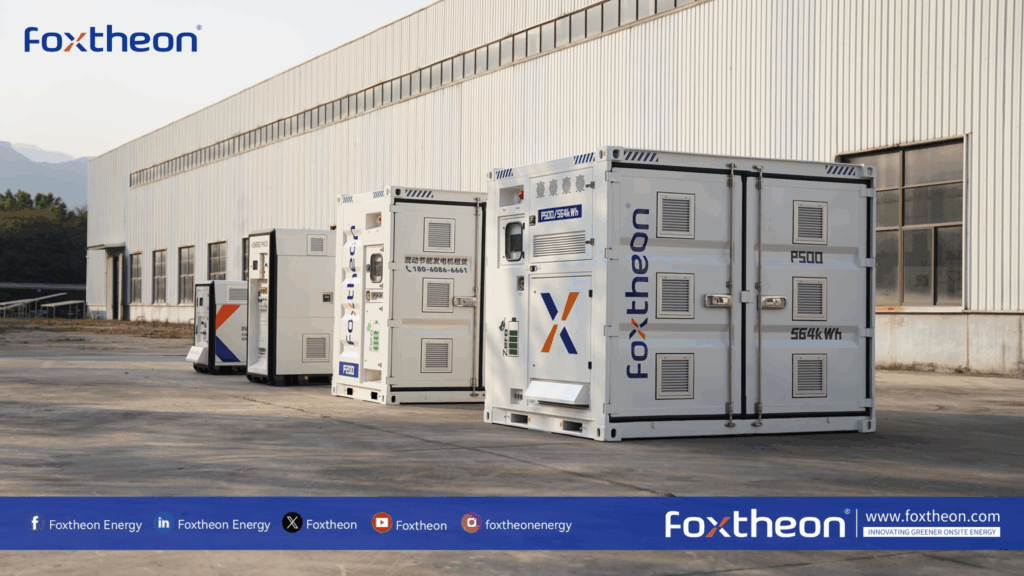
Forward-thinking companies are partnering with innovative providers like Foxtheon, which specializes in smart, containerized energy solutions, to harness this technology.
Why Construction Sites Are the Perfect Fit for Battery Storage
Construction projects have unique energy profiles that make battery energy storage systems (BESS) exceptionally valuable.
Tackling Peak Demand and Sky-High Costs
Utility companies often charge “demand charges” based on the highest 15-30 minutes of power use in a billing cycle. When multiple high-power tools—think welders, cranes, and concrete mixers—kick on simultaneously, this creates a massive, costly spike.
A construction site battery system acts as a buffer. It discharges stored energy during these peak periods, smoothing out the demand curve and slashing those punitive charges. This “peak shaving” alone can justify the investment.
Powering Remote and Off-Grid Projects
For sites far from the main grid, the choice has historically been noisy, smelly diesel generators running 24/7. Battery storage for construction, paired with solar, creates a hybrid system. The generator can run at its most efficient, optimal load to charge the batteries, which then silently power the site. This drastically cuts fuel use, maintenance, and runtime, leading to significant savings and a quieter, cleaner worksite.
Core Benefits: Beyond Just Backup Power
1. Substantial Financial Savings and ROI
The economic case is compelling. By reducing demand charges, cutting fuel consumption by up to 80% in hybrid setups, and minimizing generator wear-and-tear, battery storage for construction delivers a rapid return on investment. It turns energy from a fixed cost into a manageable asset.
2. Achieving Sustainability Goals and Compliance
With cities and clients demanding greener building practices, reducing a project’s carbon footprint is crucial. Deploying battery storage for construction, especially with solar, cuts greenhouse gas and particulate emissions. This helps meet ESG (Environmental, Social, and Governance) targets and can qualify projects for green certifications or incentives.
3. Unmatched Reliability and Power Quality
Voltage sags or brief grid outages can damage sensitive equipment and halt progress. Battery storage provides instantaneous, seamless backup power, keeping critical systems online. It also delivers “clean” power, protecting sensitive electronics from the fluctuations common with generators.
Implementing Battery Storage on Your Jobsite
Choosing the Right System: Containerized vs. Modular
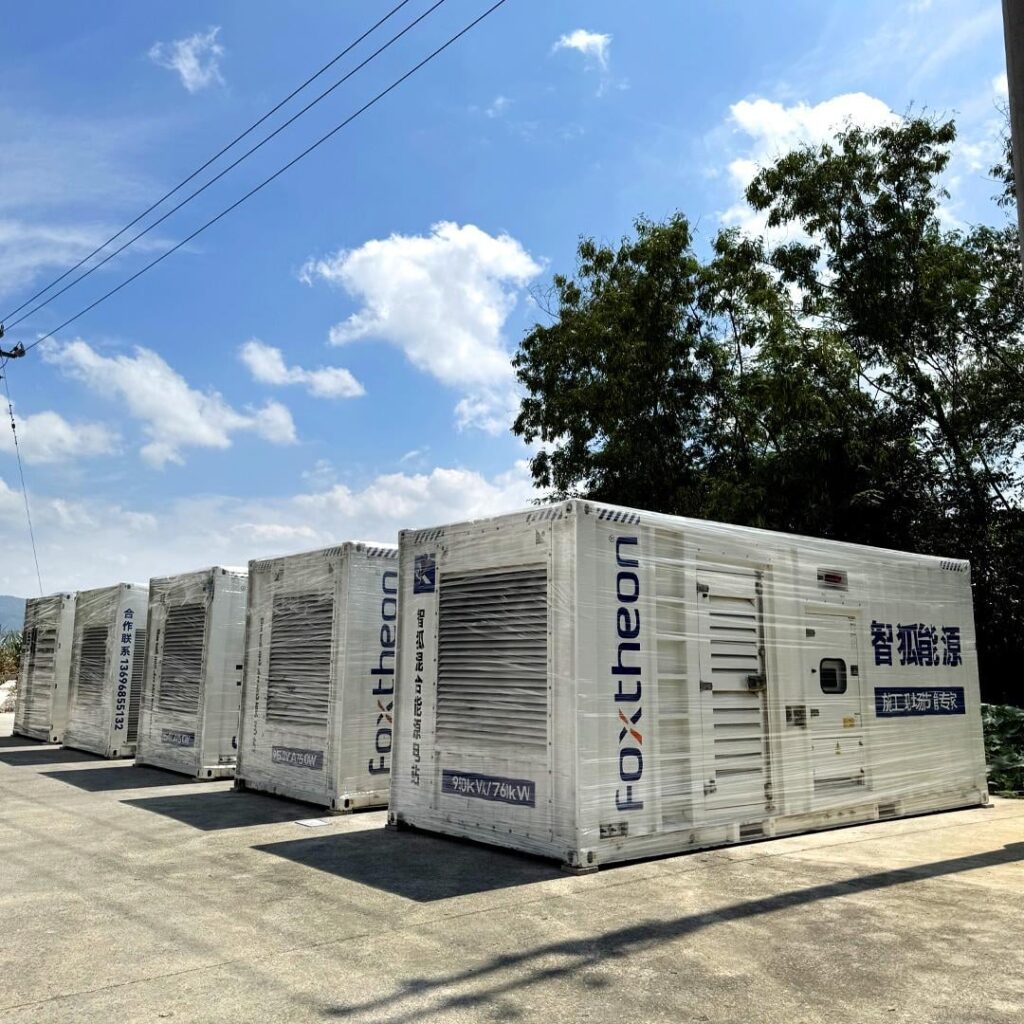
For construction, mobility and robustness are key. Containerized battery storage for construction units, like those offered by Foxtheon, are a popular choice. They are pre-assembled, weatherproof, and can be easily transported and deployed on-site. Modular systems offer more flexibility to scale capacity up or down as project needs change.
Key Technical Considerations
Capacity & Power: How much energy do you need to store (kWh), and what is the required discharge rate (kW)? This depends on your tools and daily energy use.
Integration: The system must seamlessly integrate with existing generators, solar PV, and the site’s electrical distribution. Smart energy management software is critical for optimizing this.
Durability: Systems must withstand dust, vibration, and temperature extremes common on construction sites.
A Real-World Application: Silent Night Shifts
Imagine a project in an urban area with strict noise ordinances that prohibit generator use at night. A battery storage system charged by solar or a generator during the day can silently power security lights, charging stations for electric equipment, and site offices overnight, allowing for extended work hours without complaints or fines. This is a tangible advantage Foxtheon‘s solutions are designed to enable.
The Future is Integrated and Smart
The future of battery storage for construction lies in intelligent integration. We are moving towards fully digitalized, IoT-enabled jobsite microgrids. These systems use AI and real-time data to predict energy usage, automate charging from the cheapest source (solar vs. grid vs. generator), and provide remote monitoring and control.
This smart management maximizes efficiency and minimizes human error, pushing savings and sustainability even further.
Frequently Asked Questions (FAQ)
Q1: Is battery storage for construction sites cost-effective compared to just using diesel generators?
A1: Absolutely. While the upfront cost is higher, the total lifetime cost is often lower. Savings come from drastic fuel reduction, lower maintenance on generators, avoidance of utility demand charges, and potential incentives. The ROI is typically clear within a few years, depending on fuel costs and usage patterns.
Q2: Can battery storage systems power an entire construction site?
A2: It depends on the site’s size and energy needs. For many sites, a hybrid system is ideal. The battery storage system handles base loads, peak shaving, and silent operation, while a generator or grid connection supports periods of exceptionally high demand, ensuring you never run out of power.
Q3: How durable are these systems in harsh construction environments?
A3: Systems designed for construction, like containerized units, are built to be rugged. They feature robust enclosures rated for dust and water ingress, temperature management systems, and are engineered to handle the vibrations of a live jobsite. Always choose a provider with experience in industrial and construction applications.
Q4: What happens to the batteries at the end of the project or their life?
A4: Reputable suppliers have responsible end-of-life programs. Lithium-ion batteries can often be repurposed for less demanding second-life applications (like stationary storage) before finally being recycled. Leading companies are committed to circular economy principles for their battery storage products.
Q5: How do I get started with implementing a battery storage solution on my next project?
A5: Start by conducting an energy audit of your typical jobsite to understand your load profile. Then, consult with a specialized provider. They can analyze your data, model the financial and environmental benefits, and design a turnkey system. Partnering with an expert like Foxtheon early in the project planning stage ensures the energy solution is optimized for your specific challenges and goals.
Battery storage for construction is no longer a futuristic concept; it’s a practical, profitable, and necessary tool for the modern builder. It directly addresses the industry’s biggest pain points: cost control, reliability, and environmental impact.
By investing in this smart energy infrastructure, construction firms not only future-proof their operations but also gain a competitive edge through enhanced efficiency and sustainability credentials. As technology advances and solutions become even more tailored, the adoption of battery storage will become standard practice for building the world of tomorrow.
Innovative partners in this space, such as Foxtheon, are crucial in translating this powerful technology into reliable, on-the-ground results for the global construction industry.