
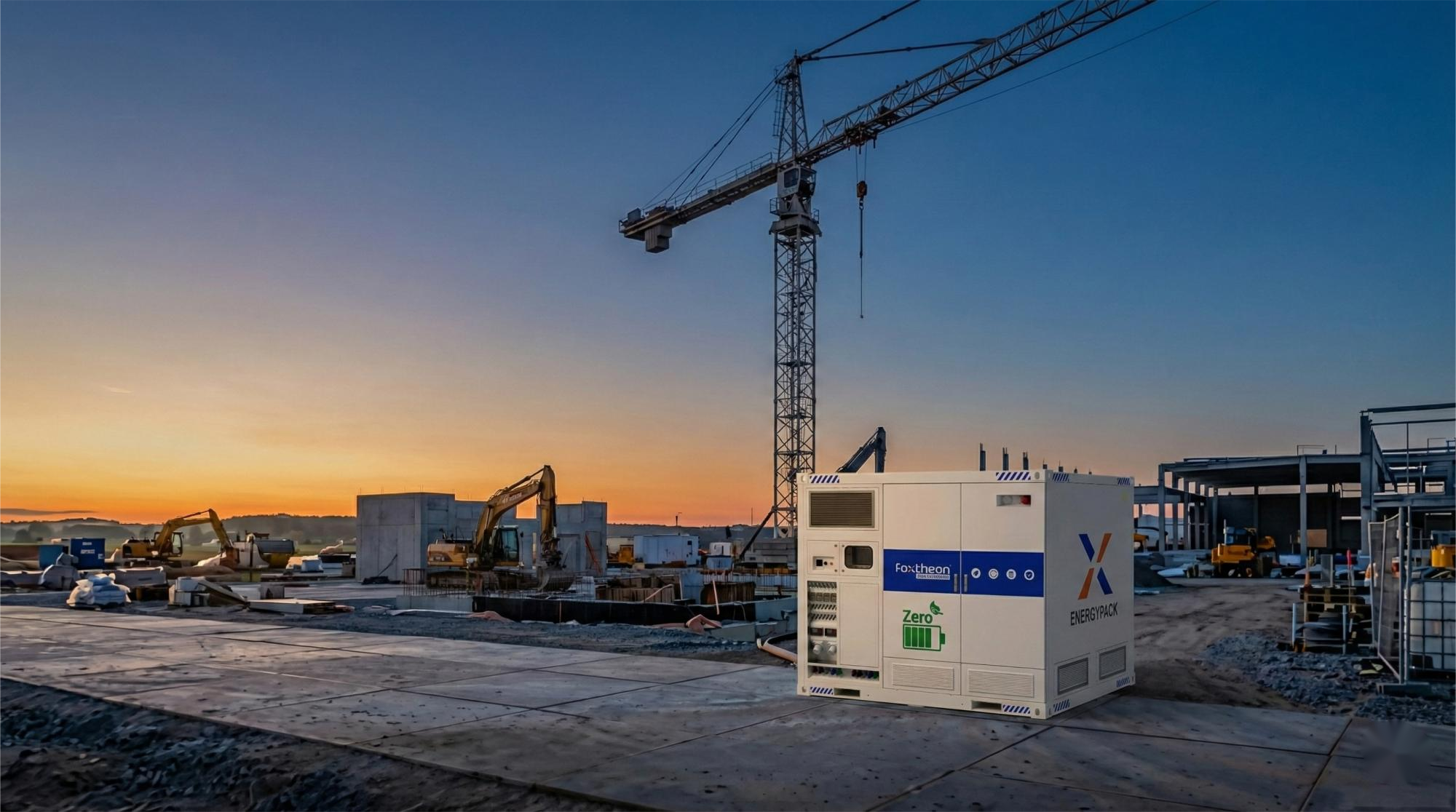
Introduction: The Financial Engineering of Decentralized Power Assets
In the highly regulated and capital-intensive domain of commercial and industrial (C&I) energy management, facility operators are constantly analyzing methodologies to stabilize utility expenses and ensure high-fidelity power quality. As power grids face increasing volatility and commercial tariff structures become progressively more complex, integrating localized energy storage infrastructure is a strategic priority. However, deploying these assets requires rigorous financial and technical evaluation. Accurately modeling the electricity battery storage cost is fundamental to determining project feasibility, designing the optimal system architecture, and projecting a reliable Return on Investment (ROI) over the asset’s multi-decade lifecycle.
This comprehensive technical analysis explores the nuanced economic variables governing commercial energy storage. By deconstructing capital expenditures, long-term operational costs, lifecycle degradation curves, and asset hybridization strategies, we provide a definitive framework for corporate procurement teams, microgrid developers, and facility engineers to maximize their energy infrastructure investments.
1. Deconstructing the Capital Expenditure (CAPEX) Architecture
Understanding the upfront electricity battery storage cost requires a granular breakdown of the system’s hardware, software, and deployment components. A utility-grade or C&I energy storage system is a sophisticated integration of multiple sub-systems, each contributing to the total CAPEX.
Cell Chemistry and Battery Pack Assembly
The electrochemical cells typically represent 40% to 50% of the total hardware cost. In current B2B applications, Lithium-Iron-Phosphate (LFP) chemistry has become the industry standard, moving away from Nickel-Manganese-Cobalt (NMC). LFP offers superior thermal stability, a higher cycle life threshold, and lower raw material volatility. The engineering of the battery pack, including busbars, structural framing, and localized thermal sensors, further dictates the baseline cost.
Power Conversion and Balance of System (BOS)
The bidirectional Power Conversion System (PCS) or smart inverter is responsible for converting direct current (DC) from the battery into usable alternating current (AC) for the facility. Depending on grid-forming or grid-following capabilities, the PCS constitutes 15% to 20% of the hardware budget. Additionally, the Balance of System (BOS)—which includes isolation transformers, switchgear, cabling, and protective relays—must be factored into the initial financial models. High-quality BOS components reduce interconnection friction and ensure compliance with stringent grid codes.
2. Operational Expenditure (OPEX) and Parasitic Load Management
Evaluating purely on initial purchase price is a flawed methodology. The true electricity battery storage cost must account for Operational Expenditure (OPEX) accrued over a 10 to 15-year operational horizon. A major driver of OPEX is the energy required to maintain the system itself, known as the parasitic load.
Thermal Management Efficiency
Lithium-ion cells require a strict operating temperature bandwidth (generally 20°C to 25°C) to maintain internal resistance levels and prevent accelerated degradation. Traditional HVAC forced-air cooling systems draw significant auxiliary power from the battery, reducing the total available energy for facility dispatch. Conversely, advanced active liquid cooling architectures utilize precisely routed coolant plates directly adjacent to the battery modules. This method offers superior thermal conductivity, minimizes temperature variance between cells to under 3°C, and drastically reduces the system’s parasitic energy draw, thereby lowering ongoing OPEX.
Predictive Maintenance and Software Licensing
Enterprise-grade Energy Management Systems (EMS) and Battery Management Systems (BMS) require continuous cloud connectivity for data logging, algorithm optimization, and over-the-air (OTA) firmware updates. The annual software licensing fees, combined with scheduled preventative maintenance (such as coolant replacement and contactor testing), form the baseline of the yearly operational budget.
3. Calculating the Levelized Cost of Storage (LCOS)
To accurately compare storage technologies against other energy generation assets, engineers utilize the Levelized Cost of Storage (LCOS) metric. LCOS represents the total discounted cost of the storage system over its lifetime divided by the total discounted volume of electrical energy discharged.
Several dynamic variables influence this calculation:
- Round-Trip Efficiency (RTE): The ratio of energy retrieved from the battery compared to the energy utilized to charge it. High-performance systems maintain an RTE above 88%. Energy lost to heat and conversion inefficiencies directly increases the electricity battery storage cost on a per-kWh basis.
- Depth of Discharge (DoD) Protocols: Repeatedly discharging a battery to 0% accelerates the breakdown of the cell’s internal structure. Microgrid algorithms typically restrict DoD to 10%-90% parameters to extend the system’s overall cycle life, directly improving the LCOS equation.
- Degradation and Augmentation: As cells naturally degrade over thousands of cycles, their total capacity diminishes. Financial models must account for capacity augmentation—the future cost of adding supplemental battery racks in year 7 or year 10 to maintain the system’s nominal output requirements.
4. Synergistic Hybridization with Existing Power Generation Assets
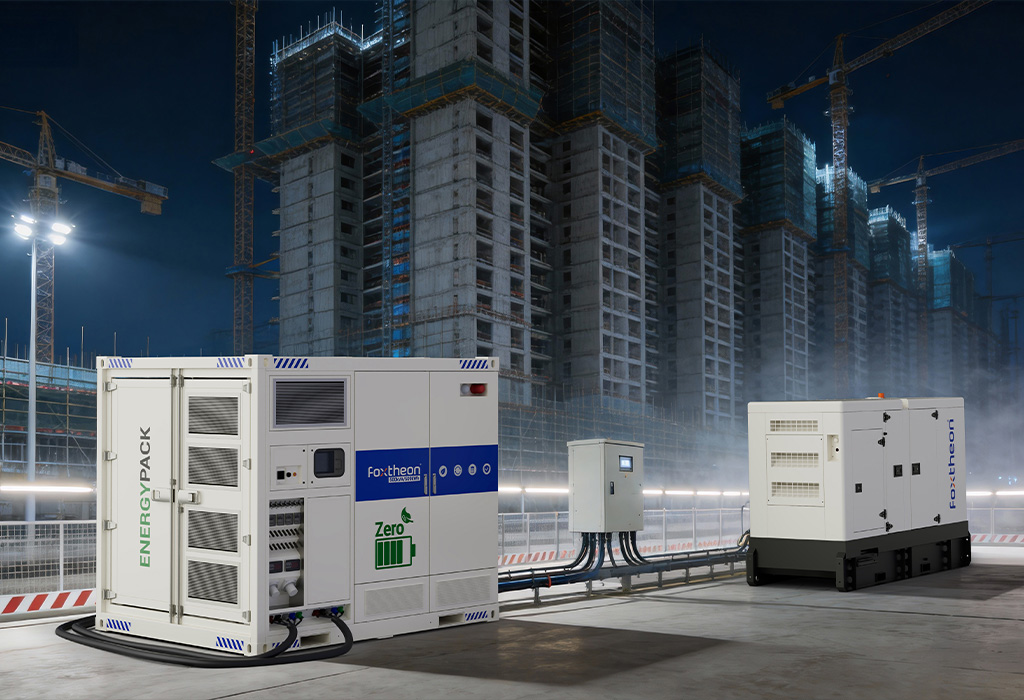
Optimizing facility energy infrastructure does not mean abandoning existing capital investments. In fact, a major advantage of modern energy storage is its capacity to hybridize with existing thermal generation assets, such as diesel or natural gas generator sets, maximizing their efficiency and longevity.
Load Optimization and Fuel Efficiency
Internal combustion engines operate at maximum fuel efficiency and minimum mechanical wear when subjected to a consistent load factor of 70% to 85%. Operating generators at low or highly variable loads leads to incomplete combustion, carbon buildup (wet stacking), and increased maintenance intervals. By utilizing a hybrid microgrid controller, facility operators can coordinate the assets perfectly. The generator is dispatched solely within its peak efficiency window; excess power charges the battery. Once the battery achieves its target State of Charge (SoC), the generator shuts down, and the battery supports the facility’s baseline load. This strategy dramatically reduces total fuel consumption, extends generator maintenance cycles, and optimizes the overall operational budget.
Spinning Reserves and Transient Spikes
Heavy industrial equipment often generates massive inrush currents upon start-up. Relying entirely on mechanical generators to absorb these millisecond transient spikes requires over-sizing the generator sets, which is capital-intensive. Implementing an energy storage system to act as an instantaneous spinning reserve allows the battery to absorb these harsh spikes, protecting the generator and ensuring superior power quality across the facility’s localized grid.
5. Revenue Stacking: Mitigating the Electricity Battery Storage Cost
The financial justification for commercial energy storage is heavily reliant on revenue stacking—the practice of utilizing a single asset to perform multiple value-generating tasks simultaneously. When effectively managed by a sophisticated EMS, these value streams offset the initial electricity battery storage cost.
- Peak Demand Shaving: Utility demand charges are calculated based on a facility’s highest 15-minute interval of power usage during a billing cycle. By automatically discharging the battery during these peak demand events, facilities artificially lower their grid draw, directly reducing monthly utility penalties.
- Time-of-Use (TOU) Arbitrage: The system intelligently charges from the grid during off-peak, low-tariff hours and discharges the stored energy to the facility during on-peak, premium-tariff hours.
- Grid Ancillary Services: In deregulated energy markets, facilities can commit a portion of their battery capacity to grid operators for Frequency Control Ancillary Services (FCAS). Because batteries offer sub-second response times, grid operators compensate facility owners highly for helping maintain strict 50Hz or 60Hz grid frequencies.
6. Advanced Hardware Engineering and Modularity
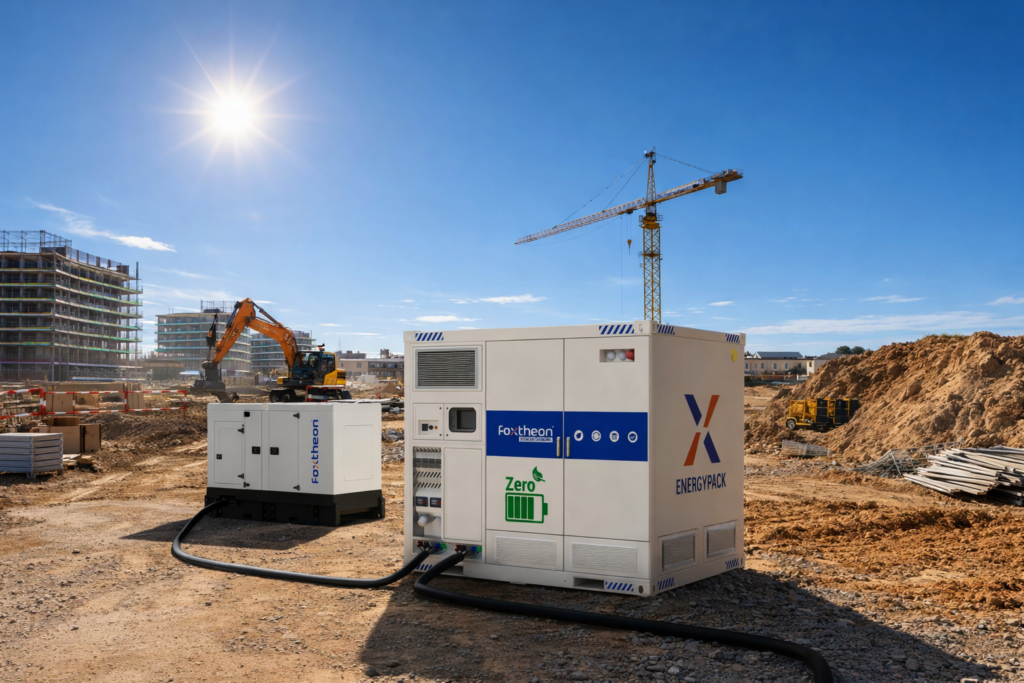
The trajectory of B2B energy storage relies heavily on system scalability. Procuring a monolithic, rigid system forces developers to over-capitalize on day one to account for projected future load growth. Modular architecture is the pragmatic solution to this financial challenge.
Working with specialized equipment manufacturers like Foxtheon enables facility managers to adopt a phased deployment strategy. Modular, cabinet-based systems allow developers to match the initial capital expenditure exactly to current load profiles. As the facility expands—perhaps through the integration of a commercial EV charging depot or expanded manufacturing lines—additional battery racks and power conversion modules can be seamlessly integrated onto the existing DC bus. This scalable approach limits initial capital exposure and ensures the long-term viability of the microgrid architecture.
7. Navigating Interconnection and Deployment Logistics
A frequently underestimated component of the total electricity battery storage cost is the Engineering, Procurement, and Construction (EPC) phase, alongside utility interconnection approvals.
Complex, custom-built systems require extensive on-site integration, custom cabling, and prolonged commissioning periods, driving up labor costs. Alternatively, highly integrated, factory-tested modular solutions arrive on-site pre-configured. These all-in-one architectures encompass the battery modules, PCS, HVAC/liquid cooling, and fire suppression systems within a single NEMA-rated enclosure. This plug-and-play methodology reduces on-site construction timelines from months to weeks, minimizes localized engineering risk, and accelerates the timeline to operational revenue generation.
Frequently Asked Questions (FAQ)
Q1: What is the difference between CAPEX and LCOS when evaluating energy storage?
A1: CAPEX (Capital Expenditure) refers strictly to the upfront costs required to purchase hardware, software, and install the system. LCOS (Levelized Cost of Storage) is a comprehensive financial metric that calculates the total cost of owning and operating the asset over its entire lifespan (including OPEX, charging costs, and degradation), divided by the total energy it will discharge, providing a true cost-per-kWh metric.
Q2: How does an energy storage system reduce our monthly utility demand charges?
A2: Commercial utilities often charge high fees based on your facility’s maximum power draw (measured in kW) during a short 15-minute window. An intelligent Energy Management System monitors your real-time consumption. When it detects an impending power spike, it commands the battery to discharge, effectively capping the power drawn from the utility grid and lowering that month’s demand charge.
Q3: Can battery storage systems operate in tandem with our existing diesel generators?
A3: Yes, this is a highly recommended architecture. The systems are integrated via a microgrid controller. The battery handles minor loads and momentary power spikes, while the generator is scheduled to run only when sustained power is needed, allowing it to operate in its most efficient load band. This hybrid approach lowers fuel consumption, reduces mechanical wear, and extends the operational life of your thermal assets.
Q4: Why is liquid cooling preferred over air cooling for commercial battery systems?
A4: Active liquid cooling systems provide vastly superior thermal transfer compared to ambient air cooling. They maintain a much tighter temperature variance across individual battery cells (typically under 3°C difference). This uniformity prevents localized cell degradation, extends the cycle life of the asset, and consumes less auxiliary power to operate, thereby lowering ongoing operational costs.
Q5: If our facility’s power needs increase in the future, do we need to buy an entirely new system?
A5: Not if you select a system with a modular architecture. Solutions designed by Foxtheon utilize scalable cabinet configurations. You can install a baseline capacity to meet your current needs and easily string additional battery modules or entire cabinets in parallel at a later date, optimizing your capital deployment strategy.
Execute Your Next Generation Energy Strategy
Evaluating and deploying commercial energy storage requires precise financial modeling, rigorous technical analysis, and deep integration expertise. From reducing peak demand charges to forming resilient, hybridized microgrids with your existing power assets, specialized infrastructure is paramount to achieving your corporate sustainability and economic targets.
To accurately model the electricity battery storage cost for your specific load profile and operational parameters, contact the engineering and project development team at Foxtheon. Submit an inquiry today to schedule a comprehensive technical consultation and receive a tailored system design proposal optimized for your commercial facility.