
The global transition toward decentralized power structures has placed energy storage at the center of modern infrastructure planning. For project developers, EPC (Engineering, Procurement, and Construction) firms, and industrial facility managers, understanding the cost of battery storage system is no longer just about comparing quotes; it is about analyzing long-term value, operational efficiency, and total cost of ownership (TCO). As hardware prices fluctuate and technological advancements redefine performance parameters, a granular look at what constitutes the price of a Battery Energy Storage System (BESS) becomes necessary.
To evaluate the financial feasibility of a project, one must look beyond the initial Capital Expenditure (CAPEX). The integration of storage technology involves sophisticated hardware, software management layers, and complex installation requirements that collectively dictate the final investment profile. Foxtheon provides high-performance energy solutions designed to optimize these variables, ensuring that commercial and industrial users achieve reliable energy independence without compromising on safety or lifespan.
1. Battery Chemistry and Raw Material Volatility
The most significant component of the cost of battery storage system is the battery cell itself, typically accounting for 40% to 60% of the total hardware price. Currently, Lithium Iron Phosphate (LiFePO4 or LFP) has become the industry standard for stationary storage due to its superior thermal stability and cycle life compared to Nickel Manganese Cobalt (NMC).
- LFP Advantages: While LFP cells have lower energy density than NMC, their lower risk of thermal runaway and longer lifespan make them more cost-effective for 10-to-15-year projects.
- Material Supply Chain: Prices for lithium carbonate, phosphate, and graphite are subject to geopolitical factors and mining output. Modern manufacturers are increasingly sourcing materials from diversified regions to stabilize pricing.
- Cell Grading: Grade-A prismatic cells carry a premium but offer the consistency needed for large-scale series and parallel configurations. Using lower-grade cells might reduce upfront costs but significantly increases the risk of premature system failure.
2. Power Conversion System (PCS) and Balance of System (BOS)
A battery storage unit is useless without the ability to convert Direct Current (DC) into usable Alternating Current (AC). The Power Conversion System (PCS), or bidirectional inverter, represents a substantial portion of the system’s technical complexity. The capacity of the PCS determines how much power can be discharged or charged at any given moment.
Balance of System (BOS) components include the structural racks, high-voltage wiring, switchgear, and transformers. For industrial applications, the cost of battery storage system often scales based on the sophistication of the BOS. High-efficiency transformers and silicon carbide (SiC) based inverters, though more expensive, reduce conversion losses, which improves the project’s net present value (NPV).
3. Thermal Management and Environmental Housing
Operating temperature is a primary determinant of battery degradation. A robust thermal management system ensures that cells remain within their optimal temperature window (typically 15°C to 30°C). There are two primary cooling methods used in modern BESS:
- Air Cooling: Generally less expensive to implement but less effective in extreme climates or high-C-rate applications.
- Liquid Cooling: Offers superior temperature uniformity and allows for higher energy density within the container. While liquid cooling increases the cost of battery storage system, it can extend the battery’s life by up to 20%, significantly lowering the Levelized Cost of Storage (LCOS).
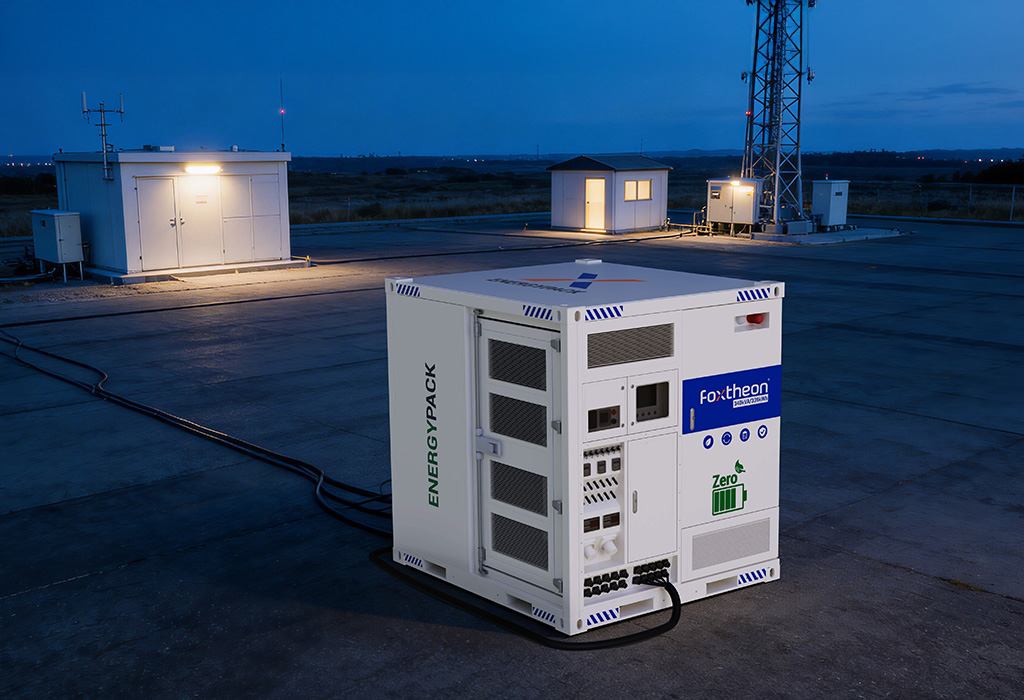
Furthermore, the physical enclosure—whether it is a specialized cabinet for indoor use or an IP55/IP66 rated outdoor container—must withstand environmental stressors such as humidity, salinity in coastal areas, and seismic activity. Foxtheon integrates advanced climate control technologies into its modular systems to ensure peak performance regardless of external conditions.
4. Software Integration: BMS and EMS
The intelligence of the system resides in the Battery Management System (BMS) and the Energy Management System (EMS). The BMS monitors cell-level parameters—voltage, current, and temperature—to prevent overcharging and deep discharge. A multi-tier BMS architecture (cell, module, and system level) is a standard requirement for safety compliance.
The EMS acts as the brain of the operation, communicating with the grid, renewable energy sources (like solar PV), and the building’s load. Advanced EMS features include:
- Peak Shaving: Reducing demand charges by discharging during peak utility rate hours.
- Load Shifting: Storing energy when prices are low and using it when prices are high.
- Frequency Regulation: Providing rapid response to grid fluctuations, which can generate additional revenue streams for the owner.
Sophisticated software integration adds to the initial cost of battery storage system, but it is the primary driver of the Return on Investment (ROI).
5. Installation, Permitting, and Soft Costs
B2B energy projects involve significant “soft costs” that are often overlooked during the initial feasibility phase. These include site preparation (concrete pads, trenching), permitting, and grid interconnection studies. In many jurisdictions, the regulatory process for fire safety and grid compliance can take months, requiring specialized engineering documentation.
Labor costs for qualified electricians and system integrators also vary by region. Modular, “plug-and-play” designs are gaining popularity because they minimize on-site labor and reduce the likelihood of wiring errors during commissioning. By choosing a pre-configured solution from a trusted provider like Foxtheon, developers can streamline the deployment timeline and reduce contingency expenses.
6. Maintenance and Operational Expenditure (OPEX)
Calculating the cost of battery storage system requires an honest assessment of long-term maintenance. While BESS units have fewer moving parts than traditional mechanical equipment, they are not maintenance-free. OPEX items include:
- Regular Inspections: Checking torque on electrical connections and inspecting HVAC filters.
- Remote Monitoring: Subscription-based cloud platforms that provide real-time data and predictive maintenance alerts.
- Augmentation: Because all batteries degrade over time, a project may require “augmentation”—adding new battery modules in year 5 or 7—to maintain the rated capacity over the contract term.
7. Economies of Scale and Project Sizing
There is a clear inverse relationship between system size and the price per kilowatt-hour (kWh). Large-scale utility projects benefit from volume discounts on battery cells and shared infrastructure costs. However, for commercial and industrial (C&I) customers, the focus is often on right-sizing the system. Over-sizing leads to wasted capital, while under-sizing fails to meet the peak demand requirements, negating the savings on utility bills.
The duty cycle—how often the battery is charged and discharged—also influences the price. A system designed for a high C-rate (fast discharge for high power) requires more robust power electronics and cooling compared to a system designed for a 4-hour or 8-hour slow discharge.
Evaluating LCOS: The True Measure of Value
To truly compare different energy storage options, industry professionals use the Levelized Cost of Storage (LCOS). This metric accounts for the total lifetime costs (CAPEX + OPEX) divided by the total energy throughput (the amount of electricity the system will discharge over its life).
A lower cost of battery storage system at the time of purchase might result in a higher LCOS if the round-trip efficiency is poor or the cycle life is short. Therefore, prioritizing high-quality components and efficient thermal management is a strategic financial decision rather than just a technical preference.
The Role of Hybridization in Cost Optimization
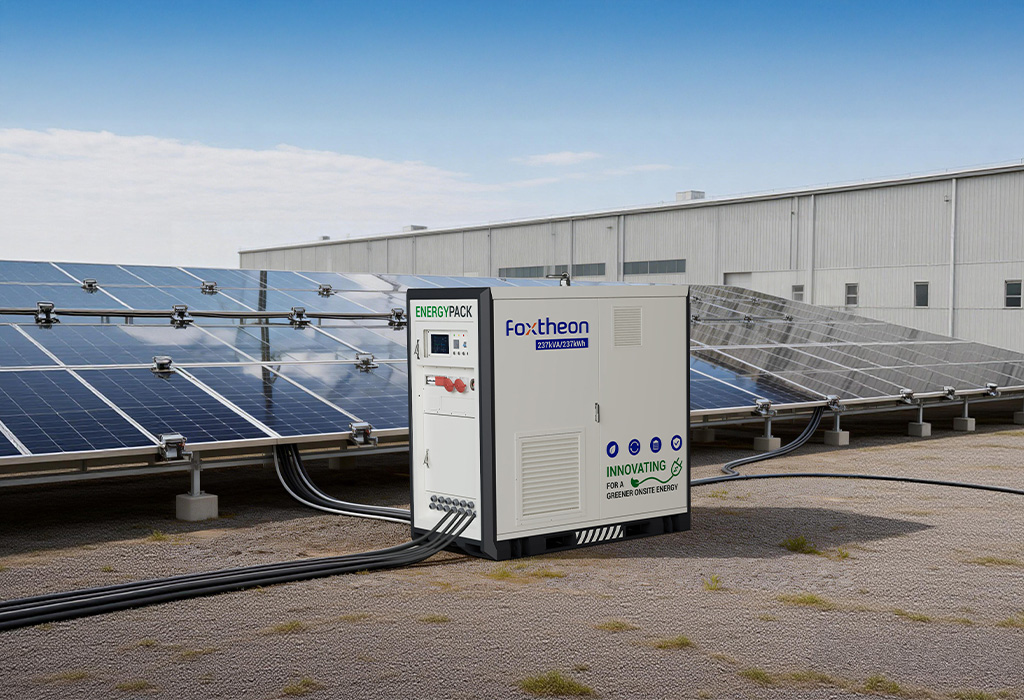
Integrating battery storage with existing energy assets can further improve the economic profile of a project. For instance, pairing a BESS with a solar array allows for the capture of excess renewable energy that would otherwise be curtailed. This synergy increases the “value of energy” stored, effectively subsidizing the cost of the hardware through increased savings and potential green energy incentives or tax credits.
Innovative solutions from Foxtheon allow for seamless integration with various power sources, ensuring that the transition to modern energy management is as smooth as possible. By focusing on modularity and high-density storage, these systems address the spatial and financial constraints typical of B2B environments.
Summary of Technical Factors
The landscape of energy storage is maturing. While the cost of battery storage system has seen a general downward trend over the last decade, the focus has shifted toward reliability, safety, and software-driven optimization. When selecting a BESS, stakeholders must weigh the trade-offs between cell chemistry, cooling technology, and software capabilities to find the solution that best fits their specific operational profile.
Frequently Asked Questions
Q1: What is the average lifespan of a commercial battery storage system?
A1: Most modern LFP-based systems are designed for 6,000 to 10,000 cycles, which typically equates to 10 to 15 years of daily use, depending on the depth of discharge and thermal management quality.
Q2: How does the depth of discharge (DoD) affect the cost?
A2: While a higher DoD allows you to use more of the stored energy, it can accelerate degradation. Most systems are optimized for 80% to 90% DoD to balance usable capacity with long-term cycle life.
Q3: Are there tax incentives available for the cost of battery storage system?
A3: Yes, many regions offer significant incentives. For example, in the United States, the Inflation Reduction Act (IRA) provides Investment Tax Credits (ITC) for standalone storage, which can cover 30% or more of the project cost.
Q4: What is the difference between power-intensive and energy-intensive systems?
A4: Power-intensive systems (high C-rate) are designed for short bursts of high power, such as frequency regulation. Energy-intensive systems (low C-rate) are designed for long-duration discharge, such as shifting solar energy from day to night.
Q5: Can I expand my battery system later if my energy needs grow?
A5: Many modern systems are modular, allowing for future expansion. However, it is important to ensure the original BMS and PCS are compatible with additional modules to avoid excessive integration costs later.
Contact Our Experts for a Detailed Quote
Determining the precise cost of battery storage system for your specific application requires a detailed analysis of your load profile, local utility rates, and site conditions. Our team of energy specialists is ready to provide a comprehensive technical assessment and a customized ROI projection for your project. Reach out to us today to discuss how we can help you achieve your energy goals with reliability and precision.
Contact us for an inquiry regarding your next energy project.